


The United Quest Card sits in a sweet spot for frequent and aspiring United flyers. It offers richer rewards and more generous baggage and credit perks than entry-level airline cards, without the sky-high annual fee of top-tier premium products. To get full value, though, you need to understand how the miles, free bags, and travel credits actually work on real bookings rather than just in the fine print.
Get the latest updates straight to your inbox!
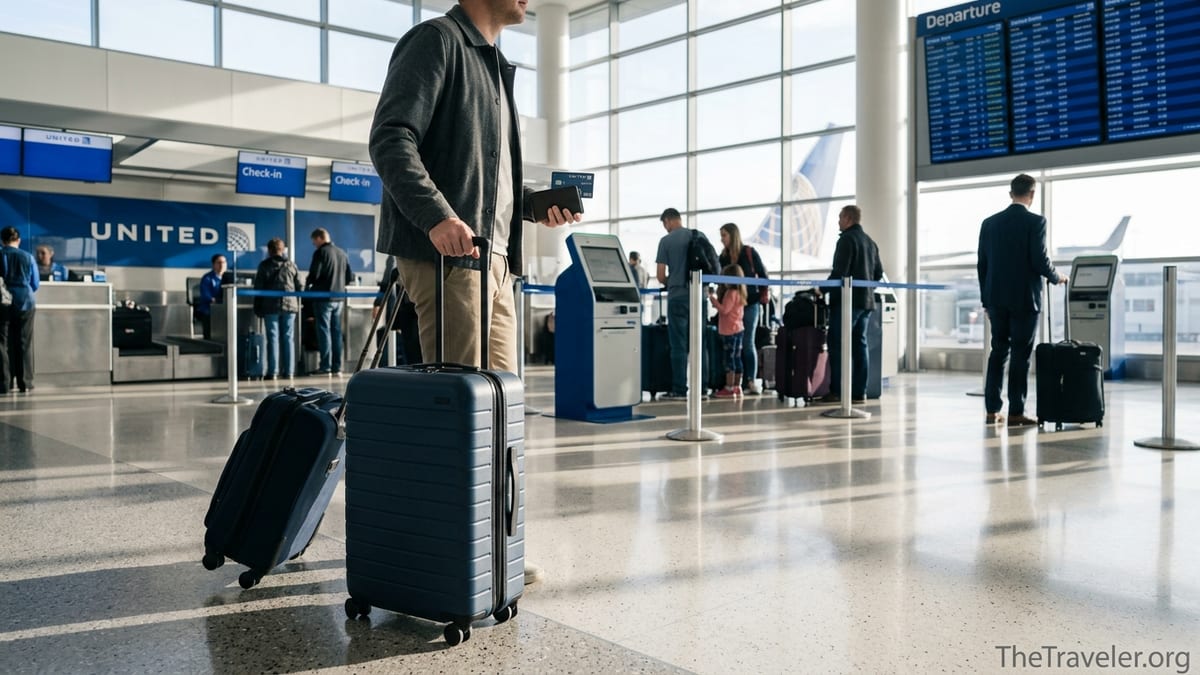
What the United Quest Card Is Designed to Do
The United Quest Card is a mid-tier co-branded credit card issued by Chase for United Airlines travelers. It charges a substantial annual fee, but in return it layers together faster mile earning on United flights, free checked bags, an annual United travel credit, and discounts on award tickets. When used strategically, many travelers can offset the fee with just one or two trips a year.
At its core, the card is meant for people who fly United at least a couple of times annually, whether that is a family visiting relatives on the East Coast, a consultant commuting between Chicago and San Francisco, or a couple planning an annual Europe vacation from Newark. Occasional flyers who only step on a United plane every few years may find the benefits harder to use fully within a cardmember year.
The magic of the Quest card is that several benefits stack. You earn miles on the flight as a MileagePlus member, earn additional miles from putting the purchase on the card, avoid baggage fees for you and a companion, and then get a portion of what you paid back through an annual United travel credit. If you also redeem miles for at least two award tickets per year, the anniversary rebate on award flights adds yet another layer of savings.
To see whether the card makes sense, it helps to look closely at each benefit: how many miles you actually earn on a typical ticket, what the free bag benefit is worth at current United baggage prices, and how to trigger the travel credits in day-to-day booking scenarios.
How Mileage Earning Works on Everyday Spending and Flights
The United Quest Card earns miles in simple tiers. On regular, non-bonus purchases such as groceries or utilities, you earn 1 United MileagePlus mile per dollar. On dining, select streaming services, and most travel purchases that are not directly from United, you earn 2 miles per dollar. On airline tickets and many extras purchased from United itself, such as seat upgrades and onboard purchases, you earn 4 miles per dollar on the card. These card earnings are in addition to the miles you earn from United as a MileagePlus member when you actually fly.
Consider a traveler booking a $400 round-trip economy ticket from Denver to Newark on United. As a standard MileagePlus member, United typically awards miles based on ticket price before taxes, at roughly 5 miles per dollar. If the base fare is $320, the traveler might earn about 1,600 miles from United itself. By paying with the Quest card, they also earn 4 miles per dollar on the full $400, adding another 1,600 miles. The same flight now yields around 3,200 total miles between airline and card rewards, roughly double what would have been earned without the Quest card.
The multiplier becomes even more meaningful on bigger trips. Take a family of four flying Chicago to Honolulu in economy, spending $3,000 on United tickets. The Quest card would earn about 12,000 miles on the purchase alone. United would separately award miles to each traveler’s MileagePlus account based on their individual ticket price, so the household can easily walk away with more than 20,000 total miles from a single vacation. That balance is often enough for at least a one-way domestic award ticket at saver-level pricing if booked far in advance.
For spending at restaurants or on hotels not booked through United, 2 miles per dollar can also add up. A consultant who spends $800 a month on work dinners and $400 a month on general travel expenses like rideshares and independent hotels would earn about 2,400 miles monthly in the 2x categories, or nearly 30,000 miles per year just from those categories before even stepping on a plane.
Free First and Second Checked Bags in Practice
One of the signature perks of the United Quest Card is free first and second checked bags for the primary cardmember and one companion traveling on the same reservation, on United-operated flights, when the tickets are purchased with the card. At current typical domestic checked-bag prices, United’s first checked bag often starts around the mid-40-dollar range each way and the second can run in the mid-50-dollar range, so a round-trip itinerary with two checked bags per person can easily reach around 190 to 220 dollars in baggage fees for two travelers.
Imagine a couple flying round-trip from Houston to Seattle with two checked bags each. Without the Quest card, they might pay about 45 dollars per person each way for the first bag and around 55 dollars for the second, yielding roughly 200 dollars total in bag fees. With the Quest card, both the first and second bags for the cardholder and one companion are free, turning those 200 dollars in potential fees into savings that directly offset more than half of the card’s annual fee on a single trip.
The benefit becomes even more compelling on itineraries where the base fare is low but travelers need luggage. A New York to Orlando sale fare might be under 120 dollars round trip in basic economy, but two checked bags could easily add more than the cost of the ticket if paid separately. When the Quest card’s baggage benefit applies, the traveler can avoid that unpleasant surprise and instead spend on other trip expenses, from a rental car to park tickets.
To trigger the free bag benefit, three conditions generally need to be met. First, the flight must be operated by United or United Express; codeshare itineraries flown by another airline usually will not qualify for the card’s baggage perk. Second, the primary cardmember’s MileagePlus number needs to be attached to the reservation. Third, the tickets must be purchased with the Quest card. Travelers who, for example, use a United flight credit or a different credit card for part of the purchase, or who book through some third-party sites that process payment differently, sometimes find the system does not automatically recognize the benefit, which may require contacting United to have the allowance manually adjusted.
Working the Annual United Travel Credit
The United Quest Card includes an annual United travel credit that can help offset the card’s fee. The structure has evolved over time, but in its current form, cardmembers receive United-specific credit each cardmember year that can be used toward eligible United purchases, such as flights and certain fees, until the credit is exhausted. While the exact dollar amount and mechanics can change, the intent is stable: to refund a portion of what you spend with United each year.
In practice, the travel credit acts like a rebate on your first few United purchases after your cardmember anniversary. Suppose a traveler’s card anniversary is in August. On September 10, they buy a 250 dollar United ticket from Los Angeles to Denver with taxes and fees. If the Quest card’s annual United travel credit is 200 dollars, they could see a 200 dollar statement credit post after that purchase, effectively reducing the out-of-pocket cost of that ticket to just 50 dollars. Any remaining eligible United charges until the cap is reached will continue to be offset until the full credit is used for that anniversary year.
Another realistic use case is for a family that books multiple United trips per year. A parent might buy a 150 dollar United ticket for a quick work trip from Dallas to Chicago in January, and later in the year purchase 300 dollars worth of United flights for summer vacation. Depending on timing and remaining available credit, the Quest card’s travel credit can offset part or all of the earlier work trip or the later family booking. That flexibility makes it relatively easy for regular United flyers to capture the full benefit each year.
Cardholders should keep an eye on their credit tracker in the card account dashboard, which typically shows how much United travel credit has been used and how much remains for the current anniversary year. Because unused credit generally does not carry over past the anniversary date, a traveler planning an end-of-year holiday trip might intentionally book just before the anniversary to use any remaining credit, or just after the anniversary to start the new year’s credit cycle with a big purchase.
Anniversary Award Flight Credits: How the Miles Rebate Works
Beyond earning miles on paid tickets, the United Quest Card offers an ongoing incentive for travelers who redeem miles for flights. Starting after the first cardmember anniversary, cardholders receive two anniversary award flight credits per year. Each credit refunds 5,000 miles back into the MileagePlus account after the cardholder takes an eligible United or United Express award flight that was booked with miles. In effect, up to 10,000 miles can be rebated each cardmember year.
Consider a traveler who uses 22,000 miles for a round-trip economy award from San Francisco to Vancouver on United during fall shoulder season. After they complete the trip, one 5,000-mile credit would post back to their MileagePlus account, effectively reducing the net cost of the award to 17,000 miles. Later in the same cardmember year, they book and fly another 15,000-mile one-way award from Chicago to New York. The second 5,000-mile credit would then trigger, dropping the net mileage cost of that ticket to 10,000 miles.
The impact is especially noticeable on shorter domestic awards. A one-way economy award like Denver to Phoenix might price at around 10,000 miles during off-peak dates. If a Quest cardholder uses miles for that trip and then receives a 5,000-mile rebate afterward, it is as if they used only 5,000 miles for the one-way flight. Repeat that twice in a cardmember year and the traveler has effectively flown two domestic one-way trips for a combined 10,000 miles, assuming availability at those prices.
Travelers should note that certain hybrid bookings, such as Money + Miles options where part of the ticket is paid in cash and part in miles, may not qualify for the 5,000-mile rebate according to the card terms. To reliably trigger the anniversary credits, it is safer to book traditional award tickets fully priced in miles on United or United Express metal and then simply wait a few weeks after completing each trip for the credits to appear in the MileagePlus account.
Stacking Benefits on Real-World Trips
Where the United Quest Card really shines is when you layer the benefits on trips that involve both checked luggage and at least moderate ticket prices. Take a straightforward example: a couple from Newark planning an annual winter escape to San Diego. They find a round-trip United fare for 450 dollars per person. Without any airline card, they would pay around 900 dollars for tickets plus roughly 200 dollars or more for two checked bags each round-trip. With the Quest card, they pay the 900 dollars on the card, earn 3,600 miles from the card purchase alone, likely over 4,000 miles total including United’s own earnings, and save the entire baggage fee. If their cardmember anniversary recently passed, the first 200 dollars of that 900-dollar charge might even be wiped out by the annual United travel credit, bringing the effective cost much lower.
On a different trip, a family of four might be flying from Washington Dulles to London Heathrow. Suppose they book two tickets in economy with cash on the Quest card and two tickets as mileage awards using the household’s MileagePlus balance. For the two cash tickets, the Quest card still provides the free first and second checked bag for the primary cardmember and one companion. If each of these two travelers checks two bags, the savings could approach 200 to 250 dollars round-trip at transatlantic baggage prices. Meanwhile, because the family redeemed miles for at least one United or United Express-operated award flight, the cardholder can expect a 5,000-mile rebate, potentially twice if two separate award itineraries are completed within the same anniversary year.
For frequent domestic flyers, smaller but repeated savings can be powerful. A consultant flying monthly between Austin and Denver with one checked bag each way might save around 90 to 100 dollars in bag fees per round-trip by relying on the Quest card’s baggage benefit and United operations. Over six trips in a year, that can amount to more than 500 dollars in avoided baggage fees alone, in addition to miles earned and any United travel credit used on early-year bookings.
These realistic scenarios show how the card’s components, used together, can comfortably exceed the annual fee for travelers who step on a United aircraft several times a year and do not pack ultralight.
Rules, Limitations, and Common Pitfalls
To fully benefit from the United Quest Card, it is important to understand the fine print that governs when perks do and do not apply. For checked bags, the flights generally must be operated by United or United Express, not simply sold by United. Booking a codeshare flight that appears on United’s site but is operated by a partner airline can leave travelers paying baggage fees they assumed would be waived. Similarly, the cardholder’s MileagePlus number must be on the reservation and the tickets paid with the Quest card; mixing in airline vouchers or other cards can confuse the system and may prevent the free bags from attaching automatically.
With the United travel credit, timing is another pitfall. Because the credit is tied to the card anniversary year rather than the calendar year, booking an expensive United trip just before the anniversary date when you still have unused credit may help capture that value, but booking just after the anniversary could mean you start fresh and risk leaving some of the previous year’s credit unused. Monitoring your credit usage online, especially in the final months before your anniversary, helps avoid missing out.
For the anniversary award flight credits, travelers sometimes misinterpret eligibility. Only award flights that are fully paid in miles and operated by United or United Express typically qualify. If you use a combination of cash and miles or book with a partner airline, the 5,000-mile rebate is unlikely to apply. Furthermore, the credits begin after the first anniversary, so travelers who open the card and redeem miles heavily in the first few months should not expect those early awards to trigger the rebate until their anniversary passes.
Last, the Quest card is still a credit card at its core, which means interest and fees can easily erase the value of miles and travel credits if balances are carried month to month. The card makes most sense for travelers who can pay statements in full, view the annual fee as an upfront cost that they aim to recoup, and use the benefits thoughtfully rather than treating the card as a source of long-term borrowing.
The Takeaway
The United Quest Card is built for travelers who fly United often enough, and with enough luggage, that free bags and travel credits are meaningful. The card’s enhanced mileage earning rates on United purchases and broad travel and dining spending, paired with annual United travel credit and anniversary award rebates, can add tangible value in as few as one or two well-planned trips per year.
For a couple taking an annual domestic vacation and one or two shorter trips, or a professional who regularly flies United between major business hubs, the combination of free first and second checked bags, refunded United travel charges, and rebated miles on award tickets can more than offset the annual fee. On the other hand, travelers who rarely check bags, prefer to fly whichever airline is cheapest for each trip, or seldom redeem miles for awards may find a more flexible general travel card a better fit.
Ultimately, making the Quest card work comes down to matching its benefits with your actual travel habits. If you regularly see United boarding passes in your email and your suitcase is a frequent companion at the airport check-in desk, learning to time purchases around your anniversary, ensuring your MileagePlus number is on every reservation, and favoring United metal when redeeming miles can turn the Quest card from a line item on your statement into a tool that quietly lowers the real cost of your trips.
FAQ
Q1. Do I have to pay for my United ticket with the United Quest Card to get free checked bags? Yes, in most cases you must purchase your United or United Express-operated ticket with the Quest card and have your MileagePlus number on the reservation for the free first and second checked bag benefit to apply.
Q2. Does the free checked bag benefit apply on partner airlines or codeshare flights? Generally no. The benefit is intended for flights operated by United or United Express; if your flight is operated by a partner airline, even if the ticket was booked through United, baggage fees may still apply.
Q3. How much can I realistically save on baggage fees with the Quest card? On a typical domestic round-trip, first checked bags often cost around the mid-40-dollar range each way and second bags in the mid-50-dollar range, so a cardholder and companion who each check two bags could save roughly 200 dollars on one round-trip.
Q4. How does the annual United travel credit work? Each cardmember year, you receive a set amount of credit that automatically reimburses eligible United purchases, such as flights and certain fees, until you reach the credit limit for that anniversary year.
Q5. When do I start receiving the 5,000-mile anniversary award flight credits? The two 5,000-mile anniversary award flight credits begin after your first cardmember anniversary and apply each year thereafter when you complete up to two qualifying United or United Express award flights booked entirely with miles.
Q6. Do Money + Miles bookings qualify for the 5,000-mile anniversary rebate? Card terms indicate that hybrid bookings that combine cash and miles typically do not qualify, so to be safe you should use fully mileage-based award tickets on United or United Express when aiming to trigger the 5,000-mile rebates.
Q7. Can I use the United travel credit for purchases other than flights? The credit is generally limited to eligible United purchases, which can include flights and certain fees, but cannot usually be applied to unrelated spending like hotel charges from non-United channels.
Q8. What happens if I do not use all of my United travel credit before my anniversary? Unused United travel credit usually expires at the end of your cardmember anniversary year and does not carry over, so it is wise to plan at least one eligible United purchase annually to fully capture it.
Q9. Is the Quest card worth it if I rarely check bags? If you almost never check bags and do not redeem miles for award tickets, the primary value of the Quest card becomes its mileage earning and United travel credit, which may not fully justify the annual fee for very light or infrequent United flyers.
Q10. How should I decide between the United Quest Card and a general travel card? If you fly United several times a year, check bags, and often redeem miles on United or United Express flights, the Quest card’s airline-specific perks can be more valuable, while travelers who split loyalty among many airlines may prefer a flexible travel rewards card that earns points usable across multiple carriers.