


More news on this day
A routine departure turned into a tense return when a passenger jet was forced to go back to its departure airport after overshooting the runway on takeoff, according to multiple media and aviation safety reports.
Get the latest news straight to your inbox!
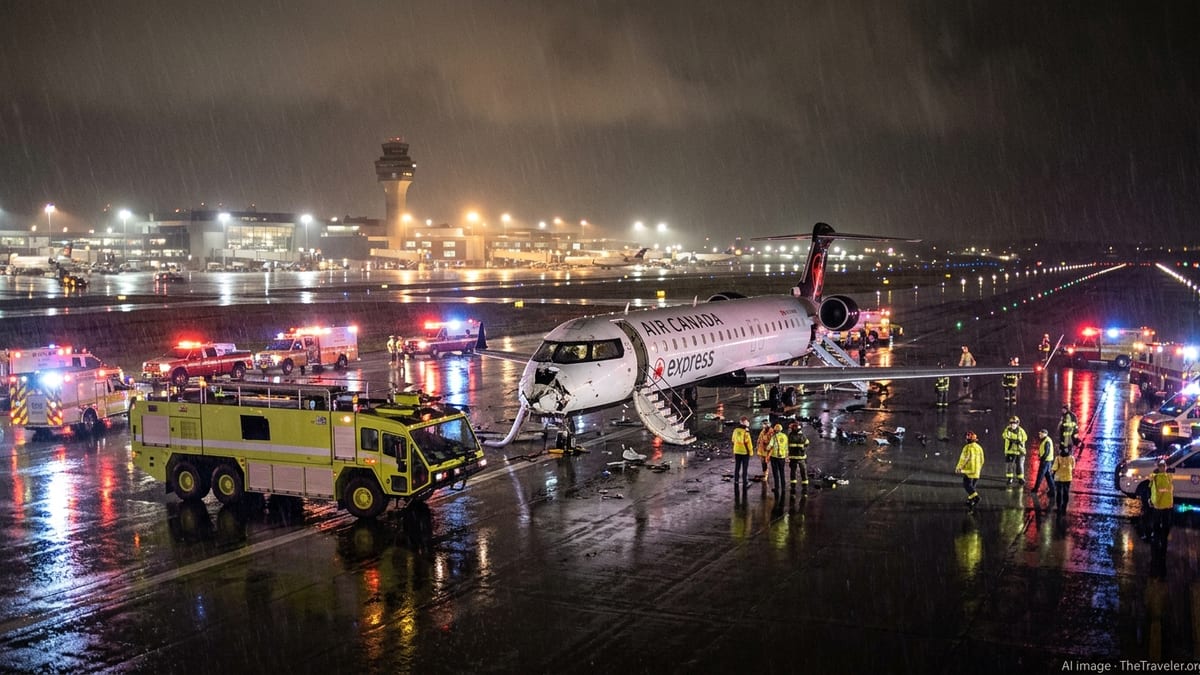
Takeoff Roll Extends Beyond Planned Distance
Initial coverage of the incident indicates the aircraft was accelerating for departure when the takeoff roll extended beyond the length the crew expected for the prevailing weight and weather conditions. Instead of lifting off within the usual distance markers, the jet continued toward the far end of the runway, reportedly contacting or passing near ground equipment positioned beyond the standard takeoff zone.
Publicly available information suggests the crew became aware during or shortly after liftoff that the aircraft had traveled too far down the runway, raising concerns about potential damage to the landing gear or structure. While the jet did become airborne and climb away, the atypical use of runway length triggered a series of safety assessments in the cockpit.
Witness accounts and online flight-tracking data referenced in news coverage show the aircraft climbing to a relatively low holding altitude and remaining in the vicinity of the airport rather than continuing on its planned route. That profile typically reflects a crew prioritizing a safe return and inspection over pressing ahead to the destination.
Decision to Return and Low-Altitude Holding Pattern
Aviation analysts note that once there is any suspicion an aircraft may have struck objects at the end of a runway or pushed close to safety margins, continuing on a longer sector becomes far less attractive. In this case, publicly available data show the jet entering a holding pattern near the departure airport shortly after takeoff, a maneuver consistent with crews performing checklists, coordinating with dispatch, and reviewing aircraft systems before committing to an approach.
Reports indicate that the pilots opted to keep the aircraft relatively light by burning fuel in a holding pattern rather than immediately attempting a landing, which can help reduce landing speed and stress on the landing gear if any damage is suspected. The return approach was carried out at a conservative speed profile, with emergency response vehicles positioned along the runway as a routine precaution in such events.
After landing, the aircraft vacated the runway under its own power and stopped at a remote stand for inspection. Passengers were later disembarked and rebooked on alternative services, according to airline statements cited in local and international coverage of the event.
Runway Safety and Overrun Protection in Focus
Although the jet ultimately returned safely, the incident highlights long-running concerns around runway margins and the consequences when aircraft use more tarmac than planned. Runway overruns and overshoots, particularly during wet or low-visibility conditions, remain a recurring focus for accident investigators and regulators. Previous cases around the world have involved airliners overrunning the end of the pavement and coming to rest on adjacent roads or soft ground, prompting upgrades such as engineered materials arresting systems and extended safety areas.
Experts often note that modern performance calculations are designed to ensure an aircraft can either safely stop or safely fly at a defined decision speed. When a departure continues beyond that point with less remaining runway than planned, any abnormal vibration, suspected tire failure, or contact with obstacles can quickly escalate into a complex decision-making scenario for the crew.
The latest incident is expected to feed into ongoing safety discussions about how airports manage equipment near runway ends, how airlines apply performance margins in day-to-day operations, and how real-time data from onboard systems can help crews make earlier calls to reject or continue takeoff.
Passenger Impact and Operational Disruptions
For travelers on board, the event reportedly translated into a long night of uncertainty and delays. Accounts shared through local media describe a takeoff that felt unusually prolonged followed by a relatively short cruise phase and an announcement that the aircraft would be returning to the departure airport. Once on the ground, passengers faced additional waiting while the aircraft was inspected and ground handlers organized alternative flights.
Such operational disruptions can quickly ripple through an airline’s network, particularly when a mid-journey return removes an aircraft from service unexpectedly. Schedules on the affected route and at the departure hub were adjusted as the airline arranged replacement aircraft and crews, a familiar pattern whenever a technical or safety-related diversion occurs.
Industry observers point out that while passengers often focus on the inconvenience of missed connections and overnight stays, events like this also demonstrate how aviation systems are designed to prioritize caution over punctuality. The choice to abandon a flight shortly after takeoff and bring the aircraft back for checks reflects conservative safety culture rather than an assumption that any damage has definitely occurred.
Investigations and Next Steps
According to published coverage, national accident investigators and aviation safety agencies have begun gathering evidence, including flight data, cockpit recordings, and runway surveillance images. The inquiry is expected to examine the aircraft’s weight and balance, takeoff performance calculations, runway surface conditions, and any potential misalignment or contact with lighting, signage, or other structures near the runway end.
A key question in similar cases has been whether the crew’s takeoff decision complied with required performance margins and whether any late changes in configuration or air traffic control instructions contributed to the extended roll. Investigators also typically look at how quickly crews recognize abnormal acceleration or rotation behavior and how that interfaces with standard procedures for rejecting or continuing takeoff.
While a full report can take months or longer, preliminary findings are often used within the industry to refresh guidance for pilots and dispatchers, review airport obstacle clearances, and consider additional safeguards at particular runways. For travelers, the incident is another reminder that even when a departure appears routine, complex calculations and split-second judgments underpin each takeoff and landing, and cautionary returns to the gate or departure airport are an integral part of keeping modern air travel statistically very safe.