


Ocean City, Maryland is one of the classic East Coast beach escapes: a long, wide Atlantic shoreline, an old-fashioned wooden boardwalk, and an almost nonstop calendar of family-friendly events. Planning a trip here is not difficult, but a bit of strategy will help you avoid traffic headaches, overspending, and tired kids who melt down before the evening rides. This guide walks you step by step through timing, lodging, transportation, and how to make the most of the boardwalk and beach so your Ocean City vacation feels relaxed instead of rushed.
Get the latest updates straight to your inbox!
Choosing the Best Time to Visit Ocean City
When you visit Ocean City shapes almost everything about your experience, from hotel rates to how crowded the boardwalk feels at sunset. Peak season typically runs from late June through late August, when schools are out, lifeguards are on duty daily, and the boardwalk is buzzing well into the night. Expect oceanfront hotels around the boardwalk to command some of their highest nightly rates during this window, especially over holiday weeks like the Fourth of July. If your priority is guaranteed hot beach days and the fullest schedule of rides, arcades, and live entertainment, this is when to come, but book months in advance and budget accordingly.
Families who want a balance of energy and elbow room often target shoulder-season weeks instead. Late May and early June, as well as early to mid September, can offer warm days and cooler nights with noticeably thinner crowds. Events like Springfest in late April and Sunfest in late October transform the south end of the boardwalk near the inlet with tents, live music, and food vendors, so if you like a festival atmosphere, you might time a long weekend to overlap one of those. During these periods, you may still find oceanfront rooms at mid-range hotels along the boardwalk for noticeably less than midsummer, and parking is easier to manage around town.
If your schedule is flexible and your budget is tight, consider an off-season visit between late October and early April. Many classic boardwalk spots shorten hours and some amusement rides shut down in winter, but you gain dramatically lower hotel rates and a quieter, more local feel. A November weekend might be perfect for bundled-up boardwalk walks, kite flying on the beach, and off-season happy hour deals at restaurants along Coastal Highway. This works especially well for families with very young children who are more interested in sand play than ocean swimming.
Picking the Right Neighborhood and Lodging
Ocean City stretches roughly 10 miles along a narrow barrier island, with the historic boardwalk covering the southern end from the inlet up through the low teens in street numbers. If rides, arcades, and nightly strolls past Thrasher’s-style french fries and classic T-shirt shops are at the center of your plans, staying in the downtown and boardwalk area (roughly Inlet to 15th Street) is ideal. Many families opt for mid-range oceanfront hotels here so they can walk straight from their room to the sand and roll a stroller right onto the boardwalk in the evening. These properties often offer family suites, small kitchenettes, and outdoor pools that help break up the day for kids.
Farther north, the midtown corridor around 28th to 45th Street offers a different tradeoff. You are still a short drive or bus ride from the downtown boardwalk, but the beach can feel a bit quieter and parking is generally less stressful. Here you will find a mix of chain hotels on the ocean side and bayside properties with sunset views and boat access. A bayside condo near 32nd Street, for example, might give a family two bedrooms, an in-unit washer and dryer, and a full kitchen for about what a smaller oceanfront hotel room costs during peak weeks. If your family plans to cook some meals in and does not mind a short commute to the boardwalk at night, this can be a smart compromise.
At the north end near the Delaware line, the atmosphere tends to be calmer and a bit more residential. Families traveling with grandparents or those who want early bedtimes may appreciate this end of town. You will still find mini-golf courses, casual restaurants, and beach access, but you will likely drive or use the bus to reach the full energy of the boardwalk. When comparing prices among hotels, vacation rentals, and condo resorts, remember to factor in nightly parking fees, cleaning charges, and any amenity charges. For example, a three-night stay in a central condo that adds a hefty cleaning fee can sometimes end up pricier than a straightforward hotel bill including free parking.
Getting There, Parking, and Getting Around
Most visitors drive into Ocean City along US Route 50 from the west or Route 90 from the northwest. Weekend arrivals, especially on summer Saturdays, often translate into heavy traffic across the Route 50 bridge in the afternoon. If possible, plan to hit town before lunchtime or later in the evening to avoid the thickest congestion. For families driving from cities like Baltimore, Washington, or Philadelphia, leaving early in the morning not only shortens time in the car but also lets you settle into your hotel and still enjoy a half day on the beach.
Parking strategy can make or break your stress level, especially if you plan to spend lots of time around the inlet and south boardwalk. The inlet parking lot, adjacent to the amusement rides and start of the boardwalk, is convenient but fills quickly on sunny days and during major events. Rates are charged by the hour, and on a peak summer afternoon a full day there can add up. Many repeat visitors opt to park at the West Ocean City Park and Ride on the mainland side and take the beach bus into town instead. The Park and Ride lot typically offers free or low-cost parking with a modest all-day bus fare, which can be easier and cheaper than circling for a space near the boardwalk with kids in the backseat.
Once you are in town, leave the car parked as much as possible. The municipal buses run along Coastal Highway and are built for beachgoers, with frequent stops and straightforward flat fares that let you ride all day. This can be especially helpful in the evening when your family wants to head from a midtown condo down to the boardwalk for rides and ice cream without worrying about finding a new parking spot. If you stay along the southern end, walking is often the easiest way to get around; just remember that summer humidity can make even short walks sweaty, so pack water bottles and light clothing when you head out.
Making the Most of the Boardwalk With Kids
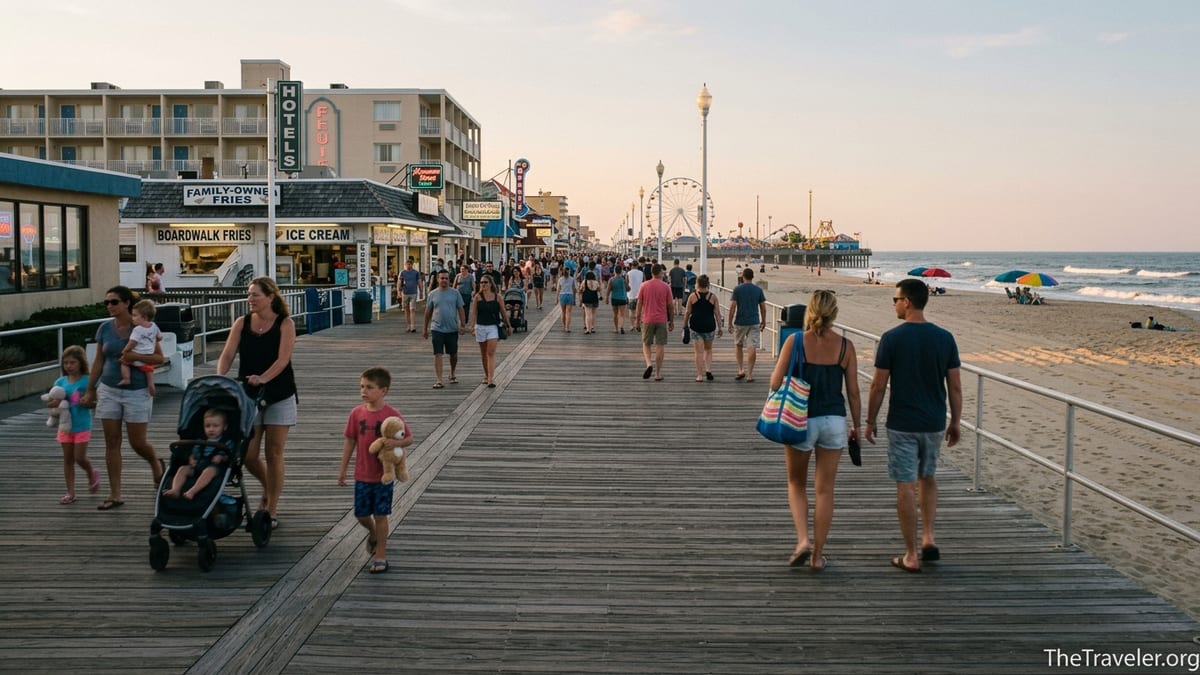
The Ocean City boardwalk is a sensory overload in the best possible way for families: the smell of fries and funnel cakes, the sounds of arcade games and live music, and the constant motion of bikes, surreys, and strollers. To keep it fun instead of overwhelming, think in loose segments rather than trying to “do it all” in one night. One evening might focus on classic amusement rides at the south end, another on arcades and treats around the central portion, and a third on people-watching walks with a simple goal like picking out T-shirts or saltwater taffy to take home.
At the southern tip near the inlet, long-running amusement parks cluster around the boardwalk. Here your kids can ride a traditional carousel, bump cars, or take a spin on a modest coaster while parents linger nearby with a lemonade. Ride operations tend to run into the evening during the summer, but it pays to check current hours before promising a specific attraction. Many families save the ride area for after dinner, when the lights flicker on and ocean breezes cool things down, and they limit everyone to a set number of ride tickets to keep both time and budget in check.
Farther up the boardwalk, arcades provide a welcome break from the sun and a chance to sit while kids burn through rolls of quarters or preloaded play cards. It is easy for time to vanish in these spaces, so consider agreeing in advance on either a time limit or a spending cap. A realistic example might be giving each child a fixed amount to spend on games one evening instead of scattering small amounts across multiple nights. That way, winning enough tickets for a mid-range prize feels like a single fun challenge rather than a nightly negotiation.
Beach Time: Rules, Comfort, and Safety
The beach is the real star of any Ocean City trip, and a little planning can make your family’s time in the sand both comfortable and compliant with local rules. The public beachfront runs the length of town and is generally open during daytime and evening hours, but overnight access is restricted so that cleaning crews can do their work. Alcohol is not allowed on the beach or boardwalk, and open containers are prohibited throughout public areas, so keep drinks nonalcoholic when you set up your umbrella and cooler. Smoking and vaping are restricted to designated areas off the main beach and boardwalk in order to keep the sand cleaner and the air more comfortable for families.
Recent updates to local regulations have put tighter limits on beach tents and canopies. Large enclosed tents with sides are typically banned, and even open-sided canopies are limited in size and placement to preserve ocean views and ensure emergency access. Many families now rely on basic beach umbrellas, smaller baby sunshades, or compact sun shelters that meet the rules. When in doubt, check your hotel front desk or a local beach shop before buying or unpacking a large structure you plan to use all week. Umbrella rentals set up by vendors along the sand can be a carefree alternative, allowing you to show up with just towels and toys.
Safety-wise, always swim near a staffed lifeguard stand and pay attention to posted flags and warnings about rip currents or surf conditions. On busy summer days, guards may restrict rough ball games or flying objects in crowded areas to avoid injuries. If your kids love digging deep holes, keep them shallow and fill them in when you leave; collapsing sand can be more dangerous than it looks. Sunscreen, hats, and rash guards can help with the strong midday sun off the Atlantic, and many families schedule a daily beach break back at the hotel pool or room during the hottest early afternoon hours to prevent sunburn and fatigue.
What to Budget For Food, Rides, and Extras
Ocean City can fit a range of budgets, but costs can rise quickly if you treat every day like a blank check. Before you arrive, sketch out a rough daily budget that accounts for food, beach extras, rides, games, and souvenirs. On the boardwalk, a family of four might spend a moderate amount for lunch consisting of a couple of pizza slices, drinks, and fries at a casual stand, while a sit-down dinner at a popular seafood house off the boards can easily double that. A common strategy is to eat simple breakfasts in your room, enjoy casual lunches near the beach, and then choose a mix of one or two nicer dinners out balanced with lower-key nights grabbing subs or takeout.
Rides and arcade games are another predictable expense. Instead of buying ride tickets every night, some families choose one or two “big” ride evenings and plan for a set amount to spend on wristbands or ticket books. For example, you might designate Tuesday as the night for the kids to ride as many attractions as they like within a set time, then choose another evening focused on inexpensive fun like mini-golf midtown or free entertainment on the boardwalk. Souvenir shopping is best handled with boundaries: let each child know in advance they can pick one sweatshirt or toy and one treat like a box of fudge or taffy, which prevents nightly pressure to buy new items.
Do not forget to include less obvious costs in your planning. Daily or hourly parking fees, tolls on the drive in, and beach gear purchases like boogie boards or extra towels can add up. Some families choose to buy bulk snacks, drinks, and basic groceries at a supermarket on the mainland or at the north end of town before checking in, which keeps them from relying solely on boardwalk prices for every bottle of water and snack. If you are traveling on a tight budget, consider plotting one or two completely low-cost days centered around free activities like shell hunting at sunrise, playing on a bayside playground, or watching sunset from a public pier instead of pricey attractions.
Sample Three-Day Family Itinerary
To visualize how all these decisions come together, imagine a long weekend for a family of four staying at a mid-priced oceanfront hotel around 10th Street. They arrive early Friday afternoon, park once for the entire stay, and walk to the beach for a couple of hours before dinner. That first evening, they keep things simple: a casual boardwalk meal of pizza and fries, a slow stroll up to the pier, and a stop at one arcade where each child has a small set amount to spend on games. Everyone is back at the hotel by 10 p.m., ready for a full Saturday.
On Saturday morning, the family heads out after a light in-room breakfast to claim a spot on the beach in front of their hotel, renting an umbrella and two chairs so they do not have to carry gear. They alternate between ocean swims, sandcastle building, and snack breaks back up in the room. Around midafternoon, they retreat from the heat for an hour by the hotel pool before showers and an early dinner at a seafood restaurant a short walk inland. That night becomes their designated “big rides” evening near the inlet. Parents set a firm end time and spending cap, and they enjoy watching the kids tackle a few thrill rides, a Ferris wheel, and bumper cars under the lights.
Sunday is deliberately slower. The parents get up early to walk a stretch of the boardwalk with coffee while the kids sleep in, then everyone shares a late breakfast at a small diner a few blocks off the beach. They spend a final few hours on the sand, letting the kids boogie board and dig while the adults start packing up the room in shifts. Check-out is timed to miss the heaviest return traffic, and they plan a low-key lunch at a bayside spot on the way off the island. By giving themselves this simple structure instead of trying to squeeze in every possible attraction, the family leaves feeling like they balanced the boardwalk experience with real downtime.
The Takeaway
Planning an Ocean City trip for boardwalk fun, beaches, and family time does not have to be complicated, but it does benefit from thinking through timing, lodging location, transportation, and daily rhythms before you go. Choosing your season carefully, picking a neighborhood that matches your priorities, and deciding in advance how you will handle parking or the bus can strip out common stress points. Building loose plans for how many ride nights, arcade visits, and restaurant splurges you will have keeps your budget under control without sacrificing the core experiences that make Ocean City special.
At its best, an Ocean City vacation is about simple pleasures: kids shrieking on a spinning ride, sand between your toes, the smell of boardwalk fries on an evening breeze, and the sight of neon reflecting off the Atlantic after dark. By arriving with a realistic sense of crowds, costs, and rules, you free yourself to lean into those moments rather than logistics. Think of this guide as a framework, then adapt it to your family’s pace and interests so that your own Ocean City memories feel both effortless and uniquely yours.
FAQ
Q1. Is Ocean City, Maryland or New Jersey better for a boardwalk-focused family trip? Both offer classic boardwalks, but Ocean City, Maryland has a longer beach and a single main boardwalk, while Ocean City, New Jersey is a dry town where alcohol is not served in boardwalk restaurants. Families who want more dining and nightlife variety often lean toward Maryland, while those seeking a quieter, strictly alcohol-free boardwalk may prefer New Jersey.
Q2. How many days do I need in Ocean City to enjoy the boardwalk and beach without rushing? A long weekend of three nights works well for most families, giving you one full day focused on the beach, one centered on boardwalk rides and arcades, and a third that can flex between both. If you are driving more than five or six hours, adding an extra night can make the trip feel more relaxed.
Q3. Do I need a rental car once I arrive in Ocean City? If you stay near the boardwalk or along Coastal Highway, you can often get by without driving much. The city buses run up and down the main corridor, and many families simply walk between their hotel, the beach, and nearby restaurants. A car is most useful for arrival, departure, and occasional grocery or side trips.
Q4. Are beach tents and canopies allowed on Ocean City’s beach? Large enclosed tents are generally not allowed, and canopies are tightly regulated in size and placement to protect views and ensure access for safety vehicles. Simple beach umbrellas and small baby sunshades are usually the safest choices. Always check the latest local rules before bringing a large structure to set up on the sand.
Q5. Is Ocean City expensive for families compared with other East Coast beaches? Ocean City can feel pricey in peak season, especially for oceanfront hotels and daily boardwalk spending, but it also offers many ways to control costs. Choosing shoulder-season dates, staying in a condo with a kitchen, and planning a few low-cost days built around the free beach can bring the overall trip cost closer to that of other regional beach towns.
Q6. What is the best area to stay if I want to walk to the boardwalk every night? The southern part of town from the inlet up to about 15th Street is the sweet spot for easy boardwalk access. Hotels and rentals here let you walk straight onto the boards in the evening without driving or using the bus, which is especially handy with strollers or younger kids.
Q7. Are there things to do in Ocean City if the weather turns rainy? Yes. Arcades along the boardwalk, indoor mini-golf courses, small local museums, and shopping centers off Coastal Highway all offer ways to keep kids entertained during bad weather. Many families also use rainy periods to enjoy long restaurant meals, visit a nearby movie theater, or relax in the hotel pool if it is indoors.
Q8. Is Ocean City a good choice for families with toddlers? Ocean City can be very toddler friendly thanks to its wide, gradual beach, stroller-friendly boardwalk, and abundance of gentle rides and playground-style attractions. Choosing a hotel with easy beach access and a small pool, and planning midday naps back in the room, makes the experience easier on both kids and parents.
Q9. How crowded does the boardwalk get at night in summer? On warm summer evenings, especially weekends, the boardwalk can feel very busy, with steady foot traffic, bikes, and surrey rentals. It is usually still manageable for families, but you may want to keep younger children in strollers or hold hands in the thickest areas near the inlet. Visiting earlier in the evening or on weeknights can help you avoid the biggest crowds.
Q10. Can I visit Ocean City without spending much time on rides and still have fun? Absolutely. Many visitors focus on simple pleasures like long walks on the boardwalk, lazy beach days, mini-golf, and exploring bayside restaurants or fishing spots. Rides and arcades are a highlight for many families, but they are only part of what makes Ocean City appealing, and you can tailor your trip to whatever balance of activities suits your group.