


More news on this day
Hundreds of flights were canceled at Chicago’s O’Hare International Airport as heavy rain and thunderstorms moved into the region over the weekend, snarling a major U.S. hub and leaving travelers scrambling for rebookings and alternate routes.
Get the latest news straight to your inbox!
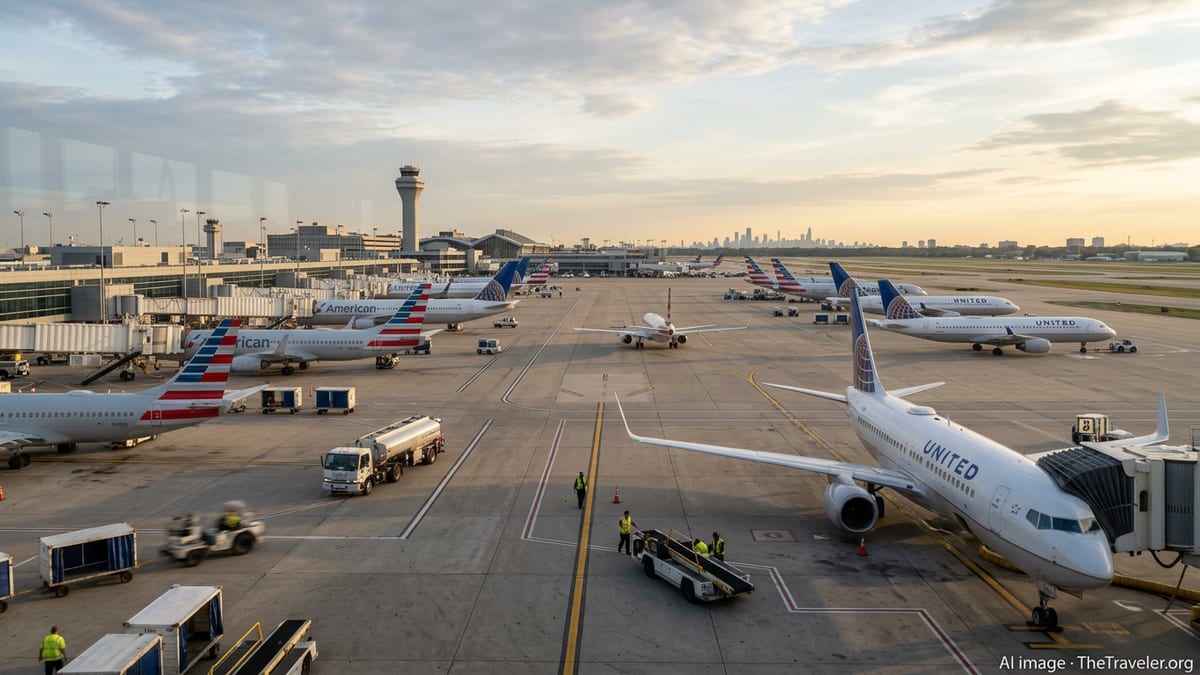
What happened at O’Hare and how big the disruption got
Published coverage and airport tracking data showed a sharp wave of cancellations at O’Hare as storms pushed through Saturday morning, with the disruption spreading into the afternoon. ABC7 Chicago reported that as of 1:44 p.m. local time on Saturday, 345 flights had been canceled at O’Hare and average delays were running around 78 minutes.
Midway International Airport was also affected, though to a lesser extent. ABC7 Chicago reported 71 cancellations at Midway at the same time, with average delays under 15 minutes, highlighting how storm impacts can vary across the Chicago area’s two major airports depending on runway configurations and the most intense bands of weather.
For travelers, the operational picture can change quickly during convective weather. While the FAA’s national status page later showed no active ground stoppages or ground delays at the time it was checked, the same ABC7 Chicago coverage described earlier ground stops during the storm period, indicating that restrictions may be implemented and then lifted as conditions improve.
Why heavy rain can ground flights even when planes can fly in wet weather
Airlines and air traffic managers typically slow operations during thunderstorms not simply because of rain, but because of lightning risk to ground crews, reduced visibility, wind shifts, and the need to keep safe separation between aircraft. When a busy hub like O’Hare loses arrival and departure capacity, cancellations can cascade across the national network as aircraft and crews end up out of position.
Publicly available forecasts for the O’Hare area showed conditions supportive of continued disruption. The National Weather Service point forecast for Chicago O’Hare indicated a Flood Watch and a high likelihood of showers and thunderstorms, including the potential for additional rainfall amounts in the 1 to 2 inch range overnight, with showers lingering into Sunday.
That matters for aviation because a sequence of storm rounds can eliminate the “recovery window” airlines count on to reset schedules. Even after the heaviest cells move east, airports can face residual delays from congested ramp areas, late inbound aircraft, and airspace management constraints upstream.
Flood Watch timeline and the weekend forecast outlook
Storm impacts extended beyond the airport perimeter. ABC7 Chicago reported a Flood Watch covering a wide swath of northeastern Illinois and northwest Indiana through early Sunday, and described additional rounds of heavy rain expected between Saturday evening and Sunday morning, with lighter rain possible into Sunday afternoon.
For aviation planning, the key is not only the presence of rain but the timing of the highest-impact periods. When heavier precipitation and lightning are forecast during peak departure banks, airlines may preemptively cancel flights to consolidate passengers onto fewer departures and preserve aircraft availability for later in the day.
Travelers should also consider surface transportation. Heavy downpours can slow traffic to and from the terminals, complicate rideshare pickup times, and strain parking and curbside operations. When storms coincide with event weekends, demand pressures can make terminal congestion feel worse than the flight statistics alone suggest.
What travelers can do right now if their O’Hare flight is affected
For passengers already holding tickets, the most effective first step is to monitor the flight status directly through the airline’s app or website and confirm whether a rebooking or travel waiver is available. During weather events, airlines often enable self-service rebooking tools that can be faster than waiting in airport lines.
It can also help to search for alternate routings that avoid the most congested node. Depending on destination, options may include connecting through other Midwest hubs or, for some travelers, shifting to rail or driving for short-haul trips. With Chicago, checking Midway departures can sometimes provide an alternative, but availability may tighten quickly when both airports are affected.
Finally, travelers should plan for the possibility that disruptions outlast the storm itself. Even when conditions improve, aircraft rotations and crew schedules may remain strained into the next day. The National Weather Service forecast for the O’Hare area showed additional showers possible into Monday, meaning travelers may want to build extra time into itineraries and keep an eye on updated forecasts before heading to the airport.