


More news on this day
Escalating fighting between Yemen’s Houthi movement and Saudi Arabia has prompted a fresh wave of US security messaging across West Asia, with multiple US diplomatic posts circulating alerts that emphasize heightened vigilance and the possibility of sudden travel disruption, including flight cancellations and airspace closures.
Get the latest news straight to your inbox!
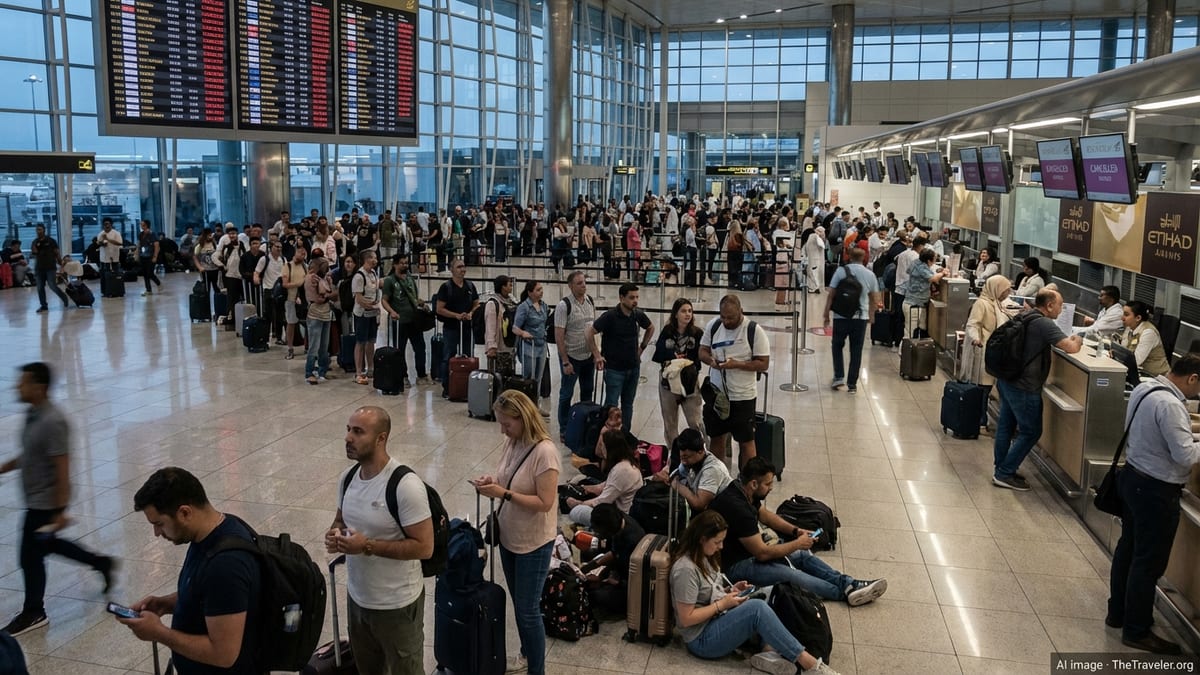
What the new US messaging means for travelers
Published coverage indicates US embassies across several Middle Eastern countries issued coordinated security alerts on September 20, 2026, urging Americans to maintain heightened vigilance after a new round of Houthi attacks on Saudi Arabia and Saudi counterstrikes. The alerts’ travel-facing takeaway is practical: travelers should be prepared for short-notice changes to flight routings, airport operations, and cross-border movement, even when their itinerary does not include Yemen.
The language in these alerts aligns with the US State Department’s broader “Worldwide Caution” messaging updated earlier this summer, which highlighted that travelers in the Middle East should be prepared for periodic airspace closures and other disruptions, and should monitor embassy security alerts and airport or airline operational updates.
In parallel, the State Department updated its Saudi Arabia Travel Advisory on September 15, 2026 to a Level 3 “Reconsider Travel” designation, and the advisory’s summary was updated to reflect additional travel restrictions for US government employees. Publicly available information shows US government personnel in Saudi Arabia are restricted from travel within 20 miles of the Yemen border.
Why the warning is being refreshed now
The renewed alerts follow several days of reported missile and drone activity aimed at Saudi cities and strategic sites. Recent published coverage describes a ballistic missile launch toward Riyadh that Saudi air defenses said they intercepted, with additional reported targets including locations such as Yanbu, a key Red Sea port and industrial area linked to energy and shipping infrastructure.
Separately, regional reporting and wire coverage over the past week has focused on attempted drone activity near sensitive religious and civic sites, and on the broader pattern of attacks affecting cities and coastal areas. This has fueled concern among airlines and travelers that the security situation could shift quickly, especially if further strikes affect airports, navigation systems, or coastal shipping corridors.
Travelers should understand that even incidents that do not directly close an airport can still cause secondary disruption, including precautionary airspace management, last-minute reroutes, and knock-on delays as carriers adjust flight paths to avoid perceived risk areas.
Where disruption risk is highest: airspace, airports, and sea lanes
For commercial aviation, the central concern is not only destination-country security but also route viability. When conflict intensifies, carriers may choose to avoid particular flight information regions, alter great-circle routes, or add refueling stops. These operational decisions can cascade into missed connections and irregular operations across hubs in the Gulf and eastern Mediterranean.
Travelers transiting through the region should watch for changes that can occur with little notice: departure-time shifts, aircraft swaps, and rebookings that split families across separate flights. Publicly available guidance tied to the recent embassy alerts emphasized the possibility of flight cancellations, airspace closures, and general travel disruptions.
At sea, the risk environment remains elevated around chokepoints connected to Yemen’s coastline. US government travel information for Yemen has long highlighted maritime risks, and recent reporting tied to the current escalation has again drawn attention to threats affecting vessels and shipping routes near the Bab al-Mandeb and surrounding waters. Cruise and ferry travelers are less common in these corridors than air travelers, but cargo disruption can indirectly affect tourism through supply constraints and broader regional uncertainty.
Concrete implications for trips to Saudi Arabia and neighboring countries
For Saudi Arabia-bound travelers, the most immediate planning adjustment is geographic: the State Department’s updated advisory highlights the Yemen-border area as a particular concern, reflected in strict movement limits for US government employees. While those restrictions do not apply directly to private travelers, they are a clear indicator of how official risk assessments are being calibrated.
Air travelers with itineraries involving Riyadh, Jeddah, Dammam, or Red Sea coastal destinations should build extra schedule resilience. That means allowing more connection time, avoiding tight same-day onward itineraries where possible, and closely tracking carrier notifications in the 24 to 48 hours before departure. Travelers should also keep documentation and essential medications in carry-on baggage in case a checked bag is delayed or a routing changes mid-journey.
For neighboring countries, the impact may be felt most through transit and reassurance measures rather than direct closures. The September 20, 2026 round of alerts was described in published coverage as spanning multiple US posts across the region, signaling concern about spillover effects and the possibility that the security environment could change quickly across borders.
What travelers can do now: monitoring, flexibility, and documentation
Given the likelihood of rapid developments, the most useful traveler steps are procedural. Monitor official travel advisories for your destination and any transit points, and watch for updated embassy security alerts that may affect airport access, movement restrictions, or recommended precautions. Because airline operations can shift quickly in a crisis, travelers should also monitor airport operational updates and airline messages rather than relying solely on scheduled timetables.
If you are already in the region, consider contingency planning for onward travel, including alternative routing through different hubs in case one airport experiences disruptions. Ensure your passport validity, local contact information, and digital copies of key documents are accessible offline, particularly if communications networks become strained during periods of heightened tension.
Finally, travelers should account for Yemen’s standing status as a “Do Not Travel” destination in US guidance, which notes that the US government cannot provide routine or emergency consular services in-country. Even travelers with no intention of approaching Yemen can be affected indirectly if conflict-related disruption spreads to nearby airspace or shipping lanes.