


More news on this day
Hundreds of passengers were left stranded across France after a fresh wave of disruption led to at least 68 flight cancellations and 1,178 delays at major airports including Paris, Nice, Marseille and Lyon, heavily impacting operations for carriers such as Air France, Transavia France, Air Algérie and several European low cost airlines.
Get the latest news straight to your inbox!
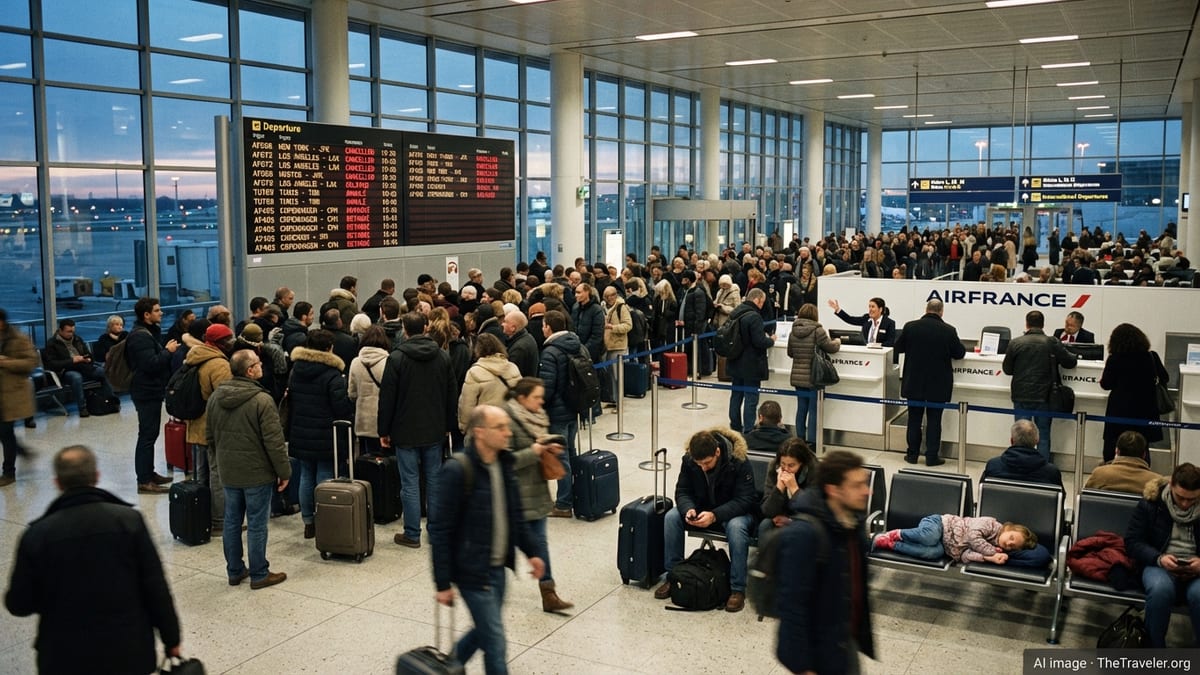
Widespread disruption across France’s main airports
Flight tracking data and operational summaries from French airports show that services at Paris Charles de Gaulle and Orly, along with Nice Côte d’Azur, Marseille Provence and Lyon Saint Exupéry, experienced a sharp spike in disruption over the course of the day. A combined tally of at least 68 cancelled flights and more than 1,100 delays was recorded, with knock on effects for connecting services across Europe and North Africa.
Reports indicate that Air France bore a significant share of the disruption on domestic and regional routes linking Paris to cities such as Nice, Marseille and Lyon, while Transavia France, Air Algérie and other foreign carriers operating into French hubs also faced lengthy delays. Late arriving aircraft and saturated airspace around the busiest airports contributed to rolling schedule changes throughout the afternoon and evening.
Operational data from services on key corridors such as Paris to Nice show multiple flights operating well behind schedule, feeding into the wider pattern of congestion on heavily travelled summer routes. Delays on high frequency domestic sectors then rippled outward to affect long haul connections and onward short haul flights, compounding the backlog of stranded travellers waiting for rebookings.
Airports in the south of France, already managing heavy seasonal demand, struggled to absorb the disruption. With gates and ground handling resources tightly scheduled, any extended delay quickly translated into bottlenecks at boarding areas and on the apron, leaving passengers facing long queues and limited information while staff worked through reassignments.
Stranded passengers face queues, missed connections and limited options
The combination of cancellations and extensive delays left hundreds of travellers stuck in terminals or forced to improvise last minute changes to their journeys. At major hubs, long queues formed at airline service desks as passengers sought rebooking on later departures or alternative routings through less congested airports.
Publicly available guidance on passenger rights under European regulation shows that travellers whose flights were cancelled or heavily delayed may be entitled to meals, accommodation and, in some cases, financial compensation, depending on the cause of the disruption and the length of the delay. In practice, however, high passenger volumes and pressure on staff often meant long waiting times before arrangements could be confirmed.
Domestic travellers heading between Paris, Lyon, Marseille and Nice were particularly affected, as delays on short haul flights made it difficult to guarantee same day arrival, even on routes with frequent services. For international passengers, missed connections at Charles de Gaulle and other transfer hubs led to overnight stays and, in some cases, the loss of nonrefundable bookings for trains, hotels and events at their final destinations.
Some passengers reportedly turned to rail or long distance coach services when suitable flights were no longer available, adding further strain to already busy summer transport networks. However, with peak holiday travel under way, alternative options were limited and often significantly more expensive at short notice.
Operational pressures and external factors drive delays
While specific causes varied by airport and route, the disruption unfolded against a backdrop of intense summer traffic across France and the wider Mediterranean region. Recent government and transport bulletins have highlighted heavy road and rail flows on key north to south corridors, along with heat related challenges and heightened wildfire risk in the south of the country, all of which add complexity to managing transport operations.
In aviation, published analyses of delay management at airlines such as Air France underline how tightly scheduled aircraft rotations and short turn times can leave carriers vulnerable when even a small number of flights are disrupted. Once morning or early afternoon services are delayed, knock on effects can cascade through the daily programme, particularly at slot constrained airports like Paris Charles de Gaulle and busy seasonal gateways such as Nice.
Operational data from recent days also point to weather related constraints and temporary airspace restrictions around high profile events as additional contributors to irregular operations. When airspace capacity is reduced or approach and departure flows are slowed, airlines are required to cut or delay flights, leading to queues both in the air and on the ground.
At the same time, strong demand for leisure travel to and from the French Riviera, Corsica and North African destinations has left carriers with little spare capacity to re accommodate disrupted passengers quickly. Fully booked flights limit the number of available seats for rebooking, prolonging waits for those whose original departures were cancelled.
Airlines adjust schedules while advising passengers to plan ahead
In response to the disruption, airlines affected by the cancellations and delays adjusted schedules, retimed departures and, in some cases, consolidated lightly booked services in order to free capacity for stranded passengers. Publicly accessible customer updates from several carriers urged travellers to monitor their booking status closely and to check airport departure boards before setting out.
At airports, operational teams moved aircraft and crews to rebalance networks and reopen congested gates, but these efforts took time to translate into tangible improvements for passengers waiting to depart. With crews subject to strict working time limits, some flights were further delayed while fresh staff were positioned to operate them, particularly in the late evening.
Travel industry observers note that French airports and carriers have been working to strengthen resilience after previous episodes of disruption linked to air traffic control issues and technical failures. However, the scale of summer demand, combined with local constraints and weather risks, means that sudden spikes in cancellations and delays remain a recurring challenge.
For now, travellers planning to fly into or within France in the coming days are being encouraged by publicly available advisories and airline communications to allow extra time, consider earlier departures where possible and ensure that any critical onward connections include a generous buffer in case of further irregular operations.