


More news on this day
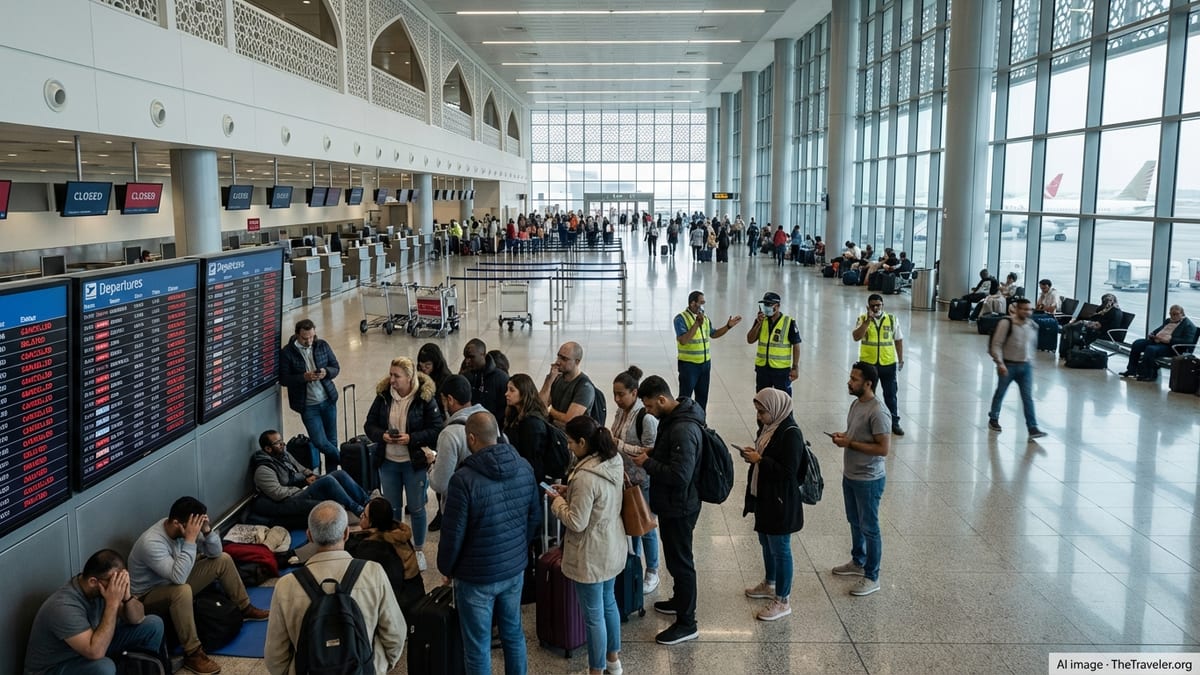
Operations at Mumbai’s Chhatrapati Shivaji Maharaj International Airport were disrupted on Monday as a protest by employees of AI Airport Services Limited (AIASL) led to delays for multiple Air India and Air India Express flights, leaving passengers facing extended waits on the ground and in aircraft.
Get the latest news straight to your inbox!
Wage Dispute Sparks Fresh Disruption at Key Indian Hub
According to published coverage, the demonstration was staged by a section of AIASL employees seeking a wage hike and improved service conditions. The action took place at Mumbai’s primary international terminal, where AIASL is a major ground handling provider for the Air India group.
Reports indicate that employees participated in what was described as a silent march within the airport precincts, impacting ground operations for departing and arriving flights. Check-in, baggage handling and aircraft turnaround schedules were affected as staffing levels temporarily tightened during the protest window.
Air India publicly acknowledged that an “industrial action” involving a third-party ground-handling agency at Mumbai airport was affecting its operations. Publicly available information shows the carrier deployed additional airport teams and coordination efforts to stabilize schedules and limit knock-on disruptions during the busy weekday period.
Coverage of the incident describes the protest as short-lived, with workers returning to duty after receiving an assurance from AIASL management that their demands would be formally reviewed. Even so, the brief stoppage was enough to trigger a wave of delays across one of India’s most important aviation hubs.
Delays Hit Air India and Air India Express Passengers
Published reports from Indian news outlets describe several Air India and Air India Express flights experiencing delays on Monday as a direct result of the AIASL protest. While exact numbers varied across early accounts, coverage consistently pointed to a significant disruption window, particularly around midday operations.
On the domestic side, one Air India service into Mumbai was reported to have been held on the ground after landing, with passengers required to remain seated on board while ground staff availability remained constrained. Accounts from the scene described waits of more than half an hour as the aircraft awaited the necessary personnel and equipment for standard post-arrival procedures.
International and connecting passengers were also affected as schedule adjustments cascaded through the network. With AIASL providing handling for Air India, Air India Express and numerous foreign airlines at Mumbai, any slowdown in ramp activity, baggage transfer and aircraft dispatch quickly translated into extended turnaround times.
Operational updates issued by the airline group emphasized efforts to re-accommodate affected travelers, adjust crew and aircraft rotations, and reduce the risk of wider knock-on delays into the evening. However, passengers with tight onward connections or time-sensitive travel plans still faced considerable uncertainty throughout the day.
AIASL’s Central Role in Mumbai Ground Operations
AI Airport Services Limited, formerly known as Air India Air Transport Services, is a government-owned ground handling company with a substantial national footprint. Publicly available corporate and government records indicate that AIASL serves around 80 airlines at more than 80 airports across India, including major hubs such as Mumbai.
In Mumbai, AIASL is responsible for a wide range of activities that are critical to on-time performance. These include passenger check-in and boarding procedures, baggage loading and unloading, ramp handling, aircraft pushback, as well as cabin cleaning and related turnaround services. Any coordinated slowdown or protest by such a workforce can rapidly ripple through an airport’s tightly sequenced flight schedule.
Recent regulatory and industry documents show that AIASL manages hundreds of flights per day nationwide, with a large proportion of both domestic and international movements passing through its systems. At Mumbai, where Air India and Air India Express maintain significant operations, this dependence becomes even more pronounced during peak travel periods and banked waves of arrivals and departures.
The latest protest follows heightened scrutiny of ground handling standards at Mumbai. In April, the private airport operator reportedly levied a financial penalty on AIASL in connection with an aircraft damage incident, highlighting the complex relationship between airlines, service providers and airport authorities as traffic volumes continue to rise.
Growing Spotlight on Reliability Across Indian Aviation
The AIASL incident at Mumbai adds to a series of recent disruptions that have placed operational reliability at the center of India’s aviation conversation. In the past year, passengers have reported a mix of weather-related delays, aircraft technical issues and staffing challenges across several carriers serving major Indian hubs.
For travelers using Mumbai as a gateway or transfer point, Monday’s disruption is a reminder of how sensitive modern air travel is to ground handling bottlenecks. Even short-lived industrial actions can lead to extended waiting times at gates, mounting queues at check-in counters, and missed connections when contingency plans are strained.
Industry observers note that the integration of Air India and Air India Express operations, along with ongoing expansion plans, has increased the importance of reliable third-party services. Ground handling contracts, training standards and workforce relations are expected to draw closer attention as airlines and regulators look to support India’s fast-growing passenger numbers while limiting service breakdowns.
For now, publicly available information indicates that AIASL employees at Mumbai have resumed duties and that Air India and Air India Express schedules are gradually normalizing. Travelers, however, are likely to watch closely for further updates, particularly during upcoming peak travel periods when even minor operational issues can quickly magnify across the network.