


More news on this day
Southwest Airlines recorded more than 1,000 delayed flights after a Federal Aviation Administration traffic management action halted many evening departures at one of the carrier’s busiest hubs, triggering rolling disruptions across its nationwide network.
Get the latest news straight to your inbox!
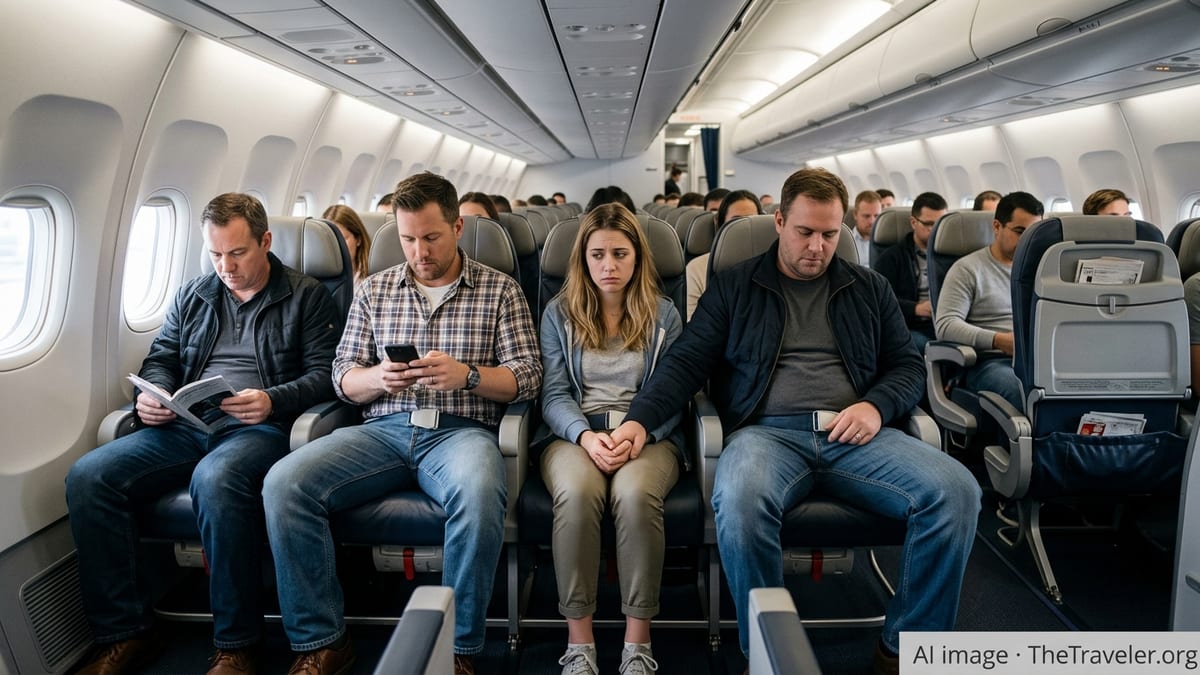
Ground Stop at Major Hub Triggers Systemwide Slowdown
Publicly available flight-tracking data indicates that Southwest Airlines was the only U.S. carrier to cross the 1,000-delay threshold on the day a Federal Aviation Administration directive interrupted evening departures at one of its primary hubs. The ground stop, issued as a traffic management measure, forced aircraft to remain on the ground at origin airports instead of proceeding into already constrained airspace.
The FAA routinely uses ground stops and ground delay programs to manage congestion when weather, equipment outages, or staffing issues limit the number of flights that can safely operate at a given time. In this instance, evening operations at the Southwest hub were sharply curtailed, creating a bottleneck that quickly rippled into later departures and arrivals around the country.
Because Southwest operates a point-to-point network built around major focus cities rather than a traditional hub-and-spoke model, disruptions at a single heavily used airport can cascade across multiple routes. Aircraft and crews that were scheduled to continue on to other flights remained out of position, contributing to mounting delays that stretched late into the night.
By comparison, other large U.S. carriers reported elevated delays but did not reach the same four-digit totals, according to aggregated delay statistics from aviation data services and airport status boards. The gap underscored how network design, schedule density and crew positioning can shape how each airline weathers the same underlying airspace constraint.
Weather, Equipment Issues and Airspace Constraints Converge
Reports from aviation outlets and FAA status pages show that the interruption to evening traffic coincided with a combination of challenges in the regional airspace, including adverse weather and technical limitations at key facilities. In recent months, similar incidents have seen thunderstorms, low visibility and equipment malfunctions at air traffic control centers trigger temporary halts to arrivals and departures at major airports.
Ground stops can be declared for a single airport, a cluster of airports in a region, or flights feeding those airports from specific origins. When that action targets a major base for a single carrier, that airline’s operation tends to be disproportionately affected. On this occasion, the Southwest hub subject to the evening halt handled a concentrated mix of departures and arrivals for the carrier, magnifying the operational impact compared with airlines that distribute flying across multiple primary hubs.
FAA advisories describe these pauses as safety-driven measures that are lifted once traffic can be managed at a sustainable rate. Even when the formal restriction is withdrawn, however, airlines can face hours of residual disruption as aircraft queues are cleared, gates are reassigned and crews are re-sequenced. For Southwest, which schedules frequent short-haul flights that depend on tight turn times, any prolonged constraint at a central node can produce outsized knock-on effects.
In the broader national system, the same period saw scattered delays at other large airports, but their impact on individual carriers was more evenly spread. The situation highlighted the ongoing fragility of the U.S. air travel network during peak travel periods when weather and infrastructure challenges converge.
Why Southwest’s Network Feels Disruptions So Intensely
Southwest’s rolling-hub, point-to-point model has long been one of its competitive strengths, allowing the airline to offer frequent, nonstop service among secondary and mid-sized markets that might see fewer options under a traditional hub-and-spoke system. Instead of funneling the majority of traffic through a small set of mega-hubs, the airline relies on a network of large focus cities with high daily departure counts.
That structure can also amplify the consequences when operations at one of those key cities are constrained. Aircraft often operate multiple legs in a single day, touching several cities in sequence. If a plane is held on the ground by an FAA stop at the hub, every subsequent leg is at risk of delay or cancellation. Crews may time out under federal duty regulations, forcing last-minute reassignments or substitutions that further complicate recovery.
Industry analyses of past disruption events have repeatedly shown that heavily banked schedules and high aircraft utilization make rapid recovery more challenging when irregular operations strike. For Southwest, the evening timing of the FAA action meant there was limited slack remaining in the daily schedule to re-accommodate customers, re-time flights or reposition aircraft overnight.
The result was a sharp spike in delays that stood out in national statistics. While other major carriers saw hundreds of late departures, data from flight-tracking platforms indicates that Southwest’s tally surpassed 1,000 delayed flights, confirming its status as the most affected airline during the episode.
Passenger Experience: Long Waits and Tight Connections
For travelers, the operational picture translated into crowded gate areas, rolling departure times and missed connections, particularly for those relying on evening flights to complete same-day itineraries. Social media posts and traveler accounts described departure boards at the affected hub showing long columns of delayed Southwest flights as the FAA restriction took effect and the airline worked to re-sequence departures.
Southwest’s reliance on short- and medium-haul flights means a high proportion of passengers are connecting through its largest bases, even if the airline does not label them as traditional hubs. When an evening bank of departures is disrupted, connecting customers can find their onward options limited, with many forced into next-day rebooking as remaining flights fill up.
Publicly available information from consumer advocacy organizations notes that, under existing federal rules, U.S. airlines are not required to provide compensation for delays caused by air traffic control decisions or most weather-related events. In practice, carriers often offer rebooking assistance and some meal or hotel support on a case-by-case basis, but policies vary widely and are typically outlined in each airline’s contract of carriage.
Travelers affected by the latest Southwest disruption reported spending extended periods in customer service lines or on hold as the airline adjusted schedules and sought to open new routing options around the grounded hub. Those efforts gradually reduced the backlog, but some late-night and early-morning flights remained off schedule while aircraft and crew positions were reset.
What the Disruption Signals for the Summer Travel Season
The scale of Southwest’s delay total on a single day has renewed questions about how both airlines and federal regulators will manage the upcoming peak travel season. Forecasts from government and industry groups point to record passenger volumes this summer, placing additional pressure on an air traffic system that has already faced weather volatility, staffing challenges and aging infrastructure.
Recent FAA initiatives, including targeted ground delay programs and mandated schedule reductions at the busiest airports, are intended to reduce congestion and improve predictability. However, the Southwest disruption illustrates how a single high-impact action at a major carrier base can still lead to systemwide knock-on effects, particularly when implemented during peak evening periods.
For travelers, the episode serves as a reminder to build additional buffer time into evening itineraries that rely on tight connections or critical arrival times. Travel advisers often recommend avoiding the last flight of the day where possible and monitoring flight status closely through airline apps, which tend to update more quickly than general airport boards.
Airline performance metrics from federal transportation reports indicate that delays remain a persistent feature of U.S. air travel, even as carriers refine schedules and invest in new technology. As Southwest works through the aftermath of the FAA’s evening halt at its major hub, analysts suggest that both the airline and regulators will face continued scrutiny over how they prepare for and respond to inevitable bouts of airspace disruption during the busiest months ahead.