


More news on this day
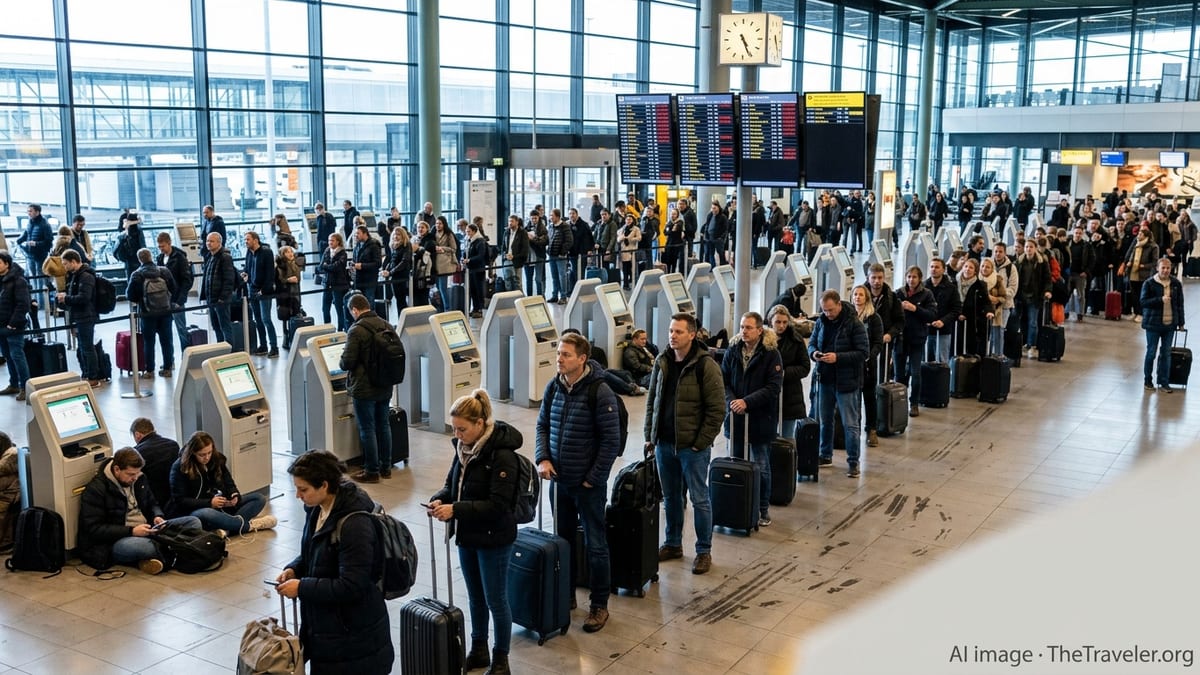
Hundreds of air travelers were left stranded at Amsterdam’s Schiphol Airport on Friday after a fresh wave of delays and cancellations disrupted one of Europe’s busiest hubs at the height of the June travel season.
Get the latest news straight to your inbox!
Wave of Delays and Cancellations Hits Key European Hub
Publicly available flight-tracking data for Friday, June 26, indicates that Schiphol recorded hundreds of disrupted services, with reports pointing to more than 350 delayed flights and several dozen cancellations within a single operating day. The disruption affected a mix of domestic, European, and long haul services, snarling arrivals and departures across peak morning and afternoon banks.
Published coverage from aviation and travel outlets describes passengers facing hours-long waits in departure halls, repeatedly revised departure times, and missed onward connections as late-running aircraft threw off carefully timed schedules. Some flights eventually departed with substantial delays, while others were removed from the schedule entirely, forcing travelers to seek hotel rooms, rebook itineraries, or reroute via other European gateways.
The incident adds to a series of recent operational disruptions at Amsterdam Schiphol during June, which have ranged from moderate timetable interruptions to full-blown gridlock triggered by weather and capacity constraints elsewhere in the European network. The latest problems further highlight the vulnerability of tightly wound hub operations when multiple small delays accumulate across a single day.
Major Airlines and Global Routes Affected
According to publicly accessible disruption tallies, the impact at Schiphol extended across a broad mix of airlines and destinations. Network carrier KLM, which uses Schiphol as its primary hub, was among the most affected, alongside major partners and competitors including Delta Air Lines, easyJet, British Airways, Lufthansa, Emirates and several other European and long haul operators.
Flights serving key cities such as London, Paris, Frankfurt, New York, Dubai, Barcelona, Rome and Singapore were reported among the delayed or cancelled services. For passengers, this meant that even those whose individual flights eventually operated often faced missed onward connections, unplanned overnight stays or the need to accept reroutings through alternative hubs such as Paris Charles de Gaulle, Frankfurt, or London Heathrow.
Operational data from earlier in June shows that Schiphol has already faced several days of significant irregular operations this month, including earlier events in which more than 160 flights were disrupted in a single day. Aviation analysts note that repeated pressure on the same hub can leave airlines with fewer spare aircraft and crew, making it harder to absorb additional shocks later in the month.
Ground Access and National Transport Strains Add Pressure
The airside difficulties have coincided with strains across the broader Dutch transport system. Earlier in the week, a national public transport strike on June 24 sharply reduced train frequencies to and from Schiphol, with operators and airport notices warning that only a limited number of services would run between Amsterdam Centraal, Schiphol and Hoofddorp for several hours.
Local media reports and official advisories indicated that regional rail and bus networks were also affected, complicating journeys for both departing passengers and those trying to reach hotels or alternative airports after missed flights. For stranded travelers already dealing with cancellations, reduced rail options meant longer queues for taxis, higher demand for rental cars and additional pressure on nearby road corridors.
At the same time, scheduled maintenance and roadworks around key highways near Amsterdam have narrowed options for motorists, with Dutch news outlets warning of congestion on routes connecting the city with Schiphol and other parts of the Randstad. Combined with the airside disruption, the broader transport picture has made it more difficult for passengers to recover from missed flights or to reposition to other gateways in the region.
Knock-on Effects Across Europe’s Summer Travel Network
The situation at Schiphol is part of a wider pattern of June disruption across European aviation. Recent weeks have seen episodes of severe weather, capacity restrictions and staffing bottlenecks affecting multiple hubs, including London, Brussels and Copenhagen. Industry trackers have counted thousands of delayed and cancelled flights across the continent this month, hitting both full-service and low-cost carriers.
Travel-focused data providers note that when a major hub such as Schiphol experiences large numbers of late departures, the consequences ripple far beyond the Netherlands. Aircraft scheduled to return to Amsterdam or continue onward to another city arrive late into their next duty, pushing delays into subsequent rotations and increasing the likelihood that crew will time out under duty regulations. A single day with several hundred delayed flights at one airport can therefore translate into problems for passengers thousands of kilometers away.
June is typically one of the busiest months for European leisure travel, with demand driven by school holidays and early summer tourism. Analysts suggest that the combination of strong demand, tight capacity, and lingering operational fragility after years of pandemic-era downsizing has left airlines and airports with less margin to cope when disruptions arise, whether from storms, strikes or technical issues.
What Travelers Can Expect in the Coming Days
While the immediate peak of Friday’s disruption at Schiphol appears centered on a single day of intense delays and cancellations, aviation observers warn that residual knock-on effects are likely to persist into the weekend. Late-arriving aircraft and displaced crews can leave gaps in schedules, leading to further short-notice timetable changes even after the original cause has passed.
Consumer-rights organizations and air passenger advocacy groups are already advising affected travelers to document their disruptions, retain receipts for additional expenses, and check eligibility for compensation or reimbursement under European air passenger protection rules. These frameworks can, under certain conditions, require airlines to provide care, rebooking, or financial compensation when flights are heavily delayed or cancelled.
For travelers with upcoming itineraries through Amsterdam, publicly available guidance from airports and airlines continues to emphasize monitoring flight status closely on the day of travel, allowing extra time for check-in and security, and being prepared for potential last-minute gate changes or re-routings. With early summer demand continuing to build, Europe’s aviation network is expected to remain sensitive to further operational shocks in the weeks ahead.