


More news on this day
An ambulance call handler who helped coordinate the emergency response to the Huntingdon train stabbing has been formally honoured for exceptional performance under pressure, bringing renewed attention to the often unseen professionals who manage major incidents from control rooms.
Get the latest news straight to your inbox!
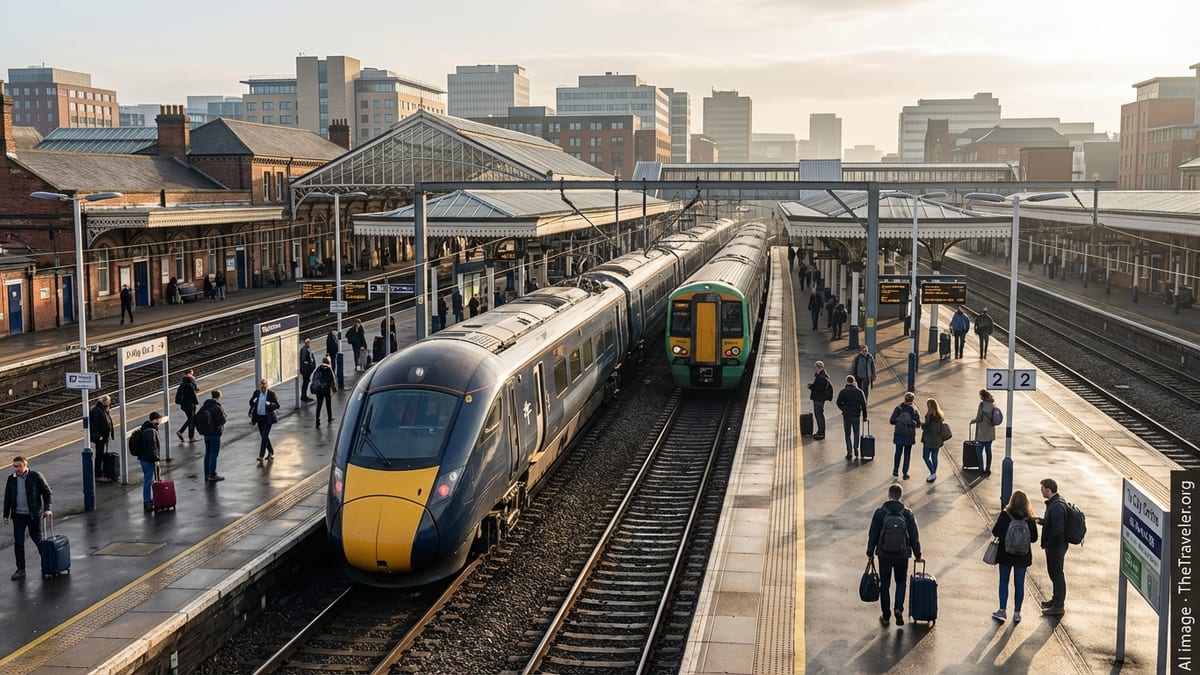
Award shines spotlight on unseen frontline of rail emergencies
The recognition follows the mass stabbing on a Doncaster to London service that made an emergency stop at Huntingdon station in Cambridgeshire, where multiple passengers sustained serious injuries. Publicly available information indicates that the first 999 calls reported several people stabbed on board and triggered a rapid, large-scale deployment of emergency resources.
The award presented to the ambulance call handler acknowledges the decisions taken in the opening minutes, when incomplete information and distressing reports were coming in from the moving train. According to coverage of the incident and subsequent commendation ceremonies, the handler prioritised information from witnesses, coordinated with other agencies and ensured that advanced medical resources were sent to Huntingdon as the train was diverted there.
Control-room staff rarely feature in public accounts of rail incidents, yet their actions can shape how quickly patients receive treatment. The Huntingdon case has become a prominent example of how call handlers translate chaotic, real-time accounts from passengers and rail staff into clear tasking for ambulance crews, air ambulances and specialist teams.
The commendation also reflects broader efforts within UK emergency services to recognise the psychological and operational load on staff who never leave the control room but are exposed to some of the most harrowing details of a crisis through callers’ voices.
How the Huntingdon train incident unfolded
Reports from the time of the attack describe a crowded intercity service travelling south when passengers raised the alarm about a man with a knife moving through the carriages. Witness accounts published in British and international media indicate that people hammered on the driver’s cab door and used emergency communication systems to alert rail staff and trigger calls to the ambulance service and police.
Rail operations data and parliamentary records show that the train was diverted to make an unscheduled stop at Huntingdon, allowing emergency responders to board within minutes of the first alarm. Ten people were taken to hospital, most with life-threatening or serious injuries, in what investigators have described as one of the most severe mass casualty incidents on the UK rail network in recent years.
Ambulance dispatch logs referenced in news coverage indicate that the incident was treated as a major emergency, with multiple land ambulances, specialist critical care teams and air ambulances sent to the station. The control-room team was responsible for maintaining contact with police and rail operators, updating clinical crews on patient numbers and injuries, and planning how to distribute casualties to hospitals across the region.
The call handler now honoured for their work is reported to have remained on duty for an extended period as the response unfolded, managing successive waves of information and adapting deployment plans as more details about injuries, passenger numbers and train movements became clear.
Recognition for call handlers after high-profile incidents
Major incidents on the rail network increasingly lead to formal recognition not only for frontline paramedics and police officers but also for the staff who answer emergency calls. In Cambridgeshire and across the wider East of England region, recent award ceremonies have highlighted the role of control-room professionals in critical cases ranging from knife attacks to complex multi-vehicle collisions.
According to publicly available accounts of these ceremonies, commendations often cite clear communication with distressed callers, the ability to identify when an event has escalated into a major incident, and coordination with multiple agencies under intense time pressure. The Huntingdon train stabbing has been repeatedly referenced in this context as an example of a call that required rapid escalation and cross-border cooperation.
Clinical leaders within ambulance services have also used such awards to underline how call handlers support on-scene crews, providing real-time updates about rail operations, platform access and hospital capacity. In rail emergencies, where access routes can be congested and platforms crowded, precise instructions from the control room about rendezvous points and safe approaches can save valuable minutes.
The Huntingdon commendation has therefore been framed by commentators as part of a wider shift toward recognising emergency call handling as a specialist discipline in its own right, rather than a purely administrative function.
Implications for passenger safety and rail operations
The recognition of the call handler involved in the Huntingdon response comes as rail operators and unions continue to debate how best to manage security and emergency procedures on busy intercity routes. Coverage of the case has been widely cited in discussions about staffing levels on trains, communication systems between passengers and crew, and the interface between rail control centres and emergency service dispatch rooms.
Analysts note that the Huntingdon incident demonstrated the importance of passengers being able to rapidly contact both train staff and the emergency services. Reports suggest that information passed via onboard communications and mobile phone calls to 999 allowed the call handler to build a clearer picture of the unfolding attack, including carriage location, number of casualties and the decision to divert to Huntingdon station.
For travellers, the case underlines the value of knowing how to raise the alarm on board a train, whether through in-carriage help points, contacting the rail operator or dialling emergency services directly. It also highlights how detailed information about location, carriage number and visible injuries can influence how call handlers prioritise and dispatch resources.
Industry observers say the award may encourage further joint training between rail staff and ambulance control rooms, including scenario exercises based on mass casualty events and station evacuations. Such training is designed to streamline how information from trains is shared with emergency services in the critical first minutes of a crisis.
Focus on mental health support for emergency call handlers
The commendation has also drawn attention to the emotional impact on call handlers who manage traumatic events such as the Huntingdon stabbing. Publicly available information from ambulance trusts across the UK highlights growing concern about stress, burnout and post-incident trauma among control-room staff who regularly handle life-or-death situations over the phone.
Following high-profile cases, many services now emphasise debriefs, peer support and access to professional counselling for call handlers. The Huntingdon incident, involving multiple critically injured passengers and highly distressed callers, is frequently cited in internal training and welfare programmes as a scenario that can be particularly challenging for staff who never see the scene but hear it unfold in real time.
Recognition at award ceremonies is viewed by some within the sector as a practical way to validate the work of control-room teams and ensure they are not overlooked when rail emergencies enter the public consciousness. While the focus after such incidents often falls on the visible presence of ambulances, police vehicles and helicopters at stations, the Huntingdon award has served as a reminder that the first link in the chain of survival is often a calm voice on the end of a phone line.
For the travelling public, the story of the Huntingdon call handler adds a human dimension to the emergency number printed in train carriages. It illustrates how crucial those initial conversations can be in shaping the outcome of a major rail incident and why investment in skilled, well-supported call handlers remains central to passenger safety.