

More news on this day
India’s air links to London Heathrow are entering a new phase of expansion in 2026, with fresh capacity from full service and low cost carriers sharpening focus on which Indian city could next secure a coveted nonstop to the United Kingdom’s busiest airport.
Get the latest news straight to your inbox!
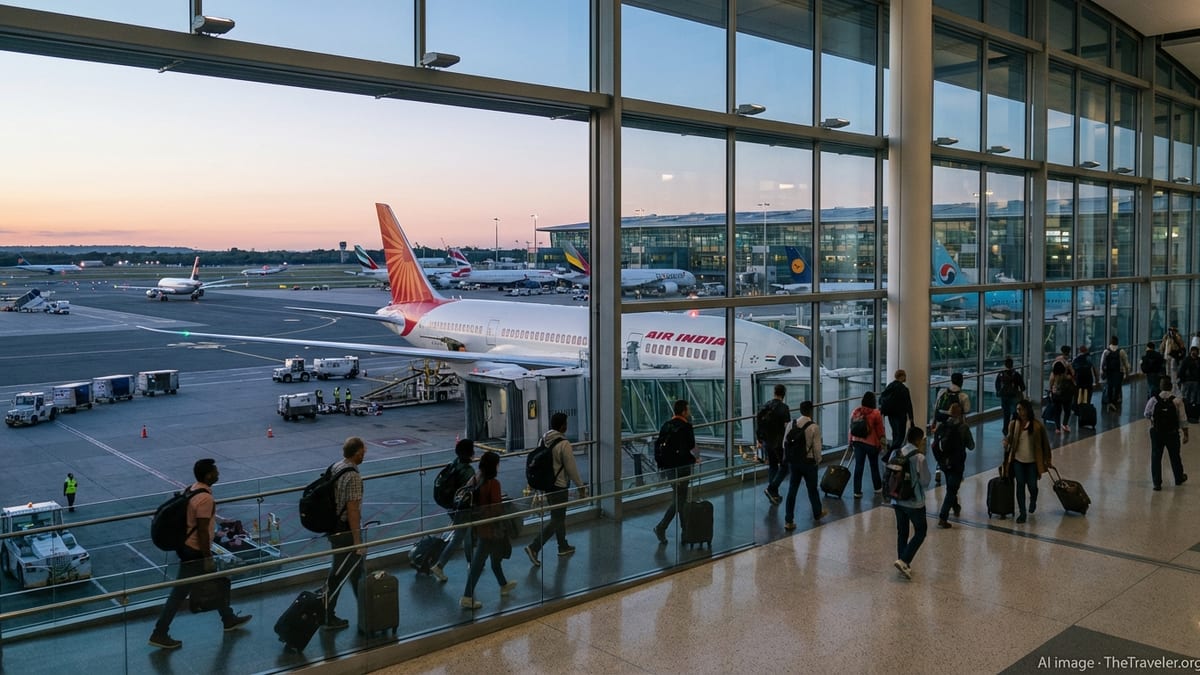
Record Seat Growth on the India–Heathrow Corridor
Publicly available schedule data for early 2026 indicates that flights between India and London Heathrow have grown by around 15 percent year on year, with February alone scheduled to see about 160 weekly departures from Indian cities. Aviation analysts point to a combination of business travel recovery, strong demand from students, and a resilient visiting friends and relatives segment as key drivers.
British Airways, Virgin Atlantic, Air India and Vistara remain the mainstays of the market, joined in 2026 by IndiGo’s first long haul services into Heathrow from Delhi. This mix of legacy and newer carriers has created a more competitive landscape on fares and timings, while also broadening the range of one stop connections into Europe and North America.
For Heathrow itself, India has consolidated its position as one of the airport’s largest long haul country markets by capacity. Industry coverage describes India as central to Heathrow’s growth strategy, particularly as transatlantic growth slows and slot constrained European hubs look increasingly to Asia for incremental traffic.
The surge in frequencies has pushed more Indian cities into multi daily service territory to Heathrow. Delhi and Mumbai now see several daily departures when all airlines are combined, Bengaluru is gaining additional services, and other metros such as Chennai and Hyderabad continue to build their presence through one stop links and seasonal boosts.
Air India and IndiGo Lead a New Wave of Expansion
Among Indian carriers, Air India has taken a prominent role in the current growth phase. Company schedules and recent announcements show a ramp up to four daily Delhi–Heathrow rotations in the northern winter 2025/26 season, extending into the first quarter of 2026. Reports indicate that these flights are being progressively shifted to new generation widebodies, including Airbus A350 and refitted Boeing 787 aircraft.
The airline is also upgrading its Heathrow presence from Bengaluru and Mumbai, with published plans for daily nonstops from Bengaluru and a mix of next generation and retrofitted aircraft on the Mumbai route. A series of additional flights filed for March 2026 on Delhi–Heathrow and Mumbai–Heathrow underlines the strength of demand, particularly during peak travel periods.
Low cost giant IndiGo is adding further momentum. Travel industry coverage confirms that IndiGo launched Delhi–Heathrow flights in February 2026, initially operating five times weekly. This new service joins the carrier’s existing daily Mumbai–Heathrow operation, bringing its total London flights to a dozen per week and giving price sensitive travellers more options on a route long dominated by full service competitors.
Together, these moves by Air India and IndiGo are reshaping the competitive balance on India–UK routes. Analysts note that Indian carriers have steadily increased their share of seat capacity to the UK, aided by fleet renewal, new bilateral rights and the ability to tap into fast growing secondary cities through their domestic networks.
Ahmedabad: From Gatwick Success to Heathrow Ambition
Ahmedabad has emerged as one of the most closely watched candidates for expanded direct London access. Air India introduced nonstop flights from the city to London Gatwick in 2023, linking Gujarat’s commercial hub with the UK’s South East and catering to a large diaspora community. Those services demonstrated robust demand, with multiple weekly departures operating through 2024.
In mid 2025, local media reported that Air India temporarily transferred its Ahmedabad–London operation from Gatwick to Heathrow for a defined period, reflecting both operational considerations and the strength of premium demand into Heathrow. The switch highlighted the potential of the Ahmedabad market to support a long term presence at the primary London hub, not just at Gatwick.
Air India’s booking channels for 2026 currently focus Ahmedabad’s nonstop connectivity on London Gatwick, but sector observers suggest that any future redistribution of Heathrow slots or aircraft could again bring Ahmedabad–Heathrow under active consideration. The combination of high yielding business traffic, strong visiting friends and relatives flows, and a sizeable student population gives the route a favourable demand profile.
Airport development in western India may further support the case. As Mumbai grapples with congestion while a new Navi Mumbai airport is completed, some analysts see an opportunity for Ahmedabad to capture incremental long haul demand if airlines decide to diversify beyond India’s traditional gateways.
Kolkata’s Long Campaign for a London Comeback
While Ahmedabad already enjoys nonstop services to the London area, Kolkata is still campaigning for the restoration of a direct link. Netaji Subhas Chandra Bose International Airport last saw scheduled nonstop Heathrow services in 2024, with timetable data showing flights ending that year. Since then, passengers from eastern India have relied on one stop connections via Delhi, Mumbai, Bengaluru, the Gulf hubs and Southeast Asia.
Kolkata’s airport is in the midst of a phased upgrade program, including demolition of older domestic infrastructure and capacity enhancements to the existing integrated terminal. Local news reports underline the airport operator’s view that these works will create headroom for additional international services in the second half of the decade, buying time while longer term expansion plans are developed.
Interest in a renewed Kolkata–London nonstop remains strong. Regional coverage in early 2026 quoted senior airline executives as acknowledging that a London service from Kolkata is “on the radar,” although no formal schedule filing has yet appeared in global distribution systems. Airport officials have indicated they intend to approach carriers, including Air India, to pitch the route once terminal works progress.
For airlines, Kolkata offers access to a populous catchment area across eastern India and parts of neighbouring countries, but operational and commercial considerations are complex. Dense airspace, slot constraints at Heathrow, aircraft range performance in hot conditions and the need to maintain high year round load factors all feed into route planning decisions, prolonging the city’s wait for a direct London link.
Is Your City Next in Line for Heathrow?
The rapid acceleration of India–Heathrow capacity in 2026 has sparked speculation about which city might next secure direct access. Beyond Ahmedabad and Kolkata, aviation analysts frequently mention cities such as Pune, Kochi, and Jaipur as longer term contenders, especially once new widebody aircraft and additional bilateral rights become available.
For now, carriers are prioritising consolidation on existing metro routes, where frequency increases can be quickly absorbed by demand and offer better aircraft utilisation. The latest schedule filings from British Airways and Virgin Atlantic for the 2026 summer season show added services to Bengaluru and more intensive deployment on Delhi and Mumbai, reinforcing the dominance of India’s largest gateways.
Yet the strategic logic behind secondary city routes remains compelling. As India’s domestic aviation market grows and surface infrastructure improves, more travellers in Tier 2 and Tier 3 cities are seeking to bypass traditional metros for long haul journeys. Direct flights from cities such as Ahmedabad or a reinstated nonstop from Kolkata to Heathrow would shorten travel times, reduce domestic connections and support regional economic development.
With fleets being renewed, new airports coming on stream and India–UK ties deepening, industry observers expect the 2026 growth spurt to be a staging post rather than a peak. For many Indian cities eyeing that first or restored London Heathrow connection, the question is no longer whether the route makes strategic sense, but when the right combination of aircraft, slots and demand will finally align.