


More news on this day
India has renewed its travel warning for Iran, advising citizens to avoid non-essential visits and urging all nationals currently in the country to promptly register their details with the Indian Embassy in Tehran as regional security tensions continue to evolve.
Get the latest news straight to your inbox!
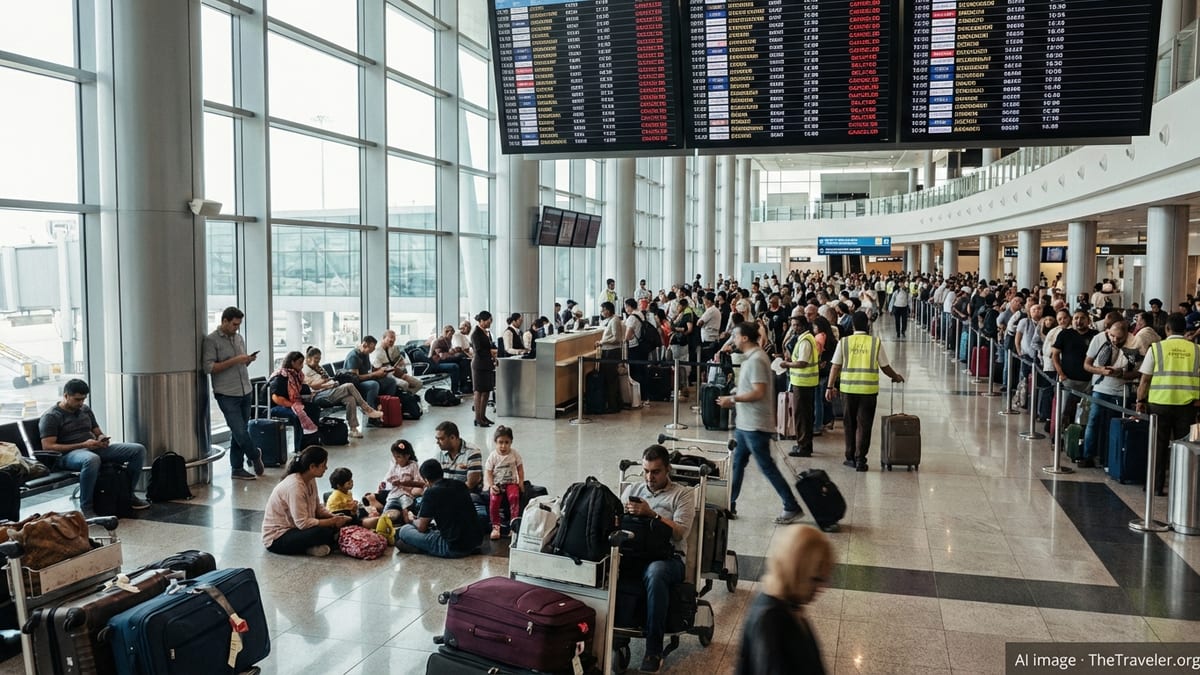
Revised advisory underscores ongoing security concerns
The latest guidance, circulated on June 24, 2026, reiterates that Indian nationals should continue to avoid all non-essential travel to Iran, despite indications of an improved security environment. Publicly available information from official notices and Indian media coverage indicates that the embassy in Tehran has been issuing a series of advisories since early 2026 in response to shifting conditions in the region.
The advisory notes that the mission is closely tracking the prevailing situation in Iran and in the wider West Asia region. While some reports describe recent positive developments, the overall assessment remains cautious, with non-essential travel still discouraged until further notice. The tone reflects an effort to balance acknowledgement of relative stability in parts of the country with the risk of sudden escalations.
The renewed warning follows earlier guidance in April and June urging Indian citizens already in Iran to leave using available commercial routes where feasible. Those who remain are asked to maintain a high degree of vigilance, stay alert to local developments and be prepared to adjust plans quickly if circumstances deteriorate.
Registration drive targets Indians living, working or transiting in Iran
A central feature of the latest advisory is a strong appeal for all Indian nationals in Iran to register with the embassy at the earliest opportunity. Coverage in Indian outlets reports that the mission has repeatedly emphasized registration in recent months, describing it as essential for timely communication and assistance.
The embassy is calling on a broad cross-section of the Indian community in Iran, including students, business travellers, medical tourists, professionals on assignment and pilgrims, to provide up-to-date contact details. Registration is being framed as a critical step to ensure that advisories, alerts and practical guidance can reach individuals quickly in the event of sudden disruptions, including transport interruptions or communications outages.
Public information indicates that the mission has shared emergency contact numbers and dedicated email addresses, and has encouraged Indians to monitor its official website and social media channels for updates. The emphasis on multiple channels reflects concern that regular lines of communication can become strained or unreliable during periods of heightened tension.
From “leave expeditiously” to cautious reopening: a shifting advisory pattern
India’s latest guidance fits into a broader pattern of evolving travel advice linked to developments in and around Iran since the start of the year. Earlier advisories, including those issued in February, March and April, urged Indian nationals to leave Iran “expeditiously” when security risks were assessed to be particularly acute following military actions in the region.
Reports from Indian and international media show that tensions have periodically spiked due to exchanges involving Iran and other regional actors, prompting repeated warnings from foreign missions. In that context, New Delhi’s approach has moved between strong calls for departure and, more recently, a cautious stance that continues to discourage non-essential travel while acknowledging an improved security picture.
The June 24 advisory is described in published coverage as “revised,” indicating a modest recalibration rather than a full return to normal travel conditions. Indian nationals contemplating fresh trips are encouraged to reassess the necessity of their plans, taking into account both the residual security risks and the possibility of rapid changes that could affect flights, visas or access to key infrastructure.
Implications for Indian travellers, students and businesses
The continuing restrictions and warnings have practical implications for a range of Indian travellers and residents in Iran. Students enrolled at Iranian universities may face uncertainty over in-person classes, exams and visa renewals, while being urged to remain prepared for a potential need to depart at short notice. Business visitors and contract workers are similarly being asked to weigh commercial interests against possible disruption to logistics and insurance coverage.
For tour operators and individual travellers, the advisory effectively places most leisure trips on hold. Pilgrimage travel and cultural tourism, which previously drew regular numbers of Indian visitors to Iranian cities, remain constrained by official guidance against non-essential journeys. Travel industry commentary in Indian media suggests that operators are maintaining a watchful stance, keeping itineraries flexible and advising clients to monitor the situation closely.
Companies with longer-term projects in sectors such as energy, infrastructure and healthcare are relying on risk assessments and contingency plans to manage essential staff presence in Iran. According to open reports, some firms have reduced on-the-ground personnel or shifted roles to remote arrangements where possible, in line with the embassy’s call for limited and carefully evaluated travel.
Practical safety steps urged for those who remain in Iran
Alongside the call for registration, the advisory highlights a series of practical safety measures for Indian nationals who remain in Iran. Publicly shared guidance encourages individuals to avoid large gatherings and protest sites, keep identity documents and travel papers readily accessible, and maintain regular contact with family members and employers outside Iran.
The embassy has urged nationals to stay informed through credible local news outlets and official channels, and to be attentive to any changes in curfews, security checkpoints or transport availability. Many advisories recommend that residents keep essential supplies on hand and identify multiple routes to airports or border crossings in case of sudden closures or rerouting.
Travel analysts note that such measures are increasingly standard in conflict-affected or high-risk environments, where the main objective is to reduce exposure to unpredictable incidents while preserving the ability to move quickly if necessary. India’s latest Iran advisory reflects this broader trend, combining a firm warning against non-essential travel with targeted instructions designed to keep those who must remain as informed and prepared as possible.