


More news on this day
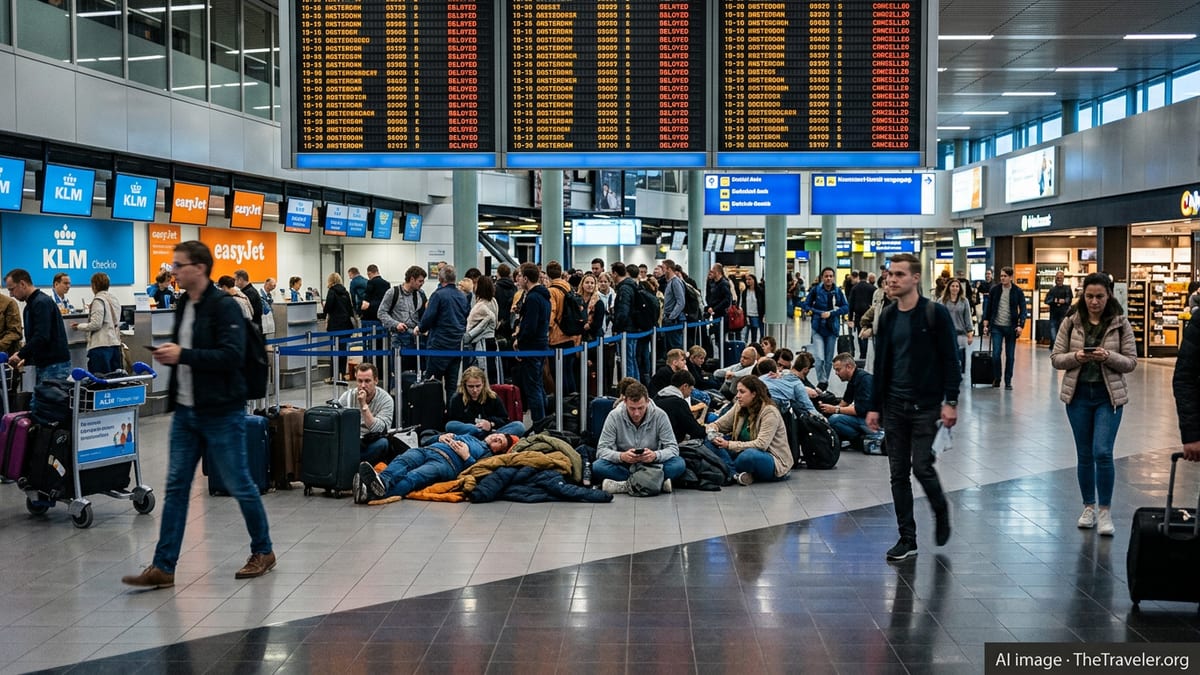
Air travelers across Europe faced another difficult day on June 25, 2026, as tracking data showed 132 flights cancelled and 2,348 delayed across Italy, France, Austria, the United Kingdom, Belgium, Switzerland, Sweden and other countries, disrupting operations for ITA Airways, Air France, Virgin Atlantic, Austrian Airlines and several other carriers at major hubs including London, Rome, Vienna, Paris and Brussels.
Get the latest news straight to your inbox!
Network-Wide Disruptions Across Key European Hubs
According to operational snapshots compiled from aviation tracking platforms and industry reports, the latest wave of disruption was concentrated at major hubs including Paris Charles de Gaulle, Rome Fiumicino, Vienna International, London Heathrow, Brussels Airport, Zurich Airport, Stockholm Arlanda, Amsterdam Schiphol, Madrid Barajas, Barcelona El Prat, Paris Orly, Venice Marco Polo and Pulkovo Airport in Russia. The pattern reflects a broad network effect rather than isolated local issues.
Publicly available data attributed the 132 cancellations and 2,348 delays to a combination of congestion, weather, capacity limits and knock-on effects from earlier operational strains. Air France, Austrian Airlines, KLM, British Airways, easyJet, Ryanair, Vueling, ITA Airways, Transavia France, Iberia, Swiss and several leisure carriers all appeared among the most disrupted operators, mirroring the mix of full-service and low-cost airlines that dominate intra-European traffic.
Industry coverage indicates that Swiss and affiliated operators, including Helvetic and Edelweiss, featured prominently in the disruption statistics, alongside central and northern European carriers such as Air Baltic and Eurowings. The breadth of affected airlines highlights how quickly issues in one part of the network can spill into neighboring airspaces, especially during the busy summer holiday period.
For passengers, the result was extended waits at check-in and security, rolling departure pushes on departure boards and a sharp rise in late arrivals across multiple time zones. With many services operating nearly full, rebooking options on the same day were limited on popular routes linking London, Paris, Rome and other Mediterranean gateways.
Summer Pressure Builds on an Already Strained System
The latest disruption comes against a backdrop of mounting pressure on Europe’s aviation system as summer 2026 traffic climbs above last year’s levels. Recent overviews from regional air navigation authorities show daily flight volumes running higher than in 2025, with total air traffic flow management delays per flight trending upward as storms, congestion and staffing constraints intersect during peak hours.
In recent weeks, France, Spain, Italy, Belgium and Germany have repeatedly appeared among the worst-affected countries for en-route and airport delays. Capacity constraints at key area control centers, weather systems moving across western and central Europe, and continuing transition projects in air traffic management technology have all been cited in published analyses as contributing factors to a volatile operating environment.
Separate travel-industry monitoring has also documented earlier spikes this month, including days where more than 2,000 flights across Europe were disrupted by a combination of storms, congested airspace and infrastructure bottlenecks at large hubs such as Paris, Madrid, Rome, Vienna and Barcelona. Those events foreshadowed the latest figures and underscore that the current disruption is part of a broader pattern rather than an isolated anomaly.
At the same time, a summer strike wave in parts of southern Europe has forced some airlines to trim schedules and adjust crew deployments, particularly at bases in Spain, Italy, France and Belgium. While the June 25 figures are linked primarily to operational and weather factors, the wider labor backdrop has reduced the margin for recovery when problems arise.
Airlines Balance Cancellations and Prolonged Delays
Operational data and expert commentary suggest that European airlines are increasingly trying to limit outright cancellations on busy days by accepting higher levels of delay instead. By operating services late, carriers can keep aircraft and crews broadly in position, even if the resulting knock-on effects are felt for many hours across their networks.
Analysts note that this strategy may also intersect with Europe’s passenger-rights framework, which exposes airlines to compensation obligations when flights are cancelled at short notice for reasons considered within their control. Where safety allows, extending ground times, consolidating loads and adjusting rotations can be less disruptive to long-term network integrity than mass cancellations, particularly when aircraft are fully booked.
The June 25 pattern, with far more delays than cancellations, appears consistent with this approach. While 132 cancellations represent a significant number of lost flights in a single day, the 2,348 delays indicate that most scheduled services still operated, albeit often hours behind timetable. For passengers, however, long waits, missed connections and late-night arrivals can be just as disruptive as an outright cancellation.
On days of widespread disruption, airlines typically prioritize long-haul and strategically important routes while trimming or rescheduling some short-haul frequencies. Publicly available timetables and tracking data for the current episode show knock-on adjustments affecting both transatlantic links and dense intra-European city pairs connecting to leisure destinations in the Mediterranean and northern Europe.
Passenger Rights Under EU261 and UK261
The latest disruption once again places a spotlight on European passenger-protection rules. Under EU Regulation 261/2004 and the parallel UK261 regime, travelers whose flights are cancelled or severely delayed on qualifying routes may be entitled to assistance and, in some cases, financial compensation, depending on the cause and the amount of notice provided.
Consumer-rights guidance explains that airlines are generally required to offer a choice between rerouting at the earliest opportunity or a refund when a flight is cancelled. During long delays, passengers may also be entitled to meals, refreshments and communication assistance, and if an overnight stay becomes necessary, accommodation and transport between the airport and hotel.
Recent policy discussions in Brussels have confirmed that EU countries intend to retain the three-hour delay threshold for compensation in forthcoming updates to passenger-rights legislation. For travelers, this means the core framework remains familiar even as airlines face higher costs from fuel, staffing and compliance with new border and security systems at European airports.
Legal specialists caution that eligibility for cash compensation still depends heavily on the specific reason for a disruption. Weather and certain air-traffic control restrictions are often categorized as extraordinary circumstances, while staffing shortages, technical issues within an airline’s control or certain forms of industrial action may strengthen a passenger’s claim. Given the mixed causes behind the June 25 disruption, many travelers are expected to seek case-by-case assessments.
What Travelers Can Do If Their Flight Is Affected
Travel-advice services recommend that passengers due to travel through Europe in the coming days monitor their flights closely and prepare for potential changes. Checking airline apps and official airport departure boards before leaving for the airport can provide early warning of delays or cancellations and may present self-service rebooking options.
Experts also suggest building extra buffer time into itineraries that rely on tight connections, particularly when transiting major hubs such as London Heathrow, Paris Charles de Gaulle, Amsterdam Schiphol, Rome Fiumicino or Vienna International. Where possible, selecting longer layovers or earlier feeder flights can reduce the risk of missed onward journeys during periods of instability.
For those who experience disruption, retaining boarding passes, booking confirmations and any written notices from airlines can help support later claims under EU261 or UK261. Travel-insurance providers may also require documentation to process reimbursement for accommodation, meals or alternative transport arranged independently by passengers stranded for extended periods.
With high summer demand coinciding with operational and regulatory pressures, industry observers expect further days of elevated delays and targeted cancellations across Europe in the weeks ahead. Travelers heading to or from London, Rome, Vienna, Paris, Brussels and other key gateways are being advised to remain flexible, stay informed and factor the possibility of disruption into their plans.