


More news on this day
Rail passengers across Sussex and Surrey are being urged to undertake only essential journeys after an intense summer heatwave triggered widespread disruption, reduced timetables and mounting delays on key commuter routes.
Get the latest news straight to your inbox!
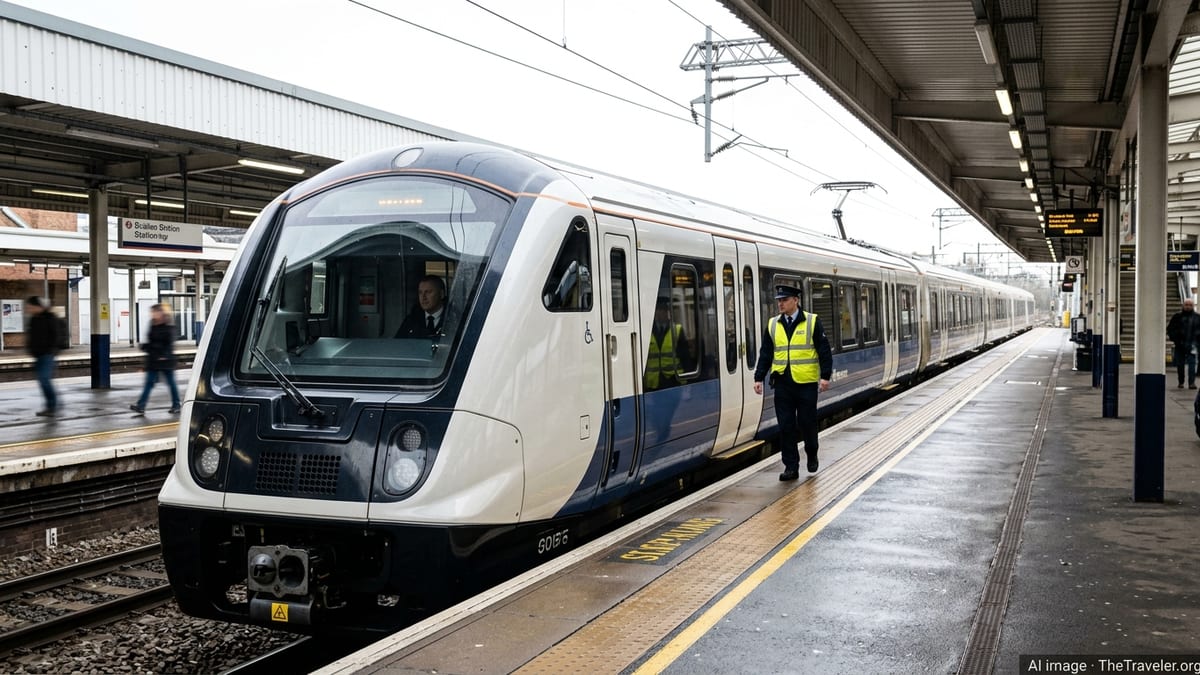
Extreme heat pushes rail network to its limits
Publicly available data from the Met Office and media coverage indicate that temperatures in parts of West Sussex and Surrey have climbed above 35 degrees Celsius in recent days, placing exceptional strain on rail infrastructure. Locations including Wiggonholt in West Sussex and Wisley in Surrey recorded some of the highest provisional readings in the country, with forecasters warning that the heatwave is both intense and unusually early in the summer.
Network-wide guidance reported by national broadcasters shows that rail infrastructure managers and train operators are imposing blanket speed restrictions on many routes in southern England to reduce the risk of heat-related damage. Slower running means fewer trains are able to operate, while journey times have lengthened significantly on some of the busiest lines into London.
The combination of high temperatures, slower trains and limited capacity has resulted in knock-on delays and short-notice cancellations across multiple operators. Services through key hubs in Sussex and Surrey, including routes toward London Victoria, London Bridge and Waterloo, have been among those reporting disruption.
According to published travel updates, the heat has also affected road traffic and other public transport services in the South East, compounding difficulties for commuters seeking alternatives to rail.
‘Essential travel only’ message for Sussex and Surrey
Travel advice compiled from operator statements and rail industry bulletins shows that passengers in Sussex and Surrey are now being strongly advised to avoid all but essential journeys. Network Rail has issued broad guidance across affected regions that people should travel only if absolutely necessary on the hottest days of the week, reflecting the expectation of further delays and disruption.
Regional operators serving the two counties have echoed this message. Information published by South Western Railway and other companies indicates that timetables have been amended, with some services removed in advance to create a more resilient, though reduced, schedule. Passengers who do need to travel are being told to allow extra time, check their journey before setting out and be prepared for last-minute changes.
Local coverage from Surrey and Sussex outlets highlights specific pinch points, including commuter stations such as Epsom and routes along the Brighton Main Line, where previous disruption and emergency works have already limited operating flexibility. With the heatwave expected to persist in the short term, rail planners are prioritising essential flows and seeking to prevent severe overcrowding on the trains that do run.
Travel notices also advise customers to consider whether journeys can be postponed or re-routed, especially during the hottest periods of the day, when rails and overhead equipment are under the greatest strain.
How high temperatures disrupt trains
Explainers published by the rail industry describe how extreme heat can deform steel rails, causing them to expand and potentially buckle if temperatures rise too quickly. To limit that risk, engineers require trains to run at lower speeds, reducing the forces exerted on the track. These safety measures are particularly important on busy main lines in Sussex and Surrey, where frequent services normally operate at relatively high speeds.
In addition to track issues, overhead electrification and on-board systems are more prone to failure during prolonged heat. Hot weather can lead to sagging power lines, signalling problems and faults in air conditioning equipment. When combined with very crowded trains, any failure can quickly escalate into a significant incident requiring services to be held or diverted.
Research commissioned by the rail industry on passenger communications during extreme weather has found that people generally respond more clearly to guidance framed as “essential travel only” rather than broader appeals to avoid non-essential journeys. This preference has helped shape the language now being used across the network during the current heatwave, including on routes running through Sussex and Surrey.
The long-standing design of much of the British rail network, with lines dating back more than a century, also limits how quickly large-scale resilience upgrades can be delivered. Reports assessing previous heatwaves note that, while ongoing renewals and maintenance can mitigate some risks, it is difficult to fully eliminate vulnerabilities during episodes of extreme temperature.
Timetable changes and passenger advice
According to operator service updates and local authority notices, a series of temporary timetable changes has been introduced across the South East to cope with the heatwave. Some peak services in and out of London have been removed or combined, while stopping patterns have been altered on certain suburban routes serving Surrey and Sussex. The intention is to keep a smaller timetable running more reliably rather than maintaining a full schedule that is vulnerable to widespread delays.
Passengers are being encouraged to travel earlier in the day where possible, particularly before midday, when track and train temperatures tend to be lower. Several operators have relaxed ticket restrictions so that customers can switch to alternative services without penalty if they need to avoid the hottest periods or if their original train is cancelled.
Guidance circulated through station announcements and online channels recommends that those who must travel carry water, avoid standing for long periods on exposed platforms and seek assistance if they begin to feel unwell. In the event of a breakdown or extended delay, people are being advised to follow on-board instructions and remain on the train unless directed otherwise, as walking along the track is both unsafe and likely to prolong disruption.
Consumer advice groups are also reminding passengers of their rights when services are significantly delayed or cancelled, noting that compensation policies such as Delay Repay continue to apply even when disruption is caused by extreme weather.
Uncertain outlook as heatwave continues
Meteorological forecasts reported by national and regional media indicate that the heatwave affecting Sussex, Surrey and much of southern England may persist for several days, with some moderation possible toward the end of the week. The Met Office has issued heat warnings for large parts of the country, and health agencies are maintaining red and amber alerts for the South East.
Rail planners are therefore preparing for an extended period of altered timetables and heat-related precautions. Industry commentary suggests that speed restrictions are likely to remain in place whenever track temperatures climb to critical thresholds, meaning that services could continue to operate more slowly and less frequently than usual even if air temperatures begin to ease slightly.
For leisure travellers heading to the coast in Sussex or visiting attractions in Surrey, the continuing “essential travel only” guidance represents a significant deterrent. Tourism businesses are monitoring the situation closely, with some local reports suggesting that visitors are reconsidering day trips and short breaks that rely on rail access.
Until temperatures return closer to seasonal norms, published advice from rail companies and transport agencies across Sussex and Surrey remains consistent: only travel by train if the journey is essential, plan carefully, and be prepared for conditions that may be hotter, slower and more crowded than usual.