


More news on this day
An alleged security breach involving an Afghan traveler using a suspected fake Indian passport at a Goa airport is drawing renewed attention to India’s battle against forged travel documents and the risks they pose for international tourism and aviation security.
Get the latest news straight to your inbox!
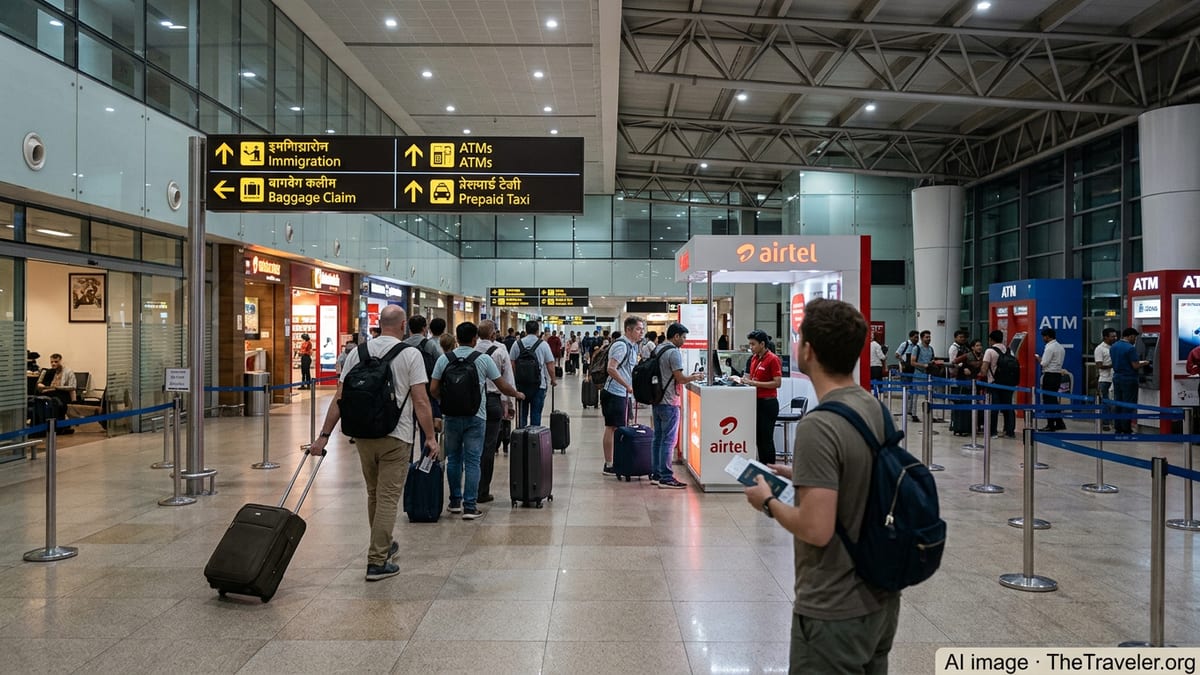
Alleged Fake Passport Case Puts Goa in Spotlight
Recent reports from India describe an incident in Goa in which an Afghan national was intercepted while attempting to travel with what investigators believe to be a fraudulently obtained Indian passport. The case, traced to checks at one of Goa’s two international gateways, has pushed concerns about document fraud and airport vigilance back into the travel news cycle.
Publicly available information indicates that the traveler was flagged during immigration scrutiny when inconsistencies reportedly emerged between the individual’s claimed Indian identity and supporting records. The incident follows a wider regional pattern in which foreign nationals have attempted to pass themselves off as Indian citizens to gain easier access to flights, visas, or longer stays.
Goa, served by Dabolim Airport and the newer Manohar International Airport at Mopa, is one of India’s busiest leisure gateways, handling significant charter and scheduled traffic from Europe, the Middle East, and within India. Any suggestion of a lapse in screening at such hubs quickly resonates beyond the state, touching airlines, tour operators, and travelers who depend on predictable and secure border processes.
While full case details have not been made public, the Goa incident echoes earlier episodes at other Indian airports where Afghan nationals were detained after checks uncovered allegedly forged Indian passports and supporting IDs. These parallels are fueling discussion about how easily fraudsters can plug into gaps in local identity and document systems to create a false Indian profile.
Pattern of Forged Indian Identity Among Foreign Nationals
The Goa case is emerging against a broader backdrop in which foreign nationals have been accused of using Indian documents that later proved to be fraudulent. Previous enforcement actions at major hubs such as Mumbai and Delhi, as reflected in court filings and media coverage, have described Afghan travelers allegedly securing Indian passports through forged birth certificates, falsified addresses, and fabricated school or municipal records.
In one Mumbai case, an Afghan citizen was arrested after attempting to board an international flight on an Indian passport that investigators said had been obtained with forged paperwork. In Delhi, published coverage highlighted an Afghan traveler who reportedly failed basic questions about the Indian state listed as his birthplace, prompting closer inspection of his passport and supporting ID. Those earlier episodes now frame the Goa incident as part of a persistent pattern rather than an isolated anomaly.
Goa has seen its own share of document fraud cases involving non-Indians. At the start of 2026, for example, coverage from Panaji detailed the arrest of a Philippine national accused of obtaining an Indian passport from Goa under a false name with forged documents. Investigators in that matter cited violations of the Passport Act and the Foreigners Act, underscoring how forged identities can intersect with immigration, work, and residency rules.
For travel planners and airlines, the recurring theme is that fake Indian identities are no longer confined to obscure land borders or small-town offices. They surface at mainstream tourist gateways, on common flight routes, and in sectors ranging from hospitality and personal services to informal labor, raising the stakes for verification at every step of the travel chain.
Why Fake Indian Passports Appeal to Scam Networks
Analysts who track South Asian migration patterns note that a genuine-looking Indian passport can act as a powerful enabler in multiple forms of fraud. It may grant easier visa access to certain countries, reduce scrutiny at transit points, and help conceal the true nationality of travelers moving through sensitive routes. For Afghan nationals facing visa restrictions or unstable consular services, the incentive to purchase or fabricate an alternate identity can be especially strong.
Reports and court documents from across the region describe brokers and agents who specialize in stitching together fake Indian identities by combining forged birth certificates, bogus local residence proofs, and fraudulently obtained Aadhaar or voter cards. Once those foundational IDs are in place, a passport application that appears routine on the surface can in some cases slip through unless rigorous checks are applied.
India’s scale and diversity add another challenge. With hundreds of districts and thousands of local bodies issuing documents, verification remains highly decentralized. Fraudulent records produced in one state can be presented at a passport office or police station in another, complicating efforts to detect anomalies. Travel scams thrive in these gaps, where cross-checks between databases, police records, and civil registries may still be catching up with the pace of demand for travel documents.
For airports, the result is a complex threat profile that blends traditional fake passports with more sophisticated “built from scratch” identities rooted in counterfeit local records. The Goa incident involving the Afghan traveler fits squarely into that category of concerns, showing how forged Indian status can be used as a springboard to international departures.
Government Measures to Tighten Passport and Airport Security
In response to high-profile fraud cases, the Indian government has been steadily tightening identity verification around passports and international departures. Public advisories and policy updates in recent years highlight efforts to integrate police verification with digital civil registries, expand biometric checks, and flag unusual patterns in applications, such as clusters of passports issued from the same address or sponsor.
At the airport level, immigration counters are increasingly leaning on targeted questioning, data-driven risk profiling, and real-time access to watchlists. Reported incidents at Delhi and Mumbai indicate that simple verbal cross-checks about claimed hometowns or states of origin have occasionally exposed fake identities when a traveler could not answer basic questions about the place listed on the passport.
Goa’s airports, which juggle holiday crowds with domestic business traffic, are expected to apply similar protocols. The alleged Afghan fake passport case has therefore become a reference point in broader discussions about how effectively those measures are being implemented at leisure-focused gateways, where long queues and peak-season pressure can test the resilience of security routines.
On the international side, India continues to work with other governments and airlines on advance passenger information systems and document training, so that forged Indian passports are more likely to be spotted before boarding or at transit points. For global tourism stakeholders, these measures are increasingly seen as necessary infrastructure to keep legitimate travelers moving while blocking those attempting to game the system.
Implications for Travelers, Tourism, and Perception of India
For the average visitor planning a beach break or wellness retreat in Goa, the immediate impact of an incident like the Afghan fake passport case is limited. Most tourists encounter the story only as a brief news item. However, the long-term implications for India’s tourism narrative are more significant. Each reported breach raises questions about how effectively the country protects its borders and document systems while handling rising passenger volumes.
India has invested heavily in promoting Goa, Kerala, Rajasthan, and other regions as reliable, welcoming destinations for international travelers. Ensuring that airports in those areas are not associated with systemic loopholes in document control is now a core part of that branding. Travel companies, especially those serving high-spend European and Middle Eastern visitors, closely watch how quickly and transparently such episodes are addressed.
There is also a reputational dimension for genuine Indian passport holders abroad. Reports about fake Indian passports in circulation can trigger additional scrutiny at foreign immigration counters, sometimes leading to longer queues or more intensive questioning even for legitimate travelers. Tightening controls at home, from passport issuance to airport checks, is one way India can reassure both partner governments and its own citizens.
For now, the Goa case involving an Afghan traveler with an alleged fake Indian passport serves as another reminder that sophisticated travel scams often intersect with everyday tourist hubs. As India looks to grow its slice of global tourism, the pressure to stay ahead of such fraud, without making journeys more difficult for law-abiding visitors, will only increase.