


More news on this day
Thousands of passengers were left sleeping in terminals and scrambling to rebook after a fresh wave of disruptions at Dallas Fort Worth International Airport on May 10 led to more than 230 flight cancellations and over 800 delays, snarling operations for American Airlines, Envoy Air, SkyWest, Frontier, United and other carriers and disrupting key routes serving Greenville, Santa Fe, Detroit, Cincinnati, Atlanta and additional cities across the United States.
Get the latest news straight to your inbox!
Severe Weather and Congestion Trigger New Disruptions
Publicly available flight-tracking boards showed Dallas Fort Worth International Airport among the most affected hubs in the country on May 10, as lines of thunderstorms moving across North Texas converged with heavy traffic at one of the world’s largest airline hubs. The combination led to periodic ground stops, reduced arrival rates and extended taxi times, limiting the number of aircraft that could safely operate in and out of the airport.
According to aggregate data from real-time trackers, more than 230 flights linked to Dallas Fort Worth were cancelled and upwards of 800 were delayed during the day, affecting both departures and arrivals. The disruption cut across mainline and regional operations, with American Airlines, its regional affiliate Envoy Air and contract carrier SkyWest bearing much of the impact, alongside low-cost operator Frontier Airlines and legacy competitor United Airlines.
Dallas Fort Worth is identified in federal aviation statistics as one of the nation’s busiest connecting hubs, and American’s operation there is routinely described as one of the largest single-airline hubs in the world. When weather constrains runway capacity or disrupts crew positioning, even a relatively brief storm band can cascade quickly across the tightly banked schedule of departures and arrivals.
The latest episode followed a pattern seen repeatedly during the past year, in which bursts of severe weather over major hubs have translated into large-scale disruption for travelers whose journeys neither begin nor end in the affected city but rely on those airports for connections.
American, Envoy and SkyWest Bear the Brunt
Operational data compiled in recent U.S. Department of Transportation consumer reports show that American Airlines, Envoy Air and SkyWest collectively operate tens of thousands of monthly flights through Dallas Fort Worth, feeding regional routes across the South, Midwest and Mountain West. On May 10, those carriers faced a disproportionate share of cancellations as regional jets and narrowbody aircraft were pulled from crowded departure banks.
Regional operators Envoy and SkyWest, which fly under the American Eagle banner on many routes, are particularly exposed during weather-related disruptions. Their fleets are used heavily on shorter legs into smaller cities with fewer daily frequencies, meaning that when one flight cancels, an entire day’s connectivity for that route can be compromised. Passengers traveling from secondary markets into Dallas Fort Worth for onward connections often have limited alternative options the same day.
Publicly accessible aviation performance reports highlight that while these carriers typically complete a high percentage of scheduled flights, delays and cancellations spike when severe weather, crew availability constraints and air traffic control programs coincide. Observers note that regional networks, already operating with lean spare capacity, have less flexibility to absorb rolling disruptions than larger widebody-focused operations.
The May 10 disruptions also arrived against a backdrop of elevated strain on airline staffing and scheduling systems following a busy spring travel period, which travel analysts say can leave limited resilience when storms move through a major hub like Dallas Fort Worth.
Ripple Effects Hit Greenville, Santa Fe, Detroit, Cincinnati and Atlanta
As Dallas Fort Worth’s departure banks became compressed, the impact quickly spread across the country. Real-time boards and schedule data showed flights between Dallas Fort Worth and smaller destinations such as Greenville and Santa Fe among those experiencing significant disruption, with cancellations and multi-hour delays forcing travelers onto later connections or entirely new itineraries.
Major metropolitan areas were not spared. Flights linking Dallas Fort Worth with Detroit, Cincinnati and Atlanta were repeatedly pushed back or rerouted as airlines attempted to work around arrival meter programs and congested taxiways. In some cases, aircraft originating from those cities never left the gate because there was no viable arrival slot available in North Texas within crew duty-time limits.
These ripple effects extended beyond direct Dallas Fort Worth services. Passengers booked on through itineraries between third cities, such as travelers going from Santa Fe to Detroit or Greenville to Atlanta via Dallas Fort Worth, found themselves stranded at intermediate points or facing overnight stays as missed connections accumulated. With spring demand running high, same-day reaccommodation options on other carriers were limited, and walk-up fares on remaining seats climbed sharply.
Travel-planning platforms and airline mobile apps showed a surge in same-day searches for alternative routings that bypassed the North Texas hub, including connections over Chicago, Denver and Houston, as travelers sought to rebuild their journeys around the disruption.
Low-Cost and Competing Carriers Struggle to Keep Schedules Intact
While American and its regional affiliates dominated the traffic picture at Dallas Fort Worth, other carriers also faced operational headwinds. Frontier Airlines, which runs a lean, high-utilization network model, saw several departures held or cancelled as storms rolled through the region and turn times stretched. In a tightly scheduled low-cost operation, even a short ground stop can ripple across an entire day’s flying.
United Airlines, whose presence at Dallas Fort Worth is smaller but strategically focused on key business and connecting routes, also experienced delays and selective cancellations on flights feeding its own hubs. As aircraft and crews arrived late from Texas, knock-on effects appeared across United’s broader network, including delayed departures from cities far from the immediate weather system.
Publicly available performance analyses of recent years indicate that ultra-low-cost and point-to-point carriers typically have fewer spare aircraft and crews positioned in secondary hubs like Dallas Fort Worth, which can limit their ability to mount recovery flights after a severe disruption. During the May 10 event, that dynamic contributed to longer-than-usual recovery times on certain routes even after the most intense weather had passed.
As a result, travelers who had chosen alternative carriers specifically to avoid the congestion of large network hubs still found themselves entangled in the same web of weather and airspace constraints affecting the dominant airline at Dallas Fort Worth.
Travelers Face Crowded Terminals and Limited Rebooking Options
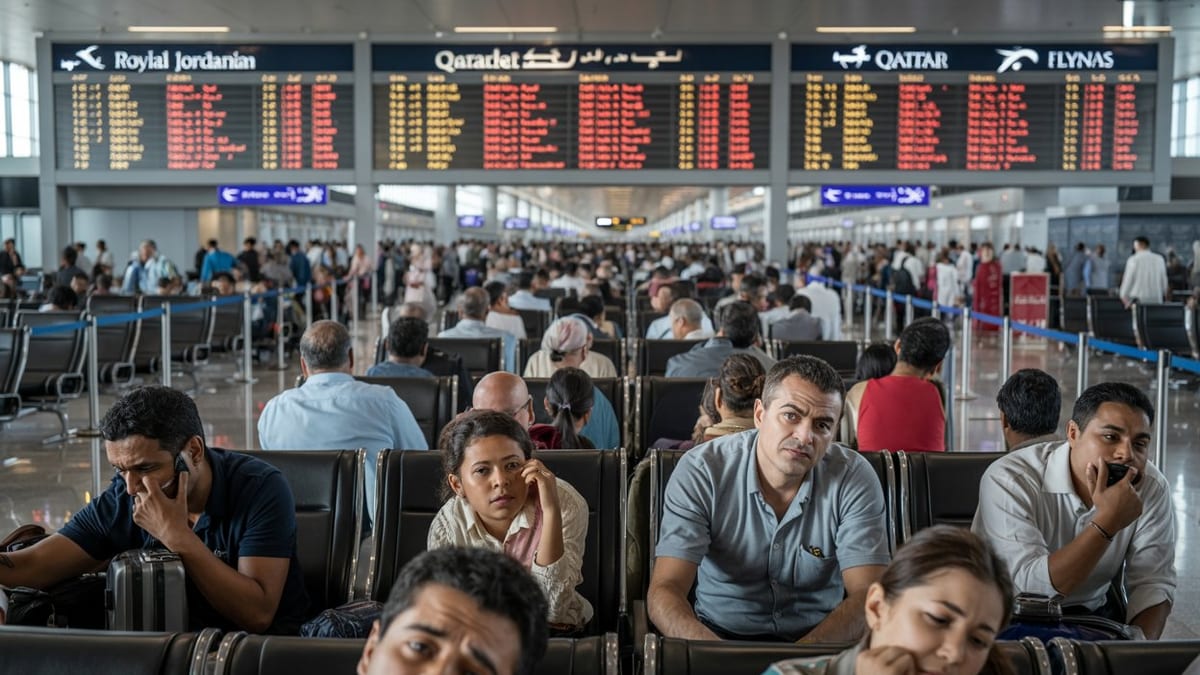
By late evening on May 10, images circulating on social platforms showed crowded gate areas, long queues at customer service desks and improvised sleeping arrangements in Dallas Fort Worth’s terminals as passengers waited for new flights. Many travelers reported relying heavily on airline mobile apps and online tools to secure rebooked seats, as in-person support struggled to keep pace with the volume of disrupted itineraries.
Publicly shared accounts from earlier disruption events at Dallas Fort Worth suggest that once cancellations reach into the hundreds, hotel availability around the airport can tighten, and overnight stays inside the terminal become more common. Similar patterns appeared to be emerging during the latest wave of disruptions, particularly for travelers arriving on late-evening flights whose onward connections were cancelled.
Consumer advocates routinely advise passengers caught in such mass irregular operations to document delay times, retain receipts for essential purchases and review carrier policies on meal vouchers, hotel accommodations and refunds. Transportation Department guidance notes that the extent of financial support available can depend on whether a delay is categorized as under the airline’s control or attributed primarily to weather or air traffic system constraints.
For now, travelers transiting Dallas Fort Worth in the coming days are being urged by travel-planning services to monitor flight status frequently, allow extra connection time where possible and consider early-morning departures, which historically show lower delay rates than heavily banked afternoon and evening flights when weather-driven congestion tends to peak.