


More news on this day
India has issued renewed safety guidance for its large expatriate community in Qatar, urging nationals to avoid non essential movement and strictly comply with local security instructions as regional tensions and recent strikes heighten concerns about civilian safety.
Get the latest news straight to your inbox!
Fresh Advisory Targets Everyday Movement in Qatar
The latest advisory, circulated in mid April 2026 through public channels linked to the Embassy of India in Doha, calls on Indian nationals to limit their movements to essential needs and to follow Qatari Ministry of Interior announcements with particular care. Publicly available information indicates that the message builds on a series of advisories issued since late February, when the wider regional conflict involving Iran led to missile and drone attacks on targets in and around Qatar.
Reports indicate that Indian nationals have been reminded to stay indoors as far as possible, avoid crowded areas and unnecessary travel within the country, and pay close attention to any curfew like measures or access restrictions announced by local authorities. The advisory is framed as a precautionary step intended to reduce exposure to evolving security risks rather than a directive to leave the country.
According to Indian and international media coverage, Qatar hosts more than 700,000 Indian citizens, forming the single largest expatriate community in the Gulf state. This demographic reality means that any deterioration in local security conditions has implications not only for individual safety but also for consular services, employment continuity, and travel plans for families spread between India and Qatar.
The latest communication follows weeks of rolling updates, with Indian government documentation listing multiple advisories for Qatar throughout March 2026. The cumulative effect is a clear pattern of heightened caution, with the newest guidance on non essential movement reinforcing the view that the situation, while under the control of Qatari institutions, remains fluid.
Regional Conflict Drives Heightened Risk Perceptions
The move to warn Indian nationals in Qatar about non essential movement comes against the backdrop of an escalating conflict that has drawn in Iran, the United States, and regional powers, and has included missile strikes on targets within Qatar. Open source reporting points to several incidents since late February in which strategic locations in and around Doha were hit, raising concerns about the spillover effects on civilian neighborhoods and key infrastructure.
International travel and security advisories issued by third countries in recent weeks have similarly pointed to a volatile threat environment in Qatar, with some government portals moving to higher risk categories for travel to the Gulf state. These assessments generally highlight the possibility of further attacks, disruptions around government and military facilities, and short notice restrictions on movement or public gatherings.
Analysts quoted in publicly available commentary note that Qatar’s role as a hub for diplomacy, energy exports, and foreign military assets has placed it close to the center of current tensions. While Qatari authorities have sought to emphasize continuity of essential services, the pattern of precautionary guidance from multiple governments, including India, underlines the view that civilians should take additional steps to minimize exposure.
The Indian advisory’s specific reference to non essential movement reflects these broader risk calculations. By encouraging nationals to reduce time spent in transit or in public spaces, especially near sensitive locations, the guidance attempts to lower the likelihood that civilians are caught up in any further security incidents or emergency responses.
Impact on Indian Expatriate Life and Travel Plans
The new warning is resonating across Qatar’s Indian community, many of whom work in construction, services, energy, and domestic roles that often involve commuting across Doha and its industrial zones. Media reports and community updates suggest that some employers have started to adjust shift timings, streamline on site movements, or encourage remote work where feasible, in order to align with emerging safety considerations.
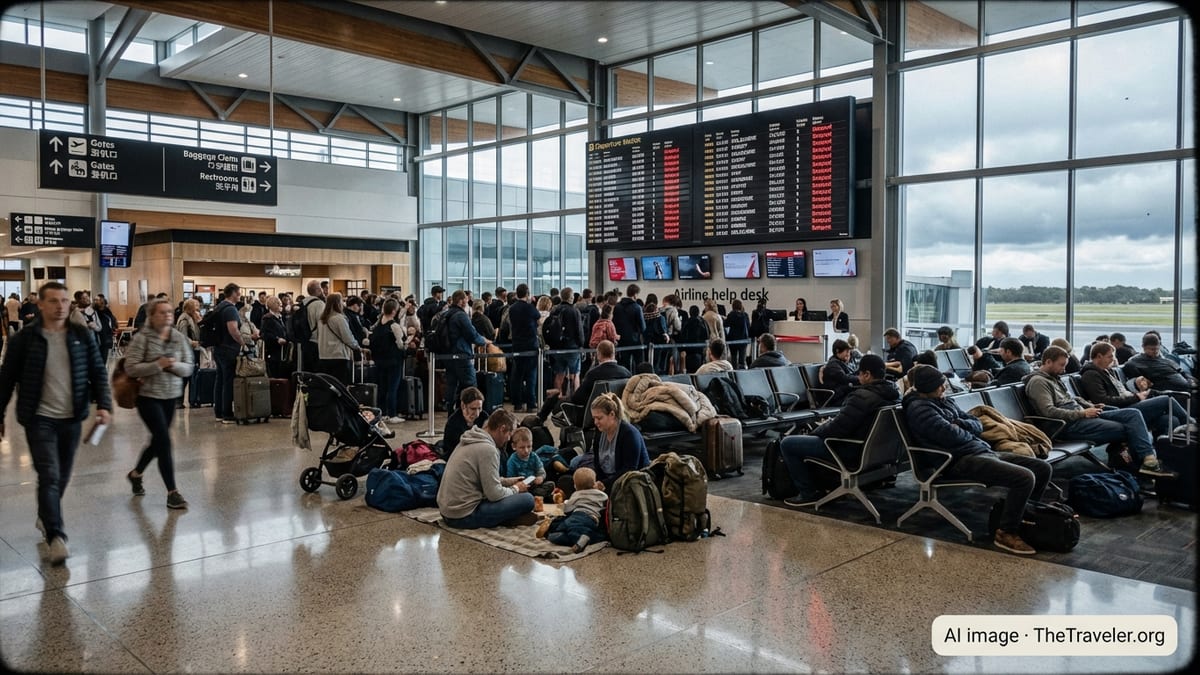
Air travel has also been affected. In March and early April, flight disruptions and reroutings across Middle East airspace led to cancellations and delays involving Doha, with ripple effects felt at airports in India and elsewhere in Asia. Published airline advisories show that Qatar’s flag carrier is gradually rebuilding its schedule, but regional airspace closures and security related restrictions continue to affect route planning.
For Indian travelers, the call to avoid non essential movement is being interpreted in two ways. Those already in Qatar are being advised to minimize internal travel and to keep essential documents, emergency contacts, and communication tools readily available. Those planning leisure or non urgent business trips to Qatar are being encouraged by travel experts and risk consultancies to reconsider the timing of their visits or to monitor advisories closely before departure.
Consular services have also had to adapt. Local media in Qatar have reported intermittent closures or reduced in person services at embassies and consulates during periods of heightened alert, prompting missions to shift some functions online or to appointment only systems. For Indian nationals who may need documentation, visa assistance, or emergency support, staying updated on embassy announcements has become an important part of personal contingency planning.
Official Guidance: Stay Informed and Follow Local Rules
Across the various public advisories, one consistent message stands out: Indian nationals in Qatar are being urged to treat directives from Qatari authorities as the primary reference point for their day to day decisions. The Indian advisory emphasizes strict adherence to local safety guidelines issued by agencies such as the Ministry of Interior, including any rules on restricted zones, identification checks, and use of public spaces.
Guidance circulated by international security and travel risk firms in March and April likewise encourages foreign residents in Qatar to track official announcements, verify information through credible channels, and avoid sharing unconfirmed reports on social media that could contribute to confusion. The focus on disciplined information consumption reflects concern that misinformation could complicate emergency responses or lead people to take unnecessary risks.
Indian nationals have been advised, through public notices, to register with relevant embassy platforms where available, maintain updated contact information, and keep family members in India informed about their location and plans. Basic preparedness steps, such as knowing the nearest shelter areas, having a small stock of essentials at home, and identifying alternate commuting routes, are being highlighted as prudent measures in the current environment.
While no broad evacuation directive has been issued for Indian citizens in Qatar, the emphasis on reduced movement and strict compliance with local safety guidelines points to a cautious, watchful posture. For now, publicly available information suggests that both Qatari institutions and foreign missions are seeking to balance continuity of daily life with a clear message that the security situation demands heightened awareness and flexibility from residents and visitors alike.