


More news on this day
Flydubai’s cancellation of two departures from Baghdad and Erbil to Dubai at the start of the week has disrupted a vital travel corridor between Iraq and the United Arab Emirates, highlighting how fragile connectivity remains across the region in April 2026.
Get the latest news straight to your inbox!
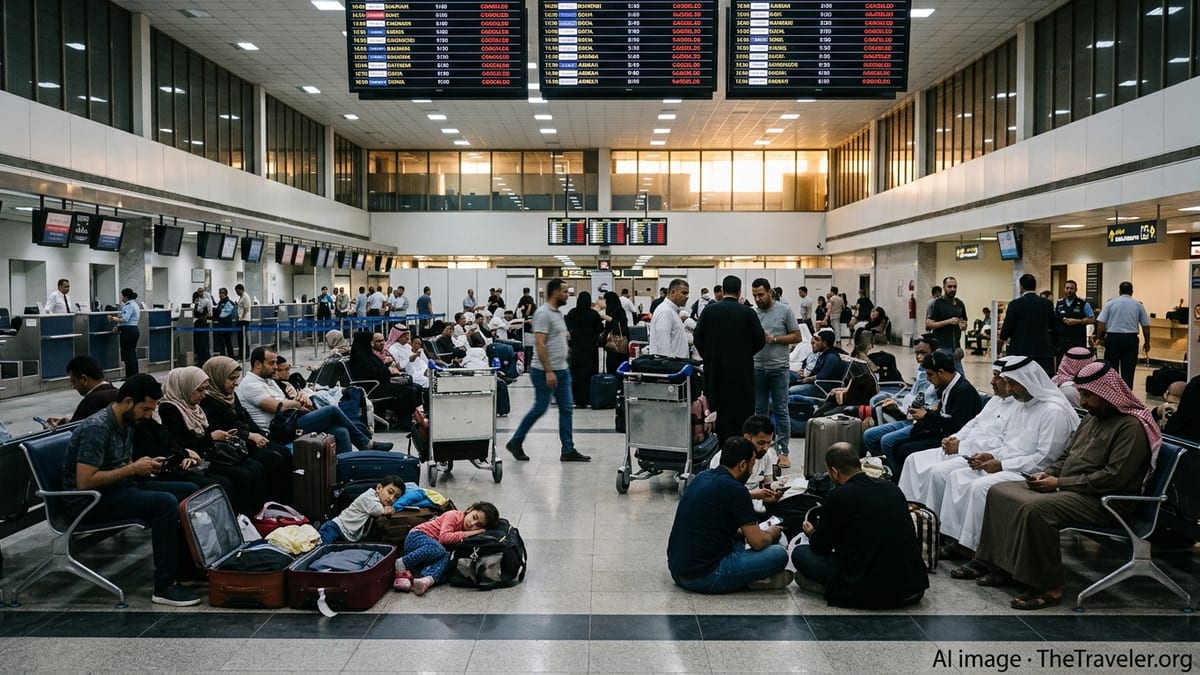
Latest Disruptions on Iraq–Dubai Routes
According to recent coverage from regional travel news outlets, two Flydubai flights scheduled to depart on Monday from Baghdad International Airport and Erbil International Airport to Dubai International Airport were cancelled, interrupting same‑day links from both the Iraqi capital and the Kurdistan Region to the UAE’s main hub. The affected services formed part of Flydubai’s regular schedule connecting Baghdad and Erbil with Dubai, routes that have been central to business, family and transit travel between the two countries.
Publicly available flight information and news reports indicate that these cancellations occurred against a backdrop of intermittent schedule adjustments since late February, when heightened regional tensions began to affect airspace and operational decisions. While many flights on the Iraq–Dubai sector are still operating, the pattern of selective cancellations has made it harder for passengers to predict whether itineraries will run as planned.
The latest disruptions follow weeks in which airlines serving the wider Middle East have repeatedly revised timetables, with Baghdad and Erbil often appearing among the destinations experiencing short‑notice changes. For travelers, the impact is particularly acute on days when both cities lose a scheduled departure to Dubai, narrowing same‑day options for reaching the UAE from Iraq.
Impact on Travelers and Transit Connections
The cancellation of two Iraq–Dubai flights in a single day has immediate consequences for passengers booked point‑to‑point between Baghdad, Erbil and Dubai, but the ripple effects extend further along the network. Dubai International Airport is a major transfer hub, and many travelers from Iraq rely on Flydubai and its partners for onward connections to Asia, Europe and Africa. When departures from Baghdad and Erbil are removed from the schedule, same‑day links to long‑haul services can be lost, forcing itinerary changes or overnight stays.
Accounts shared on travel forums in recent days describe passengers facing multiple rebookings, last‑minute schedule changes and difficulties securing preferred alternatives when flights are cancelled. Some customers report being offered travel vouchers or new dates instead of immediate refunds, while others describe being re‑routed through different Gulf gateways when a direct Baghdad or Erbil to Dubai leg is no longer available on the original date.
These experiences reflect a wider environment of uncertainty on Middle East routes this spring. Even when carriers publish updated schedules, operational adjustments can occur close to departure, leaving travelers reliant on real‑time status checks and notifications. For those traveling from Iraq to Dubai for time‑sensitive reasons, such as business meetings, medical appointments or onward long‑haul flights, the possibility of a sudden cancellation adds a significant layer of risk to trip planning.
Part of a Broader Pattern of Regional Flight Cancellations
The disruption to Flydubai’s Baghdad and Erbil services is not an isolated event. Recent aviation and business publications tracking April 2026 operations describe a broader pattern of route reductions and cancellations across the Gulf and wider Middle East, driven by airspace restrictions, capacity constraints and ongoing security considerations. Dubai International Airport has been identified as one of the most affected hubs, with repeated interruptions reported on regional links including Baghdad and Erbil.
Industry analysis shows that airlines serving Iraq and the UAE have adopted differing strategies, from full temporary suspensions on select routes to reduced frequencies or ad‑hoc cancellations on days of higher operational complexity. Low‑cost and full‑service carriers alike have adjusted their networks, sometimes at short notice, as they respond to evolving risk assessments and slot limitations at key airports.
For Flydubai specifically, publicly available information points to a reduced but ongoing network in the region, with some destinations operating on limited schedules while others face suspensions into late spring. Within that context, the loss of individual Iraq–Dubai flights on particular days illustrates how even a relatively small number of cancellations can significantly affect connectivity where frequencies are already trimmed.
What Affected Passengers Should Watch Now
Travel advisories published by airlines, airports and independent travel platforms consistently urge passengers on Middle East routes to monitor their bookings closely in the current environment. For Flydubai customers traveling from Baghdad or Erbil to Dubai, that typically means checking flight status in the 24 hours before departure and ensuring contact details are up to date so that any schedule changes can be communicated quickly.
Consumer guidance from travel comparison services and passenger rights organisations notes that options in the event of a cancellation usually include rebooking on the next available flight, changing dates without additional fees, or requesting a refund, depending on the fare rules and applicable regulations. However, recent passenger reports suggest that processing times and the range of choices can vary, particularly when many travelers are affected at once.
Travel planners also highlight the importance of allowing extra connection time when using Dubai as a transit hub from Iraq in the weeks ahead. With schedules still evolving and operational patterns not yet fully stabilised, building in flexibility through longer layovers, changeable tickets, or travel insurance that covers disruption may help mitigate some of the risk for those who must travel between Baghdad, Erbil and Dubai in the near term.
Outlook for Iraq–Dubai Connectivity
Looking ahead, analysts following Middle East aviation expect a gradual normalisation of flight operations once regional airspace conditions and capacity constraints at Gulf hubs improve. Some carriers have already signalled plans to restore additional frequencies into the summer, but many have linked such moves to continued assessments of security and demand. For now, Iraq–Dubai services remain in a period of adjustment, with sporadic cancellations such as the recent Flydubai Baghdad and Erbil flights underscoring the unsettled situation.
For travelers, this means that while the core air links between Iraq and the UAE are still in place, reliability is not yet back to pre‑crisis norms. The Baghdad and Erbil routes to Dubai continue to play an essential role for business, diaspora and leisure travel, and any interruption is closely watched by local tourism and trade stakeholders. As airlines refine their schedules in the coming weeks, developments on these key corridors will serve as a barometer for the broader recovery of regional air connectivity.