

More news on this day
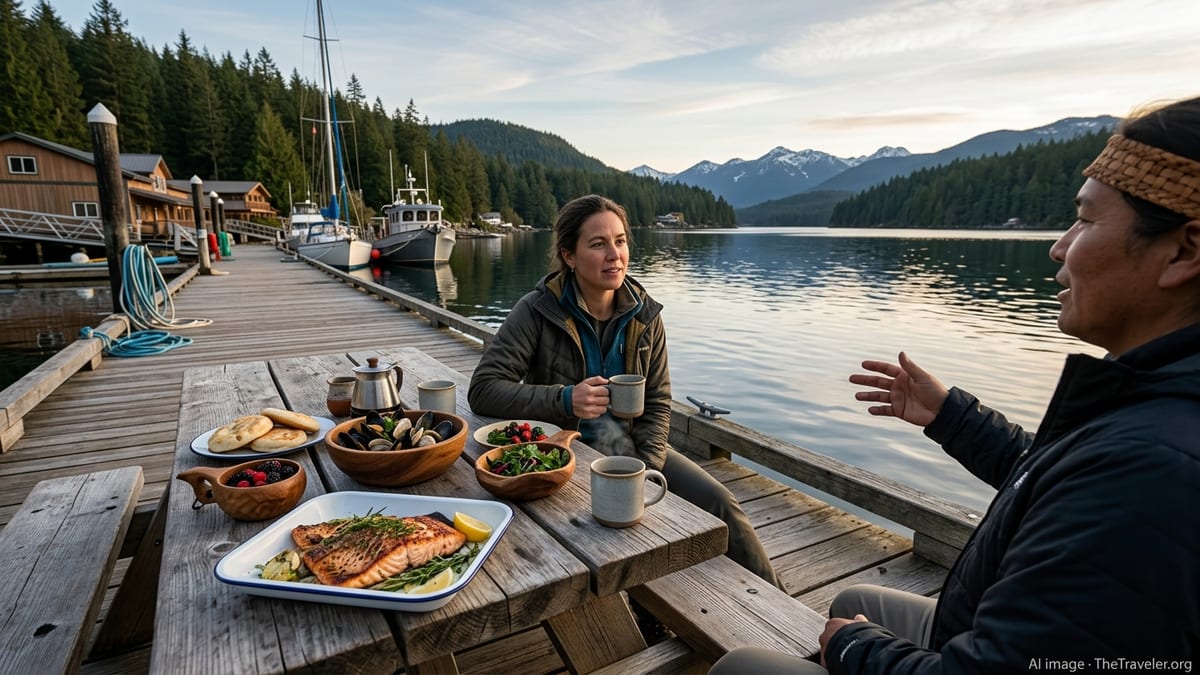
At Sa’y’ilh, known in English as Gorge Harbour on Cortes Island, the Klahoose First Nation is advancing an ambitious culinary vision that links Indigenous foodways, sustainable tourism and cultural resurgence on British Columbia’s central coast.
Get the latest news straight to your inbox!
Gorge Harbour as a Cultural and Culinary Gateway
Gorge Harbour sits within Klahoose territory at the edge of Desolation Sound, a region long recognized by boaters for its sheltered coves and marine views. In recent years, publicly available information shows that the Klahoose First Nation has been repositioning this harbour as more than a picturesque stopover, reframing it as an entry point into Coast Salish culture and contemporary Indigenous hospitality.
The Nation’s business arm has cultivated tourism enterprises in and around Sa’y’ilh that emphasize small-group stays, local knowledge and direct connections with community members. Reports indicate that Gorge Harbour Marina Resort now functions as a staging ground for travellers heading deeper into Klahoose territory, as well as a stand-alone destination for visitors interested in Indigenous-owned accommodations, marina services and emerging food experiences.
This shift aligns with a broader movement in British Columbia in which Indigenous governments and entrepreneurs are reclaiming control over tourism narratives. At Gorge Harbour, the focus is increasingly on how guests taste, learn and participate, not only on where they dock or sleep, setting the stage for a more explicitly culinary-led approach.
Within this context, Sa’y’ilh is being framed as a place where salmon runs, shellfish beds and forest foods can be interpreted through an Indigenous lens, creating a coherent story that links the harbour to surrounding inlets and traditional harvesting sites.
Klahoose Wilderness Resort and the Rise of Indigenous-Led Menus
Central to the Klahoose culinary renaissance is Klahoose Wilderness Resort, a small coastal lodge in Toba Inlet that is marketed as First Nations owned and operated. The resort, reached via boat routes that commonly pass near Gorge Harbour, has become a flagship for the Nation’s approach to food-centred tourism.
Resort materials describe a culinary program inspired by the nutrient-rich waters of the Salish Sea, farm-to-table producers in coastal British Columbia and ingredients foraged from surrounding rainforest. Seasonal menus highlight local seafood alongside foraged greens, berries and other plants that have long sustained Indigenous communities in the region.
Dining at the lodge is presented as a communal experience, with guests sharing set menus and gathering in a central space rather than eating in isolation. Public information indicates that Klahoose chefs are expected to deliver “exceptional food experiences” that balance creativity with cultural authenticity, an approach that links contemporary culinary techniques with traditional teachings about seasonality, respect for animals and sustainable harvesting.
The resort’s food program has drawn attention from national tourism bodies that increasingly promote Indigenous-led culinary experiences as a core part of Canada’s travel offering. This recognition is reinforcing the idea that what happens at the table in Klahoose territory can be an important driver of both economic development and cultural revitalization.
From Salish Sea Abundance to Regenerative Food Systems
The Klahoose culinary vision goes beyond menu design to engage with questions of food systems and environmental stewardship. According to materials shared by the Nation’s tourism and business entities, the resort and related operations emphasize sourcing from nearby waters, farms and Indigenous-owned producers, including coffee roasters and craft beverage makers.
This focus reflects a wider shift in Indigenous tourism toward food sovereignty: the ability of communities to define their own food systems, protect traditional harvesting areas and benefit directly from value-added processing. In the Klahoose case, the Salish Sea’s salmon, shellfish and marine life are positioned not only as ingredients but as indicators of ecological health that must be protected for future generations.
Hydropower infrastructure at Klahoose Wilderness Resort, which uses falling water from nearby mountains to generate electricity, has been highlighted in tourism coverage as an example of low-impact operations linked to Indigenous values. By coupling renewable energy with careful sourcing and limited guest capacity, the resort model supports a culinary offering that is framed as both climate-conscious and rooted in place.
Gorge Harbour’s role in this system is evolving as visitors increasingly seek trips that integrate boating, hiking and wildlife viewing with education about Indigenous stewardship. Food becomes a natural bridge between these interests, allowing travellers to encounter local species and landscapes in ways that feel tangible and memorable.
Culinary Experiences as Cultural Education
Klahoose leaders and tourism operators have repeatedly emphasized that food experiences should sit alongside, not replace, cultural programming such as storytelling, cedar weaving and ceremonial practices. At the resort, guests are invited to participate in evening cultural activities that frame meals within a broader history of potlatches, clan relationships and ceremonial protocols.
Published profiles describe how visitors learn about traditional preservation methods and the significance of species such as salmon and herring roe, which are intertwined with origin stories and territorial rights along the central coast. In this setting, a plated dish becomes an entry point into discussions about colonial impacts on Indigenous food systems and contemporary efforts to rebuild them.
This approach mirrors national trends in Indigenous cuisine, where chefs and hosts are increasingly using tasting menus, foraging walks and outdoor feasts to share knowledge about pre-contact ingredients and techniques. Across Canada, Indigenous-owned restaurants and cafes have begun to foreground bison, wild rice, berries and bannock while also experimenting with new presentations aimed at international travellers.
For Klahoose, the combination of guided cultural activities and regionally specific dishes helps distinguish Sa’y’ilh and the surrounding territory from other coastal destinations. The harbour functions as a classroom as much as a marina, with culinary experiences anchoring broader conversations about history, rights and reconciliation.
Positioning Gorge Harbour in the Indigenous Culinary Map of Canada
As Indigenous culinary tourism gains profile across the country, Klahoose’s work at Gorge Harbour and in Toba Inlet is increasingly discussed alongside well-known urban and rural examples. Canadian travel coverage frequently points to Indigenous-owned restaurants in cities such as Vancouver, as well as lodge-based dining rooms in the Interior and on other coastal territories, as signposts of a wider movement.
Industry organizations that promote Indigenous tourism now include Klahoose Wilderness Resort among model operations that combine small-scale accommodation, guided cultural programming and regionally grounded cuisine. These examples are often used to illustrate how communities can move beyond resource extraction to build visitor economies based on cultural expression and environmental care.
For visitors arriving by boat or small aircraft, Gorge Harbour is emerging as a recognisable waypoint in this evolving map. Travellers can anchor in Sa’y’ilh, connect with Klahoose-owned services and then travel onward into inlets where lodge staff, guides and cooks extend the story through meals and shared experiences.
While future development plans for the harbour and adjacent lands continue to evolve, the direction is increasingly clear. Publicly available information suggests that the Klahoose First Nation views food as a central tool for asserting presence on ancestral territory, welcoming guests on its own terms and contributing to a nationwide Indigenous culinary renaissance that is reshaping how Canada is tasted and understood.