


More news on this day
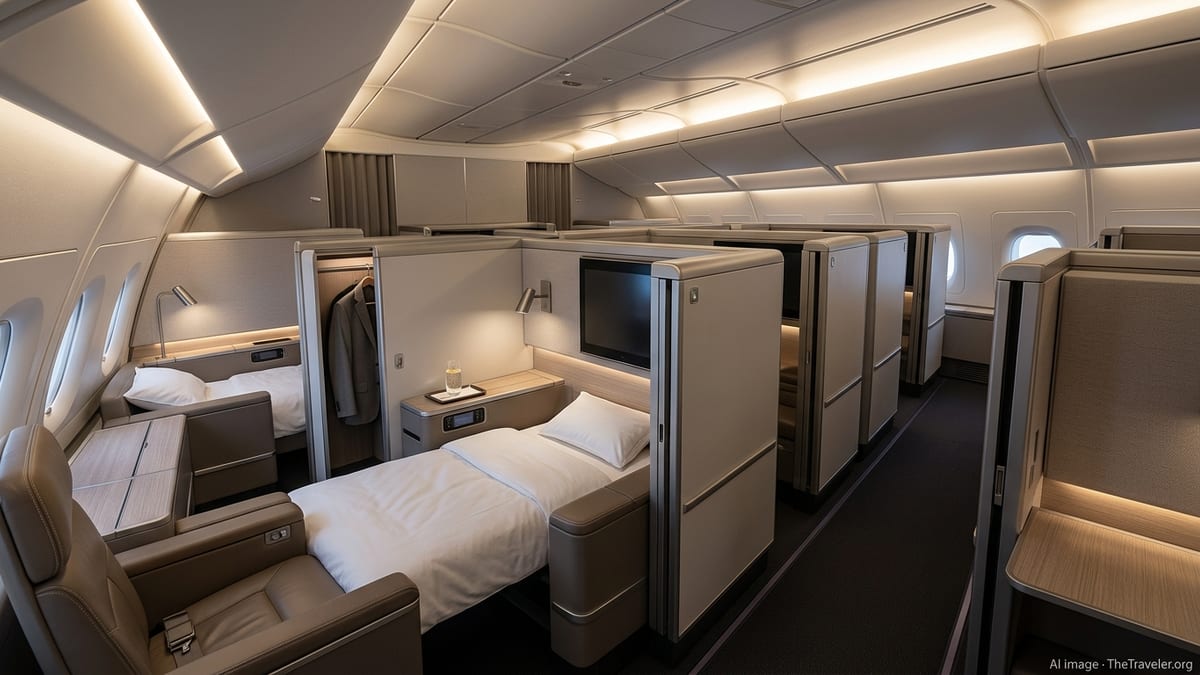
IndiGo is signaling the next phase of its long haul ambitions, teasing a new business class cabin to debut on its future Airbus A350 fleet and marking a further break from its all economy roots.
Get the latest news straight to your inbox!
From All Economy To A350 Flagship Ambitions
IndiGo has built its position as India’s largest airline on a high density, all economy model operated primarily by Airbus A320neo and A321neo aircraft. That formula has focused on efficiency, quick turnarounds, and low fares across an expansive domestic and short haul international network. Publicly available information shows that the airline began softening that stance in 2024 with the launch of its IndiGo Stretch product on selected A321neo routes, introducing a limited number of business class style seats at the front of the cabin.
The carrier’s move into widebody operations with the Airbus A350 marks a far more significant strategic turn. IndiGo placed an initial firm order for 30 A350 900s in April 2024 and followed it with an additional order of 30 aircraft in 2025, supported by further purchase rights. Delivery of the first A350s is expected from 2027, positioning the airline to enter true long haul markets from India to Europe, East Asia and potentially North America.
Recent investor presentations and industry commentary indicate that the A350s will carry a dedicated business class cabin rather than a simple extra legroom section. While IndiGo has not released a final seat map, references to lie flat business seats and a two class layout suggest a substantial redesign of its traditional single class interior concept.
The new product is widely seen by analysts as IndiGo’s attempt to move beyond the purely low cost model and compete more directly with full service rivals on key trunk and long haul markets. It also reflects the growing demand for premium travel from India’s expanding corporate sector and affluent leisure travelers.
What The A350 Business Cabin Might Look Like
Teaser material and third party analysis point toward a conventional long haul business class cabin on IndiGo’s A350s, likely arranged at the very front of the aircraft. Aviation enthusiasts and industry reports suggest a layout of roughly 30 to 40 business class seats, followed by a large economy section, for a total capacity in the region of 320 to 340 passengers depending on final configuration.
On modern A350s operated by global airlines, business cabins typically feature fully flat beds, direct aisle access in a 1 2 1 layout, and privacy features such as high shells or sliding doors. Air India’s A350 900s, for example, offer 28 suites with full flat beds and direct aisle access ahead of premium economy and economy sections, while leading international carriers have introduced suites, extra long beds and enhanced storage within the same airframe type.
IndiGo has not confirmed whether it will opt for closed door suites or an open shell product, but the airline is expected to follow the broad industry trend toward higher privacy and personal space in business class. The cabin is also likely to include large format in flight entertainment screens, expanded personal stowage, and integrated power and connectivity at each seat, bringing IndiGo’s long haul offering closer to the standards seen on established full service competitors.
Seat makers such as Safran and Recaro have been active suppliers across the A350 market, and IndiGo has already worked with premium seat manufacturers for its IndiGo Stretch product on the A321neo. Sector observers therefore anticipate that the airline will select a proven long haul business platform that can be customized with its branding and color palette rather than commission a fully bespoke design.
IndiGo’s Growing Premium Strategy Beyond The A350
The planned A350 business class sits within a broader shift in IndiGo’s product strategy. The IndiGo Stretch cabin on selected A321neo aircraft has already introduced a differentiated front cabin with wider seats in a 2 2 layout, additional legroom, and upgraded soft product on key domestic and regional routes. This move, according to published coverage, is intended to attract corporate travelers and high yield passengers who previously gravitated toward India’s full service airlines.
Reports also indicate that IndiGo is preparing for the arrival of the long range A321XLR, which will enable thinner point to point services of up to eight hours from Indian hubs. Industry speculation suggests that these aircraft may eventually carry a small business cabin or an enhanced premium product, serving as a bridge between domestic operations and the more expansive A350 widebody offering.
The combination of business style seating on narrowbodies and a full long haul business cabin on the A350 would give IndiGo a tiered premium strategy for the first time. Corporate contracts, connecting premium passengers between regional Indian cities and long haul gateways, and the ability to price segment more effectively across the cabin are all seen as potential advantages of this approach.
At the same time, IndiGo is expected to retain a large, high density economy cabin on the A350 to preserve the cost advantages that underpin its model. For price sensitive travelers, the airline is likely to continue emphasizing low fares and extensive frequencies, even as it layers on premium options for those prepared to pay more for comfort and flexibility.
Competitive Pressure In India’s Long Haul Market
IndiGo’s A350 business class plans arrive as India’s long haul market becomes increasingly competitive. Air India has already introduced new A350 900s with an upgraded four class interior, including private business suites and a dedicated premium economy cabin, on routes linking Delhi with New York and other major long haul destinations. Other global carriers are also refreshing their A350 cabins with next generation business class products, raising passenger expectations for comfort and privacy on long flights.
Analysts note that IndiGo will be entering this arena as a relative newcomer to widebody operations, but with scale advantages and strong brand recognition in the domestic market. The ability to funnel large numbers of passengers from secondary Indian cities into A350 long haul departures, combined with a competitive business class product, could help the airline capture a meaningful share of premium traffic over time.
The shift also comes after a period of operational and growth challenges in India’s aviation sector, including rapid fleet expansion and rising infrastructure constraints. Moving into widebodies and premium cabins adds complexity, but it also offers IndiGo an opportunity to diversify revenue and reduce reliance on purely volume driven growth in the domestic market.
For travelers, IndiGo’s teased A350 business class signals that more choice is coming on long haul routes to and from India. As final seat designs, service elements and route plans are revealed closer to the first A350 deliveries, the market will gain a clearer picture of how far the airline intends to move up the value chain while still maintaining its low cost DNA.
What To Watch As IndiGo Finalizes Its A350 Plans
With several years to go before the first IndiGo A350 enters service, much remains in flux. Key questions include whether the airline will introduce a third cabin such as premium economy, how many rows of business class it will ultimately install, and which long haul markets will be prioritized for launch. Capacity choices will influence IndiGo’s unit costs and its ability to price aggressively while sustaining a high quality premium product.
Industry observers will also be watching for details on in flight connectivity, inflight entertainment and soft product design, including catering and onboard service style in the new cabin. Many of IndiGo’s prospective A350 competitors in India and abroad already offer Wi Fi, large 4K seatback screens and elaborately branded amenity kits in business class, setting a high benchmark for a newcomer aiming to appeal to corporate and high end leisure travelers.
Another factor will be how IndiGo integrates the A350 into its longer term network strategy. Choices about whether to focus initially on high volume, traditionally served routes to European gateways, or to target underserved secondary destinations and point to point city pairs, will influence how distinctive its offering appears compared with existing options. The teased business class cabin is a central part of that equation, since premium demand can be more concentrated and route specific than economy traffic.
As IndiGo continues to release hints about its upcoming A350 cabins, the airline is signaling to the market that it intends to play a sustained role in India’s premium long haul segment. The eventual unveiling of the full business class product will be a key moment not just for the carrier, but for the broader evolution of India’s aviation landscape as it shifts toward more globally competitive, long distance service offerings.