


More news on this day
Thousands of passengers moving through Saudi Arabia, the United Arab Emirates, and Oman are facing extensive disruption after a fresh wave of airspace restrictions and operational curbs triggered 48 flight cancellations and at least 68 delays on regional and long haul routes operated by Royal Jordanian, Emirates, Saudia, FlyDubai, and Oman Air.
Get the latest news straight to your inbox!
How the Latest Wave of Disruptions Unfolded
Publicly available flight status data and regional travel coverage indicate that the latest disruption has concentrated on hub airports in Riyadh, Jeddah, Dubai, and Muscat, where cancellations and rolling delays have rippled across departure banks. The brunt of the impact over the past 48 hours has fallen on services linking the Gulf to Europe, North Africa, and South Asia, with a smaller number of regional connections also affected.
These flight problems are unfolding against a backdrop of heightened security tensions across the Gulf. Airspace restrictions and sporadic airport closures since late February 2026 have repeatedly forced airlines to reroute aircraft, add holding patterns, or temporarily suspend operations, sharply reducing scheduling flexibility. Reports from aviation analytics firms suggest that even modest new constraints can now push already stretched operations into significant disruption.
Within this environment, the tally of 48 cancellations and 68 delays involving Royal Jordanian, Emirates, Saudia, FlyDubai, and Oman Air reflects a system still struggling to stabilize. Several flights have been scrapped at short notice, while others departed hours behind schedule as carriers juggled aircraft positioning, crew duty limits, and changing overflight permissions.
Travel-industry briefings circulating in the region describe a patchwork of temporary suspensions, frequency cuts, and consolidations across the affected carriers. In many cases, lightly booked services are being merged, with passengers reaccommodated on remaining departures, helping airlines protect core routes but increasing the risk of missed connections for travelers.
Which Airlines and Routes Are Hit Hardest
Published flight boards and tracking services show that Emirates and FlyDubai, the primary operators at Dubai International and Dubai World Central, have seen some of the highest absolute numbers of delayed departures. Long haul services to major European hubs and Asian gateways are particularly vulnerable, because extended routings around restricted airspace make it more difficult to keep aircraft and crews on time throughout the day.
In Saudi Arabia, Saudia’s operations from Riyadh and Jeddah have also faced significant strain. Previous rounds of airspace closures earlier in the year forced the flag carrier and its low cost partners to curtail or reroute several regional routes. Current disruptions build on that fragile base, with public flight information showing clusters of delayed and cancelled departures to neighboring Gulf states and onward connections to Europe.
Royal Jordanian, which uses Gulf hubs as key transit points for passengers connecting between the Levant, the Gulf, and beyond, has been drawn into the latest turbulence as well. Travel advisories and schedule updates show the airline trimming selected frequencies into the region while maintaining core trunk routes, a strategy that can leave some passengers facing limited rebooking options on peak travel days.
Oman Air has been grappling with operational challenges at Muscat’s main airport since earlier periods of regional disruption, and recent coverage from regional travel outlets points to renewed cancellations and delays on services linking Oman with Saudi Arabia, Bahrain, Egypt, and the United Kingdom. Combined with knock on impacts from partner airlines, this has left some travelers with unexpectedly long layovers or forced overnight stays in Muscat.
What Stranded Passengers Are Experiencing on the Ground
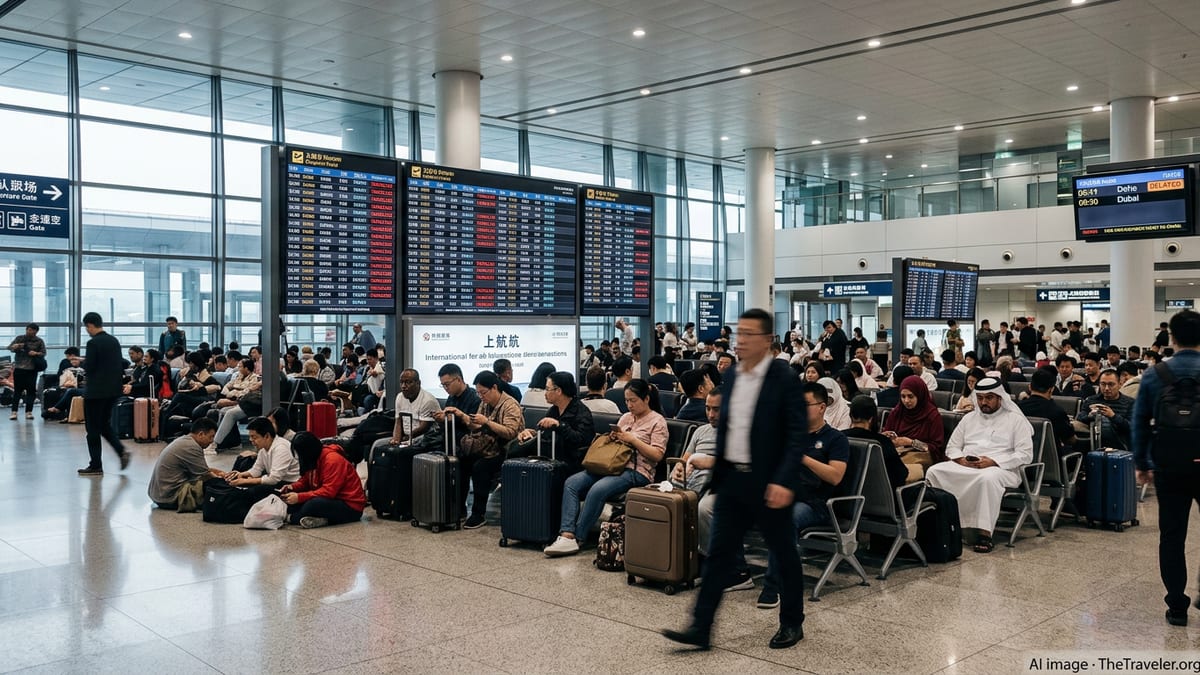
The result for many travelers in Saudi Arabia, the UAE, and Oman is a familiar pattern of long queues at transfer desks, crowded terminal waiting areas, and rapidly shifting departure information. Social media posts and local media reports describe passengers remaining airside for extended periods while they wait for new boarding times or alternative routings to open up.
In some cases, airport authorities and airlines have arranged additional rest areas and temporary amenities to manage the flow of disrupted travelers. However, the uneven nature of the cancellations and delays means that the experience can vary widely from one airport to another. At some hubs, operations have narrowed to a smaller but broadly stable schedule, while others are still seeing sharp swings in traffic levels from hour to hour.
Travelers connecting through multiple Gulf points are particularly exposed. A delayed departure from Riyadh or Amman can cascade into a missed onward connection in Dubai or Muscat, where options may already be constrained by reduced schedules and high load factors on remaining flights. For some, that has meant being rebooked a day or more later, or being offered rerouting through alternative hubs further afield.
Reports from passenger advocacy organizations suggest that information gaps remain a major source of frustration. While airlines are posting updates on digital channels and airport screens, short notice schedule changes can leave passengers unsure whether to clear immigration for hotel accommodation, remain in transit, or try to switch to a different carrier on their own.
Your Rights If Your Flight Is Cancelled or Delayed
Passenger protections in Saudi Arabia, the UAE, and Oman are not identical, but there are some common themes that travelers can rely on. National aviation regulations and carrier specific conditions of carriage typically require airlines to provide care and assistance during significant disruptions, particularly when cancellations or long delays are within the airline’s control.
In practical terms, that can include rebooking on the next available flight operated by the same airline or a partner carrier, a refund if the trip is no longer possible, meal vouchers or refreshments during extended waits, and hotel accommodation when an unexpected overnight stay becomes necessary. Public guidance from consumer rights organizations stresses that passengers should keep all receipts for out of pocket expenses, as some costs may be reimbursable depending on the circumstances and the airline’s policies.
For flights that touch the European Union or the United Kingdom, an additional layer of protection may apply. Under EU and UK passenger compensation regimes, travelers on qualifying flights could be entitled to standardized cash compensation when cancellations or long delays are caused by the airline rather than by extraordinary circumstances such as security closures or severe weather. Eligibility depends on route, operating carrier, and the reason for the disruption.
Passengers are also encouraged by advocacy groups to document their situation carefully by saving boarding passes, screen captures of delay notices, and any written communication from the airline. These records can be important when pursuing claims later, particularly in complex multi segment itineraries that pass through several jurisdictions.
Practical Steps for Travelers Heading Through the Region
Given the latest wave of cancellations and delays, travel specialists advise that anyone scheduled to fly with Royal Jordanian, Emirates, Saudia, FlyDubai, or Oman Air in the coming days should treat their itinerary as subject to change. Checking flight status frequently on official channels, enabling alerts in airline apps, and monitoring local news can offer early warning if a route becomes vulnerable to new restrictions.
Where possible, travelers are encouraged to build extra buffer time into connections through Gulf hubs, especially when onward flights are long haul or time sensitive. Opting for slightly longer layovers instead of tight minimum connection times can create room for schedule slippage without jeopardizing the entire journey.
Rebooking options may also be broader for those who contact their airline as soon as a disruption appears likely, rather than waiting until a flight is formally cancelled. Publicly available information from previous episodes of Gulf airspace disruption suggests that the earliest callers often secure the limited seats on alternative departures, while those who arrive later at the airport may face a smaller set of choices.
Finally, travel planners across the region are emphasizing the value of flexible tickets and comprehensive travel insurance during this period of instability. Products that allow date and routing changes without heavy penalties, or that cover additional accommodation and transport costs when flights are severely disrupted, can make a significant difference when airspace conditions shift quickly and unpredictably.