


More news on this day
As hydrogen-powered trains move from pilot projects to regular service, engineers are racing to ensure that onboard storage tanks, fuel cells and piping stay safe under real-world operating conditions, relying on increasingly sophisticated leak detection, shutdown logic and digital monitoring systems.
Get the latest news straight to your inbox!
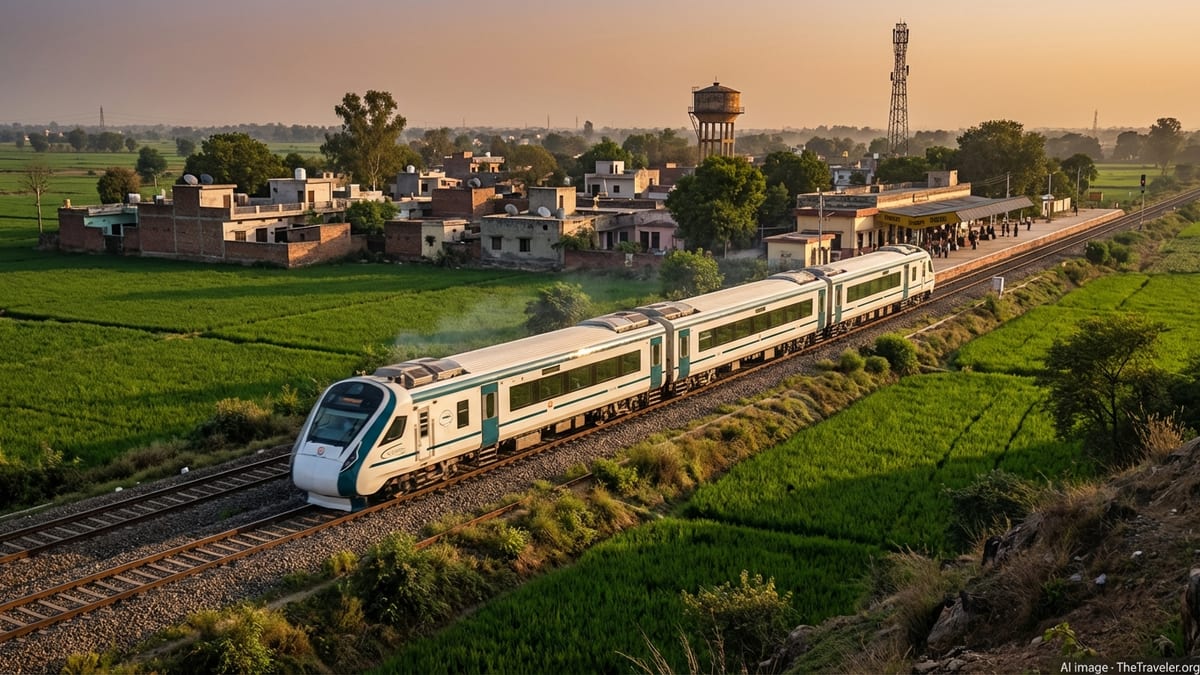
From Niche Prototype to Daily Passenger Service
Hydrogen trains are emerging as a low-emission alternative on regional lines where full electrification is costly or impractical. Instead of relying solely on overhead wires, these trains carry compressed hydrogen in roof-mounted tanks, feeding fuel cells that generate electricity for traction motors. Publicly available information indicates that such systems are now in demonstration or early commercial service in Europe and parts of Asia, placing new emphasis on onboard safety as train hours and passenger numbers rise.
The core safety concern is that hydrogen is both highly flammable and difficult to detect without sensors. The gas disperses quickly and is colorless and odorless, so conventional cues used with diesel or natural gas are of little use inside a passenger coach or maintenance depot. This has led manufacturers to layer multiple protective measures, combining robust tank and piping design with continuous leak monitoring, forced ventilation and predetermined emergency shutdown sequences.
Recent research on fuel cell railway vehicles and station environments highlights that enclosed or semi-enclosed spaces such as tunnels and covered platforms require special attention. Numerical simulations and full-scale experiments examining hydrogen release from trains show how quickly concentrations can build near ceilings or other confined zones, reinforcing the need for well-placed detectors and reliable control strategies that respond in seconds rather than minutes.
Rail safety planning guidance for hydrogen systems has evolved in parallel. Technical materials developed for fuel cell buses and other vehicles describe leak detection as an integral subsystem powered whenever the vehicle’s main control system is active, with sensors feeding alarms that can influence traction power, ventilation and refueling operations. Many of these concepts are now being adapted for rail, where longer trainsets and larger gas inventories add complexity to detection and shutoff strategies.
Inside the Leak Detection Architecture
Hydrogen trains typically deploy an array of gas sensors across key areas of the vehicle, including roof-mounted storage compartments, fuel cell rooms, power electronics cabinets and sometimes passenger spaces adjacent to technical bays. Legacy designs have relied on catalytic and thermal conductivity sensors, while newer systems are increasingly incorporating miniaturized solid-state devices, optical fiber sensors and hybrid modules that improve sensitivity and response times.
Manufacturers of automotive and industrial hydrogen sensors have begun marketing dedicated leak detector units aimed at fuel cell vehicles and stationary equipment. Public product documentation describes modules that continuously measure hydrogen concentration and communicate digitally with vehicle controllers, triggering staged alarms as levels approach preset thresholds. Some devices are promoted as capable of detecting small leaks at parts-per-million levels, giving operators an early warning window before flammable mixtures can form.
Suppliers also emphasize the importance of durability in rail environments. Sensors must operate across wide temperature ranges, resist vibration and moisture, and recover quickly after exposure to elevated gas concentrations. Recent development projects in Europe and Asia, described in technical releases and research summaries, focus on integrating these detectors into compact housings that can be distributed throughout the train, providing both localized leak alarms and data for system-level analytics.
Alongside discrete point sensors, a growing body of research explores distributed sensing networks and machine learning methods for leak localization. Studies using parking garages and refueling stations as testbeds demonstrate that arrays of detectors, combined with pattern recognition algorithms, can identify the likely source area of a release based on how concentration readings evolve in time and space. Similar approaches are being considered for depots and enclosed rail infrastructure to speed isolation of components when an anomaly is detected.
Automatic Shutdown and Venting Strategies
Leak detection alone is not sufficient; what matters for passenger safety is how quickly the train and surrounding infrastructure react. Safety planning documents for hydrogen systems outline a hierarchy of responses, beginning with local alarms and progressing to automatic shutdowns of valves, fuel cells and traction power when concentrations exceed specified thresholds. In many designs, once an automatic shutdown is triggered, a manual reset is required before the system can restart, preventing a return to service until an inspection is completed.
On hydrogen trains, control logic is typically configured to close isolation valves around high-pressure tanks, halt hydrogen supply to fuel cells, and switch the traction system to coast or braking if gas concentrations rise near sensitive equipment. Most published guidance recommends integrating these responses with forced ventilation to dilute any leaked gas, particularly in areas where hydrogen could accumulate under the roof or above suspended ceilings. In tunnels and stations, coordinated strategies between train and infrastructure, such as activation of exhaust fans, are being actively studied.
Recent full-scale experiments on emergency venting for hydrogen train storage systems examine how high-pressure releases behave when tanks are relieved through dedicated vent stacks. These studies analyze jet direction, plume length and thermal effects to inform placement of vent outlets on rail vehicles, with the goal of directing gas away from passenger doors, overhead equipment and potential ignition sources. The findings support design choices that combine rapid pressure relief with controlled dispersion in open air, complementing routine leak detection and shutdown functions.
Researchers also stress the importance of fail-safe behavior. Safety analyses of hydrogen vehicles note that minor leaks can develop quickly and that rapid automatic actions significantly reduce risk compared with scenarios that rely on manual intervention. Control systems are therefore being engineered so that loss of power or signal defaults to a safe state, such as closed valves and disabled fuel cells, aligning with established principles from other high-pressure gas and electrical safety systems.
Real-Time Monitoring and Digital Twins
Beyond binary leak alarms and shutdown triggers, hydrogen train projects are increasingly turning to real-time data analytics to manage safety margins over the full life cycle of the vehicles. Sensor data from hydrogen detectors, pressure transducers, temperature probes and ventilation systems can be streamed to onboard data acquisition units, allowing operators to track trends, correlate anomalies and refine maintenance schedules.
Technical institutes and industry partnerships have highlighted the role of advanced algorithms in this space. Research into online change-point detection and anomaly identification for fuel systems shows that statistical methods can flag subtle deviations in gas consumption or concentration profiles that may precede a detectable leak. By spotting these shifts early, operators could schedule inspections or component replacements before a safety threshold is reached.
Some research groups are exploring the integration of hydrogen detection data into digital twin models of trains and stations. In these concepts, three-dimensional simulations of airflow and gas dispersion, previously used only at the design stage, are coupled with live sensor readings to estimate where leaked hydrogen is likely to migrate in real time. Numerical studies of hydrogen behavior in tunnels and under platform roofs indicate that such models can help identify blind spots where fixed sensors may under-read, guiding both sensor placement and emergency response strategies.
Infrastructure projects such as advanced monitoring systems for hydrogen refueling stations also point toward closer coupling between rolling stock and ground equipment. Continuous leak detection at depots, combined with automated shutdown and alerting, could provide an additional layer of protection during refueling and maintenance, when piping is frequently connected and disconnected and the probability of small leaks is highest.
Designing for Future Rail Networks
As national and regional rail operators weigh the costs and benefits of hydrogen trains against alternatives such as batteries and conventional electrification, safety systems are becoming a central part of the technology evaluation. Studies on platform roof geometry, tunnel ventilation and sensor placement underscore that hydrogen requires different design assumptions from diesel exhaust or purely electric traction, particularly in partially enclosed spaces where buoyant gas can linger near structural elements.
Systematic analyses of platform and depot layouts show that sensor networks, vent locations and control logic need to be optimized together. For example, modeling work suggests that small changes in roof height, opening placement or cross-ventilation can significantly influence gas accumulation patterns, affecting how quickly detectors see rising concentrations and how effective automatic shutdown and ventilation responses will be.
Component suppliers, meanwhile, continue to introduce new generations of hydrogen leak detectors, organic and magneto-electronic sensors, and fiber-optic monitoring solutions. Publicly available product and research information points to a trend toward higher sensitivity, faster response, and lower power consumption, all of which are attractive for rail operators planning long service intervals and extensive sensor networks.
While standards specific to hydrogen trains are still evolving, many of the building blocks for safe operation already exist, adapted from fuel cell road vehicles, buses and stationary installations. For passengers stepping onto a hydrogen-powered regional service, most of this technology remains invisible. Behind the scenes, however, a layered combination of leak detectors, automatic shutdown systems and real-time monitoring is quietly shaping how railways aim to deliver low-carbon travel without compromising safety.