


More news on this day
Austria is a compact, high-income country in the heart of Europe, where Alpine landscapes, dense rail networks and historic cities underpin a powerful tourism and services-led economy.
Get the latest news straight to your inbox!
Geography and Population
Austria is a landlocked Central European state situated in the Eastern Alps, sharing borders with Germany, Czechia, Slovakia, Hungary, Slovenia, Italy, Switzerland and Liechtenstein. Its territory covers just under 84,000 square kilometres, yet includes some of Europe’s best-known mountain scenery, from Tyrol’s ski valleys to the high passes of the Grossglockner region. The Danube River cuts across the north and east of the country, tying Vienna and Linz into a transport corridor that links southern Germany with Slovakia and Hungary.
Publicly available demographic data for 2026 indicate a population of a little over 9.2 million residents, with foreign nationals accounting for about one fifth of all inhabitants. Austria’s population is relatively urbanised, concentrated in Vienna, Graz, Linz, Salzburg and Innsbruck, but a significant share of people still live in smaller market towns and Alpine valleys that depend heavily on visitor spending. The country’s median age is in the mid‑40s, reflecting broader European ageing trends.
Austria’s geography strongly shapes mobility and tourism. Mountain ranges restrict road capacity in key corridors, encouraging long-distance rail use and pushing policymakers to manage seasonal traffic flows through tunnels and high-alpine passes. At the same time, the compact size of the country allows travellers to cross from the capital to major Alpine resorts in a matter of hours, reinforcing its image as a destination where culture, nature and outdoor sport sit within easy reach of each other.
Environmental sensitivity is a defining theme. Alpine ecosystems are considered highly exposed to climate change, and reports highlight rising temperatures and changing snowfall patterns. This is already prompting many destinations to diversify away from a sole focus on winter sports towards year-round hiking, cycling and cultural tourism.
Political System and International Role
Austria is a federal parliamentary republic made up of nine provinces, known as Bundesländer, including Vienna, Tyrol, Salzburg and Styria. The federal president serves as head of state, while executive power is largely exercised by the federal government led by a chancellor who must command a majority in parliament. The bicameral legislature, consisting of the National Council and the Federal Council, shapes national law, with the latter giving the provinces a voice in federal legislation.
The country is a member of the European Union and the euro area, and uses the euro as its currency. It participates fully in the EU’s single market and Schengen Area, while maintaining a long-standing constitutional commitment to military neutrality outside collective defence alliances. This positioning gives Austria a role as a venue for international organisations and conferences, particularly in Vienna, where several United Nations agencies and other international bodies are based.
Austria’s federal structure is highly relevant for travel and tourism. Responsibilities for spatial planning, nature protection and many tourism-related regulations lie with the provinces and municipalities. This creates a patchwork of local strategies, from Vienna’s focus on cultural events and congress tourism to Tyrol’s emphasis on mountain sports and “gentle mobility” initiatives that promote car-free holidays.
At EU level, recent country reports underline that demographic ageing and the green and digital transitions are central policy challenges. Travel and transport networks, including cross-border rail and river corridors, are central to discussions on sustainable growth, emissions reduction and regional development in the Alpine region.
Economy, Infrastructure and Living Standards
Austria has one of the highest income levels in the European Union. Recent figures from official statistics and European institutions place nominal gross domestic product at just over 500 billion euros in 2025, with GDP per capita comfortably above the EU average when adjusted for purchasing power. Services dominate the economy, with industry, construction and a highly developed tourism sector also playing major roles.
The country’s economic model relies on a dense network of small and medium-sized enterprises, many of them family-owned manufacturers or service providers. Travel-related services, from accommodation and gastronomy to transport and cultural institutions, form a large part of local economies in Vienna, Salzburg, Tyrol and Vorarlberg. Health and education indicators are comparatively strong, with life expectancy above the EU average and relatively low rates of social exclusion, according to recent European health and social reports.
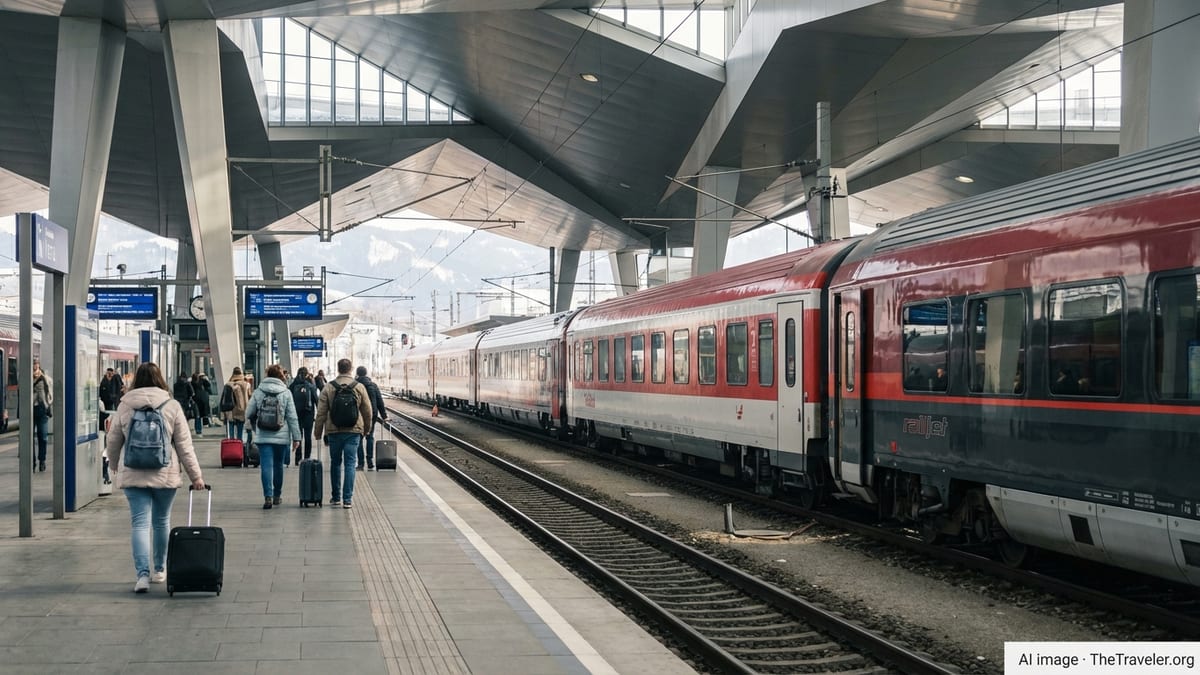
Infrastructure is a core strength. Austria maintains an extensive rail system with frequent intercity and regional services, including night trains linking Vienna with other European capitals. The KlimaTicket, a nationwide public transport pass introduced in 2021, has been analysed in academic studies that point to a measurable rise in rail and bus use compared with scenarios without the pass. For international arrivals, Vienna International Airport is the primary gateway, supplemented by regional airports in cities such as Salzburg and Innsbruck that are closely tied to seasonal tourism peaks.
At the same time, observers point to medium‑term headwinds. Recent economic surveys highlight slower productivity growth than in some peer economies, labour-market pressures linked to demographic ageing and a relatively high level of public pension expenditure. These structural issues shape debates on how to sustain public investment in transport, climate adaptation and tourism infrastructure.
Tourism Powerhouse in the Alps
Tourism is one of Austria’s signature sectors and a cornerstone of its international image. Statistics Austria and the tourism ministry report that 2024 marked a record year, with more than 150 million overnight stays and over 46 million arrivals in commercial accommodation, surpassing pre‑pandemic levels. The latest Tourism Satellite Accounts put tourism’s direct contribution to national economic output at around 4.4 percent in 2024 and 2025, with indirect effects lifting the wider contribution significantly higher.
Visitors are drawn to a broad mix of experiences. Winter sports in Tyrol, Salzburg and Vorarlberg remain globally recognised, with established resorts such as Kitzbühel and Ischgl in the west and the Ski amadé area in the central Alps. In spring and summer, hiking, cycling and lake tourism expand the season in regions including Carinthia and Salzkammergut. Vienna, Salzburg, Graz and Linz anchor city tourism, attracting travellers with imperial architecture, classical music institutions and contemporary cultural events.
Over the last decade, Austria has become a reference point in debates over “overtourism” in small Alpine and lakeside communities. The lakeside village of Hallstatt, for example, is frequently cited in international coverage as a case study in how social media exposure can overwhelm limited local infrastructure, with annual visitor numbers far outstripping the resident population. This has encouraged local and regional authorities to experiment with visitor caps, parking management and communication campaigns designed to spread demand more evenly throughout the year.
Seasonality remains a structural feature. Official data show that summer overnight stays have grown particularly strongly compared to pre‑crisis years, while winter volumes, although high, have recovered more gradually. National strategies now focus on “balanced tourism” across all seasons and regions, promoting cultural routes, wine tourism and cycling networks in lesser‑known areas to reduce pressure on a handful of hotspots.
Sustainability and Future Outlook
The policy debate around tourism and mobility in Austria increasingly centres on climate and sustainability. Alpine glaciers and snow reliability are under measurable pressure from warming temperatures, and studies indicate that low-lying ski areas face a shorter winter season over the coming decades. In response, many destinations are investing in year‑round offers such as mountain biking, wellness, food tourism and cultural festivals, while also upgrading public transport links to reduce car dependency.
National and regional programmes explicitly promote sustainable travel, from the KlimaTicket for domestic rail and bus travel to incentives for energy-efficient hotel refurbishments and climate-friendly building standards in tourism regions. Recent parliamentary documents highlight funding for “Balanced Tourism” initiatives, which aim to support projects that protect local quality of life while maintaining the economic benefits of visitor spending.
Public discussion also touches on housing affordability and labour shortages in tourism hotspots, where rising demand from visitors can collide with the needs of local residents and workers. Efforts to address these tensions include zoning rules, support for staff accommodation and campaigns designed to present tourism careers as attractive, stable options.
Looking ahead, international organisations and national economic institutes view Austria as a relatively resilient, high-income economy that nevertheless faces familiar European challenges: an ageing population, the need to lift productivity and the urgency of decarbonisation. For travellers, these dynamics may translate into more emphasis on rail-based itineraries, greener accommodation choices and a broader mix of destinations, as Austria strives to keep its Alpine landscapes and historic cities attractive and liveable for both visitors and residents.