


More news on this day
Five freight train cars derailed near West Burlington, Iowa, disrupting rail traffic through the area and drawing attention to safety and weather risks along one of the region’s key freight corridors.
Get the latest news straight to your inbox!
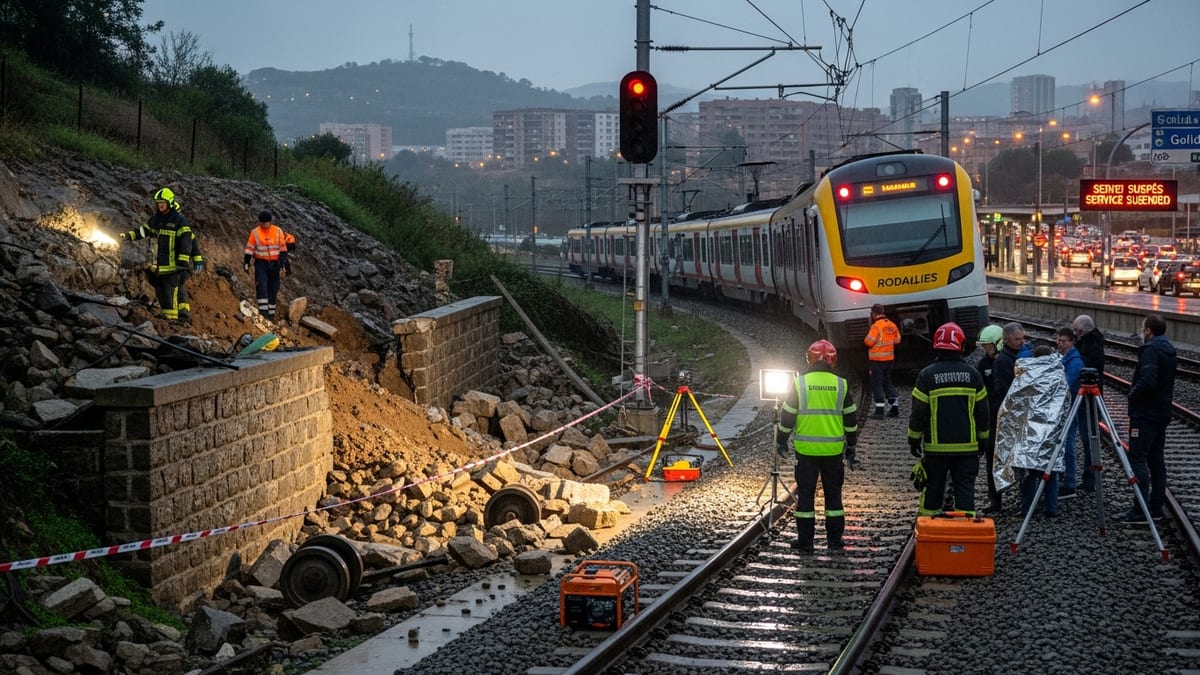
Derailment west of Burlington affects busy Iowa freight route
Reports from rail operations and regional emergency summaries indicate that a freight consist traveling through southeast Iowa experienced a partial derailment near West Burlington, with five cars leaving the tracks. The incident occurred along a line that carries significant agricultural and industrial traffic across the Mississippi River gateway at Burlington.
Initial information points to the derailment happening on a segment of track that parallels major road and river corridors used to move grain, manufactured goods, and chemicals in and out of the Midwest. While details on train speed and exact timing have not been fully consolidated, the affected consist appears to have been a mixed freight rather than a unit train dedicated to a single commodity.
There were no early indications of a large fire or visible plume, a contrast to several recent high profile derailments elsewhere in North America that have involved hazardous materials and evacuations. Publicly available information so far suggests that the cars involved were standard freight equipment and that any leaks or spills, if present, were limited and contained to the immediate right of way.
The location near West Burlington is notable because it sits within an established rail hub that has long served as a bridge between Iowa’s interior and national markets. Any disruption on this stretch can quickly ripple through freight schedules, even when an incident is relatively small in scale.
Response, inspections and early recovery efforts
Railroad maintenance crews were dispatched to the scene to stabilize the cars, clear debris, and begin track inspections. According to publicly accessible operational bulletins and routine safety reporting, the priority in the first hours after a derailment is to secure equipment and verify that rail, ballast, and signaling systems have not suffered structural damage that would compromise subsequent movements.
Heavy equipment is typically brought in to rerail cars or, if necessary, to cut and remove damaged rolling stock so that temporary repairs can be made. In comparable incidents documented in federal safety databases, five-car derailments are often resolved within a day or two, barring complications such as soil instability or bridge impacts. Early indications near West Burlington suggest the work falls within that more manageable category.
Rail traffic through the area was temporarily slowed or rerouted while inspections proceeded. Dispatch data and timetable adjustments referenced in rail community reporting point to freight trains being held at sidings on either side of the incident, with priority given to keeping time-sensitive shipments moving wherever alternative routings were available.
Local road traffic impacts appeared limited, as the derailment occurred on open track rather than directly within a major road crossing. That reduced the likelihood of extended detours or closures for nearby drivers, though work vehicles and cranes operating near the right of way may still cause short-term congestion on local access roads.
Weather and infrastructure context in southeast Iowa
The derailment near West Burlington follows a stretch of active summer weather in eastern Iowa and western Illinois. Recent National Weather Service event summaries describe strong winds and severe storms that have affected railroad infrastructure in the broader region, including instances where four to five cars were pushed off tracks by powerful straight line gusts south of Monmouth, Illinois. While it is not yet clear whether weather played a direct role in the West Burlington incident, the broader pattern has renewed attention to how aging infrastructure copes with increasingly volatile conditions.
Track geometry, ballast condition, and drainage are recurring themes in investigations of smaller freight derailments. When heavy rains saturate embankments or when repeated freeze thaw cycles weaken ties and fasteners, even routine train movements can introduce additional stress on rail joints and curves. The corridor through Burlington and West Burlington is no exception, carrying long, heavy trains that test the limits of older alignments.
State level transportation planning documents for Iowa highlight the strategic importance of maintaining reliable freight rail links in the southeast corner of the state. The presence of major shippers, transload facilities, and riverfront projects in Burlington underscores the economic stakes when a key line is interrupted, even briefly. Each unexpected stoppage feeds into broader discussions about capital investment, inspection schedules, and resilience planning.
Local emergency management materials for Des Moines County emphasize coordination between rail operators and public agencies on preparedness and mitigation. The West Burlington derailment now joins a growing list of recent rail incidents across North America that planners and safety analysts will examine for lessons on equipment placement, train makeup, and response logistics.
Rail safety debates sharpen as minor incidents accumulate
Although the derailment near West Burlington did not immediately resemble the catastrophic events that drive national headlines, safety advocates often point to smaller, low casualty incidents as warning signs. Federal advisory documents and research into train-building practices note that the positioning of loaded and empty cars, particularly tank cars, can significantly influence how many cars derail in an accident and whether hazardous cargo is released.
Recent safety advisories have urged railroads to pay closer attention to train length, distributed power configuration, and the mix of heavy and light cars in a consist. In scenarios where initial derailments involve only a handful of cars, better train design can reduce the risk of secondary pileups and minimize damage to adjacent equipment.
Academic case studies comparing unit trains and mixed manifest trains suggest that strategic placement of higher risk cars in portions of the train with lower derailment probabilities can meaningfully reduce overall transportation risk. The incident near West Burlington is likely to be reviewed through this lens, especially if investigators determine that train makeup contributed to the five cars leaving the rail.
Public perception adds another dimension. Online discussions and local commentary reflect a sense that train incidents, while still rare in absolute terms given the volume of traffic, feel more frequent and more visible. Each new derailment, even a contained one in rural or semi rural territory, feeds questions about track investment, inspection staffing, and the pace of regulatory change.
Impact on travelers and the region’s mobility network
For most travelers, the immediate effects of the West Burlington derailment are indirect. The line involved primarily carries freight, and publicly available timetables show limited passenger service using this specific segment. However, any freight disruption can influence broader mobility patterns by affecting highway congestion, delivery schedules, and the availability of goods that move by truck once they leave rail terminals.
Travelers passing through the Burlington area over the next several days may notice increased truck traffic as shippers adjust to temporary slowdowns on the rail line. Hotels and roadside services near key junctions sometimes see short term spikes in demand when freight crews and maintenance contractors are staged nearby during recovery work.
For regional tourism, the incident serves as a reminder that rail infrastructure is an often invisible but essential backbone supporting events and waterfront developments around Burlington. Construction materials, food and beverage supplies, and festival equipment frequently arrive by rail before shifting to local distribution. Even brief interruptions can complicate tight event timelines.
As rail operations normalize near West Burlington, attention is likely to shift from immediate disruption to the longer term questions of how the corridor will adapt to heavier trains, changing weather patterns, and evolving safety expectations. For travelers and residents alike, the episode highlights the delicate balance between the efficiency of long freight trains and the responsibility to keep them on the rails.