


More news on this day
Belgium, a compact country at the crossroads of Western Europe, combines medieval cityscapes, a high-income economy and a central role in European integration that belies its modest size.
Get the latest news straight to your inbox!
A Federal State of Distinct Regions
Belgium is a federal monarchy in which power is shared between the national government and several layers of regional and community authorities. The country is broadly divided into three regions: Dutch-speaking Flanders in the north, largely French-speaking Wallonia in the south and the officially bilingual Brussels-Capital Region in the centre. Each region exercises significant responsibility over areas such as transport, spatial planning and aspects of economic policy, alongside language-based communities that oversee education and culture.
Recent country assessments describe Belgium as one of the most densely populated states in Europe, with close to 12 million residents and a population density well above the European Union average. Publicly available demographic data for early 2025 indicate that the Flemish Region accounts for the majority of inhabitants, followed by Wallonia and the smaller but highly urbanised Brussels-Capital Region. The share of residents over 65 continues to rise, reflecting wider European ageing trends and adding pressure to the welfare and health systems.
Political life is shaped by this institutional complexity. Regional and federal elections held in 2024 reinforced the importance of coalition building across linguistic lines, with party systems that differ between Flanders, Wallonia and Brussels. Reports on the post-election period describe extended negotiations to form governments at various levels, underlining how Belgium’s federal architecture both accommodates diversity and complicates decision-making.
Despite these challenges, the country has remained institutionally stable, anchored in its constitutional monarchy and a long tradition of power-sharing. Observers often point to Belgium as a laboratory of federalism, where compromises between communities are essential to governing and where regional authorities play a central role in day-to-day policy.
Brussels, De Facto Capital of the European Union
The Brussels-Capital Region holds a unique position as both the seat of Belgium’s national institutions and the primary host of European Union bodies. Public information from Belgian and European sources describes Brussels as the location of the European Commission, the Council of the EU and the European Council, as well as one of the official seats of the European Parliament. The city also welcomes the headquarters of the North Atlantic Treaty Organization and numerous international organisations, cementing its image as a global diplomatic hub.
This concentration of institutions has helped turn Brussels into a major economic engine. Studies on the city’s role indicate that the wider metropolitan area forms Belgium’s largest employment basin, with a workforce that commutes daily from across Flanders and Wallonia. A large services sector, from consultancy and law to communications and hospitality, has grown up around European and international organisations, reinforcing the so-called “Brussels effect” in which EU regulatory decisions reverberate far beyond the bloc’s borders.
For visitors, the European presence has become a tourism asset in its own right. Attractions in the European Quarter, including interactive visitor centres and guided routes around EU buildings, are promoted alongside more traditional draws such as the Grand-Place, art nouveau architecture and renowned food culture. City tourism offices present the European institutions as part of Brussels’ identity, positioning the capital as both a working political centre and a destination for civic and cultural discovery.
The international profile of Brussels has spillover effects across Belgium. Conferences, summits and diplomatic events bring in business travellers who often extend their stays to explore other parts of the country, while the city’s connectivity by rail and air reinforces Belgium’s reputation as a convenient gateway to neighbouring capitals such as Paris, Amsterdam and Luxembourg.
A High-Income, Trade-Driven Economy
Belgium’s economy ranks among the most affluent in the European Union, with GDP per capita comfortably above the EU average according to recent European Commission and Eurostat data. Official summaries describe the country as an advanced, open and highly globalised economy whose performance depends heavily on trade in goods and services. Its central location and dense transport network, including major seaports such as Antwerp and Zeebrugge, underpin its role as a logistics and distribution hub for the wider region.
Manufacturing remains important, particularly in chemicals, pharmaceuticals, food processing and advanced materials. Figures released by Belgian foreign trade authorities highlight the pharmaceutical sector as a leading export driver, accounting for a substantial share of total goods exports. At the same time, Belgium has cultivated strengths in financial services, information technology and creative industries, supported by a highly educated workforce and sustained investment in research and development.
Recent policy reports point out that the labour market exhibits sharp regional contrasts. Flanders typically records lower unemployment and higher employment rates than Wallonia and Brussels, where joblessness, especially among young people and non-EU citizens, remains above the EU average. Skills shortages in certain technical and health professions coexist with inactivity among some groups, prompting debates over training, migration and labour market reform.
Public finances continue to face pressure from ageing, healthcare costs and the legacy of pandemic support measures. European surveillance documents describe Belgium as combining solid living standards with persistent structural deficits and relatively high public debt. In response, authorities have set out medium-term fiscal consolidation plans while seeking to preserve investment in green transition, digitalisation and infrastructure.
Tourism Recovery and City Destinations
Tourism plays a growing role in Belgium’s services sector, particularly in historic cities such as Brussels, Bruges, Ghent and Antwerp, as well as in coastal and countryside destinations. Regional statistics from Flanders show that 2024 was the first full year in which overnight stays by leisure and business visitors returned to or slightly exceeded levels recorded before the Covid-19 pandemic. Similar trends are reported in Brussels and Wallonia, where hotel occupancy has been buoyed by the return of conferences, cultural events and city breaks.
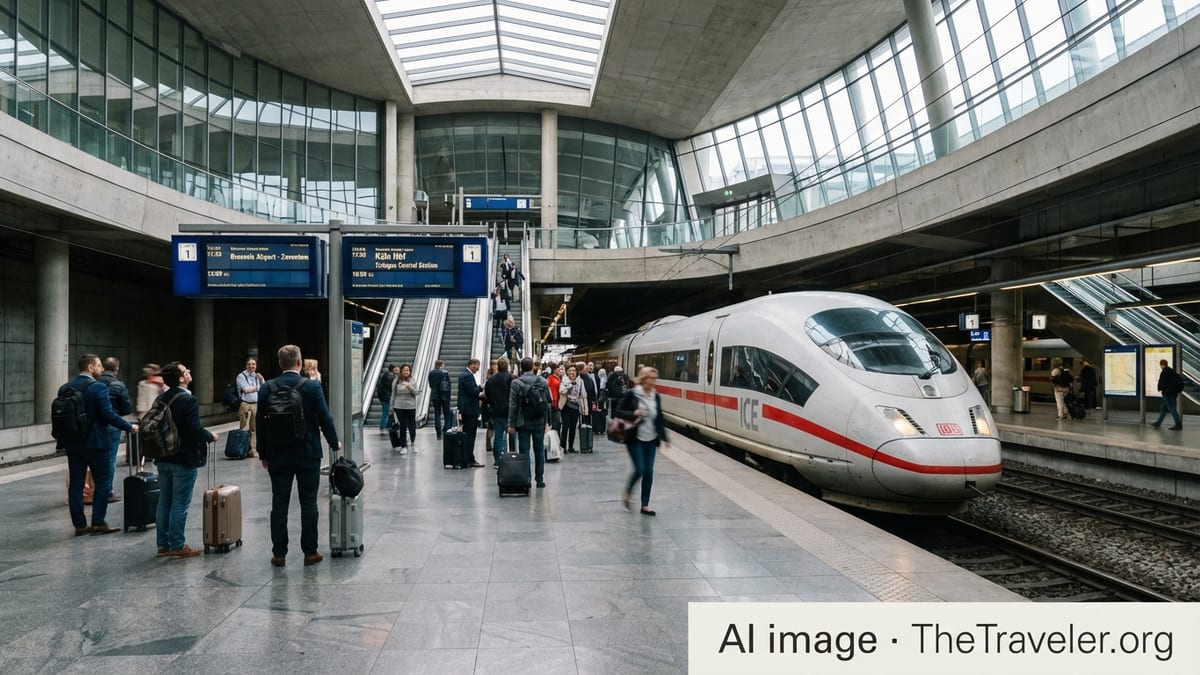
Domestic and neighbouring-country visitors continue to make up a large proportion of stays, but long-haul travel is gradually recovering, according to travel industry monitoring in early 2025. Belgium’s position on major European rail corridors and its compact geography mean that visitors can move quickly between the capital and other attractions, from canal-lined medieval quarters to World War remembrance sites and nature reserves in the Ardennes.
Tourism bodies increasingly highlight sustainability as a priority, encouraging rail travel, cycling and walking tours to limit environmental impacts in dense city centres. Destination managers in hotspots such as Bruges have debated how to balance visitor numbers with quality of life for residents, mirroring conversations in other popular European city destinations. Efforts include promoting lesser-known neighbourhoods and off-season trips to spread demand more evenly.
For travellers, the practical appeal remains straightforward: a multilingual population, the use of the euro, and Belgium’s integration in the Schengen area simplify logistics, while a well-developed hospitality sector offers options from historic hotels to contemporary design properties. Food and drink tourism, centred on Belgian chocolate, beer and gastronomy, continues to feature prominently in marketing campaigns and visitor experiences.
Quality of Life and Social Indicators
On many social indicators, Belgium performs above the European average, although gaps between regions and population groups persist. A 2025 health profile compiled for the European Union notes that life expectancy and access to healthcare are high, supported by a mandatory insurance-based system that combines public and private providers. Preventive care and hospital capacity are generally strong, yet rising demand linked to ageing and chronic conditions poses ongoing challenges.
Income figures and poverty statistics suggest that overall living standards are robust, with a GDP per capita and consumption level exceeding the EU mean. At the same time, the share of people at risk of poverty or social exclusion remains significant, particularly among children, single-parent households and migrants. Recent EU assessments highlight the need to further integrate disadvantaged groups into the labour market and education system, with attention to language barriers and urban segregation.
Education outcomes are mixed. Belgium benefits from high tertiary attainment among younger adults and a dense network of universities and research centres, many with strong international reputations. However, comparative studies also note disparities in basic skills and attainment between students from different socio-economic backgrounds and language communities. Policy debates frequently focus on how to improve equity in schooling while safeguarding performance in science, technology and innovation.
For residents and visitors alike, Belgium’s dense urban fabric, cultural institutions and transport connectivity contribute to a relatively high quality of life, even as policymakers grapple with congestion, pollution and housing affordability in fast-growing areas. The country’s ongoing efforts to reconcile economic dynamism, social cohesion and environmental sustainability continue to shape its profile as one of Europe’s most complex yet pivotal small states.