


International schools in Mexico have expanded rapidly in the last decade, driven by multinational investment, returning Mexican families from abroad, and a growing middle and upper-middle class seeking bilingual or foreign-curriculum education. For relocating families, understanding where international schools are located, how they are structured, and the typical cost ranges is essential to evaluating whether a move to Mexico is practical.
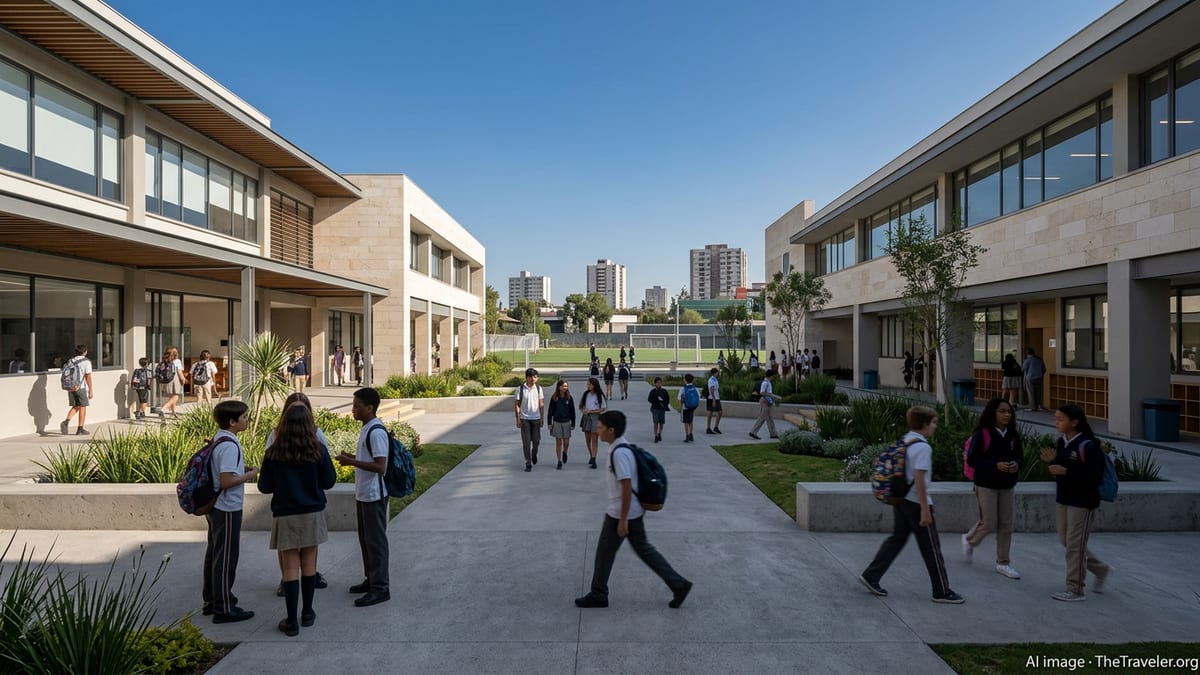
Overview of the International School Landscape in Mexico
Mexico has one of the larger and more mature international school markets in Latin America, concentrated heavily in major metropolitan areas and industrial hubs. The sector includes long-established American and British schools, bilingual Mexican private schools with international accreditation, and newer for-profit international school groups. Demand is strongest among expatriate families, globally mobile Mexican professionals, and local families targeting international universities. Market analyses note a steady rise in bilingual and international offerings, especially in urban centers with strong corporate presence.
Most international schools in Mexico operate as private, fee-paying institutions. They typically combine local recognition by the federal Secretariat of Public Education with international accreditation from organizations aligned with the US, UK or International Baccalaureate systems. This dual recognition allows students to keep university options open in Mexico and overseas.
The international segment sits on top of a wider private-school market that ranges from relatively affordable bilingual schools to premium institutions with extensive facilities, small class sizes and multiple diploma options. For relocation planning, the key variables are the city, the specific school’s positioning within the market, and whether the employer provides an education allowance to offset costs.
Relative to many other global expatriate destinations, Mexico’s international schools tend to be moderately priced. Comparative studies of the Americas put cities like Monterrey in a mid-range bracket for annual tuition, often below major US or European capitals but higher than some other Latin American cities.
Geographic Distribution and Key City Clusters
International schools in Mexico are not evenly distributed. They are heavily concentrated in a limited number of metropolitan areas where multinational companies and international organizations are based. Families considering secondary cities must assess availability carefully, as options may be fewer and more locally oriented.
Mexico City is by far the largest hub, with dozens of international or bilingual schools offering US, British, IB and mixed curricula. Well-known names include long-established American schools and newer British and international-curriculum institutions. These schools serve both expatriate and Mexican families and often maintain waiting lists in popular grades.
Monterrey and Guadalajara form the second tier of international education hubs. Monterrey, an important industrial and corporate center, hosts American-style and bilingual international schools, and is cited in regional tuition comparisons with a median annual international school cost in the high four-figure to low five-figure US dollar range. Guadalajara, a major technology and services center, also offers several IB and American-style schools catering to international and local families.
Outside the three main metros, international schools are present in a number of regional cities such as Puebla, Querétaro, Tijuana, Mérida and others. Many of these schools are American-style or bilingual institutions with IB authorization or international accreditation. Coastal and tourism-oriented regions, particularly in Baja California Sur and the Riviera Maya, also host a small but growing group of international and bilingual schools catering to multinational staff and long-stay foreign residents.
Curricula, Accreditation and Language of Instruction
The international school offer in Mexico is diverse in terms of curricula, but several clear patterns are relevant for relocating families. Many of the most established international schools follow an American-style curriculum, often from preschool through high school, and may offer Advanced Placement courses or a US-style high school diploma. Some of these schools have long histories in Mexico City and other major centers, with student bodies that are majority Mexican but strongly international in orientation.
The International Baccalaureate is widely represented. A number of schools in Mexico offer the IB Diploma Programme at upper-secondary level, and some provide all three IB programmes from primary to diploma years. In cities such as Puebla and Mexico City, certain schools have been early adopters of full IB authorization, positioning themselves as academic pathways to universities globally as well as within Mexico.
British-oriented schools are present in Mexico City and selected other cities, offering programmes aligned with the English National Curriculum, IGCSE and sometimes the IB Diploma at post-16 level. These schools tend to be smaller in number but attractive for families moving from or expecting to move to the UK or other British-curriculum regions.
Language of instruction is typically bilingual. Many schools operate with English and Spanish as core instructional languages, often starting with a greater proportion of English in early years and balancing to full bilingualism by middle school. In most cases, Spanish language and Mexican social studies are mandatory to meet local regulatory requirements, while English is the primary language for mathematics, sciences and international programmes.
Typical Tuition Ranges and Cost Structure
International school tuition in Mexico covers a wide spectrum, but broad patterns can be identified. Global comparisons that rank Mexico among relatively affordable international school destinations in 2026 indicate typical annual tuition bands of roughly 4,000 to 12,000 US dollars at many international schools, with some premium institutions exceeding this range for upper grades. Within Mexico, relocation-focused overviews often quote annual tuition for bilingual or international schools in the range of approximately 50,000 to 200,000 Mexican pesos, with top-tier schools beyond this upper bound.
Premium international schools in Mexico City and other major hubs often operate at or above the upper end of these indicative ranges. Fee schedules from well-known American and bilingual schools show tuition that, once annualized, can approach or exceed the equivalent of 10,000 US dollars per year in upper grades, excluding registration and capital fees. Some schools charge on a ten-month basis, billing monthly tuition that, multiplied by the academic months, yields a high four-figure or low five-figure annual total.
Mid-range bilingual and international schools in secondary cities tend to fall closer to the middle of the indicative spectrum. In industrial centers such as Monterrey, benchmarking exercises of international school fees show median annual tuition in the high single thousands of US dollars, placing these schools between lower-cost Latin American destinations and higher-cost markets like major European capitals.
It is important for relocating families to review full fee schedules rather than headline tuition alone. Many international schools apply additional charges for enrollment, testing, transportation, meals, extracurricular activities and materials. In some cases, capital or development levies are required on entry or periodically to fund campus investments.
Enrollment, One-Time Fees and Ancillary Costs
Most international schools in Mexico apply one-time or infrequent fees in addition to recurring tuition. These charges can significantly affect the total first-year cost for relocating families and should be factored into relocation packages or personal budgeting. Typical additional charges include application or admission fees, enrollment or inscription fees, and one-time capital contributions that act as a form of membership or development charge.
Fee schedules from international and bilingual schools show a variety of structures: some require a one-time capital or membership fee per student or per family, others charge an annual enrollment fee, and some combine both. The level of these fees varies widely, from relatively modest charges to sums that can represent a substantial percentage of annual tuition, particularly in high-demand schools.
Ancillary costs can also be material. Transportation via school bus services, meal plans, uniforms, technology fees and external examination fees (for IB, AP or similar) may be billed separately. In some institutions, extracurricular activities are included in tuition; in others, they are charged per activity or per term. Parents should request a comprehensive fee breakdown and clarify which services are optional versus mandatory.
For employers providing education allowances, it is important to understand that first-year costs may be significantly higher because of one-time levies. Negotiating packages on the basis of an average annual cost over several years, rather than first-year costs alone, can provide a more realistic picture of the financial commitment.
City-by-City Cost and Availability Considerations
Mexico City presents the widest range of international school options, from long-established American and British schools to newer international and bilingual institutions. Costs in the capital tend to be at the upper end of the Mexican spectrum, reflecting demand from both expatriate and local families. Premium schools offer extensive facilities, diverse extracurricular programmes and multiple graduation pathways, and tuition in higher grades can approach or exceed the top of the typical national range.
Monterrey, as a major industrial and business hub, has strong demand for international education linked to multinational manufacturing and corporate operations. International school tuition benchmarks for the city place typical annual fees around the mid to upper range for Mexico, with median values reported around the high four-figure US dollar level. Availability is generally good, but high-demand grades can still experience waiting lists, especially in well-known American-style schools.
Guadalajara, which has become a technology and services center, offers several international and bilingual schools with IB and American curricula. Fee levels are broadly comparable to Monterrey in many cases, although they can vary significantly by institution. Families in Guadalajara should assess both language profile and accreditation, as the market includes schools primarily serving local families alongside more internationalized options.
In secondary and emerging destinations such as Puebla, Querétaro, Tijuana, Mérida and coastal regions, international school options are more limited in number but still significant for globally mobile families. Some of these schools have IB authorization and American-style accreditation, while others focus on bilingual education under the Mexican curriculum with international elements. Tuition in these locations can be somewhat lower on average than in Mexico City, but premium schools and those serving large expatriate communities may charge levels comparable to the main metropolitan centers.
Placement Pressure, Admissions and Capacity Risks
Capacity constraints are a practical consideration in Mexico’s international school sector. Popular schools in Mexico City, Monterrey and other large cities can maintain waiting lists, especially in early childhood and key transition grades. Enrollment guides for specific cities in Mexico suggest that new residents should begin the school search process as early as possible and prepare required documentation well in advance of planned admission dates.
Admissions processes typically include an application form, review of academic records, language assessments and sometimes entrance testing. Because international schools must often validate previous schooling through Mexican authorities, there can be administrative lead times in recognizing foreign transcripts. Some local education guides note that document validation can take several weeks, affecting how quickly students can be officially enrolled.
Families relocating on short notice should consider multiple school options and clarify mid-year admission policies. Certain schools are more flexible in accepting students throughout the academic year, while others may restrict entry to the start of terms. For children with specific educational needs or language support requirements, early dialogue with schools is particularly important, as capacity for specialized support may be constrained.
In secondary cities or smaller coastal communities, the main risk is not so much waiting lists but limited choice. There may be only one or two schools that meet international criteria in a given area. In these cases, employers and relocating families should align expectations on school quality, curriculum and language profile, and may need to consider a broader commuting radius or, in some cases, hybrid or boarding options.
The Takeaway
International schools in Mexico form a diverse and growing sector that is central to relocation feasibility for families with school-age children. The strongest concentration of schools is in Mexico City, Monterrey and Guadalajara, supplemented by smaller clusters in regional industrial centers and select coastal areas. Curriculum options are broad, with American, IB and British pathways widely available alongside bilingual Mexican programmes with international accreditation.
From a cost perspective, Mexico is generally more affordable than many European and Asian expatriate destinations, but tuition and associated fees still represent a major budget item. Typical annual tuition at many international schools falls in a range that for planning purposes can be considered roughly mid-level by global standards, with premium institutions in major cities charging at the upper end. One-time enrollment and capital levies, plus transportation and ancillary charges, can significantly increase first-year and ongoing costs.
Relocating families and employers should integrate international school analysis early in the decision process, focusing on three core questions: whether acceptable curriculum and accreditation are available in the target city, whether places are realistically obtainable in the required grades, and whether total education costs fit within family or corporate budgets. Addressing these issues systematically will help determine whether a Mexican posting is practical for households that depend on international education pathways.
FAQ
Q1. How much do international schools in Mexico typically cost per year?
Annual tuition at many international schools in Mexico often falls in an indicative range of roughly 4,000 to 12,000 US dollars, with premium schools in major cities charging at or above the upper end of this range, especially in upper grades. Actual costs vary significantly by city, school reputation, grade level and additional fees.
Q2. Which Mexican cities have the largest number of international schools?
Mexico City has by far the largest concentration of international schools, followed by Monterrey and Guadalajara. Secondary clusters exist in cities such as Puebla, Querétaro, Tijuana, Mérida and in selected coastal regions that host multinational operations and long-term foreign residents.
Q3. Are international schools in Mexico cheaper than in Europe or Asia?
In general, Mexico is considered moderately priced compared with many European and some Asian expatriate destinations. Typical tuition levels are lower than those in major financial centers but higher than in some lower-cost Latin American markets. However, premium schools in Mexico’s main cities can still represent a substantial annual expense.
Q4. What curricula do international schools in Mexico usually offer?
Common curricula include American-style programmes with a US high school diploma and often Advanced Placement courses, International Baccalaureate programmes at one or more levels, and British-oriented pathways aligned with the English National Curriculum and IGCSE. Many schools combine these with the requirements of the Mexican national curriculum to maintain local recognition.
Q5. Is instruction at international schools in Mexico bilingual?
Most international and bilingual schools operate in both English and Spanish. English is frequently the primary language of instruction for core academic subjects, while Spanish language, literature and social studies are delivered in Spanish to satisfy local educational requirements and support full bilingualism.
Q6. How high are one-time enrollment or capital fees?
One-time or infrequent fees such as application, enrollment and capital or development levies vary greatly by school. In some institutions these charges are relatively modest, while in others they can amount to a significant proportion of annual tuition, particularly in high-demand, premium schools. Families should request detailed fee schedules to capture these costs accurately.
Q7. How early should families apply for international schools in Mexico?
For sought-after schools in Mexico City, Monterrey and Guadalajara, it is advisable to begin the application process several months in advance of the desired start date. Early application is especially important for early childhood, transition grades and schools known for limited capacity, as waiting lists are common.
Q8. Do international schools in Mexico accept students mid-year?
Policies differ by institution. Some international schools are relatively flexible and accept new students throughout the year if places are available, while others limit admission to the start of terms or require specific entry windows. Families relocating mid-year should verify each school’s policy and grade-level availability.
Q9. Are there international schools in smaller Mexican cities or resort areas?
Yes, but options are more limited. Certain regional industrial centers and resort areas offer international or bilingual schools that serve both expatriate and local families. In smaller markets there may be only one or two schools that meet international criteria, so families should evaluate curriculum, accreditation and language profile carefully.
Q10. How do employers typically handle international school costs in Mexico?
Many multinational employers include an education allowance or direct payment of tuition as part of expatriate packages, particularly for senior or critical roles. The level of support varies by company and policy, and may or may not cover one-time enrollment fees, transportation and ancillary charges. Families should clarify coverage in detail when assessing a relocation offer.