


More news on this day
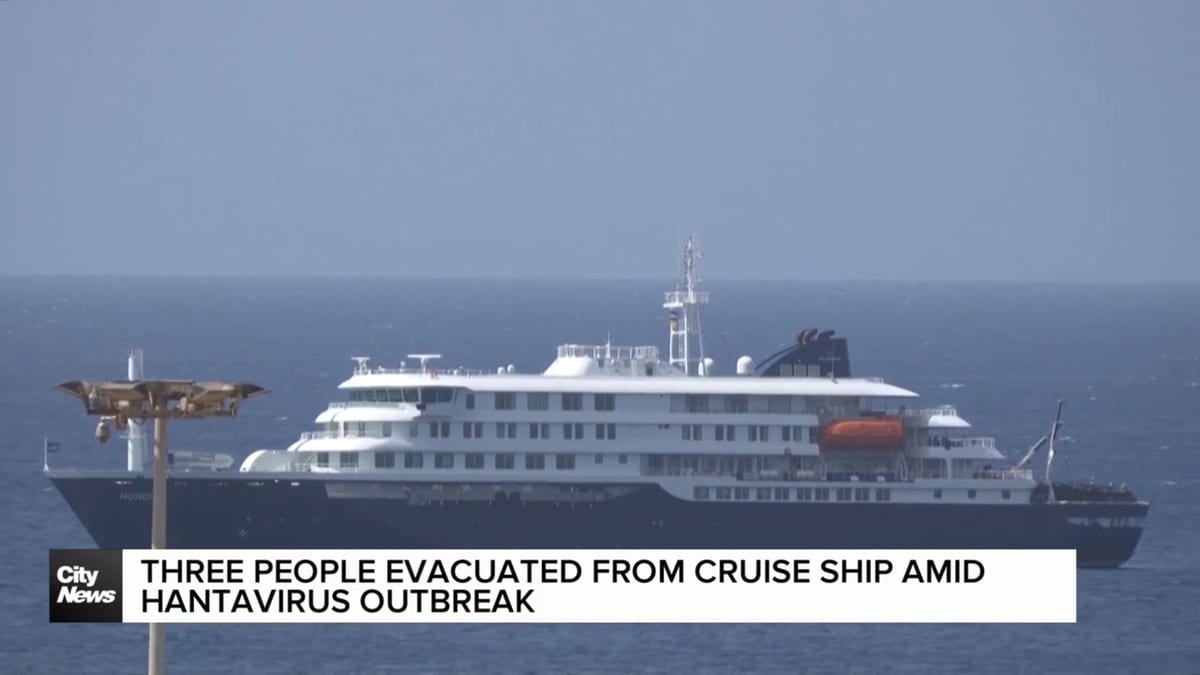
Nearly 150 passengers and crew remain stranded at sea aboard the Dutch-flagged expedition ship MV Hondius, after a deadly hantavirus outbreak turned a long-haul cruise into a protracted medical and diplomatic crisis off the coast of West Africa.
Get the latest news straight to your inbox!
Deadly outbreak unfolds on remote expedition voyage
The MV Hondius set sail from Ushuaia, Argentina, in March on a 46-day expedition voyage that was meant to trace remote South Atlantic and Atlantic islands before finishing in the Cape Verde archipelago. Publicly available information shows that the first passenger fell seriously ill in early April, thousands of miles from major medical facilities, and died on April 11 while the ship was at sea.
Subsequent investigations by international health agencies indicate that at least two cases of hantavirus have now been confirmed among people linked to the voyage, with several more suspected. Reports indicate that three passengers have died in connection with the outbreak, while others required emergency evacuation to hospitals in South Africa and Europe after developing severe respiratory symptoms.
Hantavirus infections in humans are rare and typically associated with exposure to rodent droppings, often in rural or wilderness settings. Health briefings cited in media coverage suggest that the incubation period can be lengthy, complicating efforts to trace the initial source of infection and determine when and where exposure occurred during the cruise.
According to published coverage, preliminary findings shared by the ship’s operator point to a likely exposure in South America before embarkation rather than an onboard environmental source, although investigations are still under way. That uncertainty has added to passenger anxiety and to the challenges faced by public health officials trying to balance containment with the needs of those stuck at sea.
Anchored off Cape Verde as ports weigh public health risks
The Hondius has spent days anchored off Cape Verde, where local authorities initially refused to allow the ship to disembark passengers or land additional sick crew members. Publicly available images show the ship holding position near the port of Praia while officials weighed how to minimize any risk to the archipelago’s limited health system.
Reports from international news outlets describe a patchwork of responses as different jurisdictions considered whether to accept medical evacuations or provide a safe harbor. One passenger who died was taken off the ship at Saint Helena along with a companion, while later evacuations involved critically ill travelers flown onward for intensive care in Johannesburg and hospitals in Europe.
More recently, Dutch and Spanish coordination appears to have opened the way for further transfers. According to published coverage, several passengers connected to confirmed or suspected cases have now been evacuated to the Netherlands for treatment or monitoring, and the vessel has received clearance to sail toward Spain’s Canary Islands for its next phase of medical and logistical handling.
Even with these steps, the majority of those on board remain in limbo, uncertain how long they will stay offshore and what protocols they will face before being allowed to return home. The situation highlights how quickly an outbreak on a self-contained vessel can become an international issue once multiple countries are involved in accepting patients, bodies, or repatriation flights.
Life on board a stranded ship
Footage and social media posts referenced in news reports offer glimpses of daily life aboard the stranded ship. Passengers describe a strange mix of routine and tension, with organized lectures, meals, and deck time continuing even as medical teams work in protective gear and certain areas of the vessel remain off limits.
Travel accounts cited in published coverage suggest that many passengers have tried to maintain a sense of community and calm, participating in briefings, watching wildlife from the decks, and sharing updates with friends and family at home whenever satellite connections allow. At the same time, uncertainty over how long the ship will remain at sea and evolving headlines about new suspected cases have weighed heavily on those confined to their cabins.
Unlike large mainstream cruise liners, expedition ships such as the Hondius are smaller and more tightly knit, often carrying fewer than 200 guests on itineraries that rely on remote anchorages rather than big-city ports. That intimacy can be a comfort during normal voyages but becomes challenging when passengers are asked to accept extended isolation, restricted movement, and repeated health screenings far from shore.
Accounts compiled by international media point to a growing sense of fatigue, particularly as the outbreak has unfolded over several weeks rather than days. While publicly available information from health agencies continues to stress that the global risk remains low, those on board are living with the immediate consequences of containment: closed borders, delayed homecomings, and the knowledge that a once-in-a-lifetime trip has ended in tragedy for fellow travelers.
Health protocols and the limits of preparedness at sea
The Hondius incident is renewing scrutiny of health protocols on cruise and expedition vessels, especially those operating in remote regions with limited access to shore-based care. According to publicly available guidance, international regulations require ships to maintain medical facilities, isolation procedures, and reporting mechanisms for serious illnesses, but rare pathogens such as hantavirus test the limits of those systems.
World Health Organization updates and national health bulletins cited in coverage emphasize that human-to-human transmission of hantavirus appears uncommon, with most cases linked to environmental exposure. Even so, health teams on board and on shore have implemented measures such as cabin isolation, enhanced cleaning, and contact tracing of passengers who shared excursions, flights, or accommodations with infected individuals.
Maritime health experts quoted in recent analyses note that extended itineraries across multiple climate zones complicate screening efforts. Passengers may board feeling healthy despite incubation periods that stretch for weeks, while symptoms like fever and shortness of breath can initially resemble more common respiratory infections. In such circumstances, the threshold for diverting a ship or requesting evacuations becomes a difficult judgment call.
Industry observers say the Hondius case will likely feed into broader discussions about medical staffing levels, onboard diagnostic capabilities, and contingency planning for small expedition vessels. As voyages to Antarctica and other remote destinations grow in popularity, the question of how to safely manage rare but severe illnesses at sea is expected to feature prominently in future regulatory and operational reviews.
Broader implications for cruise travel and remote tourism
The crisis aboard the Hondius is unfolding against a backdrop of wider disruptions in cruise travel, from geopolitical tensions that have stranded ships near the Strait of Hormuz to port delays and last-minute itinerary changes in major hubs. Together, these incidents underline how quickly cruise passengers can find themselves unexpectedly stuck on board, even when no mechanical damage has occurred.
For the expedition segment in particular, the outbreak raises difficult questions about risk communication. Travel marketing materials often emphasize adventure, remoteness, and access to pristine environments, while health advisories and contingency plans receive less prominent billing. Recent reporting suggests that some prospective travelers are now scrutinizing insurance policies, evacuation coverage, and medical provisions more closely before booking long itineraries in distant regions.
Analysts following the cruise and tourism sectors indicate that demand for polar and remote cruising remains strong, but they expect heightened expectations around transparency when health issues arise. Companies may face pressure to publish clearer timelines, make real-time updates more accessible, and coordinate more visibly with international health bodies when rare diseases are suspected on board.
For the nearly 150 people still riding out this outbreak at sea, those industry debates are overshadowed by more immediate concerns: when they will be allowed to disembark, what medical monitoring will await them on land, and how long it will take before this unplanned chapter of their journey is finally over.