


International schools are a central consideration for globally mobile families assessing a move to Spain. The country has a fast‑growing international school sector that blends national and foreign curricula, but access, pricing, and educational outcomes vary significantly by region and school type. Understanding this landscape is essential for determining whether Spain can meet a family’s schooling requirements over the medium to long term.
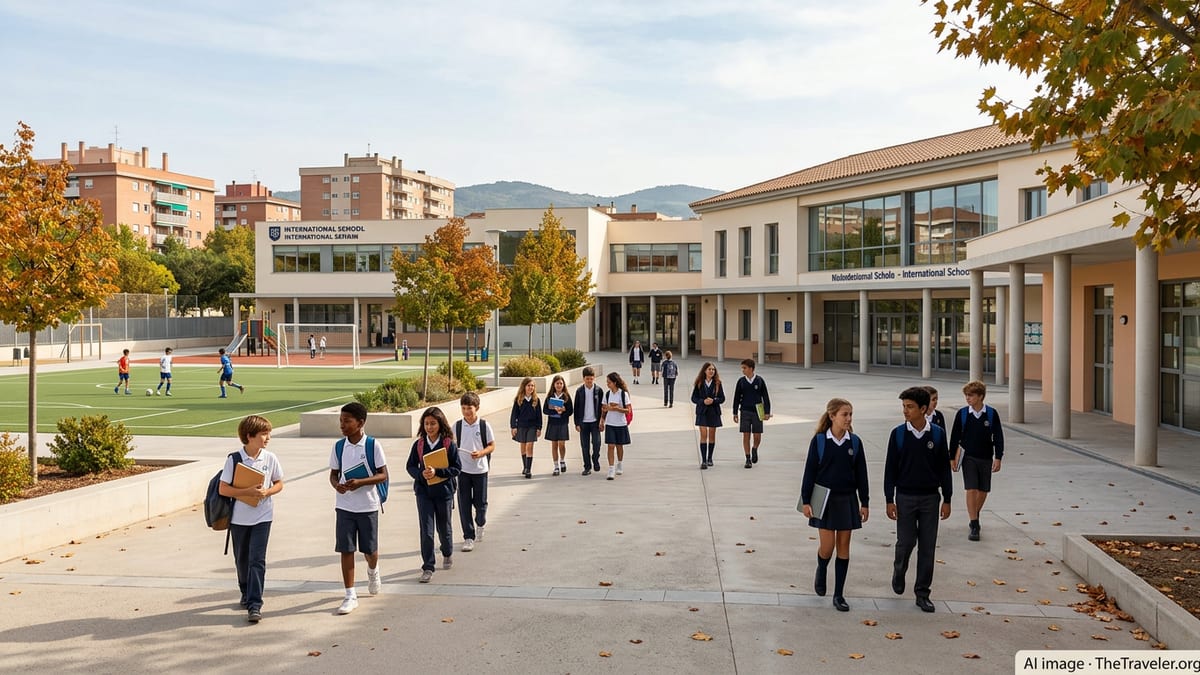
Scale and Geographic Distribution of International Schools in Spain
Spain has one of Europe’s more developed international school markets. Recent market research indicates that Spain hosts more than 400 schools positioned as international or bilingual with an international component, representing roughly 10 percent growth in the last five years. Growth has concentrated in metropolitan and coastal expatriate hubs such as Madrid, Barcelona, Valencia, Alicante and the Costa del Sol, where schools have expanded facilities and programmes to respond to rising demand from both expatriate and Spanish families.
In practical relocation terms, the availability of international schools is highly uneven across the country. Madrid and Barcelona together account for a substantial share of fully international British, American and IB schools, often with full K‑12 pathways. Coastal provinces including Málaga, Alicante and Valencia offer clusters of British and other European schools, but options can be sparse outside specific towns. In smaller cities and rural regions, families may find only one bilingual private school, or no international provision at all, making daily long‑distance commuting or weekly boarding the only way to access an international curriculum.
Families should therefore approach school planning as a primary location filter rather than an afterthought. For many international assignees, the realistic residential choice narrows to districts within commutable distance of a viable school. This is particularly relevant for dual‑career households who must balance workplace access with the need to avoid overly long school runs for younger children.
Because popular schools in high‑demand areas can operate near capacity, availability at specific year levels may further restrict options, especially for late applicants or those relocating mid‑year. Early mapping of potential schools against residential neighbourhoods is essential to avoid misalignment between desired lifestyle location and actual schooling possibilities.
Curriculum Types and Language of Instruction
International schools in Spain operate under several distinct curriculum models, each with implications for language, pedagogy and future university access. A large proportion follow the British curriculum, leading to IGCSE and A‑level qualifications, often alongside Spanish ESO and Bachillerato content to secure national recognition. Other schools deliver the International Baccalaureate continuum, most commonly the IB Diploma Programme in the final two years of secondary. A smaller number follow American, French, German or other national systems, sometimes combined with IB components.
Language of instruction is a critical differentiator. Many schools market themselves as “international” but in practice operate as bilingual Spanish–English private schools, with a majority of teaching through English in core subjects and Spanish used in language, social sciences and some electives. In coastal areas with long‑standing expatriate communities, some British schools are predominantly English‑medium with Spanish taught as a subject and additional support for non‑Spanish speakers. Conversely, some urban private schools position English as a strong second language while maintaining Spanish as the main instructional language, which can be suitable for families prioritising integration into the national system.
For relocation planning, the compatibility between the host school curriculum and the child’s previous and potential future systems is decisive. Children arriving from British, IB or American schools will generally find smoother transitions in schools using similar frameworks. Families who anticipate subsequent moves or possible repatriation often prioritise IB Diploma, A‑levels or American Advanced Placement availability in the upper grades to maintain global university access. Conversely, families intending long‑term settlement in Spain may place greater value on dual pathways that secure both Spanish and international qualifications.
It is important to distinguish marketing language from regulatory status. Many bilingual schools combine a Spanish national licence with foreign accreditation bodies or membership associations such as national British school groupings or international school councils. Reviewing both the official authorisation by Spanish regional education authorities and any international accreditations provides a clearer picture of academic standards and recognition.
Admissions Practices, Capacity and Waiting Lists
Admissions processes for international schools in Spain vary by provider, but several common patterns affect relocation feasibility. Most schools require prior academic records, behaviour reports and, from certain ages, entrance assessments in language and mathematics. English‑medium schools routinely test applicants to verify that language skills are sufficient for access to the curriculum, although many offer English as an Additional Language support at an additional cost. Some schools also conduct family interviews to assess alignment with institutional values and expectations.
Capacity constraints are a significant operational issue in several regions. Well‑regarded schools in Madrid, Barcelona and popular coastal areas may have waiting lists in multiple year groups, particularly at key entry points such as early years, Year 7/1º ESO and Year 12/Bachillerato or IB Diploma. It is common for schools to prioritize siblings and sometimes corporate partners who have signed enrolment agreements, leaving fewer places for independent relocating families applying at short notice.
Application timelines typically open many months before the start of the academic year, which generally runs from early September to late June. Some schools advise families to initiate contact up to a year in advance, especially for nursery and primary places. Mid‑year entry is possible where capacity exists, but placement into exam‑bearing years may be restricted due to curriculum sequencing. This is particularly relevant for IGCSE and IB Diploma programmes, which follow two‑year cycles with limited flexibility for late arrivals.
From a risk‑management standpoint, families should avoid basing a relocation decision on a single preferred school. A more resilient strategy is to identify a short‑list of viable schools, understand their current capacity situation and admissions criteria, and secure at least one conditional offer before finalising housing or employment commitments tied to a specific area.
Fee Levels and Total Cost of Attendance
International schooling in Spain spans a wide fee spectrum, from relatively moderate bilingual private schools to premium international campuses with extensive facilities. Recent surveys of fee schedules in major cities for the 2024/25 and 2025/26 academic years indicate that annual tuition at many international schools typically falls between approximately 6,000 and 15,000 euros per pupil, with high‑end secondary and IB Diploma programmes in cities such as Barcelona often ranging from around 12,000 to 25,000 euros per year. Budget‑oriented options exist in smaller cities and among less brand‑driven schools, but tuition below 5,000 euros per year is uncommon in fully international settings.
In addition to tuition, families must budget for a range of compulsory and optional charges. Most schools levy a one‑off or recurring enrolment or registration fee, which can range from a few hundred to several thousand euros per student or per family. Some institutions apply capital or building levies, sometimes in the 6,000 to 7,000 euro range per family, to fund campus development. Annual charges for educational materials, technology, insurance and examination fees may be billed separately, particularly in upper secondary and IB Diploma years.
Ancillary costs also add significantly to the total cost of attendance. School lunch programmes in Spain, commonly mandatory in private and international schools, can cost roughly 1,500 to 2,000 euros per year per child. Uniforms, where required, may represent several hundred euros initially, with ongoing replacement costs. Extracurricular activities, transport, school trips and international excursions can each add hundreds or in some cases thousands of euros annually. Learning support, intensive language support and specialist services are frequently charged separately and can add several thousand euros per year for students who need them.
For relocation budgeting, it is advisable to request a detailed written fee schedule from shortlisted schools that clearly sets out tuition, mandatory charges, and likely optional expenses over a three‑ to five‑year horizon. Families with multiple children should also enquire about sibling discounts, which some schools offer on a sliding scale, and about likely annual fee increases, as mid‑single‑digit percentage uplifts per year are common in the sector.
Quality Indicators, Accreditation and Outcomes
Measuring educational quality in Spain’s international schools requires attention to both domestic regulatory oversight and international benchmarks. All schools must operate under regional education authorities and meet minimum staffing and curriculum requirements where they are registered as Spanish centres. Many international schools seek additional accreditation from recognised international bodies or join national associations of foreign‑curriculum schools, which may require regular inspections, teacher qualification standards and safeguarding audits.
Academic outcomes can be partially assessed through published examination results where schools disclose data for IGCSE, A‑levels, IB Diploma or Spanish Bachillerato. While direct cross‑school comparison is complicated by differences in cohort sizes and selectivity, families can look for multi‑year consistency rather than isolated strong years. University destinations lists, while often used for marketing, can still provide useful insight into the breadth of graduate pathways, including entry to Spanish public universities, UK and other European institutions, and in some cases North American universities.
Teacher recruitment and retention patterns also influence quality. Spain is regarded as a relatively attractive posting in lifestyle terms, which allows some schools to hire experienced international staff; however, teacher salary levels are often lower than in northern Europe or the Gulf states. This can lead to a mix of highly experienced and early‑career educators, particularly in lower‑fee schools. Parents evaluating a school may wish to inquire about the proportion of qualified teachers, staff turnover in recent years and the presence of ongoing professional development programmes.
Beyond academics, international schools differ in their emphasis on languages, arts, sports, and pastoral structures such as house systems and counselling services. Families should align school profiles with their child’s strengths and needs rather than relying solely on league‑table style metrics. On‑site visits, class observations where permitted, and structured discussions with school leadership are valuable for assessing the day‑to‑day learning environment.
Integration with the Spanish Education System and Long‑Term Pathways
One distinctive feature of international schooling in Spain is the frequent blending of national and international pathways. Many schools enable students to obtain both Spanish secondary qualifications and international certificates, which can be advantageous for families considering long‑term residence or the option of local university entry. This often requires students to undertake additional coursework in Spanish language, history and philosophy, and may increase academic workload in the upper years.
For families prioritising Spanish university access, it is important to understand how each school prepares students for the national university entrance process. This may involve the Spanish Bachillerato, the Spanish‑regulated part of the curriculum in concert with international programmes, or additional preparation for specific entry exams or weighting systems. Families considering non‑Spanish university destinations should verify how well the school supports applications to those systems, including guidance counselling, documentation and exam scheduling.
Language trajectory is another crucial factor. Younger children enrolled in bilingual or predominantly Spanish‑medium international schools often achieve high levels of Spanish proficiency, which can ease integration into wider society and provide flexibility to transfer to Spanish public or concertado schools in future. Older students arriving with limited Spanish may face a more constrained set of options and may be better served by schools where the full academic programme is delivered in their strongest language while Spanish is introduced more gradually.
Relocating families should recognise that changing between systems, for example from an international school to a Spanish public institution or vice versa, can be administratively and academically complex, particularly around the transitions into and out of lower and upper secondary. Advance planning with clear long‑term educational scenarios reduces the risk of students encountering curriculum gaps or recognition issues at critical examination stages.
The Takeaway
Spain’s international schools ecosystem offers substantial choice in major cities and expatriate regions, combining British, IB, American and bilingual Spanish curricula at a range of price points. For globally mobile families, this diversity can support continuity of learning and global university access, particularly where schools provide robust dual pathways and recognised international qualifications. At the same time, meaningful constraints exist in terms of geography, capacity and total cost of attendance that can materially shape the feasibility of a relocation.
Decision‑grade assessment requires treating schooling as a primary strategic parameter rather than a secondary consideration. This involves mapping realistic residential options to specific schools, testing admissions possibilities early, and building a detailed financial model that incorporates all direct and indirect schooling costs over several years. Families also need clarity on long‑term educational objectives, including whether they prioritise integration into the Spanish system, portability to other countries, or a balance of both.
For assignees whose children require an English‑medium or other non‑Spanish‑medium curriculum and who are relocating to regions with limited international provision, the school landscape may in practice determine whether a proposed move is viable. Conversely, in Madrid, Barcelona and established coastal hubs, the challenge is often selective rather than structural: choosing between multiple viable schools whose differences lie in pedagogy, culture, price and long‑term pathways. Thorough, data‑informed due diligence on international schools is therefore an essential step in evaluating Spain as a relocation destination.
FAQ
Q1. How many international schools are there in Spain?
Estimates suggest there are now more than 400 schools positioning themselves as international or bilingual with an international component, with numbers still growing in major hubs.
Q2. Which Spanish cities offer the strongest choice of international schools?
Madrid and Barcelona have the broadest range of fully international options, followed by Valencia, Alicante, Málaga and parts of the Costa del Sol and Balearic Islands.
Q3. What curricula do international schools in Spain typically follow?
The most common models are British (IGCSE and A‑levels), the International Baccalaureate, American programmes, and bilingual Spanish–international hybrids combining national and foreign qualifications.
Q4. How much do international schools in Spain cost per year?
Typical annual tuition ranges from about 6,000 to 15,000 euros, with premium secondary and IB programmes in major cities reaching roughly 20,000 to 25,000 euros, plus additional fees.
Q5. Are there more affordable international or bilingual options?
Some bilingual private schools and less premium international schools in smaller cities offer lower fees, though fully international provision under 5,000 euros per year is uncommon.
Q6. How early should families apply for international school places in Spain?
Families are generally advised to start applications six to twelve months before the September start date, especially in oversubscribed schools and key intake years.
Q7. Do international schools in Spain require Spanish language ability?
Many schools support non‑Spanish speakers, especially at younger ages, but bilingual and dual‑pathway schools expect increasing Spanish proficiency from lower secondary onward.
Q8. Are international school qualifications recognised for Spanish universities?
Yes, when structured correctly; schools typically align IB, A‑levels or other international programmes with Spanish regulations to enable access to national university admissions processes.
Q9. What additional costs beyond tuition should families expect?
Common extras include enrolment and capital fees, lunch, uniforms, transport, trips, examination fees, extracurricular activities and any specialist learning or language support.
Q10. Can children transfer from an international school to the Spanish public system later on?
Transfers are possible but can be complex, especially around exam years, so families should plan early and ensure the chosen school maintains alignment with Spanish curriculum requirements.