


More news on this day
Spain has agreed to receive an expedition cruise ship linked to a deadly hantavirus outbreak in the Atlantic, clearing a path for hundreds of passengers and crew who have been stranded off the coast of Cape Verde while international health agencies investigated the rare infection.
Get the latest news straight to your inbox!
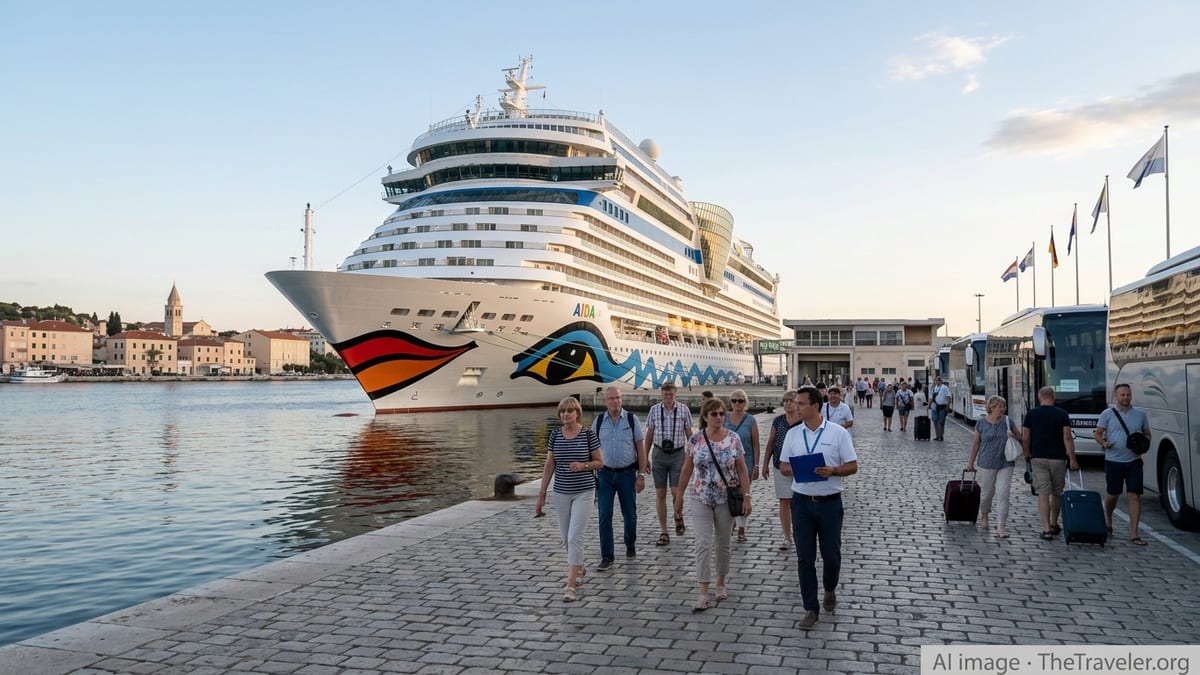
Spain Confirms Plan to Receive MV Hondius in Canary Islands
Publicly available information from Spain’s Ministry of Health indicates that the government has accepted a formal request from the Netherlands to receive the cruise vessel MV Hondius in the Canary Islands. The ship, which has been anchored off Praia, Cape Verde, became the focus of global attention after three people died and several others fell ill with confirmed or suspected hantavirus infection.
Spanish media reports describe the decision as coordinated with the World Health Organization and other European health bodies, with the ship expected to sail to the archipelago once seriously ill patients are transported to the Netherlands for specialized care. The voyage from Cape Verde to the Canary Islands is expected to take around three days, according to coverage of the operator’s plans.
The move marks a shift from the uncertain status of the vessel earlier in the week, when reports indicated that no country had yet agreed to take in the ship and its passengers. Spain’s acceptance provides a destination where health assessments, further testing, and possible disembarkation procedures can be organized under European Union and international health regulations.
According to Spanish press coverage, the government has framed the decision as aligned with humanitarian obligations and international law, while emphasizing that protective measures for local residents and visitors in the Canary Islands will be central to the operation.
Deadly Hantavirus Outbreak Unfolds at Sea
Reports from international health agencies and news outlets indicate that the outbreak aboard MV Hondius has led to three deaths and multiple confirmed or suspected infections among passengers and crew. The cluster was first detected after several people developed severe respiratory symptoms consistent with hantavirus disease, prompting laboratory testing and an urgent epidemiological investigation.
World Health Organization updates describe the incident as a multi-country event involving Cape Verde, the Netherlands, Spain, South Africa, the United Kingdom and others, reflecting the complex travel histories of passengers and the onward journeys some affected travelers took by air. The suspected index cases are believed to have boarded the cruise after spending time in regions where hantavirus is known to circulate in rodent populations.
Health briefings summarize hantavirus as a rodent-borne virus most commonly transmitted through contact with or inhalation of aerosolized particles from infected rodent urine, droppings or saliva. In severe cases, it can lead to hantavirus pulmonary syndrome or hemorrhagic fever with renal syndrome, both associated with high fatality rates. Human-to-human transmission is considered uncommon, but rare person-to-person spread has been documented with certain strains such as Andes virus.
In this outbreak, the World Health Organization has said that human-to-human transmission on board cannot be ruled out, given the close-contact environment on the ship and the timing of some cases. At the same time, European health authorities continue to assess the overall risk to the wider public in Europe as very low, noting that hantaviruses generally do not spread easily between people and that infection control measures are in place.
What Passengers Can Expect as the Ship Heads for Spain
Once MV Hondius reaches the Canary Islands, Spanish coverage indicates that a team of epidemiologists and other health professionals will board the vessel before any broad disembarkation is considered. The plan, as described in local media and European health agency communications, involves symptom screening, clinical evaluation of suspected cases and laboratory testing where indicated.
Passengers who are well and test negative may ultimately be cleared to leave the vessel under controlled conditions, though observers expect that local authorities will weigh each step against the need to protect residents and tourists in the Canary Islands. Quarantine or continued onboard isolation for some individuals remains possible, depending on evolving risk assessments and test results.
For travelers with upcoming trips to Spain or other European destinations, publicly available guidance so far has not called for broad changes in itineraries beyond those directly linked to the affected ship. Travel industry reports suggest that cruise lines operating in the region are reviewing onboard health protocols, communication procedures and contingency plans, but no widespread cancellations have been reported in connection with this incident alone.
Travel medicine specialists quoted in international coverage advise that people booked on expedition or adventure cruises, especially in regions with known rodent populations, should monitor advisories from national health agencies and consider consulting a health professional before departure. Standard advice includes seeking prompt medical attention if flu-like or respiratory symptoms emerge in the weeks after travel.
Health Risk Seen as Low for Wider European Public
Analyses published by the European Centre for Disease Prevention and Control characterize the risk to the general population in Europe as very low, provided that infection prevention and control measures on the ship and on land are properly applied. This assessment is based in part on the biology of hantaviruses, which are not typically efficient at spreading between humans in the way that influenza or coronaviruses can.
According to disease background materials, most hantavirus infections worldwide occur after environmental exposure to infected rodents or their excreta, often in rural or forested settings. Cruise ships are not a common setting for such outbreaks, which makes the MV Hondius incident a rare and closely scrutinized event. Investigators are considering possible environmental contamination scenarios on board, including storage areas or other spaces where rodents could have gained access.
Public communications from the World Health Organization and European health agencies stress that individuals who were not on the ship or in direct contact with affected travelers face minimal risk. Contact-tracing efforts are focusing on passengers, crew and certain airline passengers who may have shared confined spaces with infected individuals before the outbreak was recognized.
Nonetheless, health experts interviewed in international media point out that the episode underscores the importance of strong surveillance systems for unusual respiratory illnesses at sea and at ports, particularly in a travel sector still adjusting after the COVID-19 pandemic.
Renewed Focus on Cruise Health Protocols and Traveler Confidence
The hantavirus cluster on MV Hondius has revived questions about infectious disease management on cruise ships, a topic that came under intense scrutiny during the early stages of the COVID-19 pandemic. Commentators in European and North American outlets note that expedition vessels, though smaller than mass-market cruise ships, still bring together passengers from many countries in relatively enclosed environments for days or weeks at a time.
Industry analysts suggest that how the operator and Spanish authorities handle the arrival in the Canary Islands may influence traveler confidence, especially among those considering expedition cruises to remote areas. Transparent communication about testing, isolation measures and eventual disembarkation procedures is widely viewed as critical for reassuring both passengers and destination communities.
Cruise companies active in Europe are expected to review their protocols around pre-boarding health questionnaires, onboard surveillance for unusual clusters of illness and coordination with port health authorities. While many measures were strengthened in response to COVID-19, the appearance of a different, rarer pathogen at sea highlights that preparedness must extend beyond familiar respiratory viruses.
For travelers, the incident serves as a reminder to pay close attention to health information provided by cruise operators, consider travel insurance that covers medical evacuation and trip disruption, and remain informed about any new guidance from national and international health agencies as the situation with MV Hondius and its passengers evolves.