


More news on this day
In Bucyrus, a small northern Ohio city on key road and rail corridors, investigators are beginning to piece together what caused a Norfolk Southern freight train to derail near a residential neighborhood, triggering late night evacuations and lingering travel disruption across the area.
Get the latest news straight to your inbox!
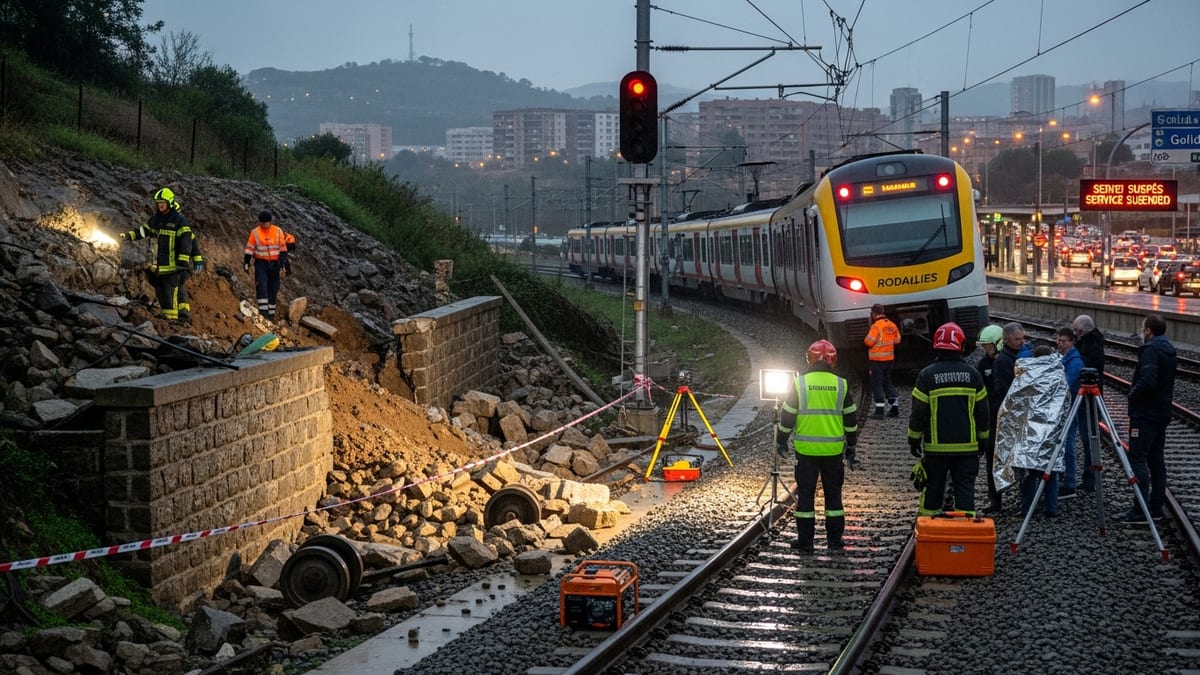
What is known about the Bucyrus derailment
Published coverage indicates that the derailment occurred around 8:40 p.m. on Sunday, July 5, near the intersection of Whetstone Street and Auto Avenue in Bucyrus. A Norfolk Southern freight train left the tracks, tipping several cars, including at least one tanker that raised initial concern about a possible hazardous materials release.
Local reports describe an immediate emergency response that included fire, hazmat and rail company crews converging on the site as a precaution. Early information pointed to a suspected leak involving a tanker labeled for hydrochloric acid, which led officials to establish a one mile evacuation radius overnight before that zone was later reduced.
By the morning of Monday, July 6, publicly available information showed no confirmed large scale chemical release, and monitoring results were characterized as indicating no immediate widespread threat. Even so, the scene remained active as crews continued testing the air, inspecting tank cars and stabilizing the derailed equipment.
Railroad representatives have acknowledged the incident and confirmed that specialized teams are working to rerail or remove damaged cars. The exact number of cars involved has varied across outlets, but images shared by local media show multiple freight and tank cars off the tracks or tipped alongside the right of way.
Evacuations, shelter operations and impact on residents
In the hours after the derailment, residents within the initial evacuation zone were advised to leave their homes due to the possibility of a hazardous materials leak. According to regional television coverage, a local high school was opened as a temporary shelter to accommodate evacuees and travelers who were unable to access lodging closer to the incident area.
As further assessments were carried out and no significant leak was confirmed, the evacuation radius was narrowed from one mile to roughly a quarter to one third of a mile around the site. Reports indicate that many residents outside that smaller zone were allowed to return home, although some streets remained blocked and access points were controlled while rail and hazmat crews continued their work.
For residents closest to the tracks, the disruption has extended beyond the initial overnight emergency. Noise from heavy equipment, lighting towers and ongoing rail operations has continued into the day, while some households have faced limited driveway access or detours to reach workplaces, medical appointments and childcare.
Community updates shared through local media have focused on air quality readings, the status of the tanker cars and estimated timelines for reopening roads such as Whetstone Street. While no serious injuries have been widely reported, the combination of uncertainty over hazardous materials and displacement has added stress for residents living along the rail corridor.
Travel delays and regional transport implications
The Bucyrus derailment has also had an immediate effect on local and regional travel. The crossing near Whetstone Street and Auto Avenue serves as a connector for drivers moving between residential neighborhoods, commercial areas and state routes that link Bucyrus with other parts of northern Ohio.
Published traffic advisories describe extended closures on Whetstone Street and nearby approaches while cranes, vacuum trucks and rail equipment occupy the right of way. Detours have been routed along alternative local streets, adding congestion in some residential zones and lengthening commutes for workers heading toward major highways.
Although the freight line primarily handles cargo rather than passengers, the disruption has ripple effects for logistics and supply chains that rely on timely rail movements across Ohio. Freight railroads often reroute trains after a derailment, and regional business outlets have noted that shippers may face temporary delays or adjustments in schedules as the line through Bucyrus is inspected and repaired.
Statements summarized in news reports suggest that rail traffic through the corridor is expected to resume in stages, beginning with limited-speed movements once track repairs and safety inspections are complete. Until that happens, highway travel will carry more of the load, particularly for trucks that typically interline with rail operations in the region.
Early focus of the safety investigation
The cause of the Bucyrus derailment remains officially undetermined, and publicly available information indicates that the incident is under active investigation by rail safety specialists and relevant federal and state agencies. Investigators commonly begin by documenting the position of every derailed car, examining the track structure and checking locomotives and freight cars for mechanical defects.
Based on standard practices outlined in past railroad accident reports, the inquiry is likely to examine wheel bearings, brake systems, rail joints and the condition of the ballast and ties along the affected section of track. Data from locomotive event recorders and wayside detectors, including hot bearing and dragging equipment monitors, may also be reviewed to see whether any alarms or irregular readings occurred shortly before the derailment.
Because at least one involved car was reportedly carrying hydrochloric acid or another regulated hazardous material, the investigation is expected to scrutinize how the train was assembled and how tankers were placed within the consist. Previous federal findings in other accidents have emphasized train makeup, hazardous materials placement and train handling practices as key factors in crash severity.
Investigators typically publish preliminary findings within weeks of a major derailment, followed by a more detailed final report that can take many months. Those reports often include safety recommendations aimed at both the specific railroad involved and the broader industry, drawing lessons from the event to prevent similar incidents elsewhere.
Broader rail safety questions for travelers and small communities
For travelers passing through northern Ohio, the Bucyrus derailment is another reminder that many key roadways and neighborhoods sit in close proximity to busy freight rail corridors. The incident follows a series of recent derailments across the United States that have kept public attention on how hazardous materials move by rail near homes, schools and business districts.
Travel and transportation analysts note that while serious derailments are relatively rare compared with the volume of trains that operate daily, the consequences can be significant when hazardous cargo is involved. Events that require even precautionary evacuations can quickly disrupt hotels, roadside services and regional tourism, as seen when travelers were redirected away from the affected zone in Bucyrus.
Advocacy groups and policy discussions referenced in national coverage have increasingly called for tighter rules on tank car design, more frequent track inspections and expanded use of real time monitoring technology along freight routes. The Bucyrus investigation is likely to feed into those debates, especially if it highlights mechanical or infrastructure issues that echo recent high profile crashes.
For small communities like Bucyrus that lie along major freight lines, the outcome of the investigation will have practical implications for future emergency planning, evacuation protocols and communication with travelers. As rail operations normalize and traffic patterns return to usual, residents and visitors alike will be watching for clear public information on what went wrong and how similar incidents might be avoided in the future.