


More news on this day
A Norfolk Southern freight train derailment in Bucyrus, Ohio, prompted overnight evacuations and a significant emergency response, but current assessments from local and state agencies report no release of hazardous materials from the tipped tanker car involved.
Get the latest news straight to your inbox!
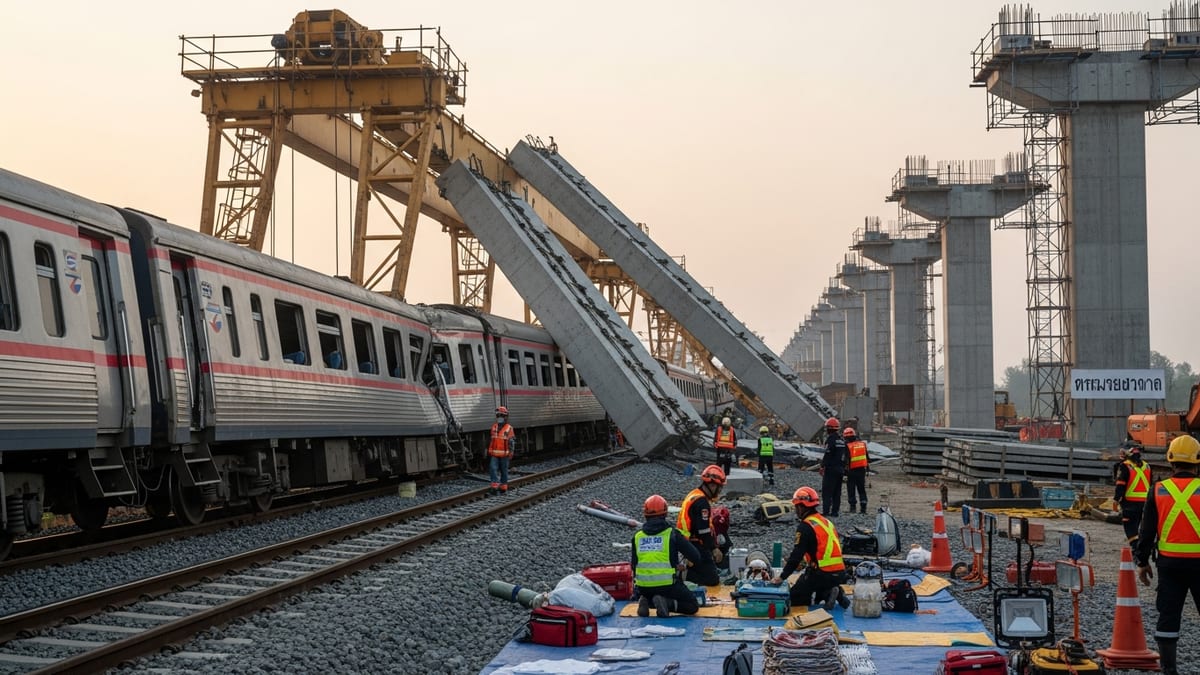
Derailment near residential streets prompts late night emergency
The incident occurred on Sunday evening, July 5, near the intersection of Whetstone Street and Auto Avenue in Bucyrus, a north central Ohio community situated along key freight rail corridors. Published coverage describes several railcars leaving the tracks, including at least one tanker that came to rest on its side close to nearby homes and local streets.
Initial information from local agencies and regional media indicates that the train was moving through a mixed residential and light industrial area when it derailed, briefly cutting off a major crossing and drawing fire, police and hazardous materials teams to the scene. Images shared by news outlets show mangled track, a tipped tanker and debris scattered along the rail bed.
The derailment added to immediate travel disruption for area residents, with traffic detoured away from the affected crossing and access to some nearby streets restricted while responders assessed structural damage and potential leaks. The location, just a short distance from neighborhood blocks, heightened concern as information began circulating on social media late Sunday.
Rail traffic along the line was halted while crews worked to stabilize the derailed cars and begin the technical process of rerailing or removing damaged equipment. According to published reports, no injuries have been reported among residents, rail workers or first responders.
Hydrochloric acid tanker examined as evacuation order evolves
Early reports from local media and emergency management updates identified one of the derailed cars as a tanker carrying hydrochloric acid, a corrosive substance used in a variety of industrial processes. Because of the potential health risks if the chemical were released, agencies treated the incident as a possible hazardous materials event until a more detailed inspection could be completed.
Coverage from Ohio outlets notes that an initial evacuation radius of roughly one mile was established late Sunday night as a precaution while hazmat teams evaluated the condition of the tanker. Some accounts indicate that the protective zone was later reduced to a smaller area, on the order of a quarter- to one-third of a mile, as field readings and visual inspections failed to show signs of an active leak.
By Monday morning, updated public information from county and city channels as summarized in regional media stated that no hazardous material had been released from the overturned tanker. Air monitoring and on-site inspections cited in those reports described the situation as controlled, with no evidence of a spill or vapor cloud impacting the surrounding area.
Although the evacuation order has been lifted for most residents, road closures remain in place near the derailment site while crews continue cleanup and track repair. Travelers moving through Bucyrus are being advised by local coverage to plan for detours and potential delays as heavy equipment operates close to the roadway.
Impacts on Bucyrus residents, travelers and local infrastructure
The derailment temporarily displaced residents living closest to the tracks, with community facilities such as a local high school opened as an emergency shelter according to broadcast and online reports. Families left their homes late at night with limited notice while officials worked to determine whether any chemical risk existed.
For those passing through the region, the event created a separate layer of disruption. Bucyrus sits along routes commonly used by motorists traveling between larger Ohio cities, and the affected crossing serves as a connector for local traffic as well as visitors. Publicly available information from transportation updates suggests that drivers may encounter detours and a heavier than usual law enforcement presence around the closed corridor until rail operations resume safely.
Rail infrastructure at the site is undergoing inspection and repairs, with damaged track segments and ballast expected to be replaced before freight traffic can restart at normal speeds. Published coverage indicates that railcars are being removed in stages, and that the process could extend through at least part of Monday as cranes and specialized equipment work in tight quarters near nearby homes.
Local businesses in the immediate vicinity are also experiencing knock-on effects, from restricted access to parking and deliveries to temporary closures during the height of the emergency response. Travel-focused reporting from regional outlets notes that downtown Bucyrus and other commercial areas outside the cordoned zone remain accessible, but visitors may need to follow alternate routes.
Context of hazardous materials and rail safety in Ohio
The Bucyrus derailment arrives amid heightened public attention to freight rail safety and hazardous materials shipments in Ohio. National and state coverage has repeatedly referenced the 2023 Norfolk Southern derailment in East Palestine, where a large-scale chemical release and controlled burn prompted widespread concern about long term environmental and health impacts.
In contrast, current information from Bucyrus indicates that the hydrochloric acid cargo involved has remained contained, with no documented release into the air, soil or nearby waterways. Even so, the presence of a tipped hazardous materials tanker beside a neighborhood rail line reinforces ongoing questions about how such cargo moves through smaller communities and what protections are in place when something goes wrong.
Recent federal and state discussions about rail regulation, inspection standards and emergency notification procedures have focused on better tracking of hazardous materials trains and improving communication with local responders. Analysts and transportation advocates interviewed in prior coverage of other incidents often point to the need for more resilient infrastructure, modernized tank car designs and enhanced braking and monitoring technologies along heavily used corridors.
For Bucyrus residents and travelers, the latest derailment serves as a real time example of how those debates translate into lived experience. Even when hazardous cargo remains contained, precautionary evacuations, shelter operations and travel disruptions can significantly affect daily life in communities that lie along major rail lines.
What travelers should know in the days ahead
As cleanup continues, regional reports advise those driving through north central Ohio to monitor local traffic advisories for Bucyrus and surrounding Crawford County. Key points for travelers include the ongoing closure of at least one rail crossing, potential congestion on nearby detour routes and intermittent movement of heavy equipment near the roadway.
Publicly available information suggests that rail operations may resume in stages once track repairs are completed and safety checks are satisfied. Until then, additional freight trains could be held outside the area or rerouted, which may subtly affect schedules and rail activity across the broader region but is not expected to create widespread passenger disruption.
Travelers planning overnight stays in or near Bucyrus are encouraged by local tourism and news outlets to verify lodging access routes and parking conditions, particularly for properties close to the rail corridor. Most of the city’s accommodations and attractions are located outside the immediate impact zone, and businesses are working to remain open while cleanup and investigation efforts proceed.
For now, the central takeaway from publicly reported information is that the incident, while disruptive, has not resulted in a confirmed hazardous materials release. Emergency measures, including evacuations and road closures, are gradually being scaled back as crews stabilize the scene, offering a measure of reassurance to residents and visitors watching another Ohio rail incident unfold.