

More news on this day
Escalating Iranian strikes on shipping in and around the Strait of Hormuz, combined with new diplomatic outreach to Turkey and Germany, are rapidly reshaping the travel and tourism outlook across the Gulf, from flight cancellations and cruise diversions to shifting perceptions of safety among international visitors.
Get the latest news straight to your inbox!
Strait of Hormuz Violence Disrupts Core Travel Arteries
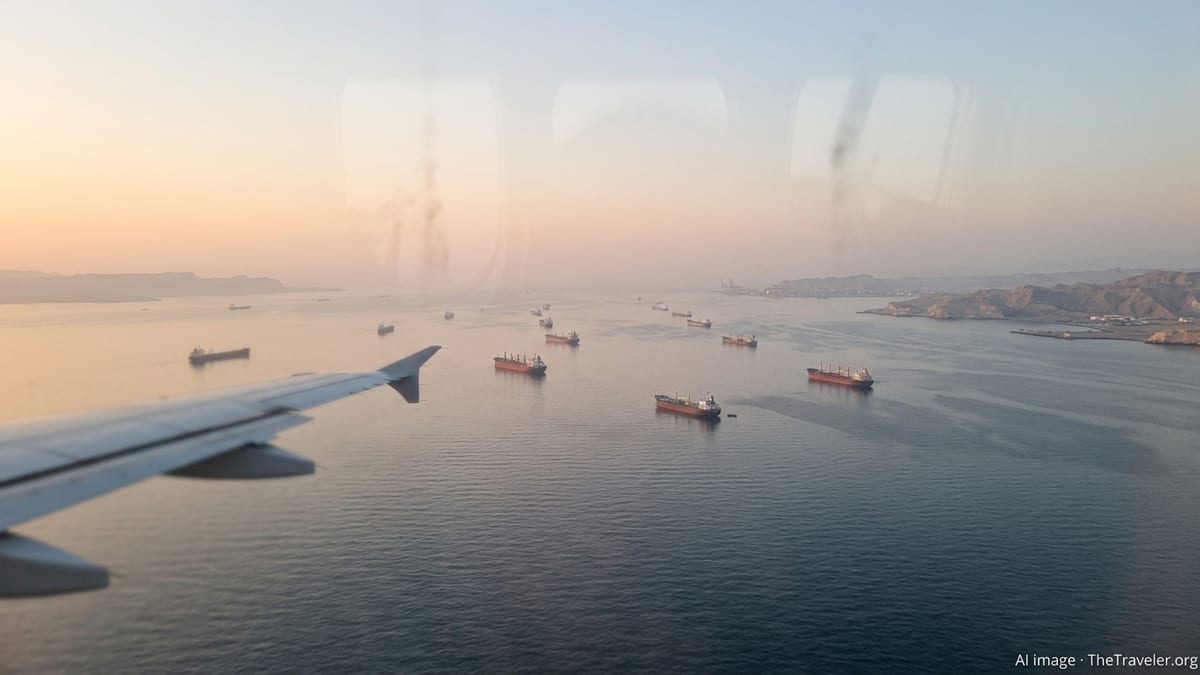
Recent Iranian attacks on commercial vessels in the Strait of Hormuz have turned one of the world’s most strategically important waterways into a high-risk zone, with maritime intelligence reports citing direct strikes on cargo ships and threats against tankers. The effective closure of the narrow passage, through which about one fifth of globally traded oil and significant volumes of liquefied natural gas normally pass, has sharply reduced traffic and pushed many operators to avoid the route altogether.
Shipping and port advisories issued in early March indicate that while there is no universally recognized legal closure of the strait, company-level risk assessments, suspended war-risk insurance and rising military activity have led to a de facto standstill for most foreign shipping. This disruption directly affects regional ports used by cruise ships and passenger ferries, particularly in Oman and the United Arab Emirates, which relied on stable Gulf transits to support excursion-heavy itineraries.
For the broader travel sector, the maritime slowdown is more than a shipping story. Cruise lines that previously marketed Gulf loops touching Dubai, Abu Dhabi, Doha and Muscat now face operational and insurance hurdles in accessing key ports, while smaller regional ferry routes serving residents and regional tourists are subject to heightened scrutiny, last-minute timetable changes and potential suspensions.
Regional economic analysis suggests that any prolonged disruption of Hormuz-linked trade can quickly spill over into tourism receipts, which Gulf governments have identified as a central pillar of diversification away from hydrocarbons. As higher freight costs and energy prices work their way into airline fuel surcharges and hotel operating costs, travelers may see fewer promotional fares and tighter capacity on remaining routes that avoid the most sensitive air and sea corridors.
Airspace Restrictions and Rerouted Flights Across the Gulf
Alongside the maritime tensions, airspace over and around parts of the Gulf has experienced rolling closures and restrictions since the late February escalation of the Iran war. Industry notices and carrier bulletins show that several regional airlines have temporarily halted or curtailed services to and from key Gulf hubs, with knock-on effects for long haul connections linking Europe and Asia via cities such as Dubai, Doha and Abu Dhabi.
Operational updates from aviation and logistics firms describe a patchwork of no-fly zones, rerouting requirements and altitude restrictions driven by military activity and risk assessments of potential missile and drone activity. This dynamic environment adds complexity and cost for airlines that built their business models on efficient overflight rights and direct routings across the Gulf and adjacent Iranian airspace.
For travelers, these shifts translate into longer flight times, schedule changes at short notice and, in some cases, temporary suspension of certain city pairs. Some carriers are opting to route flights further south over the Arabian Sea or north over Turkey, adding fuel burn and squeezing already tight aircraft rotations. Premium leisure passengers and business travelers, traditionally drawn to Gulf hubs for their extensive connectivity, may temporarily gravitate to alternative transit points in Istanbul, European capitals or South Asian hubs.
Travel risk advisories issued in recent days emphasize that while most major Gulf cities remain physically untouched by direct strikes, elevated regional threat levels and the possibility of miscalculation in crowded skies warrant caution. Tour operators selling multi-country itineraries that combine Gulf city breaks with side trips to Oman or coastal Iran face particularly acute uncertainty over air links and insurance coverage.
Turkey and Germany Step In as Diplomatic Intermediaries
Against this backdrop of maritime and aviation disruption, Ankara and Berlin have emerged as visible diplomatic players seeking to de-escalate the Iran crisis. Publicly available readouts and media coverage describe Turkish and European Union officials holding virtual and in-person meetings focused on regional security, humanitarian fallout and the risk of spillover across the broader Middle East.
Turkey’s position as both a NATO member and a neighbor with long-standing ties to Iran gives it a potential bridging role that could, if talks gain traction, contribute to reduced tensions around key corridors used by airlines and shipping companies. Diplomatic engagement involving German and broader European representatives underscores the stakes for Europe’s energy security and trade flows, including the viability of air bridges that connect European travelers to Gulf destinations.
For the travel industry, these diplomatic tracks represent more than high politics. Any framework that lowers the perceived risk of attacks on shipping or aircraft could gradually restore underwriters’ appetite for war-risk coverage and reopen routing options for airlines and cruise operators. Conversely, stalled talks or additional strikes could harden risk models, leading to longer-lasting diversions and higher costs that filter through to ticket prices and package rates.
Tourism analysts tracking booking patterns suggest that travelers respond quickly to clear signals of diplomatic progress, especially when such progress is tied to concrete steps such as reopening airspace corridors or easing maritime advisories. As Turkey and Germany seek to coordinate with Gulf governments and international institutions, the travel sector will be watching closely for any signs that negotiations are translating into operational changes.
Economic Shockwaves for Gulf Tourism Hubs
The Gulf’s flagship tourism destinations entered 2026 with ambitious growth targets, banking on mega-events, new resorts and relaxed visa regimes to attract record visitor numbers. The Iran conflict and resulting disruptions in Hormuz now threaten to undercut those plans by depressing traveler confidence and increasing operating costs for airlines, hotels and tour providers.
Economic commentary from regional and international research groups highlights the risk that higher energy prices, insurance premiums and freight rates will erode margins for tourism businesses already investing heavily in infrastructure and marketing. In scenarios where flight capacities remain constrained and cruise calls remain limited for an extended period, spending by international visitors could fall well short of pre-crisis projections, creating budget pressures for governments that rely on tourism-linked revenue.
Domestic and intra-regional tourism may offer partial relief, as residents of Gulf Cooperation Council states pivot to local getaways in destinations perceived as safer or less exposed to maritime risks. However, this substitution effect is unlikely to fully offset weaker long haul demand from Europe and Asia, especially in segments such as luxury shopping, conferences and large-scale entertainment events that depend heavily on international audiences.
Financial markets are already pricing in heightened uncertainty for sectors tied to travel and hospitality in the region, with analysts pointing to potential delays in hotel openings, cautious hiring in aviation and hospitality, and a more conservative approach to new route launches. For many stakeholders, the central question is how long elevated risk levels around Hormuz will persist and whether diplomatic initiatives can stabilize conditions in time to salvage the critical peak travel periods later in 2026.
Traveler Behavior, Risk Perception and Emerging Alternatives
From the traveler’s perspective, the combination of dramatic geopolitical headlines and practical disruptions has begun to shift planning behavior. Publicly available booking and search data cited by industry commentators suggest a cooling of demand for some Gulf itineraries, especially those involving cruises or complex multi-stop routes that depend on smooth sea and air operations in and around Hormuz.
Some international tourists are delaying decisions on Gulf trips, opting instead for Mediterranean, Red Sea or Southeast Asian destinations until there is greater clarity on security conditions and route stability. Others are reconfiguring plans to use Istanbul or European hubs as stopovers rather than transiting through traditional Gulf gateways, which may see a temporary dip in their role as global connectors even if their core city-break appeal remains intact.
At the same time, travel companies are updating safety briefings and terms and conditions to reflect the heightened risks, outlining potential itinerary changes, longer transit times and the possibility of rerouting or cancellations. Insurance firms are revising policy language and pricing, making comprehensive travel insurance more expensive or more restrictive for trips involving certain Gulf airspace and ports.
Industry observers note that the evolution of this crisis will likely shape traveler perceptions of the Gulf for years, much as earlier conflicts did for other regions. If Iranian strikes diminish and talks involving Turkey, Germany and other actors yield tangible security improvements, the Gulf’s strong tourism fundamentals and extensive infrastructure could support a relatively quick rebound. If not, a protracted period of caution could accelerate the rise of alternative transit and leisure hubs, subtly redrawing the global travel map.