

I had heard so many conflicting things about Bairro Alto before I went that I honestly was not sure what to expect. Some friends called it the heart of Lisbon’s nightlife. Others warned me it was a noisy, trash-strewn hill full of drunk tourists and pickpockets.
After spending several evenings and a few daytime walks there on my last trip to Lisbon, I came away with mixed feelings. Bairro Alto is not the bohemian secret quarter it once was. It is loud, uneven, sometimes charming, sometimes exhausting, and very much a neighborhood shaped by tourism. Whether it is worth visiting depends a lot on what you are looking for and how you plan your time.
First Impressions: Climbing Into the Hype
My first encounter with Bairro Alto began at street level near Baixa, looking up at a tangle of lanes and tram tracks with people slowly streaming uphill. The climb itself set the tone. The streets are steep, the cobblestones uneven and polished smooth, and the sidewalks narrow. I found myself constantly watching my footing instead of the scenery, which is not exactly the romantic image I had in mind. If you have mobility issues or even just bad knees, that first approach can feel like a small obstacle course rather than a pleasant stroll.
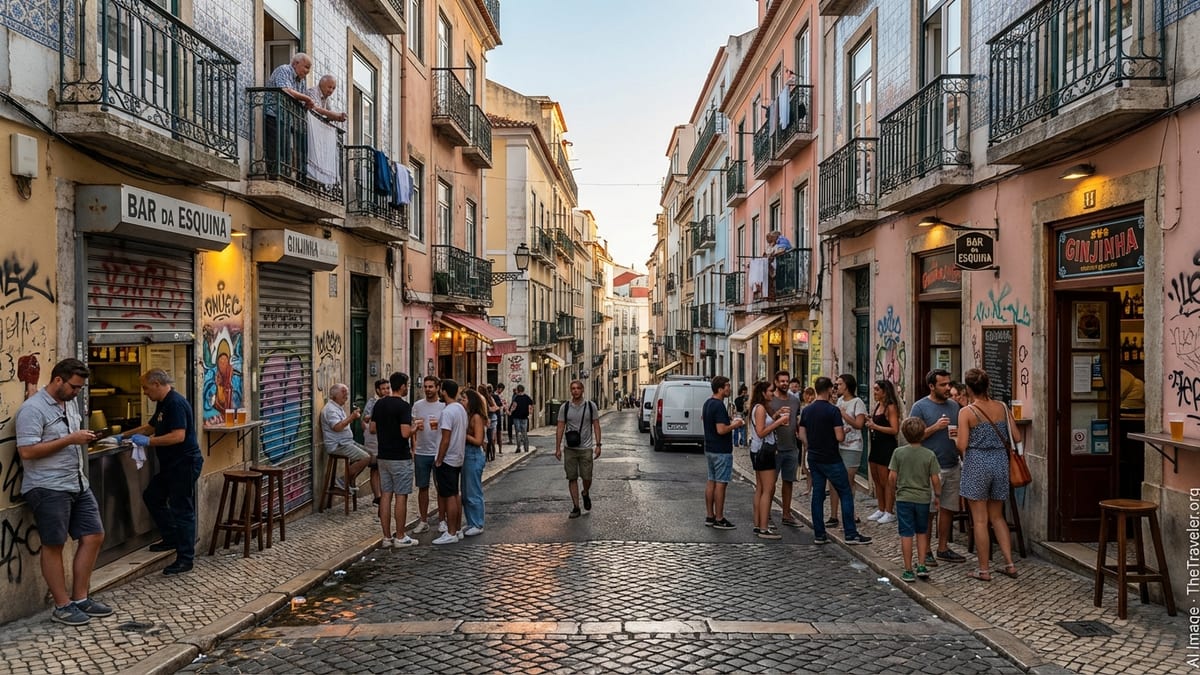
As I climbed, the architecture became more intimate. Residential buildings with wrought-iron balconies leaned toward each other, laundry hanging above eye level, and small shops and bars started to appear. During the late afternoon the neighborhood felt relatively quiet. A few tourists were taking photos of tiled facades and street art, but it still functioned like a local district. Elderly residents were chatting at open windows, and delivery trucks squeezed through lanes that looked too narrow for them. The famous chaotic nightlife felt far away at that point.
What surprised me right away was how compact everything felt. I had pictured a sprawling nightlife zone, but Bairro Alto is more like a grid of narrow streets on a hilltop. That density is part of the appeal but also part of the problem. When crowds arrive later, there is very little space for them to spread out. That reality did not fully register with me until I came back after dark.
Daytime Bairro Alto: Calm, Scruffy, and A Bit Sleepy
Visiting Bairro Alto during the day is a very different experience from going at night, and I am glad I did both. Midday and early afternoon, many bars are closed or only half awake, shutters partially down, staff inside cleaning or preparing for the evening. A few cafes and restaurants open for lunch, but the overall mood is subdued. If you are looking for a calm wander through old Lisbon streets with sporadic bursts of character, this is the time to come.
I noticed that in daylight the neighborhood looks a little more tired than romantic. Graffiti is everywhere, some of it creative, some of it just tags. Facades are chipped and weathered. Rubbish from the previous night sometimes lingers in corners until the city cleaning teams get to it. It did not feel unsafe to me, but it also did not feel especially magical. It felt like a heavily used part of the city that has been worn down by years of nightlife.
On the positive side, daytime is when small details stand out. I stopped for a coffee at a tiny corner cafe that clearly catered more to locals than tourists. The prices were lower than in the more polished neighborhoods, and the staff were friendly in a way that felt genuine rather than performative. A few independent shops selling local design and vintage clothing provided welcome breaks from the bar-dominated streets. I also appreciated being able to actually see the street art and architecture rather than just navigate through crowds.
If you are not a nightlife person at all, a daytime visit might suffice to say you have seen Bairro Alto. It will not blow you away visually if you have already explored Alfama, Mouraria, or Chiado, but it gives you a sense of the old working-class Lisbon that preceded the current wave of tourism. I did notice, though, that many of the more traditional businesses have already given way to cocktail bars and tourist-focused restaurants. You can feel the transition in progress.
Nightfall: When Bairro Alto Wakes Up
As the sun sets, Bairro Alto transforms. Bars open, neon signs flicker on, and the soundscape shifts from quiet conversations and clinking coffee cups to thumping bass and shouted greetings. I returned around 9 p.m. on a Friday evening, and at first it felt lively but manageable. People were filtering in, most bars were open, and sidewalks were busy but not packed. Staff stood outside offering drink specials and trying to pull people into bars, a dynamic that always makes me feel slightly on the defensive.
By around 11 p.m., the narrow streets became a human river. Groups of friends spilled out of tiny bars, drinks in hand, forming clusters that made walking through some alleys slow and awkward. At times I had to turn sideways and gently push past people, hoping I would not spill anyone’s drink or have my own knocked loose. This, I realized, is the defining experience of Bairro Alto at peak hours: you are rarely inside a bar; you are in the street, part of a moving, noisy crowd.
I went in winter, outside the peak summer season, and it was still busy. I heard from locals that in high season, especially on weekends, the area can become almost impossibly crowded after midnight. That reality is important if you dislike packed party streets or if you are concerned about pickpockets. I kept my phone and wallet in interior pockets and avoided bags that could be easily opened from behind. I did not have any issues, but the risk felt present given the density and occasional chaos.
There was definitely energy in the air, and if you enjoy social drinking scenes, you might find it exhilarating. For me, the novelty wore off relatively quickly. I liked the first hour of wandering, checking out bars, and people-watching. After that, the crush of bodies, the rising noise, and the constant navigation around groups started to feel more like work than fun. I found myself seeking quieter side streets just to take a break and reset.
Bars, Drinks, and Fado: Where Bairro Alto Shines and Stumbles
One of the main reasons people go to Bairro Alto is the sheer number of bars and small venues packed into a small area. In that sense, it delivers. I found everything from grungy dive bars playing rock to slicker cocktail spots serving elaborate drinks. Prices varied, but overall I found Bairro Alto slightly more expensive than some less central parts of Lisbon, especially near the busiest corners. It is not extortionate compared with major Western European capitals, but the price creep is noticeable when you compare it to simple neighborhood tascas elsewhere in the city.
The open-container culture is both a blessing and a curse. Many bars serve drinks in plastic cups so guests can take them into the street. This creates a communal, open-air party feeling. It also means that by the end of the night, the streets are often littered with cups and bottles, and the smell of spilled beer and mixed alcohol lingers. If you are sensitive to that kind of sensory overload, it might wear you down fast. I enjoyed standing outside one bar early in the evening, chatting with other travelers and locals, but by 1 a.m. I was stepping over sticky patches on the pavement and weaving around clusters of people clearly far beyond their limit.
I did try one of the small fado venues in the neighborhood. My experience was mixed. On the plus side, the performance itself was moving, and the intimacy of a small room suited the music. On the downside, the restaurant had a fixed-price menu that felt steep for what was offered, and there was a faint sense of being rushed through the meal to make room for the next seating. If authentic, less commercialized fado is a priority for you, I would not rely solely on Bairro Alto. It can be a convenient place to get a taste of it, but the atmosphere is very much shaped by the tourist circuit.
Music in general is one of Bairro Alto’s strengths, though it is scattered unevenly. Some streets are dominated by repetitive pop and electronic beats pouring from multiple bars, mixing into a loud, indistinct roar. In others, I stumbled upon live jazz or more alternative scenes that felt more local and less packaged. It takes a bit of wandering and trial and error to find places that match your taste. I wish I had done more targeted research beforehand instead of just drifting and hoping for the best.
Practical Realities: Noise, Safety, and Sleep
If there is one thing I wish I had fully internalized before booking my first Lisbon stay, it is just how loud Bairro Alto gets at night. On my first visit to the city a few years ago, I made the mistake of booking a guesthouse on a side street of the neighborhood because it looked charming in photos and had good reviews for daytime atmosphere. By 2 a.m., as bass vibrations and shouted conversations bounced off the buildings’ stone walls, I understood that I had underestimated the problem. Even with double-glazed windows and earplugs, sleep was difficult until at least 3 or 4 a.m. on weekends.
On my more recent trip, I deliberately stayed farther away and only came into Bairro Alto for the evening. That decision alone improved my overall impression. I could enjoy the energy of the neighborhood and then retreat to a quieter area to sleep. If you value rest, I strongly recommend not staying right in the heart of Bairro Alto unless you are prepared to embrace the noise as part of the experience. Even then, I would check recent guest reviews specifically mentioning noise levels and whether any bars have opened or closed nearby, as these can change the sound landscape very quickly.
In terms of safety, I never felt directly threatened, but I did feel the need to be vigilant. The crowding, alcohol, and occasional visible intoxication create a setting where petty crime can thrive, even if you never see it happen. I kept valuables to a minimum and avoided walking alone down completely empty side alleys late at night. Police presence was visible on the main streets, which provided some reassurance, but it also underscored that the area can get out of hand on busy nights.
Noise extends beyond music. Street shouting, impromptu singing, and occasional arguments flare up as the night wears on. By the time bars near their legal closing hours, there is a noticeable wave of people spilling out, looking for one last drink or a late snack. Cleaner crews start to appear, trying to reclaim the streets from the remains of the evening. Watching that transition is interesting as a visitor, but I could sense the tension between residents trying to maintain some normality and a nightlife economy that does not easily turn off.
Getting To and From Bairro Alto Without Losing Patience
Reaching Bairro Alto is not complicated, but it does require some consideration, especially if you plan to stay out late. During the day, I often reached it by walking up from Baixa or Chiado. The walk is steep but short, and public transport options, including metro stations nearby and several tram and bus routes, make it relatively easy to approach from different parts of the city. The famous funicular nearby adds a bit of novelty, though it can be crowded and is more of a tourist experience than a strict transport solution.
At night, getting home can be more frustrating. Rideshare services and taxis are common in Lisbon, but actually finding a car that can reach you in the dense, narrow streets of Bairro Alto can be tricky. On one occasion, my ride canceled twice because the driver could not find a way through the crowds and one-way streets to our precise location. I eventually walked down toward a main avenue where pick-up was easier. If you rely on taxis or rideshares, I recommend planning a clear meeting point on a wider, more accessible street just outside the most congested area.
Public transport late at night is more limited, and schedules change seasonally and over time. I checked timetables in advance to avoid being stranded, but I still found myself occasionally cutting nights short to catch a metro before it closed or to avoid a long uphill walk back after midnight. If you plan to stay out very late, budgeting time and energy for a walk down to a more central area is a good idea.
What I did appreciate is that Bairro Alto’s central location makes it easy to combine with other parts of Lisbon. On one evening, I watched sunset at a viewpoint in a neighboring district, then wandered into Bairro Alto for drinks. On another, I had dinner in Chiado and only ventured up the hill later on. This flexibility softens some of the frustration, since you are not traveling far out of your way just to see it.
Expectations vs Reality: Who Bairro Alto Is Really For
Before I visited, I had built up an image of Bairro Alto as a kind of bohemian enclave: artists, cheap wine, improvised music, and a rough but authentic charm. What I found instead was a neighborhood that still has glimpses of that spirit but is largely dominated by a commercial nightlife ecosystem driven by tourism. That does not make it terrible, but it does make it different from the romanticized version often described in blogs and travel videos.
If you are in your twenties or thirties and enjoy bar-hopping, casual street drinking, and a lively, slightly chaotic urban scene, Bairro Alto can be a lot of fun. The concentration of venues means you can sample multiple places in one night without needing to travel far. The informal, come-as-you-are atmosphere also makes it easy to strike up conversations with strangers. I had a couple of enjoyable chats with people from across Europe in those street clusters outside bars. For that demographic and mood, the neighborhood delivers.
If you are older, traveling with children, or simply not into crowded party scenes, the appeal is much more limited. I saw several families with younger kids clearly uncomfortable navigating through the night crowds. The noise, open consumption of alcohol, and occasional rowdiness did not create a family-friendly environment. In that context, Bairro Alto can feel like an obligation, a box to tick because guidebooks mention it, rather than a place you genuinely enjoy.
My own expectations mellowed over the course of my stay. I stopped looking for the mythical bohemian quarter and started accepting Bairro Alto for what it is now: a dense nightlife district with some character, some rough edges, and a lot of visitors. Frustrations remained, especially around noise and crowding, but I also found moments of genuine charm, particularly earlier in the evening or on quieter nights.
The Takeaway
So, is Bairro Alto worth visiting? For me, the answer is yes, but with clear conditions. I would not build my entire Lisbon experience around it, and I would absolutely not stay in the middle of the neighborhood again if I wanted a good night’s sleep. I would, however, carve out one or two evenings to explore it, arrive early enough to see the gradual shift from day to night, and then leave before the scene tips fully into chaotic overload.
Bairro Alto is worth visiting if you are curious about Lisbon’s nightlife and do not mind crowds, noise, and a degree of mess. It is not the place to find untouched, traditional Lisbon, nor is it the most relaxed environment for a quiet romantic evening. Other neighborhoods will serve that purpose better. But as a snapshot of how the city’s historic core has adapted to waves of tourism and changing social habits, it is fascinating to witness.
If I were to do it again, I would plan a structured evening: an early dinner in a nearby, slightly quieter area, a targeted visit to one or two well-researched bars or small venues I genuinely want to experience, and then a firm cut-off time to leave before the crowds become too intense. I would also treat any fado in Bairro Alto as an introduction rather than the definitive version of the music.
In the end, Bairro Alto gave me both frustration and enjoyment. It challenged some of my assumptions about what makes a place feel authentic and made me think more critically about the impact of tourism on city neighborhoods. If you go in with realistic expectations, a bit of planning, and an exit strategy, Bairro Alto can still be a worthwhile chapter in your Lisbon story, even if it is no longer the hidden gem it once might have been.
FAQ
Q1: Is Bairro Alto safe at night?
In my experience, Bairro Alto felt generally safe in terms of violent crime, but the dense crowds and heavy drinking make it a place where you need to stay alert. I kept valuables secure, avoided very dark side streets late at night, and stayed aware of my surroundings. Petty theft is a realistic concern, so I treated the area like any busy nightlife district in a major European city.
Q2: Should I stay in a hotel or apartment in Bairro Alto?
Personally, I would not stay directly in the heart of Bairro Alto again because of the noise, especially on weekends. Even with good windows and earplugs, the late-night music and street noise made sleep difficult. I preferred staying in a nearby but quieter neighborhood and walking in for the evening. If you are a heavy sleeper or actively want to be in the middle of the nightlife, it could work, but I would read recent reviews that mention noise specifically.
Q3: What is the best time to visit Bairro Alto?
For a balanced experience, I found early evening to be the best. Arriving around 7 to 9 p.m. allowed me to see the neighborhood as it transitioned from calm to lively without yet being overwhelmed by the late-night crowds. Daytime is good for a quieter walk and a coffee, but it lacks the atmosphere people usually come for. After midnight, especially on weekends, it can become very crowded and intense.
Q4: Is Bairro Alto suitable for families with children?
In my opinion, Bairro Alto is not ideal for families with young children at night. The crowds, alcohol consumption, noise, and sometimes rowdy behavior create an environment that can feel uncomfortable and overstimulating for kids. A daytime stroll might be manageable, but for evening plans with children, I would choose a different neighborhood.
Q5: How expensive are drinks and food in Bairro Alto?
I found prices in Bairro Alto slightly higher than in more residential parts of Lisbon but still lower than in many other European capitals. Simple beers and basic drinks were reasonably priced, but cocktails and tourist-oriented bars tended to charge more. Some fado restaurants used fixed-price menus that felt expensive for what they offered, so checking prices before sitting down is a good idea.
Q6: Can I experience authentic fado in Bairro Alto?
You can experience fado in Bairro Alto, but my experience felt somewhat commercialized, with set menus and time slots designed for tourist turnover. The music itself was moving, but the setting did not feel entirely organic. I would treat Bairro Alto as an accessible introduction to fado, then consider seeking out less touristy venues in other neighborhoods if you want a more traditional experience.
Q7: How do I get to and from Bairro Alto at night?
Reaching Bairro Alto is straightforward by walking up from Baixa or Chiado or using metro and tram connections nearby. Getting home late at night can be trickier due to crowds and narrow streets. I often walked down to a wider, more accessible avenue to meet taxis or rideshares. Planning a clear meeting point outside the most congested lanes made departures smoother.
Q8: Is Bairro Alto still authentic or is it too touristy?
To me, Bairro Alto feels heavily shaped by tourism now. There are still pockets of local life and a bit of old character, especially during the day and on side streets, but the core nightlife area is very much a tourist-oriented bar district. That does not mean it has no value, but if you are searching for untouched, traditional Lisbon, you may be disappointed.
Q9: What should I wear when going out in Bairro Alto?
The dress code in Bairro Alto is quite casual. I saw everything from jeans and sneakers to slightly dressier outfits, but nothing very formal. I focused more on comfort and practicality, especially shoes with good grip for the steep, uneven cobblestones. Dressing in a way that does not draw too much attention also made me feel more comfortable in the crowds.
Q10: Is Bairro Alto worth visiting if I do not like nightlife?
If you are not into nightlife at all, Bairro Alto is not essential, but it can still be worth a brief daytime visit to see the architecture and get a sense of the area’s atmosphere. I would not devote a full evening to it in that case. A short afternoon walk, a coffee, and then moving on to quieter, more scenic neighborhoods might suit you better.