

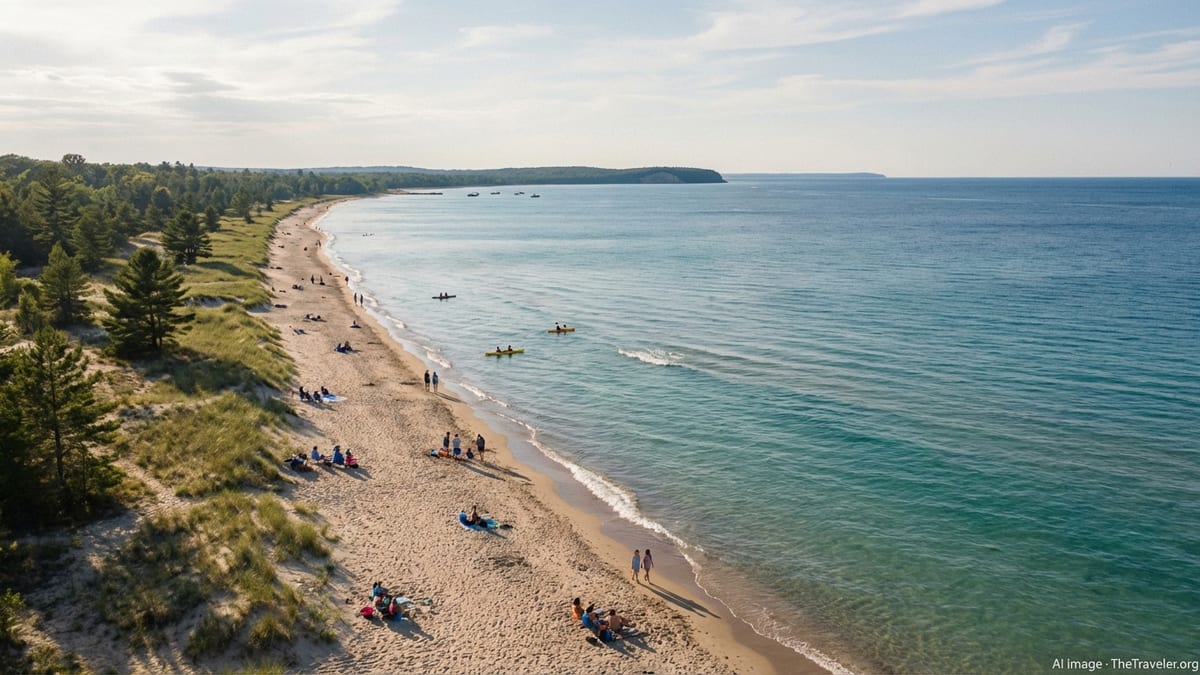
Lake Huron’s Caribbean-blue shallows, long sandbars and quiet pine-fringed bays make it one of the Great Lakes’ most inviting shorelines. Yet beneath those inviting views is a powerful inland sea with fast-changing weather, strong currents and a handful of seasonal environmental risks. Lake Huron is generally safe for visitors who come prepared, respect local warnings and understand how big-lake conditions differ from a small inland lake or hotel pool. Here is what you should know before you go.
How Safe Is Lake Huron Overall?
For most travelers, Lake Huron is a safe destination as long as they treat it as an inland sea rather than a gentle swimming hole. Communities along Michigan and Ontario’s Huron shoreline invest heavily in public safety, from local fire and rescue departments to Coast Guard stations and volunteer water safety groups. When conditions are calm, thousands of people swim, paddle and boat on Lake Huron every summer without incident.
However, the combination of cold water, quickly building waves and hidden currents means risk is always present, even on sunny days. Regional safety campaigns repeatedly stress that drowning incidents in the Great Lakes often involve people who underestimated the lake’s power or ventured out during hazardous wind and wave conditions. Public alerts after recent incidents on Lake Huron have emphasized that small craft like kayaks and paddleboards are especially vulnerable when wind speeds increase and waves build within minutes, even when the shoreline still looks calm.
Overall boating safety on U.S. waters, including the Great Lakes, has been improving, with national statistics showing a downward trend in recreational boating fatalities in recent years. That progress is tied to wider life jacket use, better training and stronger enforcement. For individual visitors, that same equation holds true on Lake Huron: the more you follow basic best practices, from checking the forecast to wearing a life jacket, the safer your visit will be.
In practical terms, the biggest determinants of personal safety on Lake Huron are timing and judgment. Visiting on a warm August afternoon with light winds, swimming at a guarded or popular beach and staying near shore carries relatively low risk. Paddling far offshore in shoulder season with cold water temperatures and brisk winds carries much higher risk. Understanding what drives that difference is key to planning a safe trip.
Understanding Lake Huron’s Unique Water Hazards
Like the other Great Lakes, Lake Huron behaves more like an ocean than a lake in many respects. Large surface area, long fetches and rapidly changing wind patterns can create steep, short-period waves and complex currents that surprise visitors who are used to smaller inland lakes. Weather agencies and safety organizations repeatedly warn that even three-foot waves on the Great Lakes can knock adults off their feet and make swimming extremely difficult.
Dangerous currents are among the most serious hazards. On Great Lakes beaches, these include classic rip currents that pull swimmers away from shore, longshore currents that move swimmers sideways along the beach, and structural currents that form along piers, breakwalls and harbor entrances. These currents can appear on days that look fairly benign from the beach, especially when waves are breaking over offshore sandbars or against man-made structures.
Outlet currents are another factor where rivers or streams flow into Lake Huron. The flow of river water can remain surprisingly strong as it enters the lake, creating fast-moving channels that can quickly carry swimmers or paddlers into deeper water. Many safety agencies advise against swimming between nearshore islands and the mainland or near river mouths when flows are high.
Cold water is a quieter but equally serious hazard. For much of the year, Lake Huron’s open water remains cold enough to cause cold shock and rapid loss of swimming ability if someone falls in unexpectedly. Even when surface temperatures in bays or near beaches warm considerably in midsummer, deeper water farther offshore can remain much colder. For boaters and paddlers, that cold water means capsizing or falling overboard can become life-threatening within minutes without a life jacket.
Waves, Weather and When Conditions Turn Dangerous
One of the most important things visitors can learn about Lake Huron is how quickly the mood of the lake can change. A glassy, calm morning can give way to whitecaps by afternoon as winds increase, especially along more exposed coastlines like Michigan’s Thumb or the open stretches near Alpena and Presque Isle. Summer thunderstorms can arrive quickly, bringing sudden gusts, lightning and steep, confused waves that challenge even experienced boaters.
Local rescue agencies routinely warn that what looks safe from the beach can become hazardous just a short distance offshore. Public safety alerts in recent seasons have underscored patterns of kayakers and stand-up paddleboarders being blown away from shore when winds exceed roughly 10 to 15 miles per hour. Because these craft sit on the surface and have little draft, they can act like sails, drifting downwind far faster than a casual paddler expects.
National Weather Service offices that cover Lake Huron issue specific products to highlight these risks, including Small Craft Advisories, Gale Warnings and Beach Hazard Statements. The latter are especially important for swimmers: they flag days when waves and currents will make it dangerous to enter the water, even for strong swimmers. Local authorities increasingly use a colored flag system at popular beaches, where double red flags mean the water is closed to the public due to hazardous conditions.
For trip planning, that means safety starts long before you spread a towel on the sand. Check the marine and beach forecasts on the morning of your visit and again before entering the water. Pay attention not just to sunshine or rain, but to wind direction and speed, wave height and any mention of dangerous currents. If advisories or warnings are in effect, or if you see high surf or double red flags, the safest choice is to enjoy the beach from the sand and save swimming or paddling for another day.
Water Quality, Algae and Environmental Concerns
Visitors often ask whether Lake Huron’s water is clean enough for swimming. In general, nearshore water quality along much of the Lake Huron coast is good, and many communities rely on the lake for drinking water after treatment. Routine monitoring programs in both the United States and Canada test for bacteria and other indicators at public beaches during the summer, and local officials post advisories or temporary closures if levels exceed health thresholds.
Across the Great Lakes region, harmful algal blooms have drawn significant attention, particularly in the western basin of Lake Erie and in some inland lakes and rivers. These blooms are typically dominated by cyanobacteria, sometimes called blue-green algae, which can produce toxins that irritate skin and pose health risks to humans and animals. While Lake Huron has experienced fewer high-profile bloom events than some neighboring waters, similar processes can occur in nutrient-rich bays, harbors or connected inland lakes during hot, calm periods.
State and provincial agencies emphasize that harmful algal blooms are highly localized and seasonal. Conditions may vary from one cove or beach to another even on the same day. Signs of a problem include bright green, paint-like streaks or scums on the surface, pea-soup water, or mats and clumps of algae washing ashore. When such conditions occur, health authorities often post warning signs at access points and advise people and pets to avoid contact with discolored water.
If you are visiting Lake Huron in mid to late summer, especially with dogs or young children, it is wise to scan the water visually before entering and to look for any posted advisories from local health departments or parks. When in doubt, choose a different stretch of shoreline or enjoy the view from land. For drinking water, public utilities draw from deeper, offshore intakes and use treatment processes designed to remove contaminants, so short-lived shoreline issues do not necessarily reflect the safety of treated tap water.
Boating, Paddling and Cold-Water Risks
Lake Huron is a major playground for sailors, anglers, powerboaters and paddlers. Its rocky islands, shipwreck preserves and long, sparsely developed reaches are among the most beautiful on the Great Lakes. At the same time, most serious incidents on Lake Huron involve boats or small craft, not swimmers wading in the shallows. National recreational boating statistics highlight that operator inattention, inexperience, alcohol use and lack of life jacket wear are consistent factors in many fatal accidents, even as overall fatalities have declined.
For motorboats and sailboats, the combination of sudden storms, mechanical issues and cold water creates risk. A broken-down vessel that might be a minor inconvenience on a small lake can quickly turn dangerous on Lake Huron if building waves drive the boat toward rocks or if people end up in the water far from shore. Wearing a properly fitted life jacket, carrying a VHF marine radio or other reliable communication, and filing a float plan with someone on shore are widely recommended practices.
Kayakers and stand-up paddleboarders face a different set of challenges. They are closer to the water and more exposed to wind and waves, which can flip a board or fill a cockpit with little warning. Recent rescue statistics across the Great Lakes show a steady stream of callouts for paddlers who become exhausted trying to fight wind and waves back to shore. In several Lake Huron incidents, local first responders have reported that paddlers launched on apparently calm water without checking forecasts, only to be caught by afternoon winds and rougher conditions.
Cold-water safety is crucial for all these groups. Even on warm days, water temperatures away from the immediate shoreline can remain low enough to cause cold shock, involuntary gasping and rapid loss of muscle control if someone falls in without thermal protection. Experts recommend that paddlers and small-boat users wear life jackets at all times and consider wetsuits or drysuits during shoulder seasons when water temperatures lag behind the air. Avoiding alcohol while on the water and knowing when to cancel a trip due to wind or waves are equally important safeguards.
Rip Currents, Piers and Beach Safety Basics
Many of the most serious swimming incidents on the Great Lakes, including Lake Huron, involve rip currents and structural currents near piers, breakwalls and harbor mouths. Safety organizations and weather agencies repeatedly urge visitors to “steer clear of the pier” on wave days, recommending that swimmers stay at least the length of a football field away from pier structures when waves are breaking.
Rip currents on Lake Huron form where water that has washed up on the beach finds a deeper channel or gap in the offshore sandbar and rushes back out toward deeper water. From the surface these currents can look like a rough, churning strip of water or a gap in the line of breaking waves. Swimmers who stray into them may suddenly feel themselves pulled away from shore. The key advice is not to panic. Floating on your back to conserve energy, allowing the current to carry you until it weakens, then swimming parallel to shore before heading back in are widely recommended techniques.
Structural currents are equally dangerous and less obvious. When waves strike a pier or breakwall, they set up fast-moving currents that run alongside the structure, sometimes pulling swimmers toward deeper water at its end. Jumping from piers, a common pastime on calm days, becomes extremely hazardous when waves build. Several regional campaigns stress that conditions near these structures are chaotic, with clashing waves and unpredictable surges that even strong swimmers find difficult.
On the beach, parents and caregivers should treat Lake Huron as they would an ocean beach. Young children and weaker swimmers benefit from life jackets, and adults should remain within arm’s reach of toddlers at the water’s edge, especially on wavy days. Beach flags, posted safety boards and lifeguard instructions, where available, give valuable real-time information about local hazards. If there are no lifeguards on duty, it is wise to swim near other beachgoers, stay in waist-deep water and avoid swimming alone or after dark.
Wildlife, Shoreline Conditions and Other Practical Concerns
Compared with oceans and some southern lakes, Lake Huron has relatively few wildlife threats that directly affect swimmers and paddlers. There are no sharks, jellyfish or venomous marine animals, and most native fish species are wary of people. The most common wildlife-related concerns involve nuisance insects along marshy shorelines, as well as the rare risk of illness from bacteria or parasites in untreated lake water.
Gulls and other birds are a familiar sight on Lake Huron’s beaches. While they are part of the lakeshore atmosphere, their droppings can contribute to short-term spikes in bacteria levels at heavily used or poorly flushed beaches, particularly after rainstorms. This is one reason local health departments test water and occasionally issue short-term advisories. Avoid swimming near large bird roosts or in areas where storm drains empty directly into the lake.
The physical shoreline itself can also present hazards. Parts of Lake Huron’s coast, especially along bluff-backed areas, are subject to erosion and slumping. Visitors should heed warning signs about unstable cliffs and avoid walking close to the edge, where loose soils can give way unexpectedly. On rocky stretches and island shorelines, slippery algae-coated rocks and sudden drop-offs into deep water call for sturdy footwear and caution when exploring.
Finally, even on calm days, sun and heat can create their own risks. Wide, open beaches along the eastern shore of Michigan can feel cooler due to lake breezes, which sometimes leads visitors to underestimate the strength of the sun. Bringing shade, applying and reapplying sunscreen and staying hydrated are simple but important parts of staying safe and comfortable on Lake Huron’s shore.
The Takeaway
So, is Lake Huron safe for visitors? Yes, for the vast majority of travelers who prepare properly, pay attention to local conditions and respect the lake’s power, Lake Huron is a rewarding and safe place to swim, paddle, cruise and explore. Its combination of clear water, long sandy beaches and quiet coves is precisely what draws people back year after year.
At the same time, this is not a gentle pond. Lake Huron is part of a vast inland sea system with real, sometimes unforgiving power. The key risks are well understood: cold water, fast-changing weather, strong currents near structures and occasional localized water quality issues. Local agencies, from beach managers to the Coast Guard, work continuously to communicate those risks through forecasts, flags and public advisories.
Visitors who build a few simple habits into their plans are well placed to enjoy Lake Huron safely. Check the marine and beach forecast before you go. Take colored beach flags and posted signs seriously. Wear a life jacket when boating or paddling, keep children within reach in the water, and avoid swimming near piers, river mouths or during high surf. If something about the conditions gives you pause, trust your instincts and enjoy the view from shore instead.
Ultimately, safety on Lake Huron is a shared responsibility. The lake will always be bigger, stronger and less predictable than it appears from the sand. Meeting it with humility, preparation and awareness allows you to experience its beauty while minimizing risk to yourself and the people you travel with.
FAQ
Q1. Is it safe to swim in Lake Huron?
It is generally safe to swim in Lake Huron when waves are small, no advisories are posted and you stay close to shore, away from piers and river mouths.
Q2. How cold is the water in Lake Huron?
Nearshore surface temperatures can feel comfortable in midsummer, but deeper and offshore waters often remain cold enough to cause cold shock if you fall in unexpectedly.
Q3. Are there rip currents in Lake Huron like in the ocean?
Yes. Rip currents and other dangerous currents can form wherever waves break over sandbars or against structures, and they are a leading drowning hazard on Great Lakes beaches.
Q4. Does Lake Huron have harmful algal blooms?
Lake Huron sees fewer major blooms than some neighboring waters, but localized blooms can occur in bays or connected lakes during hot, calm periods, so always heed local advisories.
Q5. Is the drinking water from Lake Huron safe?
Communities that draw drinking water from Lake Huron use treatment systems designed to meet health standards, and utilities monitor for contaminants and issue notices if problems arise.
Q6. How can I check if it is safe to go in the water?
Look for beach flags or posted notices, talk with local staff where available and review the latest beach and marine forecasts for mentions of strong waves, currents or contamination.
Q7. Do I really need a life jacket on Lake Huron?
Yes. Life jackets are strongly recommended for everyone on boats, kayaks and paddleboards, regardless of swimming ability, because cold water and sudden waves can quickly overwhelm swimmers.
Q8. Are there dangerous animals in Lake Huron?
Lake Huron does not have sharks or venomous marine life, and most fish avoid people; the main wildlife concerns are nuisance insects and rare illnesses from untreated water.
Q9. Is it safe for children to play in the shallows?
Children can safely enjoy the shallows when supervised closely, kept in life jackets on wavy days and taught not to go near piers, drop-offs or fast-moving water.
Q10. What should I do in an emergency on Lake Huron?
Call emergency services, provide your exact location, keep the person in trouble in sight and, if it is safe, throw or extend a flotation device rather than entering dangerous water yourself.