


Booking a yacht for the first time can feel intimidating. You are not just choosing a hotel, you are choosing a floating home, a safety-critical piece of equipment and a small logistics operation all at once. SEARADAR, a Lithuania-based yacht concierge founded in 2017, promises to simplify that process by matching you to vetted charter boats worldwide and handling the paperwork in between. For a first sailing trip, that extra hand-holding can sound appealing. But is SEARADAR actually worth using if you have never chartered before?
Get the latest updates straight to your inbox!
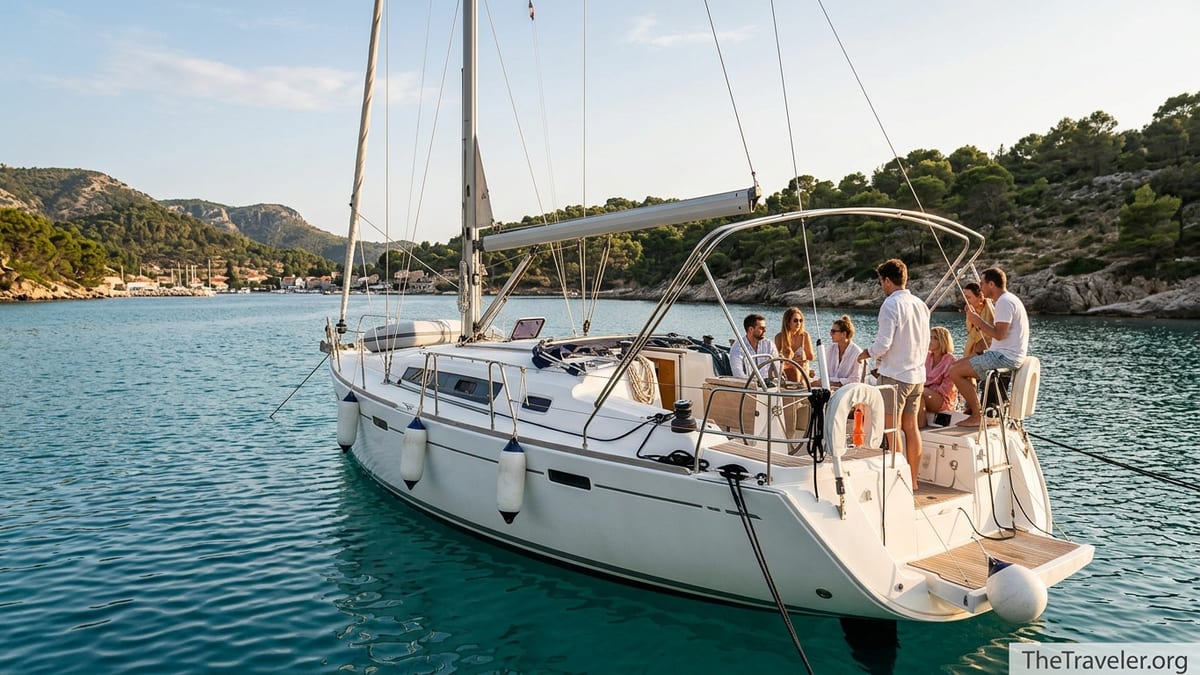
What SEARADAR Is and How It Works for Beginners
SEARADAR describes itself as a yacht concierge service rather than a simple booking site. Instead of browsing endless listings and contacting each charter company yourself, you submit a short request with your dates, preferred destination, group size and experience level. Within a short time, often within minutes in European business hours, a manager sends you a curated list of available boats that fit your brief. Behind the scenes, SEARADAR taps into major charter databases and direct contracts to pull availability from several fleets at once, then filters options by price, age, equipment and reviews.
In practice, that means a first-time traveler who wants, for example, a one-week sailing trip in early September around Croatia does not need to know which local operators to trust in Split or Zadar. Instead, they might receive a handful of concrete options such as a recent 40-foot Bavaria cruiser from a well-known Adriatic fleet or a slightly older but cheaper Jeanneau with similar cabin layout. SEARADAR’s staff, many of whom are active skippers, highlight pros and cons, like better dinghy engines, bow thrusters that help with docking, or flexible check-in hours.
Once you pick a boat, the same manager typically stays with you through the booking. They coordinate the contract with the charter company, handle payment links, collect crew details for the passenger list, and help you add extras such as a professional skipper, stand-up paddleboards or early check-in. For newcomers, that single point of contact is often less stressful than juggling messages with several local bases whose staff might be busy turning boats around on Saturdays.
For your first charter, that concierge element is the main reason SEARADAR is worth considering. You get much of the choice and pricing of a marketplace, but with a human buffer who screens out obviously unsuitable boats and can explain what each line item in the offer actually means before you commit.
Real-World Pricing: What You Might Actually Pay
Whether SEARADAR is worth it naturally depends on cost. The company typically works on a commission basis paid by the charter operator, so most travelers do not pay an extra booking fee on top of the yacht price. In many cases, the weekly rates you see from SEARADAR will be comparable to what the same boat would cost if you approached the charter company directly. At certain times, SEARADAR negotiates small discounts or loyalty benefits, particularly for repeat clients, but you should not expect miracle price drops below the general market level.
To get a sense of real numbers, imagine a first sailing holiday in the Greek Cyclades in June for four people. A 38 to 41-foot monohull from about 2018 to 2020 with two or three cabins might run roughly in the range of 2,000 to 3,500 euros for the week, before mandatory extras. Add a professional skipper and you can easily add another 1,200 to 1,800 euros, depending on local wage norms and the season. SEARADAR would usually present several combinations in this bracket, spelling out which offers include damage waiver options, bed linen, outboard engine or Wi-Fi.
Another example: a family looking at a newish 40-foot catamaran in Croatia in August could be quoted somewhere in the 5,000 to 8,000 euro range for the bareboat charter. Port fees, fuel, transit log and cleaning might add a further few hundred euros. Using SEARADAR does not eliminate these costs, but the manager can help you forecast the total trip budget more realistically by comparing different marinas and regions. For a first-timer, just seeing the all-in estimate before booking can prevent unpleasant surprises on the quay.
The key for beginners is to treat SEARADAR’s quotes as a starting point for discussion rather than a mysterious number. Ask your manager to break down the price, clarify mandatory versus optional extras, and compare a couple of similar boats in the same week. That transparency is one of the practical ways SEARADAR can add value beyond what you might get from a simple search box on a large rental marketplace.
Support, Safety and Problem-Solving on Your First Trip
On a first sailing trip, questions rarely stop at the moment you pay the deposit. SEARADAR aims to cover that gap by assigning you a support manager who remains reachable from booking through to the end of the charter. If your arrival flight shifts, your skipper falls ill, or you are unsure what license a particular country requires, you can message the manager, who then coordinates with the charter base or offers alternative solutions.
For example, imagine arriving in Palma de Mallorca to discover that strong winds have delayed boat cleaning and your check-in will be three hours late. A first-time charterer might not know whether that entitles them to any compensation or how to push back politely. In that case, you could reach out to SEARADAR. The manager can call the base in local language, confirm revised timing, and sometimes negotiate a small gesture, such as free early check-out or a discount on a future booking. The practical benefit is less about legal rights and more about not having to manage confrontation yourself on day one of your holiday.
SEARADAR also promotes extras such as damage deposit reduction products from some charter partners. Instead of placing a large refundable security deposit on your credit card, you may be able to pay a one-time fee that partially protects you from certain types of damage claims. For a cautious first-timer, this kind of option can reduce stress, though it does add to the overall cost and has exclusions you need to read carefully. A good manager will walk you through what is covered, what is not, and at what point the charter company can still charge you.
When something goes wrong mid-cruise, SEARADAR’s role is essentially that of a mediator and backup communicator. If you lose the dinghy outboard in a squall off Lefkada or snag a mooring line in the propeller in Martinique, your primary contact remains the charter base or emergency number provided at check-in. However, many first-time clients report feeling more confident knowing they can also message SEARADAR if they struggle to get through or feel a proposed solution is unreasonable. The company cannot override local maritime rules, but it can help you understand your options in plain language.
Destinations, Boat Types and Who SEARADAR Suits Best
SEARADAR works with charter fleets in most of the main sailing regions: Mediterranean hubs such as Croatia, Greece, Italy and Turkey; popular Caribbean islands; and selected bases in locations like Montenegro or the Canary Islands. For a first trip, that range lets you prioritize the style of holiday you want. A young group might be steered toward the busy Croatian coast between Split and Dubrovnik, with lively marinas and beach bars within easy day-sail distances. A family with small children might instead choose the gentler, more sheltered waters of the Saronic Gulf near Athens.
In terms of boats, SEARADAR can arrange both monohull sailboats and catamarans, from compact 30-footers suitable for a couple with a skipper up to larger cruising catamarans for groups of eight or ten. First-time charterers who are hiring a professional skipper often lean toward catamarans for their wide decks and stable feel at anchor. In contrast, those with some sailing background who are excited about helming may prefer a classic monohull for the sportier ride and easier mooring in small harbors.
SEARADAR is generally most valuable for travelers who know what kind of experience they want but not how to translate that into a specific boat and base. A corporate team looking for a four-boat flotilla in the Balearics, for instance, might ask SEARADAR to handle the puzzle of finding similar yachts in the same marina with compatible check-in times. A couple planning a honeymoon in the Dodecanese could focus their brief on quiet anchorages and waterfront tavernas, letting the concierge filter out noisier charter hubs.
If you are highly experienced, prefer to negotiate directly with local operators and enjoy the research process, a concierge-style intermediary might feel unnecessary. But for a first sailing trip, especially if you are traveling with family or friends who expect a smooth experience, having a specialist service coordinate across multiple fleets can remove a lot of friction.
Pros and Cons Compared with Booking Direct or Other Platforms
Looking at alternatives helps clarify whether SEARADAR is the right fit for your first trip. At one end of the spectrum, you can go directly to a single charter company. This sometimes yields slightly better loyalty discounts or very specific boats that are not widely listed. The trade-off is that you only see that operator’s fleet, which may not be the best match for your dates or skill level. You also need to repeat your enquiry with multiple companies to compare options, which can be time-consuming and confusing when you are still learning the terminology.
At the other end, large international marketplaces offer search filters across thousands of boats, with instant booking and user reviews. They are convenient but often leave you to interpret technical details and contract conditions yourself. Some act more as classified listings, passing you to the charter company as soon as you click “enquire,” which can be disorienting for a newcomer who expected full-service support. SEARADAR positions itself between these extremes, combining wide access to fleets with more hands-on guidance.
On the positive side, SEARADAR’s strengths for first-timers include curated offers tailored to your actual sailing background, a single human point of contact, and help decoding differences that matter in real life, such as whether a particular marina has late-night fuel availability or if a boat’s air conditioning will work at anchor. The company also promotes loyalty perks and occasional prize draws, which can be a modest bonus if you decide that your first trip was not your last.
The downsides are more subtle. Because SEARADAR earns from commissions, it has an incentive to prioritize fleets where cooperation is smooth and commercially attractive. In practice, this is not unusual in travel, but it does mean you should still ask if there are reasons a given suggestion was preferred over another. Also, response speed and depth of advice can vary slightly between individual managers, so if you feel your brief is not fully understood, it is worth clarifying early rather than assuming all concerns are automatically covered.
How to Get the Most From SEARADAR on Your First Sailing Holiday
If you decide to use SEARADAR, the quality of your first sailing trip will depend as much on how you brief the concierge as on the boat itself. Be very explicit about your group: ages, swimming confidence, mobility limitations, whether anyone gets seasick, and what kind of evenings you imagine. For example, saying “we are two couples in our 30s who want a mix of quiet bays and two or three nights near nightlife” yields different suggestions than “we are a family with a toddler who needs early bedtimes and easy beaches.”
Share your true sailing experience too, even if it feels modest or messy. There is a difference between someone who took a three-day introductory course on a 25-foot keelboat and someone who has crewed ocean passages. If you only have limited time on the water or no license, say so, and ask specifically what local rules are for hiring a professional skipper. SEARADAR can then ensure you are not offered bareboat-only fleets in countries that have strict certification requirements.
Before paying a deposit, request a clear summary of what is included and what an average week’s incidental costs might look like in that destination. Ask about marina versus anchorage patterns, approximate fuel consumption for the type of boat, and any one-time port fees that first-timers commonly overlook. Use the manager’s experience: for example, they can often advise that in the central Dalmatian islands you might spend more nights on mooring buoys and restaurant jetties than in full-service marinas, which affects both cost and how “off-grid” the trip will feel.
Finally, treat SEARADAR’s team as partners rather than anonymous agents. Let them know if you are nervous about docking, unfamiliar with Med-style mooring, or anxious about seasickness among your group. That might lead to recommendations such as a slightly smaller, more manageable yacht, a route that avoids longer exposed crossings, or hiring a skipper for at least the first few days so you can gain confidence before taking more control.
The Takeaway
For a first sailing trip, the biggest hurdles are rarely about perfect itineraries or the newest hulls. They are about uncertainty: not knowing which fleets are reputable, whether a quoted price is reasonable, or how you will handle hiccups far from home. SEARADAR’s concierge-style approach addresses those anxieties by pairing wide access to boats with hands-on human support from request to disembarkation.
If you enjoy independent research, already know specific local operators, or have substantial sailing experience, you may be comfortable booking direct or using a broad marketplace. But if this is your first time trading hotel corridors for companionways, SEARADAR can be worth using as a guide through an unfamiliar corner of the travel world. By asking detailed questions, being honest about your experience, and leveraging the manager’s local insight, you can turn a daunting process into an organized, memorable week afloat that leaves you eager to plan the next voyage.
FAQ
Q1. Do I need previous sailing experience to book through SEARADAR?
Not necessarily. Many first-time clients have little or no sailing background. In that case, SEARADAR typically recommends booking a professional skipper and may suggest calmer regions and shorter daily legs. You should be upfront about your lack of experience so the manager can avoid offering bareboat-only options that require licenses you do not have.
Q2. Can SEARADAR help me hire a skipper for my first trip?
Yes. When you submit your request, you can specify that you want a skippered charter rather than bareboat. SEARADAR then includes skippers’ fees in the offers and coordinates with the charter company to assign a qualified captain who knows the local waters. You still pay the skipper directly according to local practice, but the logistics are handled for you.
Q3. Is booking through SEARADAR more expensive than going direct to a charter company?
In many cases, prices are similar to booking directly because SEARADAR earns a commission from the charter operator rather than charging you a separate booking fee. Sometimes you may see slightly higher or lower totals depending on promotions, loyalty discounts or negotiated terms. It is reasonable to ask your manager to explain how a quoted price compares to typical market rates for the same boat type and season.
Q4. What kind of boats can I book for a first sailing holiday?
Through SEARADAR you can usually choose between monohull sailing yachts and catamarans, in sizes that match your group and comfort level. For a first trip with a skipper and four guests, something around 37 to 42 feet is common. Families or groups who value stability and deck space often opt for catamarans, while those more focused on the sailing feel may prefer monohulls.
Q5. How far in advance should I book my first sailing trip with SEARADAR?
For popular destinations in peak season, such as Croatia or Greece between June and September, it is sensible to start the process several months ahead if you care about specific dates or boat styles. That said, SEARADAR can sometimes find last-minute availability within weeks of departure, especially for smaller boats or shoulder-season weeks. More lead time generally means more choice and potentially better pricing.
Q6. Does SEARADAR offer help if something goes wrong during the charter?
Your primary operational support during the trip comes from the local charter base, which handles technical issues and emergencies. However, SEARADAR remains available as a secondary contact. If you have trouble reaching the base, are unsure about the response you receive, or need help understanding your options, you can contact your SEARADAR manager to assist with coordination and explanations.
Q7. Which destinations are best for a first sailing trip booked through SEARADAR?
Many beginners choose well-served, relatively sheltered areas such as the Croatian Adriatic around Split, the Saronic Gulf near Athens, or certain parts of the Balearic Islands. These regions offer short hops between harbors, plenty of services and predictable summer conditions. SEARADAR can discuss your preferences and suggest bases whose typical routes match your comfort level and interests.
Q8. What documents and licenses will I need?
The requirements depend on the country and whether you are hiring a skipper. If you plan to skipper yourself, you may need a recognized sailing certificate and, in some regions, a separate VHF radio license. With a hired skipper, personal documentation requirements are usually lighter, but you still need passports and any visas required for the destination. SEARADAR and the local charter company can clarify what is needed for your specific booking.
Q9. Can SEARADAR help me estimate the total budget beyond the yacht price?
Yes. When you review offers, you can ask the manager to outline likely extra costs such as fuel, final cleaning, port or marina fees, food provisioning, skipper’s meals and tips where customary. While exact amounts vary by destination and personal choices, having an informed estimate helps you decide whether a particular boat and route fit your overall budget.
Q10. Is SEARADAR a good choice if I think I will only charter once?
If you expect this to be a one-off experience, using SEARADAR can still be worthwhile because it simplifies research, reduces the chance of choosing an unsuitable boat, and provides guidance before and during the trip. You may not fully benefit from loyalty programs aimed at repeat clients, but the concierge support can make that single first voyage smoother and less stressful.