


More news on this day
Persistent drought and record summer heat are reshaping Europe’s river cruise season, as chronically low water levels on the Rhine, Danube and other key waterways trigger travel alerts, ship swaps and last-minute itinerary changes across the continent.
Get the latest news straight to your inbox!
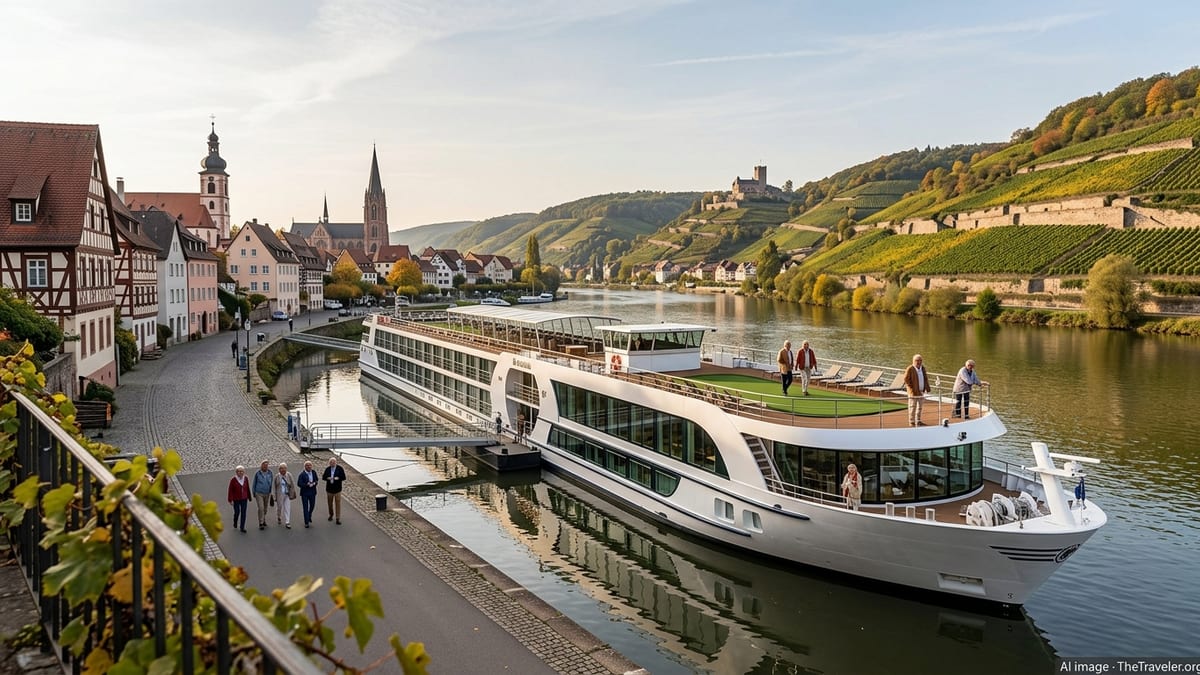
Low Water Turns Peak Season into a Moving Target
Reports from cruise lines, travel trade publications and passenger forums indicate that the 2026 summer season has been marked by some of the lowest river levels in decades on several stretches of the Danube and Rhine. Gauge readings at key chokepoints such as Kaub on the Middle Rhine and sections of the upper and middle Danube have fallen toward thresholds that constrain navigation, forcing vessels to lighten loads or avoid certain segments altogether.
Publicly available data from European drought monitoring services show broad areas of central and western Europe experiencing rainfall deficits and high temperatures this year, conditions that reduce river discharge and raise evaporation. The Danube Commission has highlighted an emerging pattern of longer, more frequent low water episodes, describing low-water navigation challenges as an ongoing operational reality rather than an occasional anomaly.
Coverage in specialist cruise media describes a patchwork of sailing conditions, with some itineraries proceeding close to schedule while others are partially converted into land-based journeys. Travel alerts issued over recent seasons by river cruise brands already reference the need to monitor unusual low or high water and to adjust plans accordingly, and the current drought is intensifying that contingency planning.
The situation follows earlier drought-hit years such as 2018 and 2022 and a notably dry spring in 2025, reinforcing a trend in which Europe’s most popular rivers have become increasingly vulnerable to hydrological extremes. For travelers, it means that even long-booked summer departures can be subject to substantial changes just days before embarkation.
Ship Swaps, Buses and Hotel Nights Redefine the Cruise Experience
To keep itineraries viable as water levels drop, river cruise operators are deploying an expanding toolkit of workarounds. Published reports from cruise news outlets and traveler accounts describe ship swaps, in which guests transfer mid-journey from one vessel to another positioned beyond a low-water bottleneck, allowing the core route to continue even if the original ship cannot pass.
Coach transfers have become another signature feature of drought-affected sailings. When ports along shallower sections of the Danube or Rhine become inaccessible, operators are routing passengers by bus between alternative docking points and planned excursions. In some cases, docking locations have shifted from central city piers to deeper berths farther away, with buses linking guests to old-town centers and shore tours.
Several cruise lines’ published terms and seasonal brochures for 2025 and 2026 explicitly reference the possibility of substitute transport by bus, train or even short flights in response to unusual water levels. These documents also outline scenarios in which hotel stays on land may replace nights aboard if ships cannot reach scheduled ports or must be repositioned to different parts of the river system.
While these measures help preserve sightseeing highlights such as Vienna, Budapest or the Rhine Gorge, traveler reports indicate that the rhythm of a river voyage can change significantly. Days that would normally involve scenic sailing may instead be spent on highways, with guests coached between vessels or overnight accommodations as operators work to hold itineraries together.
Major Brands Issue Alerts as Bookings and Expectations Shift
Travel industry coverage and cruise news sites report that several prominent river cruise brands, including operators on the Danube and Rhine, have recently flagged low water disruptions in updates to guests and travel advisors. Notices describe a mix of cancelled departures, altered embarkation points and revised stopovers on affected stretches of the rivers.
Trade publications indicate that some companies have acknowledged a reduction in July bookings compared with prior seasons, linking the slowdown to ongoing low water issues and heightened consumer awareness of climate related travel disruptions. At the same time, the broader river cruise sector continues to expand, with industry figures for recent years showing steady growth in passenger numbers and new vessel orders for Europe.
Statements in brochures and travel alerts emphasize that most departures are still operating, though not always exactly as advertised, and that decisions on modifications are often taken close to sailing dates based on the latest hydrological forecasts. Consumer discussions on travel forums suggest that prospective guests are weighing river conditions more carefully and are seeking clearer information on the likelihood of buses or ship swaps before committing to a specific itinerary or departure date.
Some travelers posting recent trip reports describe largely successful cruises with only limited deviations from schedule, particularly on routes less exposed to the driest stretches. Others recount more extensive reshaping of their journeys, with multiple coach segments and a stronger emphasis on land touring when river navigation became unviable.
Climate Pressures Prompt Operational and Design Adaptations
The pattern of recurring droughts is prompting a deeper rethink of how European river cruising operates. Meeting summaries released by the Danube Commission from expert gatherings in early 2026 describe a sector confronting hydrological volatility that is expected to intensify, with navigation authorities and shipping interests examining options such as targeted riverbed works, dredging strategies and improved forecasting to maintain safe navigation during low water.
Industry commentary points to vessel design as another line of adaptation. River ships with shallower drafts and flexible ballast systems are viewed as better positioned to cope with seasonal extremes, and some cruise lines are promoting new builds engineered to operate in more marginal depth conditions. Announcements of forthcoming European ships highlight design choices aimed at increasing resilience as summers grow hotter and drier.
Reports from policy and research organizations focusing on drought indicate that purely infrastructural responses have limits and must be balanced with environmental considerations along river corridors that double as ecological and cultural heritage sites. For cruise operators, this translates into a future in which operational agility, diversified routing and close coordination with waterway authorities become central to business planning.
The evolving climate backdrop is also influencing traveler behavior. Advisors and seasoned passengers are increasingly recommending that guests build flexibility into their expectations, recognizing that the appeal of river cruising now includes a higher degree of variability linked to weather and water levels than in the past.
What Travelers Should Expect from Europe’s New River Reality
Publicly available material from cruise companies and travel advisors suggests that travelers currently booking European river cruises are being encouraged to read water level clauses carefully and to understand that drought and flooding can both prompt last-minute changes. Seasoned observers recommend treating the published itinerary as a framework rather than a guarantee of specific sailing segments between given cities.
Guests are being advised, through advisory notes and informal guidance in traveler communities, to plan for potential coach transfers, modified embarkation points and the possibility of ship swaps on longer journeys. Some experienced river cruisers report choosing itineraries with greater redundancy in port access or selecting shoulder season departures when heat and drought risks may be slightly lower, while acknowledging that no period is entirely immune to hydrological swings.
Across recent coverage and traveler reports, a common thread is that the core appeal of Europe’s river routes remains strong, but the mode of experiencing them is changing. Iconic vistas along the Rhine Gorge, the Wachau Valley or the great cities of the middle Danube are still accessible, yet the continuity of sailing between them is increasingly contingent on conditions far upstream and on how operators adapt to a drier, hotter climate.
As the 2026 season progresses, observers expect that Europe’s river cruise industry will continue to refine its response, blending real time water monitoring with more explicit communication about potential disruptions. For travelers, the latest drought underscores that Europe’s legendary rivers are now at the front line of climate impacts, and that cruising them requires a new level of flexibility and awareness.