


More news on this day
Unusually low water levels on some of Europe’s best known rivers are disrupting the peak summer cruise season, prompting operators to redraw itineraries, deploy ship swaps and move passengers by coach around unnavigable stretches.
Get the latest news straight to your inbox!
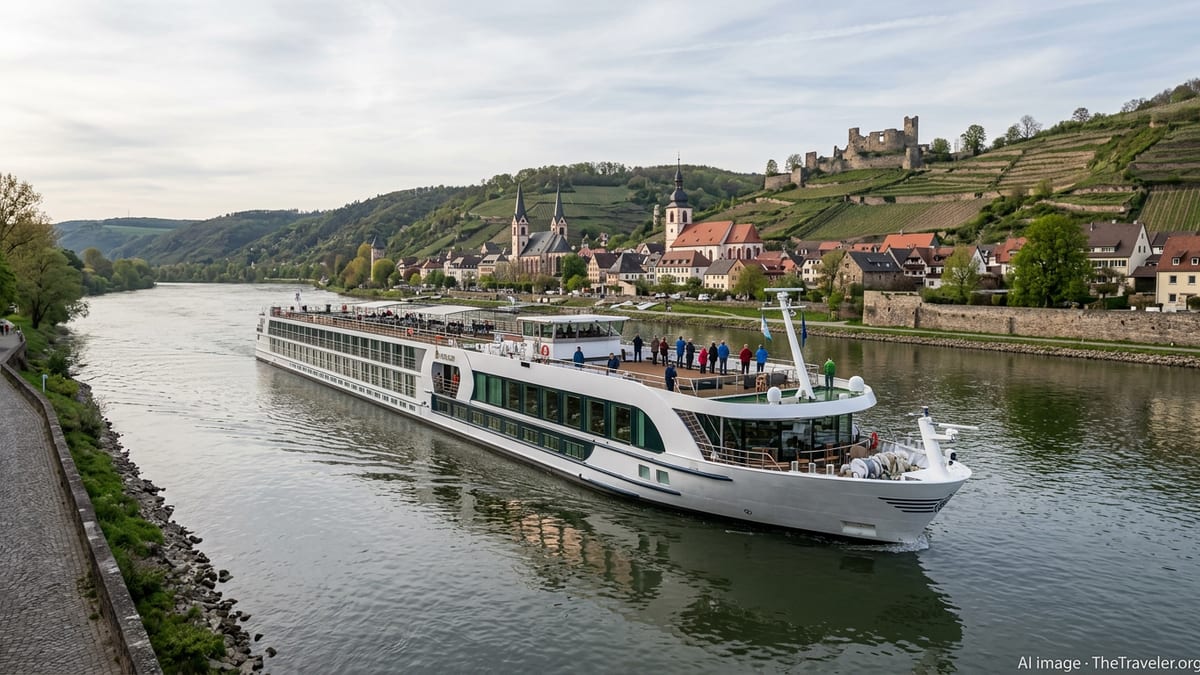
Heat, Drought and Historic Rivers Under Pressure
A prolonged heatwave and below average rainfall across central Europe have left key stretches of the Rhine and Danube at or near critical low-water marks, according to recent hydrological data and industry updates. Publicly available information points to particularly shallow sections on the Middle Rhine in Germany and parts of the Upper Danube between Bavaria and Austria, areas that are cornerstones of many classic river cruise itineraries.
Reports from recent passengers describe steep gangways, exposed riverbanks and vessels operating with restricted drafts to avoid running aground. On some weeks, navigation has remained technically possible but only at reduced speeds, leading to delays and compressed port calls. On others, certain sections have become too shallow for modern cruise ships to transit safely, triggering last minute operational changes.
Climate assessments cited in European inland shipping reports link the current conditions to a broader pattern of hotter, drier summers affecting major waterways. While year to year variability remains high, analysts note that sustained low water periods are becoming more frequent, creating new planning challenges for a sector that has rebounded strongly in passenger numbers since the pandemic.
Ship Swaps, Buses and Static Stays Replace Scenic Sailing
To keep itineraries running, river cruise companies are increasingly relying on ship swaps, a practice in which guests disembark one vessel, travel by bus around a shallow section and board an identical sister ship positioned upstream or downstream. Recent traveler accounts from the Rhine and Danube describe coach transfers lasting four to five hours, often replacing marquee scenic segments such as the castle lined Middle Rhine.
In several instances this summer, cruise lines have also reconfigured schedules into a patchwork of sailing and overland touring, with nights spent on docked ships in cities such as Rotterdam while passengers travel by motorcoach to missed ports and excursions. Some itineraries have been shortened, with embarkation or disembarkation shifted to alternative ports where water levels are more reliable, including smaller towns in Slovakia or further downriver on the Danube.
Passenger reports suggest that while crews are working to maintain onboard services and replicate planned excursions where possible, expectations of continuous river sailing are not always being met. Travelers have highlighted the loss of hallmark experiences, including full day transits through the Rhine Gorge or complete navigation between Budapest and Regensburg, as shallow stretches force vessels to tie up short of their intended routes.
Industry Data Shows Strong Demand Amid Operational Strain
Despite the disruption, sector statistics compiled by the Central Commission for the Navigation of the Rhine and other European bodies indicate that river cruising remains in a phase of robust recovery. Recent annual reports show passenger volumes on the Rhine and Danube surpassing pre pandemic levels, with more than 400 active cruise vessels operating on European inland waterways and additional ships scheduled for delivery in 2025 and 2026.
Order books for new river craft, including several multi ship expansions by major brands, underline continued confidence in long term demand. At the same time, industry analyses acknowledge that climate related low water events are now a structural risk factor. Forecasts for freight and passenger traffic on the Rhine and Danube increasingly include scenarios in which periods of very low depth curtail navigation for days or weeks during late summer.
Company brochures and travel documents reviewed for upcoming seasons emphasize that itineraries remain subject to change based on water levels, sometimes at short notice. Disclaimers point out that deviations may include extended coach travel, overnighting on moored ships and modified port calls, all framed as necessary safety measures when river depths fall toward critical thresholds.
Climate Adaptation Moves From Theory to Practice
In response to the latest disruptions, river cruise operators and inland navigation authorities are accelerating discussions on adaptation. Technical options under consideration include lighter, shallower draft vessel designs, optimized loading to reduce weight during dry spells and closer coordination with waterway managers on dredging and traffic management when levels fall.
Some newer ships already incorporate flexible ballast systems and hull shapes intended to improve performance in low water. However, experts cited in recent inland navigation studies note that there are physical limits to how shallow a large passenger vessel can operate, particularly on constricted stretches with rocky or shifting beds. This reality is steering many operators toward operational rather than purely technical solutions, such as pre planned ship swap points and contingency hotel capacity in river cities.
Travel planning guidance from cruise lines and specialist agencies now openly references climate related volatility, advising customers that water levels are an inherent variable. Industry facing briefings suggest that transparent communication of these risks, combined with flexible booking conditions and clear contingency plans, will be critical to maintaining traveler confidence as low water seasons become more common.
What Travelers Can Expect for Late Summer and Autumn
With the peak heat of August still affecting central Europe, publicly available waterway updates indicate that navigation conditions on the Rhine and Danube remain changeable from week to week. Some departures are completing their full routes with only minor timing adjustments, while others are facing substantial reworking involving ship swaps or partial bus based touring.
Advisories from cruise companies and travel forums emphasize that no operator can guarantee specific water levels for departures later in the season. Prospective guests are being encouraged to monitor pre departure updates closely and to be prepared for itinerary changes that may alter the balance between sailing time and overland travel. Insurance policies and booking terms are also drawing renewed scrutiny from travelers seeking clarity on what forms of disruption are covered.
As autumn approaches and rainfall patterns shift, river levels could recover enough to ease some of the operational pressures, but recent experience indicates that variability will persist. For now, Europe’s famed river cruise corridors remain open, yet increasingly shaped by the need to adapt to a climate in which low water seasons are no longer seen as rare anomalies, but as recurring features of the travel calendar.