


For more than two decades, Tripadvisor has been the default starting point for millions of travelers trying to choose a hotel, restaurant, or tour. In 2026 it still holds an enormous archive of reviews and photos, but it now competes with Google, Booking, Airbnb, TikTok and countless niche platforms. The question many travelers are asking is no longer "What is Tripadvisor?" but "Is Tripadvisor still worth using for trip planning and reviews?"
Get the latest updates straight to your inbox!
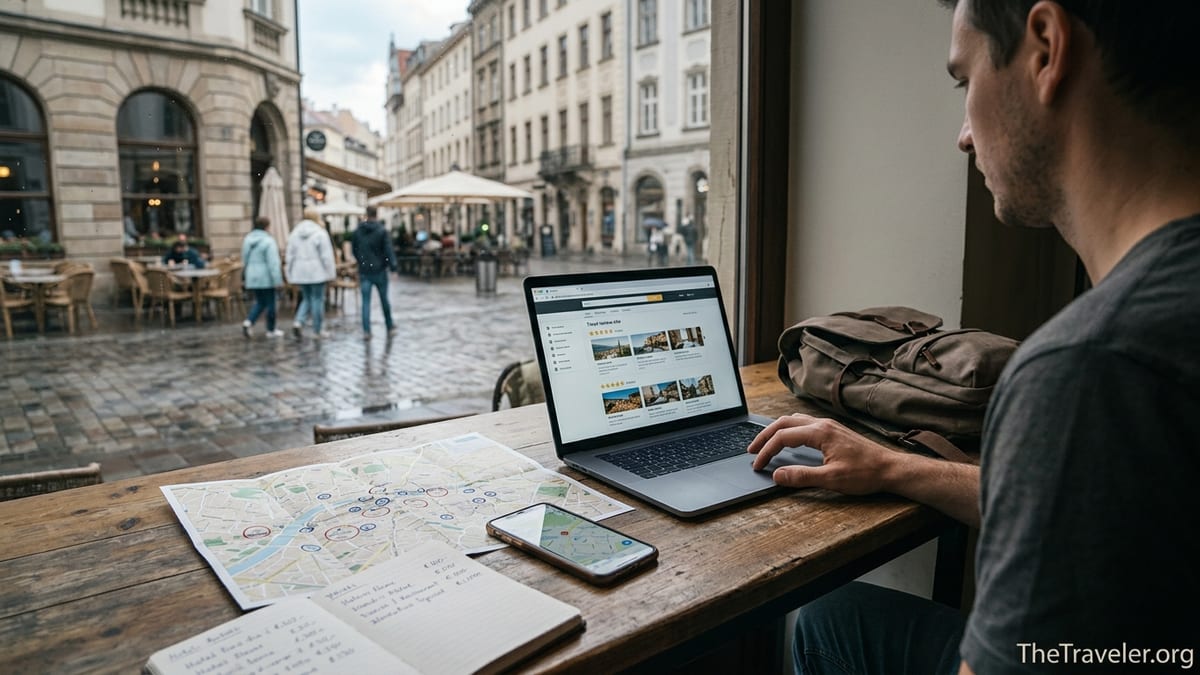
What Tripadvisor Actually Does Well in 2026
Tripadvisor remains one of the largest travel platforms in the world, with hundreds of millions of reviews and opinions covering everything from hostels in Hanoi to fine dining in New York. For a traveler trying to get an initial sense of a destination, that breadth still matters. If you search for hotels in a mid‑sized city such as Krakow or Asheville, you can usually find dozens of options with long review histories stretching back years, plus traveler photos that show rooms, bathrooms, and views far more honestly than many official hotel galleries.
That historical depth can be especially useful in places where other platforms have thinner coverage. For example, a small family guesthouse in rural Slovenia may have only a handful of Google reviews but over a hundred detailed Tripadvisor write‑ups, including notes on which rooms are quietest and how the owners help with hiking routes. When you are considering a multi‑night stay in a remote area, that extra context can make a big difference.
The platform also continues to shine for certain types of activities. In popular destinations such as Rome, Dubai or Cancun, Tripadvisor’s "Things to Do" and tour listings can surface specific small‑group experiences like food tours, street art walks or cenote swimming trips that do not always rank high on generic search engines. Reading multiple long‑form reviews of, say, a three‑hour cooking class in Florence often gives you a far clearer idea of pacing, group size and instructor personality than a brief description on a booking engine.
Tripadvisor’s community forums are another under‑appreciated strength. In the destination forums for places like Japan, New Zealand or the U.S. national parks, experienced travelers and sometimes local residents answer itinerary questions in detail, from train connections to realistic driving times. If you are planning a complex route, such as a two‑week road trip through the Scottish Highlands with ferries and island hops, those threads often contain advice that would take hours to piece together from official transport sites alone.
How Reliable Are Tripadvisor Reviews Today?
Review reliability is the biggest concern many travelers have, and with good reason. Tripadvisor’s own 2025 Transparency Report, covering reviews submitted in 2024, states that around 31 million reviews were sent in and more than 2.7 million of them were identified as fake or otherwise fraudulent, roughly 8 percent of total submissions. The company says most of these are blocked before publication and that its fraud detection systems are getting better, but the numbers confirm what many users feel: manipulation is a persistent issue, not a rare exception.
Fake or biased reviews show up in several ways. In resort areas such as parts of the Dominican Republic, Bali or the Mexican Caribbean, you will sometimes see a long sequence of five‑star reviews written within a few days, often from first‑time reviewers whose only contribution is to praise the same staff names using similar language. That pattern strongly suggests "review boosting," where businesses offer incentives or hire third parties to flood the page with praise and push down older critical reviews.
There are also reports from travelers whose negative experiences never appear. A guest who tried to post a detailed one‑star review about safety and cleanliness problems at a supposedly four‑star city hotel, for example, may find that Tripadvisor rejects the review for violating guidelines without a clear explanation, even after they rewrite it. While Tripadvisor has legitimate rules about personal attacks and sensitive content, inconsistent moderation can leave some travelers feeling that critical but honest reviews are less welcome than glowing ones.
Despite these problems, it would be inaccurate to say that "all" or even "most" Tripadvisor reviews are fake. In many mid‑range city hotels or neighborhood restaurants, the bulk of reviews are from real travelers sharing specific details: which tram stop to use, how noisy the street is at midnight, whether the breakfast buffet caters to vegetarians. The challenge for users is learning to spot patterns that suggest manipulation and to treat the overall picture as one piece of evidence, not the single source of truth.
Understanding Rankings, Ratings and What They Really Mean
Tripadvisor’s hotel and restaurant rankings are based on a popularity algorithm that considers at least three main factors: the quantity of reviews, their quality (star ratings) and how recent they are. The exact formula is proprietary and can change over time, but the result is visible on every listing when you see something like "#4 of 250 hotels in Lisbon." That rank is not an official quality score. It only reflects how that property is performing in Tripadvisor’s user review ecosystem relative to its competitors.
In practice this can lead to confusing results. In cities full of small tourist‑oriented restaurants, the top spots are often held by venues that actively encourage guests to leave reviews right after the meal, sometimes even offering a free digestif or dessert in exchange. A traditional neighborhood bistro in Paris that serves excellent food but never solicits reviews might sit far below a brightly lit, English‑language tapas bar that pushes every table to post five stars before they leave.
The same applies to hotels. A large chain hotel near Times Square might have thousands of reviews and an overall rating of 4.5, simply because sheer volume smooths out bad experiences. A much smaller boutique hotel in Brooklyn could offer more space and better service but have only a few hundred reviews because it has fewer guests and does not cater to large tour groups. On Tripadvisor it may rank lower despite being a better fit for many travelers.
For trip planning, this means you should treat rankings as a starting filter, not a verdict. A hotel in the top 20 out of several hundred can be a safe shortlist candidate, but it is worth clicking through to read recent detailed reviews, look at traveler photos and then compare what you see with other platforms like Google Maps, Booking or the hotel’s own site. If a hotel is ranked very low despite having a high star rating, or vice versa, that discrepancy is a signal to dig deeper into the timeline of reviews and see whether there was a renovation, a change of management or a recent run of complaints.
When Tripadvisor Is Especially Useful for Trip Planning
Tripadvisor tends to work best in a few specific planning scenarios. The first is when you are in the very early stages of research and simply need to understand the range of options in a destination. If you are flying to Osaka, for example, opening Tripadvisor’s hotel listings will quickly show you that many visitors cluster around Namba and Umeda, and that room sizes in business hotels are typically much smaller than in North American properties. That broad orientation makes it easier to refine your search on more specialized platforms later.
Another strong use case is for choosing tours and activities in highly touristic regions where there are dozens of similar operators. In Iceland, for instance, there are many companies offering Golden Circle day trips from Reykjavik at roughly similar prices. Tripadvisor reviews often reveal nuances: which operator uses smaller minibuses instead of large coaches, which guide makes more photo stops, and whether the itinerary feels rushed. Reading five or six detailed recent reviews can help you pick a mid‑priced operator that better matches your travel style instead of simply choosing the cheapest or the one your hotel happens to promote.
Tripadvisor can also be helpful when visiting destinations with less English‑language coverage on other platforms. Travelers heading to parts of Southeast Asia, North Africa or Eastern Europe sometimes find that local hotels have more English reviews and photos on Tripadvisor than on domestic booking sites. For example, a riad in the old medina of Fes may rely heavily on Tripadvisor for international exposure, resulting in rich review histories with detailed comments on how to navigate from the nearest gate and what to expect from traditional breakfasts.
Finally, the forums are particularly valuable for logistics questions that are too nuanced for generic search results. If you need to know whether a specific Swiss mountain pass is usually open by mid‑May for a self‑drive itinerary, or whether a certain Greek island ferry route tends to sell out on August weekends, long forum threads from previous years combined with new questions to local experts can provide highly practical, time‑sensitive advice that does not always surface elsewhere.
Where Tripadvisor Falls Short: Fake Reviews, Outdated Content and Booking Issues
For all its strengths, Tripadvisor has serious weaknesses that travelers should understand. The most widely discussed problem is fake or biased reviews. As noted earlier, Tripadvisor’s own figures show millions of fraudulent submissions each year. Some of those are caught and removed, but patterns such as bursts of five‑star reviews from new accounts, or glowing write‑ups that mention nothing but staff names and "amazing service" without concrete details, still slip through. This is particularly evident in resort zones or highly competitive restaurant streets where a single star difference can significantly impact bookings.
Another issue is that some listings feel neglected or outdated. It is not uncommon to see a hotel that changed names or ownership after a renovation still featuring traveler photos from a decade ago mixed in with new ones. Likewise, top‑ranked restaurants in fast‑changing neighborhoods may have closed or radically changed concept months ago, while their Tripadvisor pages continue to attract visitors who did not cross‑check opening hours on a more current platform.
Travelers have also reported frustrations with booking through Tripadvisor’s "instant booking" or third‑party partners. For example, someone might reserve a small hotel in Italy through a provider listed on Tripadvisor, only to arrive and discover that the property never received the reservation or is overbooked, leaving them scrambling for a last‑minute room at a much higher walk‑in rate. In such situations, getting timely support from the intermediary can be challenging, particularly outside standard business hours or in destinations where local alternatives are limited.
Finally, the user experience itself has become more commercialized. Pages can feel crowded with ads, sponsored placements and "Top Picks" that are not clearly separated from organic rankings. A first‑time visitor comparing hotels in Barcelona, for example, may find it hard to distinguish between a property that ranks highly because of consistent traveler praise and one that appears at the top due to paid promotion. That blurring of editorial and advertising content weakens trust and makes it even more important to read beyond the first few listings.
How to Use Tripadvisor Wisely and Cross‑Check Information
The most effective way to use Tripadvisor in 2026 is as one tool among several, not as your sole source of truth. Start by using it for discovery and long‑form context. For a city you have never visited, scan the top 20 or 30 hotels in your budget range and read several recent three‑ and four‑star reviews, which tend to be more balanced than one‑ or five‑star extremes. Note recurring themes such as noise, cleanliness, staff attitude or breakfast quality.
Next, cross‑check promising options on other platforms. For hotels, compare Tripadvisor reviews with recent comments on Booking, Google Maps or the hotel’s own social media. If Tripadvisor shows near‑perfect scores but Google’s newest reviews complain about ongoing construction or staffing shortages, that discrepancy is a red flag. Conversely, if a property has a few suspiciously glowing Tripadvisor posts yet multiple consistent, detailed positive reviews elsewhere, it may simply have been the target of occasional over‑enthusiastic guests rather than a systematic boosting campaign.
Pay close attention to reviewer profiles. A review from someone who has written 30 hotel reviews over several years in different countries, with both positive and negative experiences, is generally more trustworthy than a page full of five‑star comments from one‑post accounts. Look for concrete specifics: room numbers, dates, descriptions of nearby streets, mention of particular bus lines or walking distances. Vague language like "best ever," "amazing staff" and "highly recommended" without examples should carry less weight in your decision.
Finally, use Tripadvisor’s strengths where they matter most. Read forum threads for itinerary logistics and local quirks, browse traveler photos to verify that a hotel’s pool really looks like its professional photos and check opening times or seasonal closures before you commit to a non‑refundable rate. Then, when it comes time to book, consider going directly to the hotel or to a reputable major booking engine with clear customer support policies, rather than relying on whichever third‑party provider happens to appear inside the Tripadvisor interface.
Tripadvisor vs Other Platforms: When Alternatives Are Better
In many scenarios, you may get better or more current information by prioritizing other tools and using Tripadvisor as a secondary check. Google Maps has become particularly strong for up‑to‑date restaurant and cafe reviews in major cities, driven by sheer volume and the fact that locals use it daily. If you are looking for a quick lunch spot in central Berlin or a specialty coffee shop in Mexico City, Google’s combination of recent reviews, opening hours and live busyness data often outperforms Tripadvisor’s sometimes older listings.
For accommodation, booking engines like Booking or Expedia provide two key advantages: real‑time availability and clearer recourse if something goes wrong. Their review systems are usually restricted to guests who actually completed a stay, which reduces but does not eliminate the risk of fake or irrelevant reviews. When comparing a Paris hotel across platforms, you might find that Tripadvisor has more historical context and traveler photos, while Booking’s most recent reviews better reflect post‑renovation changes or current staffing levels.
Niche platforms can also beat Tripadvisor in specific categories. Vegetarian and vegan travelers frequently rely on apps such as HappyCow to find plant‑based restaurants, as those communities tend to police inaccurate listings more aggressively. For vacation rentals, Airbnb and dedicated professional managers’ sites often include more detailed amenity descriptions, cleaning policies and communication histories than the limited information available on older Tripadvisor rental listings, especially since some legacy services acquired by Tripadvisor have been wound down or integrated elsewhere.
Social media now plays a growing role too. Short videos on platforms like Instagram or TikTok that show real‑time conditions on a particular hiking trail, beach or border crossing can be invaluable when planning a trip, especially in regions undergoing rapid change. However, these sources introduce their own biases and trends, so layering them together with more traditional review platforms, including Tripadvisor, remains the best way to build a realistic picture of what to expect.
The Takeaway
So is Tripadvisor worth using for travel planning and reviews in 2026? The nuanced answer is yes, but with clear caveats. It is still an incredibly rich database of traveler experiences, especially valuable for long‑form narrative reviews, historical context and destinations that are under‑served elsewhere. Its forums continue to provide practical, experience‑based advice that is hard to find in official brochures or generic search results.
At the same time, Tripadvisor is no longer the single dominant authority it once seemed to be. The scale of fake and biased reviews, the commercial pressures on rankings and the occasional booking headaches mean travelers should treat it as one reference point rather than a final verdict. Used uncritically, it can lead you toward overhyped, tourist‑trap restaurants and average hotels that game the system. Used thoughtfully, in combination with other platforms and a bit of skepticism, it remains a powerful tool.
If you are planning a trip today, the most practical approach is to let Tripadvisor help you discover options and understand other travelers’ stories, then confirm the essentials elsewhere before you book. Read beyond star ratings, favor detailed and balanced reviews, and trust consistent patterns rather than isolated raves or rants. In that role, Tripadvisor is still worth a place in your travel planning toolkit, even if it no longer occupies the center of it.
FAQ
Q1. Can I still trust Tripadvisor reviews in 2026?
Many Tripadvisor reviews are genuine and helpful, but a noticeable minority are fake or biased. Treat them as one data point, favor detailed balanced reviews, and always cross‑check with other platforms like Google Maps or major booking sites before making important decisions.
Q2. Is it safe to book hotels and tours directly through Tripadvisor?
Booking through Tripadvisor’s partners generally works, but there have been cases of reservations not reaching the hotel or of slow customer support when things go wrong. For critical stays, such as the first night of an international trip, many travelers prefer to book directly with the hotel or via a large booking engine that offers clear customer service and cancellation policies.
Q3. How can I spot fake or manipulated reviews on Tripadvisor?
Warning signs include many five‑star reviews from first‑time accounts, similar language repeated across reviews, vague praise that mentions only staff names, and sudden bursts of positive ratings after a series of complaints. Genuine reviews usually include specific details about dates, room types, locations, and trade‑offs.
Q4. Are Tripadvisor hotel rankings (like "#3 of 200") an accurate quality measure?
Not exactly. Rankings reflect review quantity, quality and recency within Tripadvisor’s system, not an official quality standard. A hotel ranked lower may still be a better fit for you depending on your priorities. Use rankings to build a shortlist, then dig into recent reviews, photos and other platforms for a fuller picture.
Q5. When is Tripadvisor more useful than Google or Booking?
Tripadvisor is especially strong for long‑form narrative reviews, historical context about properties, boutique guesthouses in less‑touristed regions, and complex logistics questions answered in the forums. Google and Booking often provide more up‑to‑date snapshots and verified‑stay reviews, but they may lack the depth of discussion you find on Tripadvisor.
Q6. Should I write my own reviews on Tripadvisor?
Yes, if you are comfortable doing so. Thoughtful, specific reviews help other travelers and can balance out generic or suspicious content. Focus on concrete details like room layout, noise levels, staff responsiveness and neighborhood safety, and avoid personal attacks or sensitive information that might cause your review to be rejected.
Q7. Why was my honest negative review rejected or removed?
Tripadvisor enforces guidelines about language, personal information and relevance. Sometimes legitimate reviews are rejected if they contain strong wording, accusations that Tripadvisor considers unverified, or references to legal disputes. If this happens, try rewriting your review in neutral language focusing strictly on observable facts and your own experience.
Q8. Are Tripadvisor restaurant rankings reliable for finding great food?
They can be hit or miss. In very touristy areas, top‑ranked spots sometimes reflect who pushes hardest for reviews rather than who serves the best food. For everyday dining, especially in big cities, combining Tripadvisor with local recommendations, Google Maps, and niche apps for your dietary needs usually leads to better results.
Q9. How should I use Tripadvisor’s forums effectively?
Before posting, search existing threads for your destination and dates, as many common questions have already been answered in detail. When you do ask, include your travel dates, budget, interests and any constraints such as mobility or traveling with children. Clear questions tend to attract thoughtful, practical responses from experienced destination experts.
Q10. If Tripadvisor is not perfect, what is the best overall strategy for trip planning?
The most reliable approach is to combine several sources. Use Tripadvisor for discovery, in‑depth reviews and forums, then verify availability, prices and recent experiences on platforms like Google Maps, Booking, official tourism sites and social media. Look for consistent patterns across sources rather than relying on any single platform for crucial decisions.