


More news on this day
Regional Rail service across Philadelphia is returning to regular schedules after an overnight derailment on SEPTA’s Manayunk–Norristown Line in North Philadelphia forced the suspension of three lines and caused ripple effects across the entire network on Wednesday.
Get the latest news straight to your inbox!
Derailment at North Philadelphia Junction Halts Key Corridor
According to published coverage, the incident occurred shortly after midnight at the 16th Street interlocking, a busy junction near North Broad Station where multiple Regional Rail routes converge. An outbound Manayunk–Norristown Line train left the tracks as it moved through the complex switching area, disabling a critical section of infrastructure and immediately disrupting early-morning operations.
Reports indicate that the derailment did not involve a collision with another train and that the set came to rest upright, which helped limit the extent of damage to cars and track. Initial information from news outlets describes the episode as a significant operational event that nonetheless remained contained to a relatively short stretch of railway.
There were no immediate reports of life-threatening injuries connected to the derailment. Coverage from multiple local media organizations notes that passengers and crew were safely evacuated from the affected train, with responders and rail personnel inspecting equipment and the right of way through the morning.
The location of the derailment amplified its impact. The 16th Street interlocking is a pivotal node for SEPTA, carrying trains serving neighborhoods across North and Northwest Philadelphia as well as suburbs along the Schuylkill River corridor toward Norristown.
Network-Wide Delays and Suspensions Ripple Through Morning Commute
Publicly available information shows that SEPTA initially suspended service on the Manayunk–Norristown, Chestnut Hill East and Fox Chase lines, while other Regional Rail routes were forced to turn around short of Center City or operate on altered timetables. Trains that typically run through the affected junction were either rerouted or cut back, compressing capacity into a smaller set of tracks.
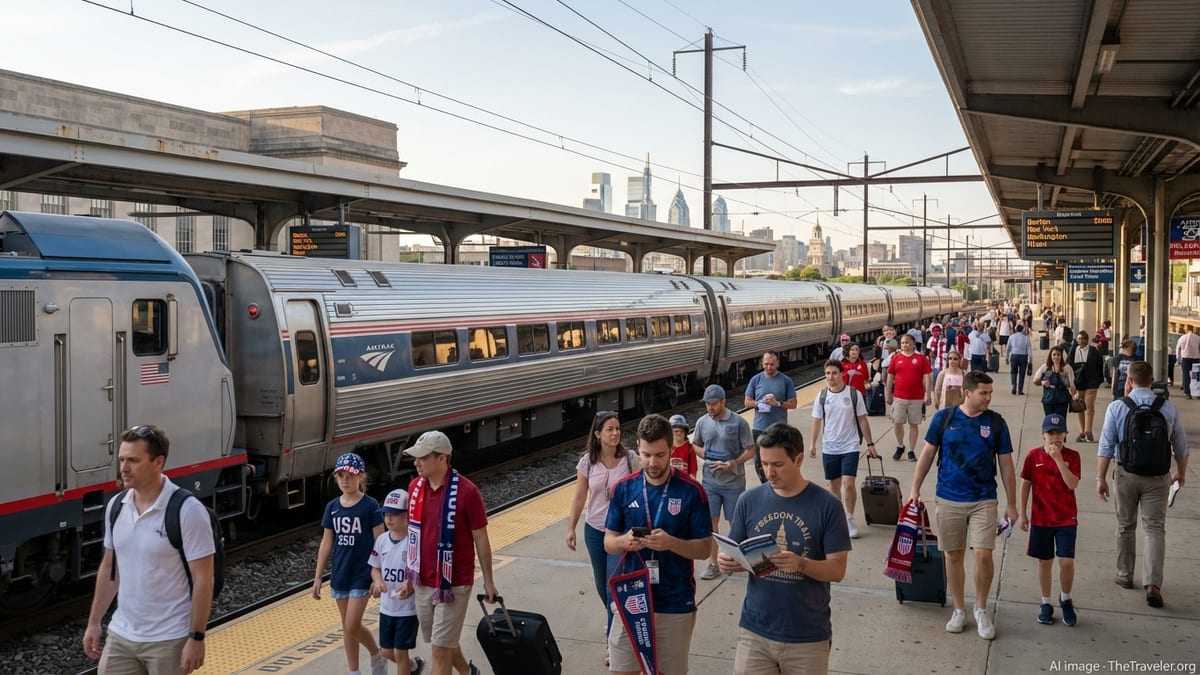
Throughout the morning peak, riders encountered crowded platforms, canceled trips and extended waits. Outlets including regional radio, television and digital news services described a morning in which many commuters shifted to the Broad Street Line subway, buses and rideshare options after finding their usual Regional Rail trips unavailable.
Service advisories circulated widely on social media and transit apps, urging passengers to allow extra travel time, check for real-time schedule changes and consider alternate departure points. At several transfer hubs, riders following updates in real time were able to pivot to subway or bus connections in order to reach Center City.
Travel disruptions were felt well beyond the immediate Manayunk–Norristown corridor. Because the derailment occurred at a junction that channels trains from multiple lines, even routes that remained technically in service were forced to operate with delays, reduced frequencies or modified stopping patterns for much of the day.
Gradual Restoration of Service on Manayunk–Norristown and Other Lines
By midafternoon, published reports indicated that track inspections and infrastructure repairs at the junction had progressed to the point where SEPTA could begin restoring normal Regional Rail operations. Coverage from local broadcasters stated that full service was brought back to the Manayunk–Norristown, Fox Chase and Chestnut Hill East lines around mid to late afternoon, allowing trains to once again pass through the 16th Street interlocking.
With the junction reopened, SEPTA began phasing out emergency turnbacks and temporary routings that had been in place since the early hours of the morning. Commuters heading home during the evening rush were advised to expect lingering delays but found trains largely back on regular routes and serving their normal downtown terminals.
Manayunk–Norristown Line riders in particular saw a marked improvement, as trains resumed the full corridor between Center City and Norristown after hours of uncertainty and suspension. The restoration helped reconnect popular riverfront neighborhoods, park-and-ride stations and the Norristown Transit Center with central Philadelphia for the evening commute.
Transit observers noted that the return to service occurred more quickly than some early projections, which had raised the possibility of prolonged shutdowns through the day. The speed of the restoration limited the disruption to a single, highly affected weekday rather than spilling significantly into Thursday’s schedules.
Alternative Routes Highlight Philadelphia’s Transit Redundancy
The derailment and subsequent recovery underscored the role of transit redundancy in the Philadelphia region. While Regional Rail was heavily affected for much of the day, passengers still had access to the Broad Street Line subway, the Market–Frankford Line, the Norristown High Speed Line and a network of bus routes that parallel portions of the Manayunk–Norristown and Fox Chase corridors.
Information posted on SEPTA’s platforms and reported by local outlets pointed riders on the suspended lines toward these alternatives, including connections at Fern Rock Transportation Center and the Norristown Transit Center. Many commuters used these options to piece together longer but still workable trips between the suburbs and Center City while Regional Rail remained constrained.
For travelers heading to and from Manayunk and nearby neighborhoods, local buses and the city’s frequent subway services offered a viable, if less direct, replacement for part of the day. Visitors and infrequent riders, including those staying in Center City hotels or traveling for leisure along the Schuylkill River trail, were encouraged to consult trip-planning tools and station announcements before setting out.
In the longer term, transportation analysts suggest that the episode may fuel additional discussion about how rail, subway and bus networks can be coordinated to better absorb major service shocks, particularly at critical choke points like the North Philadelphia junction affected in this derailment.
What Travelers Should Expect in the Coming Days
With trains back on the Manayunk–Norristown and other impacted lines, Regional Rail riders can expect service that more closely resembles normal weekday patterns. However, reports indicate that residual delays, minor schedule adjustments and speed restrictions near the repaired junction may continue over the next several days as crews complete inspections and fine-tune signaling.
Travelers planning trips in and around Philadelphia are being encouraged through publicly available advisories and news coverage to check real-time updates before leaving for stations, particularly during peak commuting hours. This is especially important for visitors relying on tight connections to flights, intercity trains or long-distance buses.
The derailment follows other recent freight and passenger rail incidents in the broader region, drawing renewed attention to the challenges of maintaining aging rail infrastructure while demand for reliable, frequent service continues to grow. Industry observers note that junctions like the one near North Broad Street are subjected to heavy daily use from multiple lines, making them priority locations for inspection and modernization.
For now, the restoration of service on the Manayunk–Norristown Line and the broader SEPTA Regional Rail network offers relief to thousands of daily riders. As investigations and engineering assessments move forward, transit users and advocates will be watching closely for any recommendations aimed at reducing the risk and impact of similar disruptions in the future.