

More news on this day
Air New Zealand has slipped back into the red as engine problems, rising costs and softer demand squeeze its finances, sparking fresh questions from travellers about whether long-planned trips to New Zealand and beyond could be at risk.
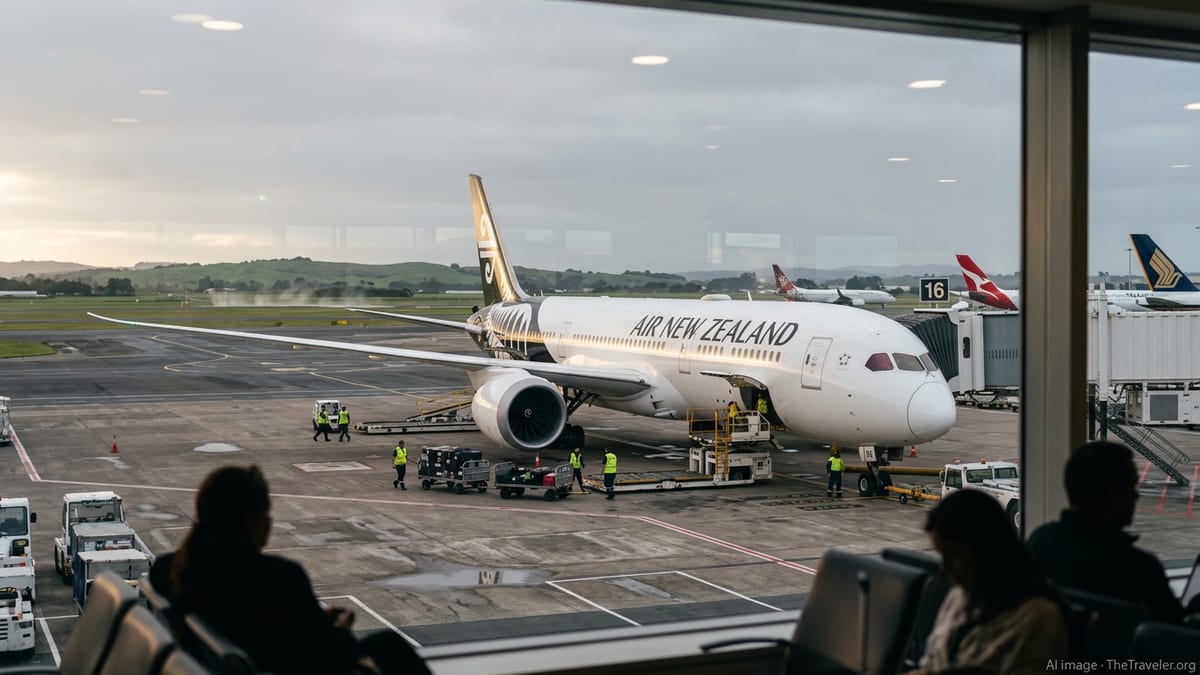
Financial Strain Puts Airline Under Pressure, Not Collapse
Air New Zealand reported a loss before tax of 59 million New Zealand dollars for the first half of its 2026 financial year, reversing a profit of 144 million dollars a year earlier. The carrier cited a mix of weaker domestic demand, higher operating costs and a weaker local currency for the downturn, on top of long-running engine maintenance issues that have left part of its fleet grounded.
The latest result follows a tough 2025 financial year in which full-year profit fell about 15 percent, even though earnings still landed at the top end of guidance. Management has warned investors that profits are likely to remain under pressure through the 2026 financial year as the engine problems and broader aviation cost inflation continue to bite.
Despite the swing back to loss, Air New Zealand’s own disclosures point to a business that is strained but far from collapse. The airline has highlighted a strong liquidity position, relatively low net debt compared with earnings in recent years, and ongoing access to compensation from engine manufacturers. For now, these cushions mean the conversation is about reduced profitability and selective capacity cuts, not imminent insolvency.
For passengers, that distinction is critical. Financial pressure can translate into higher fares or trimmed schedules, but on current information there is no indication that tickets already purchased with Air New Zealand are at risk because of a threat to the airline’s survival.
Engines on the Ground, Seats off Sale
The heart of Air New Zealand’s operational challenge lies under the wings. A combination of global maintenance requirements on Pratt & Whitney geared turbofan engines for its Airbus A320neo family and Rolls Royce engines on its Boeing 787-9 fleet has forced the airline to ground jets for prolonged periods. At times, up to eight aircraft have been out of service, with earlier periods seeing as many as 11 grounded.
This has directly reduced available seat capacity. Company updates and independent analysis show overall network capacity down around 4 percent year on year at various points, with long-haul flying particularly affected. Investor briefings have described thousands of seats per week effectively “unflown” because planned flights could not operate with the usual aircraft mix.
To keep schedules as stable as possible, Air New Zealand has responded by thinning frequencies, swapping in older, less fuel-efficient aircraft where it can, and holding back some seats from sale to create buffers when last-minute changes are needed. While this helps protect reliability, it also pushes unit costs higher and leaves fewer seats available at lower promotional fares.
The airline is negotiating additional compensation and firmer engine return timelines with manufacturers, but it also acknowledges that constraints will linger into 2027. Travellers should therefore expect that some routes, particularly those served by 787s and A320neo aircraft, may see ongoing timetable tweaks and occasional equipment changes.
What It Means for Popular Routes and Holiday Hotspots
For many travellers, the immediate concern is whether flights to favourite destinations such as Queenstown, Christchurch, Fiji, the Cook Islands, Australia or long-haul gateways in North America and Asia will disappear. Current signals suggest a more nuanced picture: targeted reductions and slower growth rather than wholesale retreat.
Domestic services have been among the softest performers in terms of demand recovery, and Air New Zealand has already trimmed capacity within New Zealand. However, major tourist links such as Auckland to Queenstown and Christchurch, and key trunk routes between Auckland, Wellington and Christchurch, remain central to the network. These are more likely to see fine-tuned schedules or seasonal adjustments than outright cancellation.
Internationally, the airline has leaned into stronger offshore demand, especially in premium cabins. Capacity has been added across the Tasman and to Pacific Island destinations where demand remains resilient, including extra services between Adelaide and New Zealand that opened up new seasonal options for Australian travellers. Long-haul routes to Asia and the Americas continue to operate, though some frequencies have been moderated as the airline works around grounded aircraft.
Looking ahead, Air New Zealand expects to take delivery of the first two of ten new GE-powered Boeing 787s at the end of the current financial year, with the new jets supporting widebody capacity growth of roughly 20 to 25 percent over the following two years. If delivered on schedule, that should improve the outlook for long-haul capacity and make it easier to restore or expand services to flagship destinations.
Should Travellers Be Worried About Their Bookings?
Despite the alarming headlines, most travellers with existing Air New Zealand bookings are unlikely to see their trips cancelled outright for financial reasons. The more realistic risks are schedule changes, time shifts or aircraft swaps driven by ongoing maintenance constraints and efforts to control costs.
Passengers flying on domestic and regional routes may notice timetable fine-tuning, especially outside peak holiday periods. Travellers on trans-Tasman or Pacific Island services could see day-of-week changes or seasonal adjustments as the airline aligns flying with demand and available aircraft. Long-haul customers may face retimed departures or occasional consolidations of less busy services.
Experts generally advise that customers protect themselves the same way they would with any airline in a volatile environment. That includes monitoring itineraries regularly in the weeks before departure, ensuring contact details in bookings are up to date, and considering travel insurance that covers schedule disruptions and missed connections rather than just outright airline failure.
For now, industry analysts do not see Air New Zealand as being on the brink of collapse. The airline retains a national flag-carrier role, an extensive domestic network, and strong brand recognition in key markets. But its reduced profitability and persistent fleet issues underscore that travellers should remain alert to operational changes and prepared to be flexible with timings where possible.
The Bigger Picture for New Zealand Travel
Air New Zealand’s challenges come against a backdrop of shifting economics across global aviation. Industry bodies have cut profit forecasts for airlines worldwide as higher costs, lingering supply chain problems and softer economic growth weigh on earnings. Even so, passenger numbers continue to edge toward record levels, intensifying pressure on constrained fleets and infrastructure.
Within New Zealand, the national carrier has warned that rising landing fees, regulatory levies and environmental compliance costs could threaten the economics of some regional routes if they keep climbing. Those pressures could, over time, affect connectivity to smaller airports and the affordability of spontaneous domestic getaways.
At the same time, competitors on trans-Tasman and South Pacific routes are expanding, adding new frequencies and aircraft as demand grows. This provides some alternative options for travellers if Air New Zealand adjusts its network, particularly between Australia and New Zealand’s main centres, or to popular island holiday spots.
For tourists planning trips over the next 12 to 24 months, the key takeaway is that New Zealand and its surrounding islands remain very much open for business. Air New Zealand is navigating a difficult patch rather than facing an existential crisis, and new aircraft arrivals should gradually ease some of the current strain. Travellers who book early, stay informed about schedule changes and build a little flexibility into their plans should still be able to reach their favourite destinations with relative confidence.