


More news on this day
Air travel across western Indonesia is gradually resuming after Jakarta’s main airport and four nearby hubs reopened early Tuesday, following a two-day shutdown caused by ash from the eruption of Mount Anak Krakatau.
Get the latest news straight to your inbox!
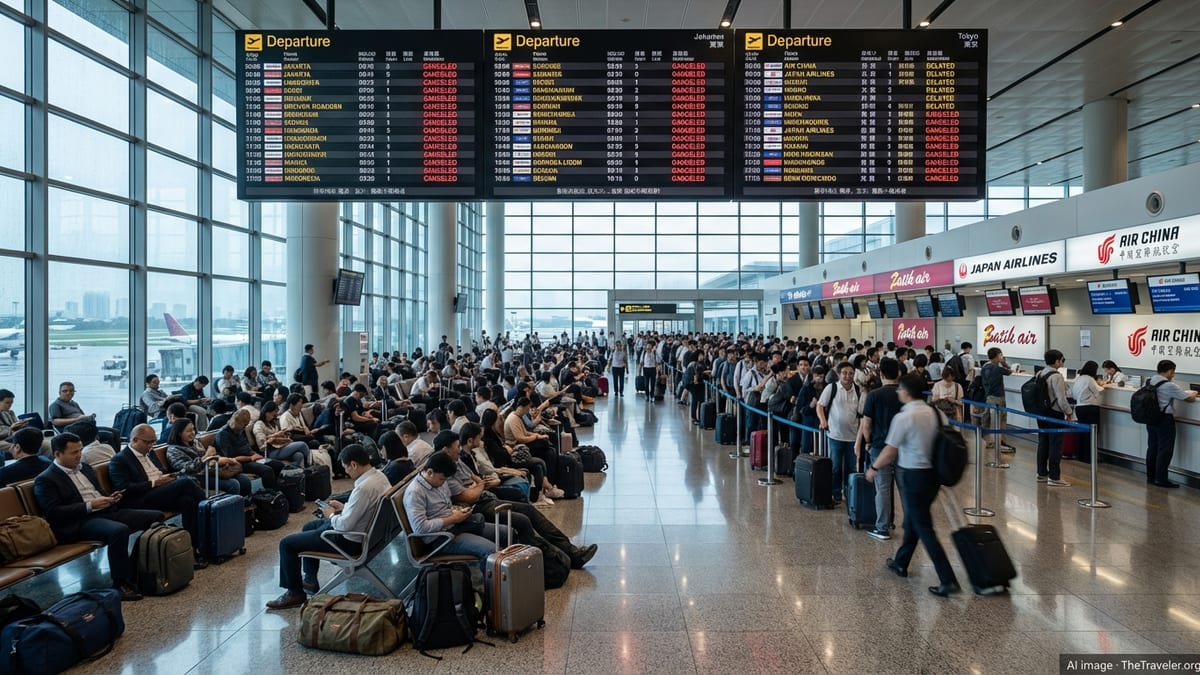
Main Jakarta hubs resume operations after two-day closure
Indonesia’s Transport Ministry announced that Soekarno Hatta International Airport, Halim Perdanakusuma Airport, Bandung’s Husein Sastranegara Airport and two smaller airports in Banten province reopened just after midnight on September 8. The decision followed updated assessments showing improving ash conditions over the capital and surrounding areas.
The reopening comes after a sweeping suspension of flights that began on September 6, when ash from Anak Krakatau drifted across busy air corridors serving Jakarta and parts of western Java and Sumatra. Notices to airmen, or NOTAMs, halted nearly all movements at Soekarno Hatta, one of Southeast Asia’s busiest hubs, and led to a rolling series of cancellations and diversions.
Published coverage from Indonesian and international outlets indicates that close to 3,000 flights were affected over the course of the disruption, leaving tens of thousands of passengers stranded at terminals or forced to reroute via other cities. Some travelers were accommodated on later services, while others faced overnight stays and extended delays as airlines worked through backlogs.
Publicly available information from Indonesia’s Ministry of Transportation shows that safety assessments on airport runways, taxiways and parked aircraft continued into late Monday, with teams clearing ash deposits and verifying visibility and air quality before the first departures and arrivals were allowed to operate again.
Four of eight affected airports reopen, with two still shut
The Anak Krakatau ash cloud initially forced the temporary closure of eight airports across western Indonesia, according to national news agency reports. By Tuesday morning, five of those facilities, including Soekarno Hatta and Halim Perdanakusuma, had reopened for limited operations after a series of negative ash tests at ground level.
Reports from regional media state that two of the originally affected airports remain closed, as ash dispersal patterns continue to be monitored. Aviation authorities are maintaining restrictions in pockets of airspace where volcanic particles remain a concern for aircraft engines and onboard systems.
Earlier updates from Indonesia’s transport authorities and meteorological agencies indicated that ash from Anak Krakatau had reached several thousand meters into the atmosphere on both the Java and Sumatra sides of the Sunda Strait. While eruptions have eased compared with the peak activity on September 5 and 6, forecasters are still tracking the direction and concentration of residual ash plumes.
Officials have emphasized in public statements that any further airport reopening or new restrictions will depend on real time satellite imagery, pilot reports and data from ground based ash sensors placed around key aviation hubs.
Passenger disruption and gradual schedule recovery
The closure of Jakarta’s airspace corridor over the weekend and into Monday triggered widespread disruption to both domestic and international services. Coverage from regional outlets describes long queues at airline service desks, with travelers seeking rebooking options, refunds or overland alternatives via rail and bus.
Bernama and other regional news services report that more than 20,000 passengers were affected at Soekarno Hatta alone in the early phase of the shutdown, with that number rising as the closure was extended. Airlines cancelled or postponed hundreds of flights, while some long haul international services diverted to alternative gateways such as Singapore, Kuala Lumpur and Denpasar.
With the main airports now reopened, carriers have begun reinstating schedules, though recovery is expected to be uneven over the next several days. Industry updates suggest that priority is being given to previously cancelled flights and to routes with high volumes of stranded passengers, meaning new bookings may still be subject to changes at short notice.
Travelers connecting through Jakarta are being advised by airlines and airport operators via public channels to monitor flight status closely, allow extra time for check in and security, and be prepared for possible gate changes or aircraft substitutions as operations stabilize.
Ongoing monitoring of Anak Krakatau and aviation safety
Indonesia’s volcanology and meteorology agencies continue to monitor Anak Krakatau, the island volcano in the Sunda Strait that began a fresh phase of heightened activity in early September. Satellite and ground based observations show that the intensity of eruptions has eased compared with the weekend peak, but ash emissions and tremors are still being tracked.
Previous guidance from aviation and geological experts highlighted that volcanic ash poses a particular risk to jet engines, cockpit instruments and external surfaces, as fine particles can melt at high temperatures and then solidify inside engine components. Because of these hazards, ash contaminated airspace is typically treated as off limits to commercial flights even when visibility appears adequate from the ground.
Publicly available information from Indonesia’s transport regulators indicates that air navigation service providers are working with international volcanic ash advisory centers to update route planning around the affected region. Some flight paths over the Sunda Strait and western Java are expected to remain adjusted until confidence grows that ash concentrations at cruising altitude have dropped to safe levels.
For now, the reopening of Jakarta’s airports marks a significant step toward normalization for Indonesia’s air network, while underscoring how quickly operations can be reshaped by changing volcanic conditions in one of the world’s most geologically active regions.
What travelers should know now
For passengers with upcoming itineraries through Jakarta, current publicly available guidance points to a more stable operating environment, but not yet a full return to normal. Airlines are still adjusting rosters, aircraft assignments and crew positioning after the multi day disruption, which may lead to altered departure times or route changes.
Travel news outlets recommend that travelers reconfirm their flights directly with airlines or through official airport channels on the day of departure, particularly for connections involving onward domestic sectors in Indonesia. Some carriers have introduced temporary fee waivers, allowing itinerary changes for passengers booked to or from Jakarta during the disruption window.
International passengers affected by extended stays due to the airport closures have also been the focus of separate guidance, with earlier reports noting that immigration authorities were providing flexibility for those whose visas or permitted stay periods were impacted by the ash related shutdowns. Travelers in this situation are being encouraged, through public advisories, to check the latest requirements with official government sources.
As Anak Krakatau’s activity evolves, the episode serves as a reminder that Indonesia’s busy aviation system operates alongside one of the planet’s most dynamic volcanic belts, where flight plans and travel routines can change rapidly when ash drifts across key air corridors.
Channel News Asia coverage of Jakarta airport reopening
The Jakarta Post report on Anak Krakatau ash disruption
Associated Press report on flights resuming to and from Jakarta