


More news on this day
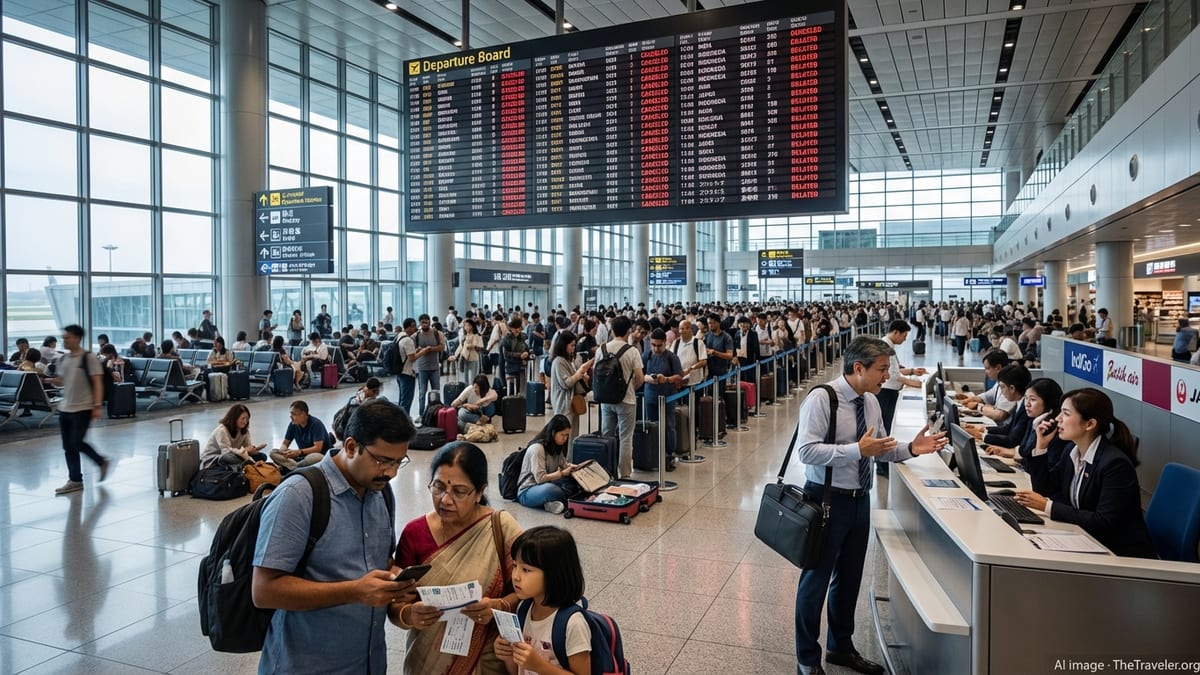
Hundreds of travelers were forced to wait for hours at Jakarta’s Soekarno-Hatta International Airport after at least 22 flights were withdrawn from the schedule and around 136 departures and arrivals were reported delayed, disrupting connections across Indonesia on one of the peak travel days of the season.
Get the latest news straight to your inbox!
Wave of Disruptions at Indonesia’s Busiest Hub
Publicly available operational data and local media coverage indicate that the disruption originated at Soekarno-Hatta on a single busy weekday, when a cluster of cancellations and rolling delays rippled through multiple domestic and regional routes. The affected services included departures to major provincial capitals such as Surabaya, Makassar, Medan, Denpasar and Balikpapan, along with a number of return legs into Jakarta.
Low cost and full service operators were both caught up in the disruption. Batik Air, Citilink, Garuda Indonesia and Lion Air were among the airlines that either removed flights from the day’s program or recorded extended delays, alongside several smaller and regional carriers. The pattern was visible across departure boards, where a series of “canceled” and “retimed” notices accumulated through the morning and afternoon peaks.
Reports from Indonesian travel media suggest that the 22 withdrawn flights represented a mix of outright cancellations and services that were consolidated into other departures. The 136 delays, ranging from modest schedule slips to multi hour waits, created a rolling backlog of passengers in terminals and at boarding gates, particularly in the domestic sections of Terminals 1 and 2.
Jakarta’s primary airport is the main gateway for Indonesia’s archipelagic air network, so even localized disruption can rapidly cascade into missed connections. On the affected day, travelers moving onward to secondary cities frequently found themselves rebooked onto later flights or routed through alternative hubs such as Surabaya and Makassar as airlines attempted to clear the queues.
Airlines Caught Between Capacity, Weather and Operational Strain
While no single root cause has been formally established in publicly available information, several overlapping pressures appear to have contributed. Recent coverage of Soekarno-Hatta operations points to a tight balance between aircraft and crew availability, dense scheduling on popular domestic trunk routes, and seasonal weather that can quickly disrupt tightly packed timetables.
Batik Air and Lion Air, both major players in Indonesia’s domestic market, operate large fleets with high daily utilization, particularly on short haul routes linking Jakarta with provincial capitals. Any technical inspection, crew rotation issue or air traffic flow restriction can therefore force last minute rescheduling, especially when spare aircraft are limited and turnarounds are short.
Citilink and Garuda Indonesia, which together carry a significant share of domestic traffic, have also been managing rising demand around the school holiday and pilgrimage periods, with Garuda deploying additional widebody capacity on certain routes for religious travel earlier in the season. Industry data shows that, under those conditions, an initial disruption at a major hub can take most of the day to unwind as aircraft and crews progressively fall out of their planned rotations.
Local aviation analysts quoted in prior coverage of Soekarno-Hatta congestion have repeatedly highlighted the vulnerability of Indonesia’s hub and spoke system when schedule buffers are thin. In such an environment, the withdrawal of 22 flights and more than a hundred delays is consistent with a system operating close to its limits in terms of slots, gate availability and turnaround times.
Stranded Passengers Face Missed Connections and Extra Costs
Passengers caught up in the disruption reported long lines at check in counters, customer service desks and ticketing offices as they sought information on new departure times and alternative routings. Social media posts circulating on the day showed crowded waiting areas in all three terminals, with domestic travelers in particular struggling to adjust itineraries that depended on tight connections in Jakarta.
Travelers whose itineraries involved onward flights to smaller cities were among the most severely affected. Many domestic links from Jakarta operate only a few times per day, meaning that a missed connection in the morning can translate into an overnight stay if later departures are already full. Published advice from Indonesian consumer groups notes that, in these situations, passengers are often left to negotiate rebooking and accommodation arrangements directly with airlines on a case by case basis.
Tourism operators and corporate travel managers have increasingly warned that irregular operations at the country’s main gateway can drive up costs, especially when travel is time sensitive. Missed meetings, lost hotel nights and additional ground transport are among the common knock on effects when travelers are forced to wait for replacement flights that may not depart until late in the day or even the following morning.
For leisure travelers connecting through Jakarta to popular destinations such as Bali, Labuan Bajo and Lombok, the disruption added uncertainty to carefully planned itineraries. Some passengers who had booked tight self made connections between different airlines faced the added complication that their tickets were not linked, limiting automatic reprotection options and increasing the time spent negotiating at airline counters.
Network Wide Repercussions Across the Indonesian Archipelago
Because Soekarno-Hatta functions as the primary hub for many airlines’ domestic networks, the impact of the withdrawals and delays extended well beyond the Jakarta region. Aircraft and crews scheduled to continue from Jakarta to cities such as Pekanbaru, Palembang, Manado and Kupang were in some cases delayed or substituted, creating secondary waves of schedule changes across the archipelago.
According to published flight tracking and airport data, aircraft arriving late into Jakarta frequently turned around later than planned, pushing subsequent departures into evening slots and compressing turnaround windows at outstations. This pattern is consistent with previous episodes in which sustained disruption at Soekarno-Hatta led to late night arrivals and, in some cases, aircraft and crew being left out of position for the following day.
Regional airports with limited infrastructure and shorter operating hours can be particularly exposed when Jakarta departures are retimed. Some outstations cannot accommodate landings late at night due to local curfews or noise restrictions, which means that delayed services may need to be canceled altogether rather than simply shifted into a later window. This, in turn, can leave passengers stranded on both ends of a route.
Domestic tourism destinations, which rely heavily on reliable air links from Jakarta, may also feel knock on effects when irregular operations discourage travelers from planning tight connections or force them to add buffer days to itineraries. Industry observers note that, over time, recurring disruption can shape traveler behavior, with some passengers opting for direct services from secondary cities where available rather than risk complex routings through Jakarta.
Calls for Greater Resilience in Indonesia’s Aviation System
The latest episode at Soekarno-Hatta has renewed discussion around the resilience of Indonesia’s aviation infrastructure and scheduling practices. Commentary in national media and travel industry outlets has for several years pointed to the need for a combination of infrastructure upgrades, improved slot management and stronger contingency planning to cope with surges in demand and unforeseen disruptions.
Aviation planners have previously explored options such as shifting some domestic operations to secondary airports, adjusting runway and taxiway usage patterns, and encouraging airlines to build more generous turnaround buffers on busy trunk routes. However, these approaches can be difficult to implement in a highly competitive market in which carriers seek to maximize aircraft utilization and match flight times closely to passenger demand.
Consumer advocates continue to encourage travelers to factor in potential irregular operations when planning itineraries that pass through Jakarta. Suggestions commonly include allowing longer connection windows, booking through tickets on a single airline group where possible and checking real time flight status on the day of travel. For those with fixed appointments or tour departures, some advisers recommend arriving in Jakarta a day early to reduce the risk of cascading delays upending onward plans.
While the immediate backlog from the 22 flight withdrawals and 136 delays at Soekarno-Hatta appears to have been addressed by the end of the operating day, the event underscores how vulnerable Indonesia’s vast domestic network can be when its main hub experiences even a short period of concentrated disruption.