


More news on this day
American Airlines has issued a mass travel warning to roughly 3.5 million customers in the wake of thousands of flight disruptions during the recent holiday period, alerting passengers to the risk of further schedule changes and reminding them of limited options for rebooking, refunds, and compensation under U.S. rules.
Get the latest news straight to your inbox!
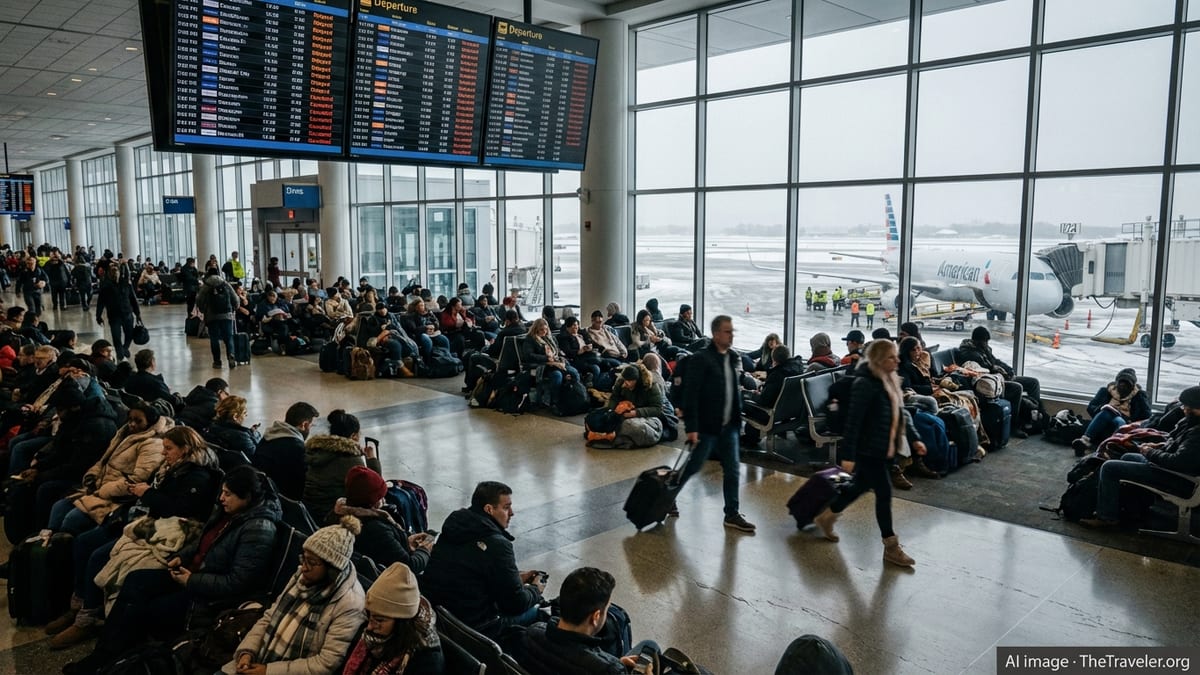
Holiday Disruptions Ripple Across American’s Network
Published coverage and passenger reports indicate that American Airlines faced extensive operational turmoil over the latest peak holiday travel stretch, with thousands of flights delayed or canceled across its network. The problems clustered around major winter storms and system constraints, echoing an increasingly familiar pattern of peak-season stress across the U.S. aviation system.
American had previously projected strong holiday demand, expecting to carry nearly 12.7 million customers across more than 118,000 flights for the 2024 winter holidays, according to its own traffic forecasts. That level of volume left little margin for error once weather and congestion began to impact key hubs such as Dallas Fort Worth, Charlotte, and other major connecting points.
Internal travel advisories and publicly available updates show that the carrier repeatedly activated special exception policies during severe weather and infrastructure outages, including waiving some change fees and allowing customers to rebook without additional charges during specified windows. Even so, many passengers reported being stranded for days, rerouted through multiple hubs, or forced to book last-minute tickets on other airlines when American’s options ran out.
Commentary on traveler forums and social media channels highlights the uneven nature of the disruption. Some customers described relatively smooth rebooking experiences using the airline’s digital tools, while others recounted missed family gatherings, lengthy airport waits, and confusion at the gate as rolling delays turned into cancellations.
Mass Travel Warning Targets 3.5 Million Passengers
Against this backdrop, American Airlines sent a broad advisory to approximately 3.5 million passengers with upcoming reservations, cautioning that their itineraries could be affected by knock-on effects from the holiday disruptions and upcoming weather and operational constraints. The message, described in published coverage and passenger screenshots, urged customers to closely monitor their email, text messages, and the American Airlines app for real-time changes.
The advisory emphasized that schedules remain subject to change, and that passengers should confirm departure times and connection details before heading to the airport. It also highlighted the possibility of proactive rebookings as the airline attempts to rebalance its network and manage capacity across constrained airports and heavily trafficked routes.
While large-scale preemptive notices are not unprecedented, the scope of American’s outreach stands out. U.S. airlines collectively handle hundreds of millions of passengers per year, but targeted advisories usually focus on narrower groups of travelers, such as those flying through a storm-affected region or an airport experiencing an outage. By contrast, the 3.5 million-passenger warning reflects how widely the recent disruptions and their aftermath have reverberated across American’s schedule.
Travel advocacy groups and passenger-commentary threads suggest that such broad notifications can help some flyers adjust plans early, though they also underline the limits of what most customers can change without incurring extra costs if their flight has not yet been formally delayed or canceled.
Limited Compensation and Flexible Rebooking Options
Publicly available information on American Airlines’ customer service plan clarifies that the carrier offers a mix of rebooking, refunds, and, in some circumstances, vouchers or meal credits when trips are significantly disrupted. However, compensation remains tightly framed by U.S. regulations, which do not mandate standardized cash payments for delays and cancellations in the way European Union rules do.
American’s customer service plan states that the airline provides phone, email, and text updates for customers who sign up for notifications and may issue food and beverage credits when delays extend beyond several hours. During major events such as winter storms or infrastructure outages, the airline has also issued travel alerts that allow affected customers to change flights without paying additional change fees, as seen in multiple recent advisories covering winter weather and airport outages.
In more substantial disruption scenarios, American’s policies point passengers toward travel credits, flight credits, or trip credits that can be applied to future bookings. The airline’s published guidance notes that these credits generally carry expiration timelines, although some credits issued after major disruptions may have longer validity periods when tied to specific exception policies.
Nevertheless, many of the passengers impacted by the latest holiday meltdown appear to have received limited direct financial compensation, relying instead on refunds where flights were canceled or on the flexibility provided by fee-waived changes. In online discussions, travelers compare this experience with compensation regimes in Europe, where fixed cash payments are sometimes available after long delays or cancellations deemed within the airline’s control.
American Expands Digital Tools After Storm and Outage Chaos
As disruptions mounted over recent seasons, American Airlines has promoted a series of technology upgrades intended to give customers clearer, faster information about changing flight conditions. According to the airline’s own newsroom updates, a revamped mobile app and home screen now foreground real-time trip details, boarding passes, flight status, and disruption support tools.
During a global technology outage in 2024 and subsequent operational challenges, American highlighted its use of digital notifications to push rebooking options, travel alerts, and fee-waived change windows directly to customers’ devices. Recent winter storms, including severe events in early 2026, prompted additional travel alerts that encouraged passengers to make voluntary changes in advance to avoid getting stuck at congested hubs.
The airline positions these tools as a way to provide greater transparency and control “throughout the journey,” with the aim of reducing the need for customers to queue at airport counters when things go wrong. Passengers who link their reservations to an AAdvantage loyalty account or who regularly use the app typically receive earlier and more detailed notifications than those relying on airport announcement boards alone.
At the same time, passenger accounts suggest that digital tools are only as effective as the options available behind the scenes. In peak disruption periods, alternative flights can be scarce, and some travelers find that automated rebookings add long connections or overnight stays. That tension underscores the limits of technology in the face of network-wide strain.
What Travelers Can Do Before Their Next American Flight
In light of American’s latest warning to 3.5 million passengers, independent travel experts and consumer advocates are urging flyers to take a more proactive approach before heading to the airport. Public guidance commonly recommends checking flight status in the airline’s app, enabling text and email alerts, and monitoring weather and air traffic conditions at both departure and arrival airports.
Travel planning resources also advise building extra time into tight connections, especially at large hubs like Dallas Fort Worth or Charlotte that are prone to cascading delays when storms or staffing issues arise. Where possible, travelers are encouraged to consider earlier departures or nonstop options, even if it means minor schedule changes, to reduce the risk of missed connections.
Another recurring recommendation is to review American’s customer service plan and travel credit rules before travel begins. Understanding when a delay or cancellation may entitle a customer to a refund, meal voucher, or hotel assistance can help passengers advocate more effectively in the moment, particularly when rebooking desks are overwhelmed.
Finally, observers emphasize the value of documenting communications with the airline and retaining receipts for hotels, meals, and alternative transportation. While American’s published policies do not guarantee reimbursement for every expense, passengers sometimes secure goodwill credits or partial compensation when they can show detailed records of out-of-pocket costs linked to extended disruptions.
American Airlines newsroom: digital tools and disruption support
American Airlines customer service plan
American Airlines travel advisory: major winter storm disruptions
American Airlines update on global technology outage and travel alert