

More news on this day
Air travel across Japan faced fresh turbulence today as more than 20 flights operated by Cathay Pacific, ANA, Air Do and other carriers were cancelled, disrupting key routes linking Hong Kong, Tokyo, Okinawa and several regional hubs.
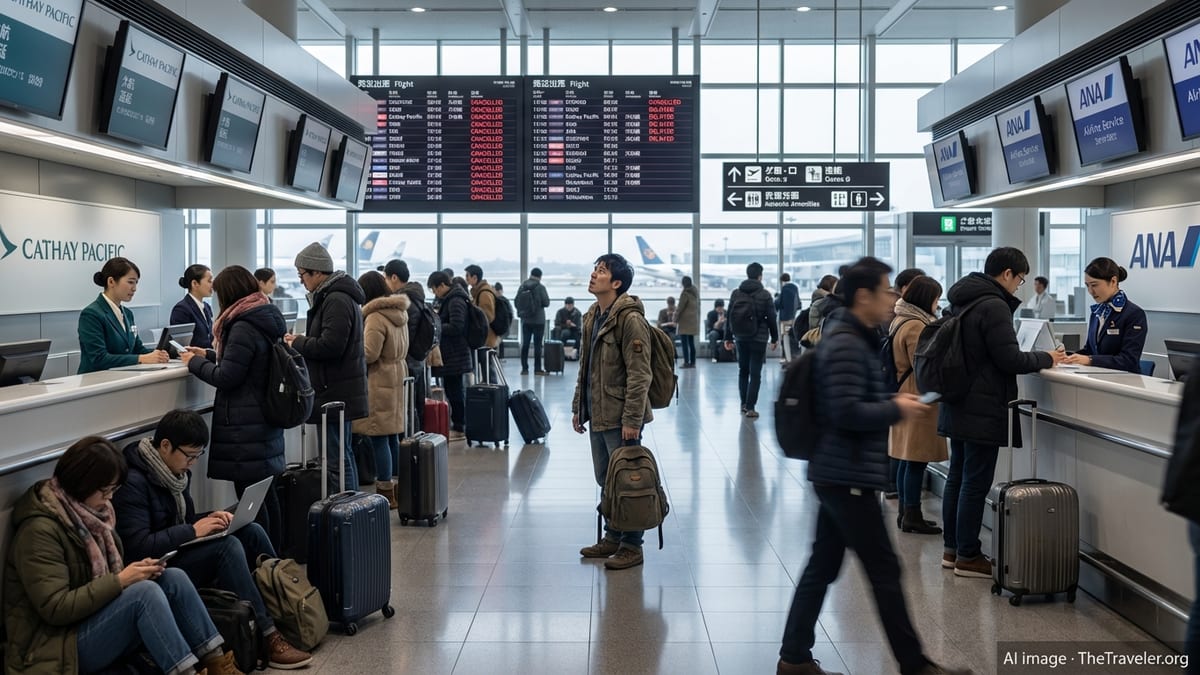
New Wave of Cancellations Hits Major Japanese Gateways
The latest round of disruptions comes amid a broader pattern of operational strain across Asian aviation, with Japan once again at the center of cascading delays and cancellations. Today’s flight cuts, spanning domestic and short-haul international services, add to a growing tally of interruptions that have unsettled travel plans during a typically busy late-winter period.
While precise tallies continue to update throughout the day, over 20 flights involving Japan’s primary gateways have been grounded, including services touching Tokyo’s Haneda and Narita airports, Osaka’s Kansai hub, and the popular holiday gateway of Naha in Okinawa. The cancellations are affecting both point-to-point domestic journeys and high-demand regional links to Hong Kong and other Asian cities.
Passengers reported crowded terminals, extended rebooking queues and scarce same-day alternatives, particularly on trunk routes that already operate near capacity. Airlines have urged travelers to check flight status before departing for the airport and to prepare for longer connection times on multi-leg itineraries through Japan.
Today’s disturbances follow earlier disruptions this week that saw hundreds of delays and more than a dozen cancellations across Tokyo International, Fukuoka, Kansai and Osaka, underscoring how even modest schedule adjustments can quickly ripple through Japan’s tightly timed domestic network.
Cathay Pacific, ANA and Air Do Among Carriers Most Affected
Cathay Pacific, All Nippon Airways (ANA) and regional carrier Air Do are among the airlines most visibly affected by the latest schedule shake-up. Services linking Hong Kong with Japanese cities, as well as domestic links within Japan’s north and south, have been particularly vulnerable, reflecting where demand has rebounded strongest.
For Cathay Pacific, Japan remains one of its most important short-haul international markets out of Hong Kong, with frequent flights to Tokyo, Osaka, Fukuoka, Sapporo and Okinawa. Even a limited number of cancellations on these routes can displace large numbers of travelers, especially those connecting onward to long-haul services in Europe and North America via Hong Kong.
ANA, Japan’s largest carrier by international seat capacity, has simultaneously been adjusting its broader route map, with some services temporarily suspended or frequencies rebalanced across its network this winter. Against that backdrop, today’s cancellations add further complexity for passengers already navigating seasonal schedule changes and aircraft rotations.
Hokkaido-focused carrier Air Do has seen its niche domestic routes, many feeding traffic into and out of Tokyo and Sapporo, come under pressure whenever there is network disruption. Travelers on these shorter sectors often have tighter travel windows, whether for business day trips or weekend leisure breaks, making re-accommodation particularly challenging when flights are consolidated.
Key Routes to Hong Kong, Tokyo and Okinawa Disrupted
Among the most closely watched impacts today are cancellations on routes linking Hong Kong with Tokyo and other Japanese cities, as well as domestic leisure corridors to Okinawa and Hokkaido. These services form a vital bridge for tourism, business travel and visiting friends and relatives across Northeast Asia.
Flights between Hong Kong and Tokyo’s dual airports are heavily trafficked not only by point-to-point passengers but also by travelers connecting onward to North America and Europe on both Japanese and foreign carriers. When services are cancelled or retimed, those complex itineraries can quickly unravel, forcing rebookings days rather than hours later due to limited seat availability.
In the domestic market, routes into Naha in Okinawa and regional airports serving resort areas remain susceptible whenever airlines trim schedules to restore overall reliability. Travelers headed for beaches and island getaways have reported last-minute changes and, in some cases, overnight stays on the mainland when same-day rebookings were unavailable.
Similar pressures are being felt on routes into Sapporo and other Hokkaido gateways, where a combination of winter tourism and local business demand keeps cabins busy. Even small cuts in frequency translate into fuller remaining flights, higher upgrade and change fees, and fewer options for travelers seeking flexible travel plans.
Passengers Face Long Queues, Limited Alternatives and Rolling Delays
For many affected travelers, today’s cancellations have translated into long queues at check-in counters and service desks as they seek rebooking options and overnight accommodations. With multiple airlines adjusting schedules simultaneously, airport support services from ground handling to security and catering have also come under strain.
Some passengers arriving in Tokyo and Osaka from other Asian cities have reported missing domestic connections and being rebooked onto flights departing many hours later, or in some cases the following day. This has had knock-on effects for hotel bookings and ground transport arrangements, particularly for those on tight itineraries or group tours.
Travel agents and airline call centers have seen increased call volumes as customers attempt to confirm schedules, explore alternative routings or request refunds and vouchers. Industry observers note that while digital tools and apps have improved self-service options, real-time information can still lag when large numbers of flights are being retimed or cancelled at short notice.
Frequent flyers are increasingly building additional buffer time into their journeys through Japan, particularly when long-haul connections are involved. Some are opting for earlier departures or alternative transit hubs in the region to reduce the risk of missed onward flights during what has become a period of heightened operational volatility.
What Travelers Should Do Next
With further schedule adjustments possible, travelers booked on Cathay Pacific, ANA, Air Do and other carriers operating to and within Japan in the coming days are being advised to monitor their bookings closely. Airline websites and mobile apps remain the primary channels for up-to-date flight status, although call centers and airport counters can assist with complex rebookings.
Experts recommend that passengers traveling through major hubs such as Tokyo, Osaka and Hong Kong where possible select longer connection windows to accommodate potential delays. Those with nonrefundable hotels or tours are also urged to review the flexibility of their ground arrangements, as shifting flight times may require last-minute changes to itineraries.
Travel insurance that includes coverage for delays and cancellations can help offset the cost of unexpected hotel nights, meals and rebooked flights, though policyholders should review the specific terms and documentation requirements. Keeping receipts and written confirmation of disruptions from airlines can streamline any subsequent claims process.
For now, the latest wave of cancellations underscores the fragility of tightly interlinked flight networks across Asia. As airlines continue to balance strong demand with operational constraints, travelers heading to or through Japan in the near term should plan for contingencies and remain prepared for last-minute changes to their journeys.