


More news on this day
Japan’s reputation as a value destination for long-distance train travel is being tested as a wave of fare revisions, led by higher Japan Rail Pass prices and changes to Kansai-area products, forces international visitors to rethink how they move around the country.
Get the latest news straight to your inbox!
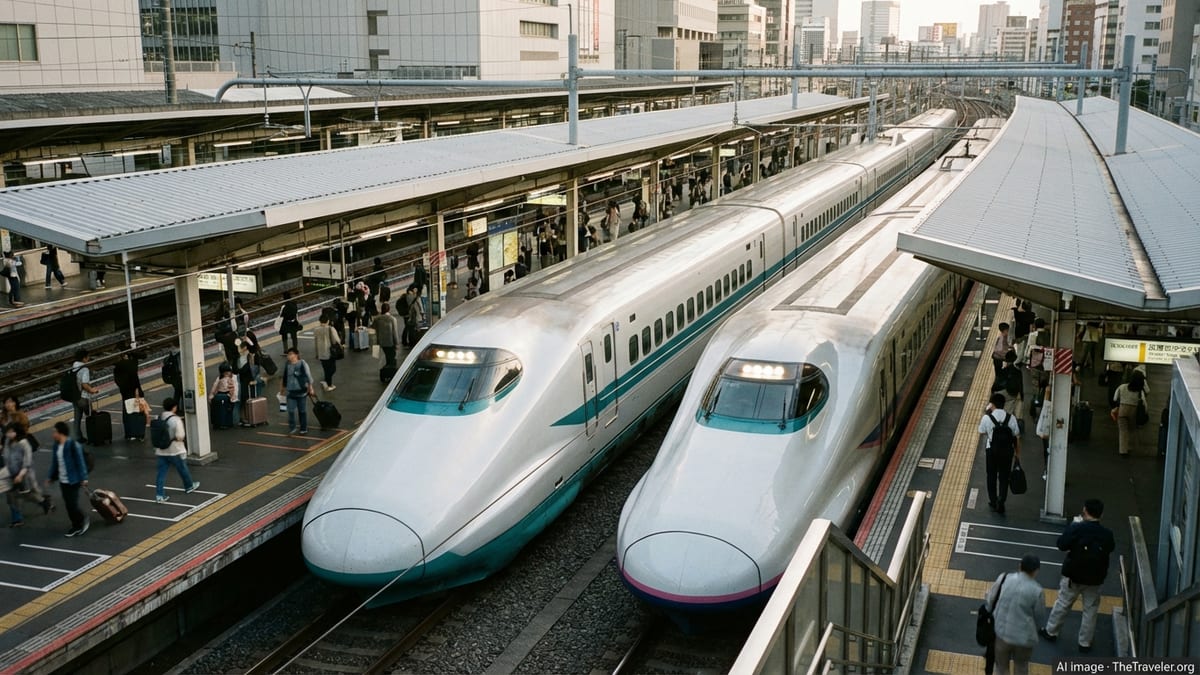
Nationwide Japan Rail Pass Now a Costly Centerpiece
The nationwide Japan Rail Pass, long regarded as one of the most economical ways for visitors to explore Japan by train, has undergone the steepest price increase in its history. The revision that took effect on October 1, 2023 lifted the cost of the most popular passes by roughly 65 to 77 percent, depending on duration and class. A 14 day ordinary pass, for example, climbed from 47,250 yen to about 80,000 yen, a shift that fundamentally altered the calculus for many itineraries focused on shinkansen travel between Tokyo and Kansai.
Publicly available information from JR Group companies shows that the 7, 14 and 21 day passes all rose sharply to reflect higher infrastructure and operating costs along key shinkansen corridors. At the same time, the passes gained limited access to faster Nozomi and Mizuho services via a surcharge and began offering a broader set of discounts at tourist attractions, a package of changes that operators framed as a rebalancing of value rather than a simple fare hike.
Travel industry analyses suggest that the nationwide pass now makes financial sense only for tightly packed, long distance itineraries covering several regions in a short period. For many visitors, particularly those focusing on just Tokyo and the Kansai region, a mix of individual tickets, IC cards and regional rail passes is increasingly recommended as a cheaper alternative.
Further adjustments are on the horizon. JR Central has indicated that ticket and pass prices are under ongoing review, while JR East has separately announced revisions to some of its foreign visitor rail passes from April 1, 2025, citing upstream fare increases in partner networks. Together, these moves point to a rail ecosystem in which discounted unlimited travel products are steadily becoming more expensive and more tightly targeted.
Regional Products: Kansai Passes Repriced and Reshaped
The Kansai region, including Osaka, Kyoto, Nara and Kobe, has been one of the main beneficiaries of Japan’s tourism boom. It has also become one of the clearest examples of how regional rail passes are being restructured. JR West has already amended prices and conditions on several foreign visitor products, including the Kansai Wide Area Pass and Hokuriku related passes, to coincide with the March 16, 2024 opening of the extended Hokuriku Shinkansen between Kanazawa and Tsuruga.
According to JR West announcements, that timetable change triggered a round of price revisions and scope adjustments for multiple JR West Rail Pass products targeted at visitors from overseas. The aim, as described in corporate materials, is to align pass prices with the expanded shinkansen network while emphasizing routes that feed into western Japan’s tourism hubs ahead of Expo 2025 in Osaka.
In parallel, JR East, JR Hokkaido and other regional operators have implemented their own updates to foreign visitor passes. JR East has published notice of fare increases for the JR East South Hokkaido Rail Pass and the JR Tohoku South Hokkaido Rail Pass from April 2025 in response to higher base fares in Hokkaido, while JR Hokkaido related materials show higher prices for the popular Hokkaido Rail Pass and Sapporo Noboribetsu Area Pass. The cumulative effect has been a broad, if staggered, increase in the rail budget required for ambitious multi region trips.
Despite these higher prices, travel planners note that many regional passes still represent good value when used intensively for day trips and shinkansen hops within a defined area. However, the room for error has narrowed. Where a Kansai or Hokkaido pass once paid off easily, visitors now need to price out individual journeys in detail to avoid overpaying.
Kansai Area Pass to Be Phased Out and Replaced
The evolution of Kansai focused passes is set to accelerate with the scrapping of one of the region’s most recognisable products. Notices circulated by major travel agencies handling JR West products show that the long running JR West Kansai Area Pass, which offers up to four consecutive days of unlimited ordinary car travel on JR lines in the Osaka Kyoto Nara corridor, is scheduled to be withdrawn in late 2026. Guidance provided to overseas distributors states that October 29, 2026 will be the latest possible start date, after which the pass will no longer be usable.
Information published by JR West and summarized by ticketing partners indicates that sales of the existing Kansai Area Pass are being curtailed in favour of a new digital offering, the West QR Kansai Area Pass. The updated product is distributed in QR code format, is designed to be read directly by ticket gates, and is set to be sold year round, with overseas agency sales for certain durations beginning in December 2025. The change aligns with JR West’s broader move toward QR based ticketing and smartphone compatible passes.
Corporate reports from JR West describe a wider strategy of reorganising inbound products around large catchment areas. In addition to the QR based Kansai pass, the company has rolled out a Kansai Sanin Area Pass that connects the Osaka Kyoto region with lesser known destinations along the Sea of Japan coast. The new line up is positioned as a way to disperse visitors beyond overcrowded city centres and into secondary destinations linked by the expanded shinkansen and limited express network.
For travellers, the replacement of the familiar Kansai Area Pass with QR based and broader area products will mean re learning pass names, conditions and validity zones. It may also constrain some of the cheapest short stay rail options historically used for intensive day tripping between Osaka, Kyoto and Nara, particularly for those who preferred physical tickets purchased through overseas agencies.
Beyond Rail: Overall Japan Trip Budgets Under Pressure
The rail pass changes are arriving at a moment when the overall cost profile of travel to Japan is shifting. The yen’s weakness against the US dollar and euro has helped keep local prices attractive in currency adjusted terms, but reports from travel media and hotel booking platforms point to sharply higher nightly rates at international brand hotels in Tokyo, Osaka and Kyoto compared with pre pandemic norms. Some properties are charging two to three times 2019 levels during peak cherry blossom and autumn foliage periods.
At the same time, central and local governments are exploring new ways to raise revenue from inbound tourism. Coverage from regional broadcasters and international outlets highlights proposals to increase accommodation taxes in major cities, including plans in Tokyo to replace flat fees with percentage based levies that rise with room rates. Several popular destinations have also introduced or expanded local tourism levies and conservation fees that apply to scenic areas, islands or cultural sites.
Imported inflation is affecting airfares as well. Long haul ticket prices from North America and Europe to Japan remain significantly higher than during the mid 2010s, reflecting constrained capacity, strong demand and elevated fuel costs. For many visitors, this means that the savings from a weak yen are being partially offset by rising transport, lodging and tax outlays once they arrive.
Despite these pressures, Japan continues to record record setting visitor numbers. Data cited by tourism analysts show that inbound arrivals surpassed 3 million in multiple months of 2024, with demand driven by first time visitors as well as repeat travellers eager to return after the border closures of 2020 to 2022. This steady flow suggests that while higher rail pass prices and new taxes are reshaping budgets, they have not yet deterred travellers from viewing Japan as a compelling long haul destination.
How Visitors Can Adapt to the New Rail Landscape
With the nationwide Japan Rail Pass no longer a default bargain and the Kansai Area Pass heading for retirement, trip planning practices are evolving. Specialist rail pass guides now recommend that visitors begin their planning by mapping out specific shinkansen and limited express journeys and pricing them as individual tickets, then comparing those totals to the cost of regional passes that match their exact routes and dates.
For Kansai focused trips, independent travel resources suggest that city based transport passes, IC cards such as ICOCA and private rail tickets on lines operated by Hankyu, Hanshin and Kintetsu can often undercut JR focused passes, particularly when most journeys are short hops within a single metropolitan area. Day trips to farther destinations like Himeji, Nara or Kinosaki Onsen still benefit from rail passes in some cases, but the break even point is now much higher than when Kansai passes were first introduced.
Another emerging strategy is to limit the use of shinkansen to one directional “transit days” that connect clusters of nearby destinations, rather than riding long distances back and forth multiple times. This approach reduces the number of expensive bullet train legs and can make regional passes or discounted advance tickets more competitive compared with unlimited travel products.
As the Kansai Area Pass gives way to QR based successors and reconfigured regional offerings, travellers are likely to face more choice but less margin for error. The new landscape rewards early research, careful reading of validity maps and a willingness to mix and match passes, local tickets and IC cards rather than relying on a single nationwide solution.