


More news on this day
Fresh Iranian missile and drone attacks on Kuwait in early September have triggered temporary airspace closures, flight suspensions and regional rerouting, unsettling air travel across Dubai and major Middle East hubs just as autumn travel demand builds.
Get the latest news straight to your inbox!
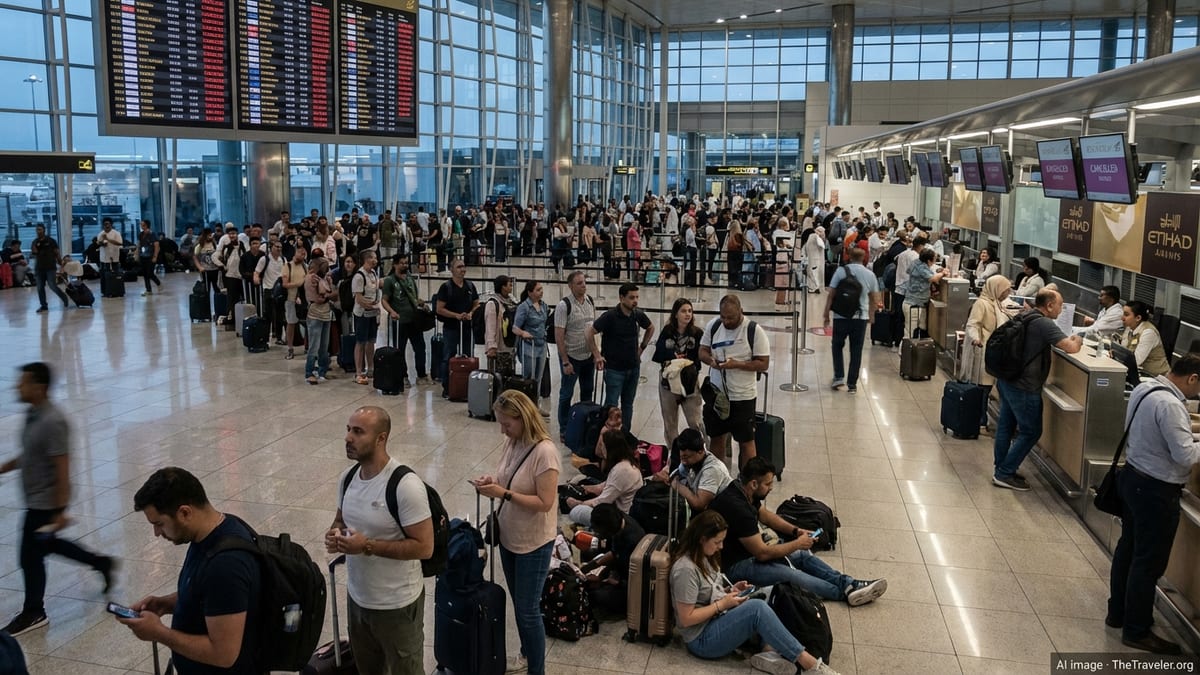
Heinous attacks prompt Kuwait airspace closures and delays
Publicly available statements from Kuwait’s military and foreign ministry describe a series of missile and drone attacks from Iran targeting multiple sites in the country at dawn on Wednesday, September 2, characterising the strikes as “heinous” and a violation of its sovereignty. Air defence systems were reported to have intercepted incoming projectiles, with residents in parts of Kuwait City hearing explosions as the interceptions took place.
Coverage from regional and international outlets indicates that the attacks followed a renewed round of US strikes on Iranian targets and form part of a wider escalation that has seen Iran directing fire at several US-aligned states in the Gulf. In Kuwait’s case, authorities reported that both civilian areas and vital infrastructure were in the crosshairs, echoing a pattern seen in earlier incidents this year when Kuwait International Airport and related facilities were damaged in previous drone strikes linked to the same conflict cycle.
In response to the latest barrage, Kuwait imposed intermittent closures of its airspace and temporarily halted operations at Kuwait International Airport. Notices to air missions and airline advisories showed departures and arrivals paused or routed away from the country for several hours at a time as military activity continued and debris risk was assessed around flight paths.
Local reporting shows that while air defences managed to intercept many of the incoming missiles and drones, the uncertainty around further launches prompted authorities to keep airspace restrictions in place intermittently into Thursday, creating rolling delays, diversions and a backlog of passengers both in Kuwait and at connecting hubs such as Dubai, Doha and Riyadh.
Ripple effects for Dubai, Gulf hubs and long-haul routes
Specialist travel coverage focused on the region reports that the attacks and subsequent airspace management measures in Kuwait have added fresh disruption on top of an already volatile operating environment for Middle East carriers. Flights that would normally overfly Kuwait on northbound and westbound routes have in many cases been rerouted around the country, adding flight time and complicating schedules into and out of Dubai, Abu Dhabi and other major hubs.
Some airlines serving Dubai and Kuwait have issued updates warning of schedule changes tied to the “intermittent closure of Kuwait International Airport and its airspace.” According to publicly available route tracking data cited in tourism and aviation reporting, rerouted flights are skirting Kuwaiti airspace and in some cases also avoiding parts of the Gulf where Iranian and US forces have traded recent fire, increasing congestion along alternative corridors over Saudi Arabia and the Arabian Sea.
While Dubai International Airport itself has remained open, the knock-on impact of diversions and crew reassignments has led to delays on certain departures to and from Europe and Asia. Aviation analysts quoted in regional coverage note that even when a hub is not directly under attack, any sudden closure of a neighbouring state’s airspace can generate operational challenges because of tight aircraft and crew rotations and the limited capacity of neighbouring routes to absorb additional traffic at short notice.
For travellers, this has meant longer flight times, missed connections and, in some cases, overnight stays while seats are rebooked. Travel advisories from airlines and tourism outlets continue to urge passengers with itineraries touching Kuwait or routing via Dubai and other Gulf gateways to monitor flight status closely and allow extra time for connections.
Heightened security posture and evolving airline risk assessments
The September strikes come after a series of earlier incidents in 2026 in which Iranian drones and missiles targeted Kuwait and other Gulf states, including an attack in June that temporarily suspended air traffic at Kuwait International Airport and prompted a formal complaint to the International Civil Aviation Organization over damage to aviation infrastructure and radar facilities. These events have pushed regional governments and carriers to reassess risk along key corridors linking Europe and Asia.
International outlets tracking the conflict note that Iran’s latest moves followed US military action against Iranian assets and maritime activity, with Tehran signalling it would strike states that host US forces or support American operations. Kuwait’s role as a logistics node and its proximity to other US-aligned bases in the Gulf has placed it under particular scrutiny in these exchanges, raising concerns among airlines about the reliability of its airspace as a transit corridor.
Global carriers have already been adjusting flight plans over parts of Iran, Iraq and Israel for months, and some European airlines have extended these precautions to avoid several Gulf states’ skies at times of heightened tension. Statements published by at least one major European airline in recent days indicate a continued policy of not flying over Iranian, Iraqi and Israeli airspace and limiting exposure over adjacent parts of the Gulf, a stance that indirectly influences routing into Dubai and other hubs even when those hubs remain fully operational.
Aviation safety experts quoted in open reporting emphasise that commercial airlines rely on a combination of government guidance, airspace notices and their own internal risk modelling to decide when to reroute around conflict zones. The repeated targeting of Kuwait and its airport facilities has become a significant factor in those assessments, especially for night-time operations and long-haul routes with fewer diversion options.
Impact on passengers and travel planning in the Middle East
For passengers, the practical impact of the latest attacks is being felt in the form of cancellations, missed connections and uncertainty around future schedules. Travel media focusing on the Gulf region advise travellers booked on itineraries touching Kuwait, or transiting through busy hubs such as Dubai, to remain flexible, monitor airline apps and websites frequently, and be prepared for last-minute gate or time changes as airlines respond to evolving airspace constraints.
Reports from regional tourism outlets describe how some carriers have temporarily suspended certain Kuwait services or reduced frequencies while they work through backlogs and reassess demand. Others are consolidating flights, operating larger aircraft on select routes to move stranded passengers, or offering free rebooking options for those who wish to avoid travel through the affected corridors in the coming days.
The broader Middle East travel sector, however, continues to operate, with most airports and airlines in the Gulf maintaining regular schedules outside the specific windows impacted by the missile and drone activity. Industry commentary suggests that while travellers are increasingly accustomed to conflict-related advisories in the region, sustained or repeated attacks on a critical node such as Kuwait could dampen demand or shift connecting traffic patterns toward alternative hubs if the security situation fails to stabilise.
For now, publicly available updates point to a cautious but ongoing recovery of operations at Kuwait International Airport following the most recent closures, even as defence systems remain on high alert and regional governments warn that the risk of further Iranian strikes has not entirely receded.
Regional diplomatic fallout and prospects for aviation stability
The aviation disruption is unfolding against a backdrop of sharp diplomatic exchanges. Gulf governments including the United Arab Emirates have issued statements strongly condemning the Iranian attacks on Kuwait and framing them as a threat to regional security. Such public positions underscore concerns that further escalation could spill over into broader restrictions on airspace, trade and financial links between Iran and its neighbours.
Earlier this summer, coverage from regional business and travel outlets highlighted how prior Iranian strikes and resulting tensions led to periods of suspended financial ties and heightened scrutiny of air connections involving Iran. While current responses remain focused on defence and diplomatic channels, analysts say any widening of sanctions or retaliatory measures could have secondary effects on airline partnerships, codeshares and passenger flows across the Gulf.
For the aviation sector, a key question is whether the latest attacks represent a short, sharp spike in risk or part of a longer pattern of targeting that will require structural changes to routing between Europe, Asia and Africa. Airspace closures over parts of Iran, Iraq and now intermittently Kuwait already force many airlines to operate longer, more fuel-intensive routes, with potential cost implications that may eventually feed through to fares.
Industry observers note that while airlines and air navigation providers have become more adept at managing dynamic conflict zones, the clustering of high-risk areas along some of the world’s busiest long-haul corridors leaves little margin for additional closures without significant disruption. Travellers heading to or through Dubai and other Middle East hubs in the coming weeks are therefore likely to face a continued backdrop of heightened vigilance, even if day-to-day operations remain largely intact.