


More news on this day
Flight schedules across Dubai and the wider Middle East are facing renewed disruption as Kuwait, Bahrain and Jordan report intercepting Iranian missiles and drones, prompting fresh security alerts from US embassies and raising uncertainty for travelers transiting key Gulf hubs.
Get the latest news straight to your inbox!
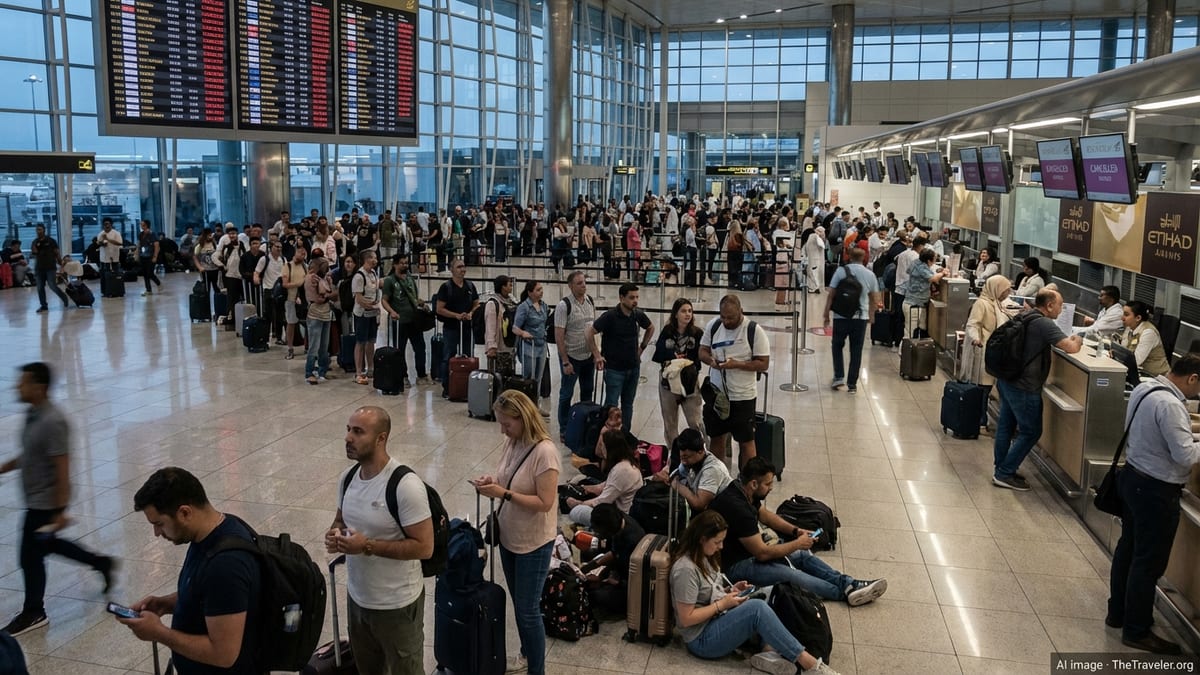
Missile interceptions trigger new security alerts
Published coverage indicates that air defense systems in Kuwait, Bahrain and Jordan have intercepted waves of Iranian missiles and drones in recent days, following US strikes on targets in Iran and Iran-linked facilities. Reports describe air raid sirens and explosions in Kuwait as defensive batteries engaged incoming projectiles, while Bahrain and Jordan documented similar interceptions over their territory.
According to regional reporting, Iran’s actions were framed as retaliation for US bombardments, with several missiles reportedly aimed at American positions and facilities in the Gulf. These exchanges have taken place over or near some of the most heavily used air corridors for long haul flights linking Europe, North America and Asia, intensifying concerns about risks to civil aviation.
Specialist conflict zone bulletins for the aviation sector highlight that the airspace covering Bahrain, Kuwait, Qatar, the UAE, Oman and parts of Jordan and Iraq remains subject to heightened operational risk, with ongoing monitoring for further launches or intercepts. While no major commercial airliner has been directly damaged in the latest round of attacks, the pattern of missile overflights and interceptions is driving conservative routing decisions and capacity reductions.
US embassies urge citizens to brace for disruption
US embassies across the Middle East have issued a series of recent security alerts advising American citizens to prepare for flight cancellations, temporary airspace closures and rapidly changing travel conditions. Publicly available embassy messages in Kuwait, the United Arab Emirates and other Gulf states emphasize the potential for unforeseen escalation and its impact on commercial aviation.
These notices encourage travelers to maintain flexible itineraries, keep passports and other documents up to date, and ensure that airlines and consular services have current contact details. The alerts also recommend monitoring local media, official government channels and airline updates for any indication of new missile launches, air defense activity or changes in airport operations.
Alongside travel specific messaging, US government advisories reiterate a broader worldwide caution regarding the risk of attacks on transportation hubs, energy infrastructure and sites associated with US and allied interests. For passengers, this translates into a higher likelihood of security checks, last minute gate changes and short notice adjustments to flight plans at major regional airports.
Dubai and Gulf hubs adjust flight operations
Dubai International Airport and Abu Dhabi’s Zayed International Airport remain operational, but regional media coverage shows that they are managing a rolling pattern of delays, diversions and selective cancellations linked to the missile crisis and broader US Iran tensions. Airlines based in the UAE and neighboring states have issued status alerts for services to Kuwait, Bahrain and Jordan, and in some cases have temporarily paused or retimed flights.
Flight tracking reports indicate that several global carriers have suspended or curtailed services to Dubai and other Gulf destinations for limited periods, while others are rerouting around Iranian and parts of Iraqi airspace. This can add flying time on certain westbound journeys as aircraft are redirected over Saudi Arabia, the Red Sea or Egypt to maintain distance from the most active conflict zones.
Airlines are generally advising passengers to check flight status before leaving for the airport, keep email and mobile details up to date in booking profiles, and allow extra time for check in and security. Some carriers are offering rebooking options where schedules have been materially changed, although waivers and compensation policies differ by airline and ticket type.
Impact on transit passengers and regional itineraries
Gulf hubs such as Dubai, Doha and Abu Dhabi function as key connectors between Europe, North America, Africa and Asia, meaning that instability in surrounding airspace can ripple far beyond the immediate region. Travel industry analysis notes that many disruptions triggered by missile interceptions in Kuwait, Bahrain and Jordan are being felt by passengers simply changing planes in Dubai or Abu Dhabi with no plans to enter those countries.
Published aviation data from earlier waves of airspace closures in 2026 documented thousands of cancellations across major Middle Eastern airports when multiple states restricted overflights. While the current episode has not yet reached those levels, industry briefings describe “continued operational instability” as airlines adjust day by day to evolving risk assessments and regulatory guidance.
Travelers with multi segment tickets that include Kuwait City, Manama or Amman as intermediate stops are especially exposed to schedule changes, as intermittent runway or airspace closures can force last minute rerouting. Even where flights continue to operate, extended routings can cause missed connections in Dubai, requiring rebooking and overnight stays for affected passengers.
Practical guidance for travelers heading through Dubai
For travelers planning to transit Dubai or other Gulf airports in the coming days, publicly available advisories consistently emphasize preparation and flexibility. Passengers are encouraged to verify their flight status using official airline apps or websites on the day of travel, and again shortly before departure, as schedules may change at short notice in response to new missile activity or airspace restrictions.
Consular guidance also highlights the value of registering travel plans with relevant embassy services, which can facilitate contact in the event of major disruption. Travelers may wish to carry printed or digital copies of onward tickets, hotel confirmations and insurance policies in case they need to negotiate rebookings or claim additional accommodation costs arising from delays.
Given the potential for longer routings and congested peak periods at Dubai International Airport, allowing extra time for transfers and security checks is advisable. While the vast majority of flights are still operating, the combination of heightened regional tensions, intermittent missile interceptions and evolving government advisories means that anyone flying through Dubai and the wider Middle East should be prepared for a more fluid travel environment than usual.
TheTraveler.org: US travel alerts as Gulf states intercept missiles near Dubai
The National: UAE flight delays and cancellations at Dubai and Abu Dhabi
Gulf News: UAE flights status update amid regional tensions
US Department of State: Kuwait travel advisory and security information