


From Memorial Day to late September, beach-loving New Yorkers and New Jersey locals face the same pleasant dilemma: head south to the Jersey Shore or east to Long Island’s beaches. Both coasts offer wide Atlantic sands, classic summer towns, and enough salt air to reset a stressed-out city brain. Yet the feel on the ground can be very different depending on where you go, how you travel, and what kind of beach day you have in mind. Here is how the Jersey Shore and Long Island compare in the real world, with concrete examples to help you decide which coastal escape fits you better this year.
Get the latest updates straight to your inbox!
Geography and First Impressions
The Jersey Shore covers roughly 140 miles of Atlantic coastline from Sandy Hook down to Cape May. It is a patchwork of more than 40 distinct towns, each with its own personality, from working-class day-trip spots to upscale Victorian getaways. You might drive from family-focused Ocean City to party-leaning Wildwood or Seaside Heights and feel like you have crossed into a different state entirely.
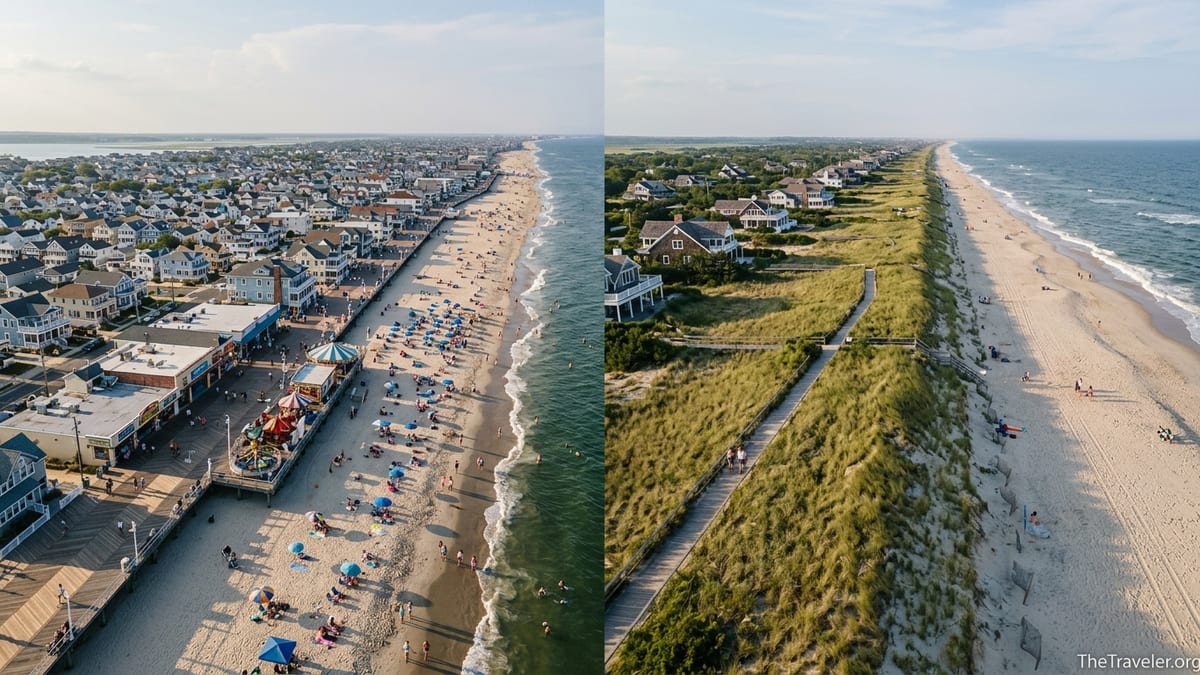
Long Island’s beaches stretch east from New York City through Nassau and Suffolk Counties to the Hamptons and Montauk. On the South Shore you find barrier islands like Long Beach, Jones Beach State Park, and Fire Island, then farther east the famously upscale villages of East Hampton and Southampton. The coastline feels more continuous and, in many spots, more natural, with rolling dunes and long views of open Atlantic surf.
For a first-timer, the Jersey Shore often feels louder and more layered, with motels, mini-golf, and neon boardwalk arcades front and center in towns like Point Pleasant Beach and Wildwood. Long Island can feel more residential or resort-like. A day at Jones Beach State Park might include a long walk from the parking field through dunes to a broad, windswept shoreline, while the residential side streets of Long Beach or Westhampton Beach look more like suburbs that happen to sit beside the ocean.
In practical terms, both regions are reachable for a weekend or even a day trip. From Midtown Manhattan, summer traffic permitting, you might hit Asbury Park in about 75 to 90 minutes by car or reach Long Beach or Jones Beach on Long Island in a similar window. Direct trains from New York Penn Station to Long Branch, Asbury Park, Long Beach, and the Hamptons in summer make both coasts realistic without a car, though connections to smaller towns are usually easier if you drive.
Vibe Check: Boardwalk Buzz vs Dune-backed Calm
If your vision of summer involves Ferris wheels, funnel cake, and the sound of arcade games under your beach chair, the Jersey Shore tends to deliver more of that classic boardwalk buzz. Towns like Point Pleasant Beach have a full mile of boardwalk anchored by Jenkinson’s amusement rides and an aquarium, while Wildwood’s sprawling piers line up roller coasters, water slides, and neon-lit games well into the night. Asbury Park blends boardwalk taco stands and pinball arcades with live music venues like the Stone Pony, which helped launch Bruce Springsteen’s career.
Long Island has a much lighter boardwalk culture. Long Beach offers a wide oceanfront promenade used by cyclists and joggers, and there are concessions and seasonal events, but it feels more like a neighborhood stroll than a carnival. Jones Beach has a historic central mall, concession buildings, and a theater for big-name concerts, yet the beach experience still centers on huge open sand and crashing surf rather than rides and games. Once you go farther east into the Hamptons or out onto Fire Island, the scene is more about dune-backed shoreline, surfcasting, and sunset cocktails on a deck rather than arcades and neon.
That does not mean Long Island is always quiet. Fire Island’s Ocean Beach, for example, has a compact downtown with bars, beach shops, and lively patios that fill up on July weekends. Still, you will not find the same scale of rides or carnival-style nightlife you see on the Wildwood or Seaside Heights boardwalks. If your ideal evening is people-watching over soft-serve ice cream while the kids beg for one more ride, the Jersey Shore usually wins. If you prefer a stroll along the dunes followed by dinner at a low-key bistro or seafood shack, Long Island is likely a better fit.
For travelers who want a middle ground, certain Jersey Shore towns offer a toned-down version of the boardwalk vibe. Cape May, at the southern tip, pairs a narrow paved oceanfront promenade with Victorian inns, farm-to-table restaurants, and quiet residential streets. On Long Island, Long Beach on a sunny Saturday in August can feel more energetic and youthful, with groups arriving by train carrying beach chairs and coolers, but the entertainment still leans toward bars, live music, and volleyball rather than amusement rides.
Family Trips: Sandcastles, Safety, and Rainy-day Backup Plans
Families with younger children often favor the Jersey Shore because a single town can deliver everything within stroller distance. In Ocean City, for instance, you can rent a weekly condo a few blocks from the boardwalk, walk to a guarded beach in the morning, hit the boardwalk amusement rides and mini-golf in the afternoon, then grab pizza or caramel popcorn without ever touching the car. Ocean City is a dry town, so nightlife is subdued, which many parents appreciate once the sun goes down.
Point Pleasant Beach is another family standby. A typical day there might start with a mid-morning walk to Jenkinson’s Aquarium on the boardwalk if clouds roll in, followed by an afternoon of rides, arcade games, and a slice of boardwalk pizza between beach sessions. Towns like Wildwood, though bigger and louder, attract multigenerational groups renting large houses for a week, giving kids a built-in menu of water parks, go-karts, and bike rentals along the famous free beaches.
On Long Island, the family experience tends to be more about the beach itself and less about built-in attractions. Jones Beach State Park, for example, offers multiple fields with lifeguards, changing facilities, and snack bars, and it frequently hosts family-friendly events like air shows and outdoor concerts. But if it rains, you may be getting back in the car to find an indoor activity at a nearby mall or aquarium. In the Hamptons, a week in a rental house near East Hampton’s Main Beach can be idyllic for older kids who love boogie-boarding, biking, and farm-stand visits, yet younger children may miss having a boardwalk with rides at their doorstep.
From a safety standpoint, both coasts rely on well-trained lifeguards at official beaches during the summer season, though the lifeguard hours and dates can vary by town or park. Parents will want to pay attention to rip current warnings, especially on less sheltered Atlantic stretches like Montauk or parts of Ocean County, and to check if their chosen beach allows coolers or restricts glass and alcohol, which can affect how calm or rowdy the crowd feels by midafternoon.
Costs, Parking, and Logistics
Costs are a major factor for many travelers deciding between New Jersey and Long Island. On the Jersey Shore, many municipal beaches charge daily badge fees that typically run in the low to mid teens per adult in peak season, with discounts for children or seniors and free access in some areas earlier or later in the day. Parking in popular towns often costs around 15 to 25 dollars for a full day in a municipal lot near the sand, with cheaper or sometimes free options a bit farther from the beach, especially in smaller communities just off the main resort strips.
Long Island’s costs are structured differently. Instead of per-person beach badges, many state and county parks charge a parking fee per vehicle. At a Nassau County oceanfront beach, for example, a local resident with a county leisure pass might pay under 10 dollars to park on a weekday, while a nonresident could pay closer to 30 dollars at peak summer rates. At some Suffolk County and state beaches, day parking fees for nonresidents commonly fall into the 15 to 20 dollar range during the main season, with season passes available for frequent visitors.
When it comes to rental costs, both coasts can be expensive in July and August, but the extremes tend to be higher in the Hamptons, where a simple two- or three-bedroom cottage within walking distance of the beach can command several thousand dollars per week in midsummer. In contrast, weekly rentals in many Jersey Shore towns, such as Seaside Park, Lavallette, or parts of Wildwood Crest, can still hit four figures but often start lower than comparable houses in Amagansett or Bridgehampton. On both coasts, travelers can save by looking just off the prime oceanfront blocks or shifting their stays to June or early September.
Public transit plays differently too. To reach Long Island beaches without a car, many travelers rely on the Long Island Rail Road, which offers summer packages that combine round-trip train fare with beach admission or shuttle buses to popular spots like Jones Beach or Long Beach. The Jersey Shore is served by New Jersey Transit’s North Jersey Coast Line, which stops in towns like Long Branch, Asbury Park, and Point Pleasant Beach, where the walk from station to sand is often manageable with a rolling cooler. Still, the farther you go toward Cape May or the deeper you venture into the Hamptons, the more a car becomes necessary for groceries, restaurants, and reaching less crowded stretches of coastline.
Scenery, Surf, and Outdoor Activities
Scenic differences can strongly influence which coast feels right for you. On the Jersey Shore, the landscape varies from compact, boardwalk-fronted resort strips to quieter barrier islands where homes sit behind low dunes and marshes. In Monmouth County, beaches around Spring Lake and Sea Girt feel manicured, fronted by grand homes and a peaceful, noncommercial boardwalk. Farther south, the Victorian architecture and tree-lined streets of Cape May add a distinct sense of history that you notice as soon as you step off the sand and back into town.
Long Island’s South Shore tends to feel more wild and open, especially as you head east. In the Hamptons, public access points such as Main Beach in East Hampton or Coopers Beach in Southampton offer postcard views of tall dunes, wide white sand, and surf that draws both families and experienced swimmers. Fire Island’s communities, reached by ferry, line up a string of car-free villages where sandy walking paths replace streets and houses sit tucked into scrub pines and beach grass. The result is an immersive coastal environment that feels removed from day-to-day city life, even though the skyline is only a couple of hours away.
Both coasts support strong surf and fishing scenes. On Long Island, breaks near Ditch Plains in Montauk and some sandbars along Fire Island draw surfers, especially during late summer and fall swells. The Jersey Shore has its own reliable surf spots, including parts of Manasquan, Belmar, and Long Beach Island, with local surf shops renting boards and running lessons in peak season. Anglers on Long Island might target striped bass and bluefish from jetties at Robert Moses State Park or beaches along the South Fork, while New Jersey surfcasting is common along jetties and inlets in towns like Barnegat Light and Island Beach State Park.
If you are a hiker or birder, Long Island may edge out New Jersey in terms of protected dune and maritime forest experiences directly adjacent to popular beaches. Fire Island National Seashore, for example, protects long undeveloped segments of barrier island where trails wind through dune systems and swales. However, New Jersey offers its own rewards, including the bird-rich wetlands around Cape May Point and the relatively undeveloped shoreline at Island Beach State Park, where it is easy to feel removed from the honky-tonk of busier nearby towns.
Nightlife, Dining, and Culture
In the evening, the Jersey Shore skews toward casual, loud, and family-friendly in many towns, with some pockets of party culture. Asbury Park has become a notable dining destination, with chef-driven restaurants, craft cocktail bars, and a revitalized arts scene that includes galleries and live music venues. Wildwood’s boardwalk lights up after dark with rides and bars that lean into a vacation-town vibe, while Seaside Heights has worked to keep a lively but more controlled atmosphere than in its reality-TV peak years.
Cape May offers a different flavor of culture, pairing historic inns and a compact downtown with wine bars, jazz nights, and a nationally known birding scene. Many visitors split their evenings between oceanfront seafood spots and strolls past gas-lit porches on streets lined with gingerbread-trimmed Victorian houses. Smaller towns such as Avon-by-the-Sea or Spring Lake quiet down earlier, appealing to travelers who want little more than ice cream, a walk on the boardwalk, and an early bedtime.
Long Island’s nightlife can feel more stratified. In Long Beach, the scene along Park Avenue and the waterfront draws a young crowd for live music, outdoor seating, and late-night bites, especially on weekends. Fire Island communities such as Ocean Beach and Cherry Grove are famous for lively bars, drag shows, and dance floors, though the mood remains generally relaxed compared with big-city clubs. In the Hamptons, nightlife ranges from laid-back taverns with local oysters to exclusive clubs where summer visitors line up in designer resort wear.
Dining on Long Island often emphasizes seafood and farm-to-table menus. It is easy to pair a beach afternoon with a stop at a roadside stand for sweet corn and tomatoes or a dockside clam shack for lobster rolls and local scallops. On the Jersey Shore, you will also find serious dining, especially in Asbury Park and Cape May, but the base layer is boardwalk classics: sausage-and-pepper sandwiches, funnel cakes, frozen custard, and pizza by the slice. For some travelers, that casual food culture is the point of a shore vacation; for others, a beach destination with more emphasis on wine lists and raw bars may be a better fit.
Who Each Coast Fits Best
Choosing between the Jersey Shore and Long Island starts with a frank look at your travel style and priorities. If you are traveling with young children or a multigenerational group that wants non-stop, walkable entertainment, the Jersey Shore has clear advantages. Ocean City, Point Pleasant Beach, and Wildwood make it simple to park the car for days at a time and move between the beach, rides, mini-golf, and casual restaurants without much planning. The slightly scruffier, carnival-like atmosphere is part of the fun, and it often means that everyone from toddlers to teens has something to do within steps of your rental.
If your ideal coastal escape centers on scenery, space, and a sense of escape, Long Island’s beaches may align more closely with your expectations. A week on Fire Island, where cars are largely absent and most movement happens by foot or wagon, offers a different mental reset than a week above a busy boardwalk. Likewise, mornings on a foggy Montauk beach or evenings watching the sunset behind dunes in the Hamptons lean into a quieter, more elemental relationship with the ocean, even when restaurants and shops are just a short drive away.
Budget-conscious travelers might find it easier to manage costs on the Jersey Shore, especially outside the most in-demand towns or by visiting in June or early September rather than high July and August weeks. Groups willing to stay slightly inland on Long Island, perhaps a short drive from a state park or county beach instead of on the oceanfront itself, can also trim expenses, but the entry-level price for waterfront Hamptons or Fire Island experiences is generally higher than a comparable stay in many New Jersey towns.
Commuters and weekenders from New York City should also weigh travel time and reliability. For someone living in Brooklyn or Queens without a car, Long Beach or Rockaway Beach may be easier for frequent short trips, while New Jersey may make more sense for those near Manhattan’s west side who can catch a direct train to Asbury Park or Long Branch. If you only get one full week by the sea all summer, though, both coasts are worth considering closely, and it often comes down to whether you want your beach in the center of the action or a bit removed from the fray.
The Takeaway
There is no single winner in the Jersey Shore versus Long Island debate, because each coastline is tuned to a different kind of beach dream. The Jersey Shore excels at instant gratification: park the car, drop your bags, and you are steps from rides, arcades, and long guarded beaches that hum with energy from morning through late night. It works especially well for families, friend groups, and anyone who views a boardwalk full of food stands and amusement rides as an essential part of summer.
Long Island succeeds when you are craving space, scenery, and a more understated version of coastal living. Its state and county beaches, Fire Island villages, and Hamptons strands offer long views, rolling dunes, and a feeling that the ocean is the main attraction rather than the backdrop to a carnival. For couples, nature lovers, and travelers who like to pair beach time with farm stands and wine bars instead of arcades, Long Island can feel like the more adult, contemplative choice.
In practice, many beachgoers end up loving both. You might spend a long weekend in Wildwood with kids and grandparents, then later in the season escape to a cottage on Fire Island or a small hotel in Montauk for slower mornings and quieter nights. If you are still undecided, test both in a single season: a day-trip recon mission to Point Pleasant Beach or Asbury Park, followed by a Saturday at Jones Beach or Long Beach, will quickly clarify which coastal escape feels more like your personal definition of summer.
FAQ
Q1. Which is better for families with young kids, the Jersey Shore or Long Island?
For most families with young children, the Jersey Shore tends to be easier. Towns like Ocean City and Point Pleasant Beach pack guarded beaches, amusement rides, mini-golf, and kid-friendly restaurants into walkable boardwalk districts, so you can avoid frequent car trips and always have a backup activity if the kids get bored or the weather changes.
Q2. Where will I find quieter, less crowded beaches in peak season?
On Long Island, lesser-known access points in the Hamptons, some stretches of Fire Island away from the busiest ferry stops, and county parks can feel more spacious even in July and August. On the Jersey Shore, spots like Island Beach State Park, the north end of Long Beach Island, and early-morning sessions in smaller Monmouth County towns such as Sea Girt or Spring Lake can offer a calmer experience than the big boardwalk resorts.
Q3. Which coast is generally more expensive for a weeklong summer rental?
While prices vary widely, Long Island, especially the Hamptons and popular Fire Island communities, is usually more expensive than most Jersey Shore towns for similar proximity to the water. Oceanfront or easy-walk rentals in East Hampton or Montauk often command higher weekly rates than comparable houses in Cape May, Wildwood Crest, or Lavallette during peak summer weeks.
Q4. Do I need a car to enjoy these beach areas?
You can reach both the Jersey Shore and parts of Long Island by train, but a car makes life easier, especially for longer stays. New Jersey Transit and the Long Island Rail Road connect major towns and some beaches, yet smaller communities, grocery shopping, and more secluded stretches of sand may require driving. For a car-free option, consider a train-accessible town like Asbury Park or Long Beach where you can stay within walking distance of the beach and downtown.
Q5. How do beach fees work on the Jersey Shore compared with Long Island?
Jersey Shore towns typically sell daily or seasonal beach badges on a per-person basis, with many charging around the low to mid teens for a peak-season adult day badge and discounted rates for kids or seniors. Long Island beaches more often charge per-vehicle parking fees at state or county parks, with resident and nonresident rates that can range roughly from under ten dollars for locals on weekdays to higher fees for nonresidents on prime summer weekends.
Q6. Which destination has better nightlife?
It depends on what you like. The Jersey Shore offers lively boardwalks, bars, and music venues in places like Asbury Park, Wildwood, and Seaside Heights, often with a casual, flip-flops-and-T-shirt dress code. Long Island nightlife ranges from laid-back bars in Long Beach and Fire Island to upscale clubs and restaurants in the Hamptons, which can feel more polished and scene-driven, especially in mid-summer.
Q7. How do the surf and swimming conditions compare?
Both coasts face the Atlantic and can have strong surf, especially after storms or during late summer hurricane swells. Long Island spots like Montauk and parts of Fire Island attract serious surfers, while New Jersey breaks near towns such as Manasquan, Belmar, and Long Beach Island are also popular with local surfers. In both regions, families should swim near lifeguard stands and pay attention to flags and posted rip current warnings.
Q8. Are there good options for nature and wildlife watching?
Yes on both sides. Long Island’s Fire Island National Seashore, dune trails, and marshes host shorebirds, deer, and coastal plant life, while the South Fork offers nature preserves close to the beach. On the Jersey Shore, places like Island Beach State Park and Cape May Point are known for birding, especially during migration seasons, and for their relatively undeveloped stretches of shoreline compared with nearby resort towns.
Q9. Which coast is easier for a last-minute weekend trip?
For New York City residents, Long Beach, Jones Beach, or parts of Long Island reachable by train or a short drive can be slightly easier for last-minute day trips, especially without a car. However, many New Jersey towns like Asbury Park and Point Pleasant Beach are also manageable for spur-of-the-moment weekends by train or car. Availability of reasonably priced last-minute lodging is often better at the Jersey Shore outside the busiest holiday weekends.
Q10. If I only have one week this summer, which should I choose?
If you prioritize convenience, built-in activities, and a classic boardwalk feel, choose the Jersey Shore and aim for a town that matches your vibe, such as Ocean City for family-friendly calm or Wildwood for high-energy fun. If your top priority is scenery, quieter evenings, and a more laid-back coastal atmosphere, lean toward Long Island, perhaps splitting time between a South Shore beach day like Jones Beach and a few nights in the Hamptons or on Fire Island.