


Say “Jersey Shore” and many travelers still picture crowded boardwalks, noisy bars, and reruns of MTV’s reality show. Then they arrive and realize how incomplete that image is. Stretching for more than 140 miles from Sandy Hook to Cape May, New Jersey’s coastline is a string of wildly different beach towns, wildlife sanctuaries, and food-obsessed communities that share little with the caricature. The biggest surprise for many visitors is how quickly the pop-culture version of the Jersey Shore fades once you step off the main boardwalks and start exploring.
Get the latest updates straight to your inbox!
A Coastline That Defies Its Reality TV Reputation
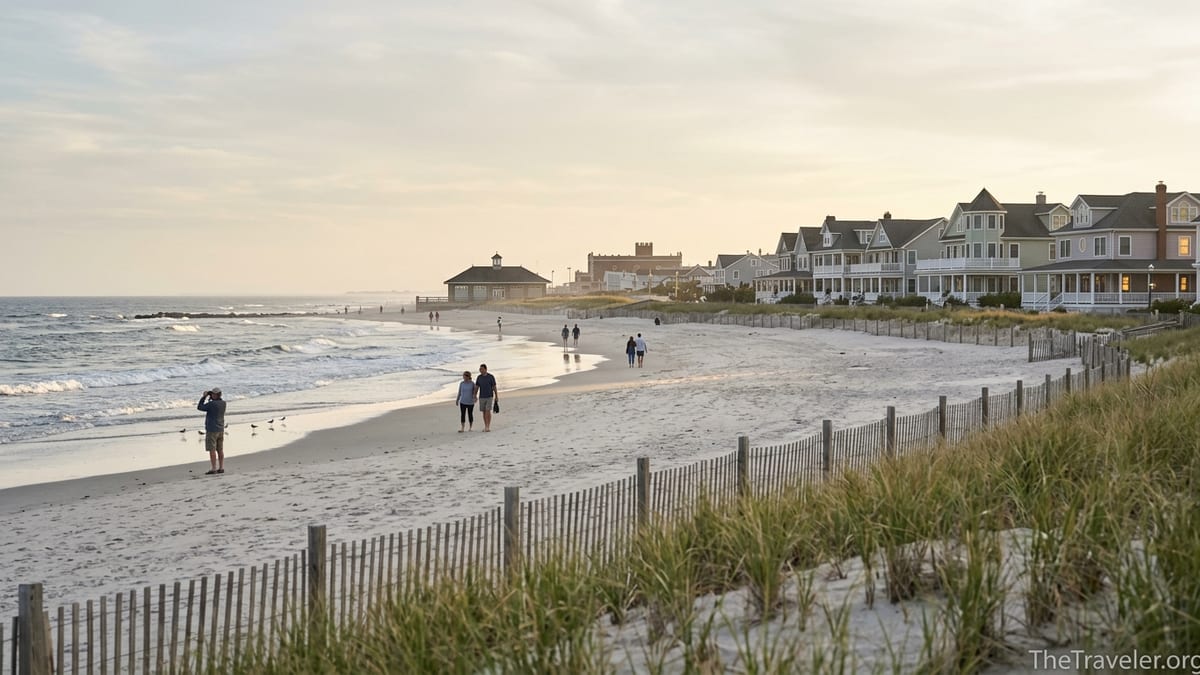
The MTV series “Jersey Shore,” which aired from 2009 to 2012, fixed Seaside Heights in the public imagination as the face of New Jersey’s coast. In reality, the show focused on a few blocks of one town that is only a small slice of a long, varied shoreline. Travelers who arrive expecting wall-to-wall party bars and T-shirt shops are often startled to find Victorian neighborhoods, dune-backed wildlife refuges, and quiet family beaches within the same hour’s drive.
Consider the contrast between Seaside Heights and nearby Island Beach State Park. One moment you are on Casino Pier hearing pop music from the rides; 20 minutes later you are walking through maritime forest and watching ospreys hunt over undeveloped dunes. On a summer weekday, the only sounds along some stretches of Island Beach are waves and wind through the grasses. For visitors used to thinking of the Jersey Shore as pure neon and noise, that switch can be jarring in the best possible way.
Farther south, the same pattern repeats. People who grew up on images of crowded party scenes in Wildwood are often taken aback by the low-key, residential feel of adjacent towns like Stone Harbor or Avalon, where streets are lined with hydrangea-trimmed shore houses and the nightlife is more about ice cream shops and quiet cocktail bars than clubs. The common reaction from first-timers is simple disbelief that all of this exists in the same state, along the same ribbon of sand.
Historic Towns With Serious Character
Beyond the reputation for summer rentals and boardwalk fries, the Jersey Shore has some of the East Coast’s most distinctive historic beach towns. Cape May, at the southern tip of the state, is a National Historic Landmark district filled with ornate Victorian houses painted in sherbet colors. Many of these “painted ladies” are now inns and bed-and-breakfasts where guests wake up to porch breakfasts and church bells rather than nightclub bass. Walking down Columbia Avenue on a summer evening, when gas lamps flicker on and horse-drawn carriages pass, feels closer to a period drama than to reality TV.
Asbury Park offers a different kind of history. Once a faded resort, it has evolved into a creative hub without losing its grit. The restored Convention Hall hosts concerts and vintage markets, while the Stone Pony remains one of America’s legendary rock clubs, closely associated with Bruce Springsteen’s early career. On a Friday in July you might find a local band playing an afternoon set on the Pony’s outdoor stage before the crowd drifts across Ocean Avenue for craft cocktails and Korean-inspired fried chicken at a nearby restaurant. For many visitors, the level of arts and music here is more reminiscent of a small city than a beach town.
Then there are quieter, old-school communities like Ocean Grove, founded in the 19th century as a Methodist camp meeting ground. Streets there are lined with tiny Victorian cottages, each with a front porch and a row of beach chairs that seem to appear as soon as the weather warms. Instead of arcades and thrill rides, Ocean Grove’s social hub is the Great Auditorium, a vast wooden structure that hosts organ recitals and choral performances. Travelers who assumed every Jersey Shore town is dominated by nightlife often find these pockets of tradition and faith-based history unexpectedly compelling.
Nature, Wildlife, and a Global Migration Stopover
One of the Shore’s most surprising stories is ecological rather than cultural. The Delaware Bay side of Cape May County is a globally important stopover for migratory shorebirds, including red knots that travel thousands of miles between South America and the Arctic. Each May and early June, visitors standing on quiet bay beaches like Reed’s Beach or Kimble’s Beach can watch flocks of birds gorge on the eggs of spawning horseshoe crabs, an ancient species whose peak activity often coincides with new and full moons. Conservation groups and state biologists monitor the spectacle closely and sometimes rope off sections of sand so birds can feed undisturbed.
For travelers used to crowded Atlantic-facing beaches, this world feels incredibly remote, even though it is less than a 30-minute drive from the shops and restaurants of central Cape May. Local nature centers and refuges, including the Cape May National Wildlife Refuge and the Cape May Bird Observatory, offer seasonal walks where naturalists point out everything from monarch butterflies in fall to peregrine falcons and ospreys hunting over the marshes. Birders from across the United States plan entire vacations around these migrations, booking simple motels or cottage rentals months in advance.
Wildlife surprises appear elsewhere along the coast too. Island Beach State Park is known for its foxes and nesting ospreys, while the back-bay marshes from Atlantic City to Sea Isle City are prime territory for kayaking among egrets and herons. In Barnegat Light on Long Beach Island, visitors can climb the brick lighthouse, then walk the inlet jetty scanning for seals in winter or schooling fish in summer. None of this fits neatly into the stereotype of the Shore as one long umbrella line; it is closer to a chain of small coastal ecosystems, many of which are within easy reach of a motel or vacation rental.
The Food Scene That Shocks First-Time Visitors
Ask a traveler who has never been and they might guess that food at the Jersey Shore begins and ends with funnel cake, cheesesteaks, and boardwalk pizza. Those classics are still there, especially in places like Seaside Heights and Wildwood, but the restaurant scene has widened dramatically. In Asbury Park, for instance, visitors can move from a low-key breakfast at a neighborhood coffee shop to a dinner of house-made pasta, small plates, or vegan fine dining, all within a few blocks of the ocean. Long-running seafood institutions along the northern shore serve classic platters of fried clams and lobster while newer spots plate raw-bar towers and crudo that would not be out of place in a major city.
Cape May has become a destination restaurant town in its own right, with seasonal menus built around local scallops, fluke, and Jersey corn. Weekend visitors are often surprised to find that reservations at popular dining rooms book out days or weeks in advance in July and August, and that menus look more like what they might expect in Philadelphia or New York than at a traditional beach town. In shoulder seasons like May and October, prices can be a bit lower and it is easier to slide into bar seats for oysters and a glass of wine after an afternoon of birding or biking.
Elsewhere, the surprises are about variety rather than formality. Down the barrier islands you can find casual taco stands operating out of repurposed cottages, Vietnamese and Korean spots in strip malls between towns, and independent bakeries turning out excellent sourdough and pastry before sunrise. Travelers who arrive planning to live on boardwalk slices and soft-serve often end up mapping out their days around where to eat next, from breakfast sandwiches at a corner deli to sunset seafood on the bay side. For many, that discovery reshapes how they think about the Shore as a whole.
Arts, Music, and a Growing Year-Round Culture
Another surprise for many visitors is that the Jersey Shore does not simply go dark after Labor Day. Towns like Asbury Park, Red Bank, and Cape May have leaned into year-round arts and events calendars, shifting the focus from beach chairs to concerts, theater, and festivals once the water cools. In Asbury Park, venues that host summer surf-rock shows move indoors for autumn indie bands, jazz nights, and comedy. The city’s mural-lined backstreets and small galleries stay open through winter, attracting weekend visitors who are more interested in music and food than in sunbathing.
Cape May’s shoulder seasons are built around themed weekends and festivals, from jazz and classical music to Victorian house tours and holiday candlelight walks. Guests might spend a November day walking the windswept promenade in a jacket and hat, then settle into a historic hotel lounge for live piano and cocktails in the evening. In winter, Ocean City and other family-focused towns decorate their downtowns with lights and host small parades and First Night celebrations, giving people reason to visit long after the Ferris wheels stop turning.
For travelers used to beach destinations that run on a strict Memorial Day to Labor Day cycle, this year-round rhythm is unexpected. It also changes the experience dramatically. Off-season hotel rates are typically lower, restaurant reservations are easier, and locals have more time to chat about everything from the history of the amusement piers to the best back-bay kayak routes. Many repeat visitors eventually decide that October walks on an almost-empty beach or March weekends spent chasing live music feel as quintessentially “Jersey Shore” as any summer afternoon in the sand.
Family Trips, Quiet Couples’ Getaways, and Outdoor Adventures
One of the clearest signs that the Jersey Shore is more than its stereotype is the sheer range of trips it supports. Families still flock to classic boardwalk towns like Ocean City and Wildwood, where kids can ride coasters late into the evening and parents can rent bikes for morning rides along the promenade. But the same coastline also caters to couples looking for romantic weekends in Victorian B&Bs, small groups of friends booking surf lessons, and solo travelers who spend their days birding, reading on the beach, or working remotely from a rental with a bay view.
Outdoor options surprise many new visitors. Surf schools in towns like Belmar and Lavallette run lessons through much of the summer, and stand-up paddleboard outfitters guide sunrise and full-moon paddles on calm back bays. In places like Sea Isle City and Long Beach Island, visitors rent kayaks by the hour from bayside docks, gliding past marsh grasses and egrets within sight of the barrier island’s busy main boulevard. Cyclists wake early for long rides along Ocean Drive between shore towns, stopping for coffee in small downtowns before the midday traffic builds.
Even something as simple as an evening stroll can feel different depending on where you go. In Seaside Heights, a nighttime walk might mean arcade lights and the sound of pop songs blending with crashing surf. In Avalon or Spring Lake, the same hour might be spent on a quiet, unlit beach where the loudest noise is the ocean and an occasional conversation from a nearby porch. The variety allows travelers to design the exact version of the Jersey Shore they want, whether that is family-friendly and structured or completely unhurried.
The Takeaway
For all its fame, the Jersey Shore remains widely misunderstood. Pop culture fixated on one party-heavy stretch of boardwalk and left the rest of the coastline in the shadows. Travelers who actually make the trip discover a place that is far more layered: historic Victorian streets, working fishing harbors, serious restaurant and music scenes, and stretches of wilderness where shorebirds and ancient horseshoe crabs still define the seasons. That mix is what keeps people coming back long after the novelty of the TV show has faded.
If your mental picture of the Jersey Shore is still dominated by reality TV, it is worth reconsidering. Spend a morning watching egrets hunt over the marshes, an afternoon exploring local galleries, and an evening over a carefully cooked seafood dinner in a century-old town center, and the caricatures fall away quickly. The surprise for many visitors is not just that the Shore has more to offer, but that it feels like several different destinations woven into one long, ever-changing coastline.
FAQ
Q1. Is the Jersey Shore really different from what I saw on reality TV?
The reality show was filmed mostly in Seaside Heights and focused on nightlife. The broader Jersey Shore includes quiet beach towns, wildlife refuges, and historic districts that look and feel completely different.
Q2. What town should I visit if I want a more relaxed, historic atmosphere?
Cape May is a top choice, with its Victorian architecture, walkable streets, and strong food and wine scene. Ocean Grove and Spring Lake also offer quieter, traditional neighborhoods with a slower pace.
Q3. Are there still classic boardwalks with rides and arcades?
Yes. Towns like Seaside Heights, Point Pleasant Beach, Wildwood, and Ocean City have traditional boardwalks with amusement rides, arcades, casual food, and games, especially busy in summer.
Q4. Can I see wildlife and unspoiled nature at the Jersey Shore?
Island Beach State Park, the Cape May area, and many back-bay marshes offer opportunities to see shorebirds, ospreys, foxes, and seasonal migrations in relatively undeveloped settings.
Q5. Is the Jersey Shore a good destination for food lovers?
Yes. Beyond boardwalk staples, you will find serious restaurants in Cape May, Asbury Park, and other towns, along with raw bars, bakeries, and diverse international options up and down the coast.
Q6. When is the best time to visit if I want fewer crowds?
Late spring and fall are ideal. Water temperatures may be cooler, but crowds are lighter, prices can be lower, and many restaurants and venues remain open, especially in larger towns.
Q7. Is it possible to enjoy the Jersey Shore without a car?
Some towns, such as Asbury Park and Long Branch, are reachable by train from New York, and once there you can walk or use rideshares. For exploring multiple towns or more remote nature areas, having a car is more convenient.
Q8. Are Jersey Shore towns family-friendly or mostly for nightlife?
It depends on the town. Ocean City and many parts of Long Beach Island are strongly family-focused, while places like Seaside Heights and parts of Wildwood have more nightlife. Many visitors choose their base town accordingly.
Q9. What can I do at the Jersey Shore in the off-season?
Off-season activities include walking the beaches, birding, attending concerts and festivals in towns like Asbury Park and Cape May, dining out, shopping in small downtowns, and simply enjoying a quieter pace by the ocean.
Q10. How long should I plan to stay to get a feel for the Jersey Shore beyond the boardwalks?
A long weekend lets you explore one town and nearby nature areas. A full week gives time to sample different communities, from classic boardwalks to quieter historic or wildlife-focused spots.