


If you are planning a Jersey Shore vacation and find yourself stuck between Cape May and Ocean City, you are not alone. These two Cape May County neighbors sit barely a half-hour apart, yet they deliver very different versions of the classic shore escape. One leans historic, walkable, and romantic, with craft cocktails at sunset. The other is proudly alcohol free, built around a lively boardwalk and kid-centric fun. The right choice depends less on which town is “better” and more on which one matches the way you actually like to travel.
Get the latest updates straight to your inbox!
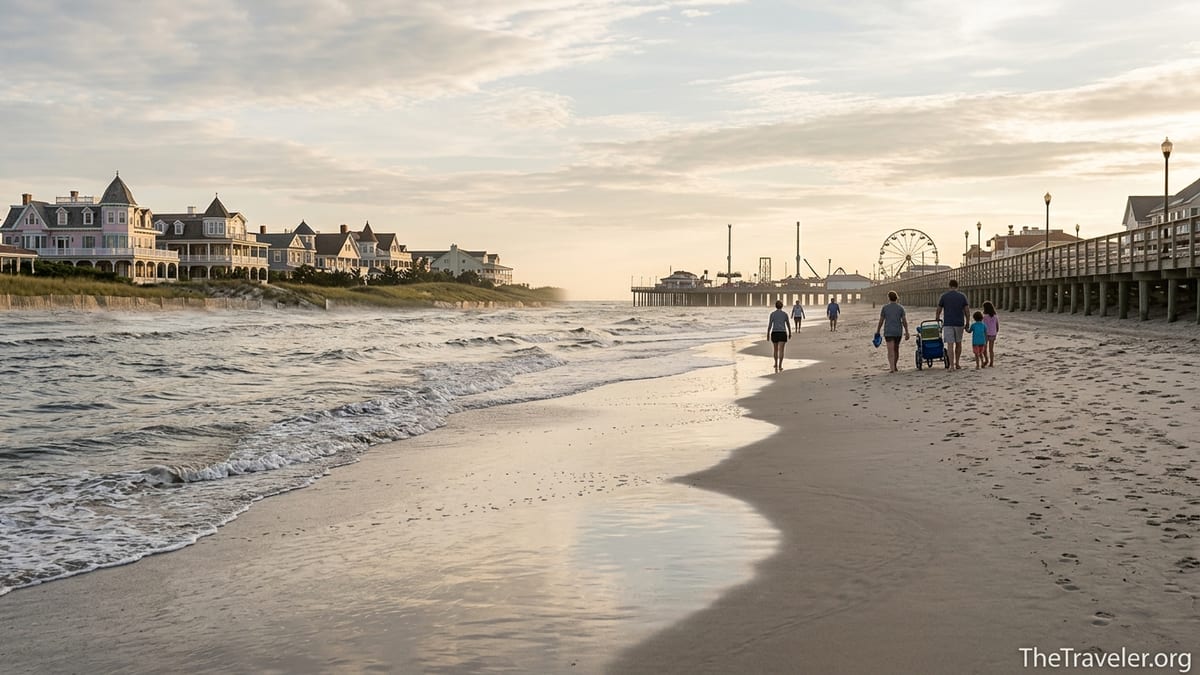
First Impressions: Atmosphere and Vibe
Arriving in Cape May feels a bit like stepping into a carefully restored seaside village. Streets around the Washington Street Mall and Jackson Street are lined with Victorian homes turned into inns, restaurants, and boutiques. Congress Hall, one of the region’s grand hotels, faces broad lawns and the ocean, and on a summer evening you will see couples in resort wear heading out for dinner or a drink. The mood skews romantic and grown up, though families are certainly part of the mix.
Ocean City, by contrast, announces itself with its 2.5-mile boardwalk and big, bright signs for mini golf, arcades, and rides. The welcome banners proudly refer to it as “America’s Greatest Family Resort,” and that tagline is not just marketing. There are beach carts full of boogie boards, kids in line for soft-serve at Kohr Bros, and teens congregating at Gillian’s Wonderland Pier or Playland’s Castaway Cove. The town is intentionally low-key in the evenings, with the boardwalk as the central gathering place.
Think of Cape May as a small coastal city with history and style, and Ocean City as a classic, wholesome beach resort. Both are busy in July and August, but in different ways: Cape May crowds restaurant patios and wine bars, while Ocean City fills tram cars, bike rentals, and the boardwalk after dark.
The choice here comes down to what you picture when you say “shore vacation.” If that image includes Victorian porches, wine tastings, and slow strolls past historic homes, Cape May is a better fit. If you imagine saltwater taffy, rides, and kids on scooters, Ocean City will feel exactly right.
Beaches and Water: Sand, Surf, and Space
Both towns offer wide Atlantic beaches, but your day on the sand can feel different in each place. In Cape May, beaches run along Beach Avenue and then curve around to Cape May Point. Near the center of town the beach is framed by classic hotels like the Marquis de Lafayette and the Victorian houses of the historic district. The vibe is relaxed, and you will see more umbrellas, paperback novels, and couples sharing a cooler than large multi-family setups with full tents and wagons.
Ocean City beaches stretch for miles along a narrow barrier island. Near the boardwalk, especially between 8th and 14th Streets, the sand is filled with families and day trippers hauling beach carts, chairs, and boogie boards. Lifeguard stands are frequent, and Ocean City Beach Patrol is very active in season. Head south toward 34th Street or 55th Street and you will find a slightly quieter atmosphere that many repeat visitors prefer for longer stays.
Water conditions are broadly similar, but swimmers often note that Ocean City can feel a bit more energetic because of the density of beachgoers and the proximity to amusements and rentals. Surfers often favor certain beaches in both towns on a rotating schedule determined by local rules, which shift between swimming-only and surfing zones during the day. Families who want lifeguard coverage and quick access to bathrooms and food will appreciate Ocean City’s boardwalk blocks. Travelers seeking a quieter sunbathing session, especially couples, often gravitate toward Cape May’s midweek mornings or the less crowded sections near Poverty Beach and Cape May Point.
In practical terms, both towns require beach tags in high season, with prices that are broadly similar and discounts for weekly and seasonal passes. Expect to pay in the range that most New Jersey shore towns charge and purchase tags from roaming inspectors or kiosks near beach entries.
Alcohol, Dining, and Nightlife: A Tale of Two Policies
The single biggest functional difference between Cape May and Ocean City is alcohol. Cape May is a fully “wet” town with bars, wine lists, and craft cocktails. Ocean City is a true dry town where alcohol is not sold anywhere on the island, there are no bars, and you cannot bring your own beer or wine to restaurants. For many visitors, this question alone decides the trip.
In Cape May, an evening might start with a glass of wine at a vineyard just outside town, followed by oysters and a cocktail at a bar in the historic district. Restaurants range from casual seafood shacks to white-tablecloth dining in places like the Ebbitt Room or the Blue Pig Tavern inside Congress Hall. Prices vary widely, but a couple should plan for typical resort-town checks: simple seafood dinners can land in the moderate range, while multi-course meals with drinks at higher-end venues can easily move into splurge territory.
In Ocean City, dinner is deliberately low-key and family oriented. Expect pizza at Manco & Manco, burgers and fries at boardwalk grills, and simple seafood plates at local spots on Asbury Avenue and along the bay. Because there is no alcohol service and no BYOB in town restaurants, menus tend to be shorter and more casual. Many visitors who want a drink simply stop at a liquor store on the mainland, enjoy a glass of wine on a rental balcony, then head to the boardwalk for ice cream and mini golf instead of a bar crawl.
Nightlife in Cape May features live music at bars and hotel lounges, wine tastings, and seasonal events like music festivals and outdoor concerts. In Ocean City, the “nightlife” is the boardwalk itself: arcades open late, rides run well into the evening in summer, and families stroll with funnel cakes and frozen custard. If you enjoy a quiet drink at the end of the day or are planning an adults-only celebration, Cape May is clearly more accommodating. If you prefer an environment where nightlife is kid-friendly and alcohol largely disappears from the public scene, Ocean City is a better match.
Family-Friendliness, Activities, and Rainy-Day Options
Both towns cater to families, but Ocean City is more singularly focused on them. The boardwalk anchors a strip of attractions that could fill an entire week: multiple mini golf courses, two major amusement piers with rides for toddlers through tweens, a water park by the boards, escape rooms, arcades, and bike rentals for morning rides when bikes are allowed on the boardwalk. On a typical July evening, you will see grandparents pushing strollers, kids clutching plush prizes from game stands, and groups of teens moving between pizza slices and rides.
Rainy days in Ocean City are softened by the same attractions. Families often spend an afternoon in the arcades, take in a movie at the local theater, or drive a short distance off-island to indoor trampoline parks and shopping centers. Prices align with what you would expect at a mainstream shore boardwalk: ride ticket books, mini golf admission, and arcade cards are all built to add up if you visit nightly, so many families set a daily budget for boardwalk spending.
Cape May offers a different style of family fun. Instead of amusement rides, the town leans on history and nature. Families with older kids or teens might spend a morning climbing the Cape May Lighthouse, then visit the nearby World War II Lookout Tower or take a trolley tour through the historic district. The Cape May County Park & Zoo, located a short drive inland, is a popular free day trip that many visitors combine with a picnic. Eco-focused activities include dolphin and whale-watching cruises, birding walks in the Cape May Meadows, and sunset excursions to Cape May Point to look for dolphins just offshore.
For younger children, the absence of a boardwalk full of rides is either a plus or a minus, depending on expectations. Some parents appreciate that there is less pressure for nightly rides and arcade spending. Others find that their kids crave the instant gratification that Ocean City’s amusements provide and may become restless in Cape May if the day’s main activity is “another nice dinner and a walk.”
Lodging, Costs, and Trip Logistics
Both towns sit within the same county and share similar peak seasons, running roughly from late June through Labor Day, with shoulder seasons in May, September, and early October. Yet the lodging scenes feel quite different. In Cape May, many stays center on historic inns, boutique hotels, and classic motels that have been refreshed over the years. It is common to find bed-and-breakfasts in ornate Victorian houses just a block or two from the ocean, with breakfast and afternoon tea included in the room rate. On a summer weekend, a couple might expect nightly rates from the mid-range up into premium territory at centrally located properties.
Ocean City’s lodging market leans heavily toward weekly rentals and family motels. Large multi-bedroom condos and single-family homes cater to groups of relatives who vacation together year after year. Many are rented by the week in high season, with Saturday-to-Saturday bookings standard. Motel options line the main arteries and the streets near the boardwalk, offering straightforward rooms geared toward beachgoers rather than design-focused stays. For a family of four or more planning a week at the shore, splitting a rental in Ocean City can be cost-effective compared with booking multiple rooms in Cape May’s inn-heavy market.
Parking and movement around town also differ. Cape May’s compact core around the Washington Street Mall encourages walking, and many visitors park once for the weekend and rarely move their car. Paid parking lots and metered streets near the beach fill quickly on sunny weekends, so day trippers should plan to arrive earlier in the morning. In Ocean City, where the island is longer, visitors often drive or bike between different beach access points and the boardwalk. Public and private lots near the boards charge typical Jersey Shore day rates, while side-street parking in residential areas becomes scarcer as the day goes on.
Access from major cities is similar. From the Philadelphia region, both towns are about a 1.5 to 2-hour drive in normal traffic. Many visitors exit the Garden State Parkway for Ocean City earlier, while those heading to Cape May continue to the end of the Parkway. Travelers from New York City and North Jersey often factor in heavier traffic and sometimes choose one town over the other based on which fits better with their usual driving pattern and rest stops.
Who Each Town Suits Best: Real-World Traveler Profiles
Imagine a couple in their early 30s planning a romantic long weekend. They live in Philadelphia, love trying new restaurants, and would like to visit a winery or two. They appreciate a lively atmosphere but prefer conversation over bar-hopping. In this scenario, Cape May tends to win. They can check into a historic inn, book dinner at a well-regarded restaurant, have a drink before or after their meal, and spend Saturday afternoon on a wine-tasting tour. After dinner, they might walk along Beach Avenue, listen to live music at a lounge, or simply sit on a porch with a glass of wine.
Now picture a family of five with kids ages 5, 9, and 12. Their ideal vacation includes plenty of beach time, but they also want built-in activities that do not require long car rides. They are willing to cook some meals in a rental but want easy pizza and ice cream nights. For them, Ocean City is often the better match. Renting a three-bedroom condo within walking distance of the boardwalk allows the kids to alternate between the ocean, the rides, and the arcades without lengthy excursions. Because the town is dry and highly family focused, parents may feel more comfortable letting responsible older kids wander a short stretch of the boards together in the early evening.
Consider also multigenerational trips. A large family group that includes grandparents, adult siblings, and young children may lean toward Ocean City if the priority is giving kids constant entertainment and a shared rental house where everyone can gather. If, however, the adults particularly value having a drink together at a bar or splitting off for a more sophisticated dinner, Cape May could be more satisfying. In practice, some families split the difference by basing themselves in Cape May and driving 30 to 40 minutes to Ocean City or Wildwood for one boardwalk night, or by staying in Ocean City and planning a day trip to Cape May for shopping and a nicer dinner.
Finally, solo travelers and friend groups should weigh what kind of social setting they prefer. Backpack-style solo travelers often enjoy Cape May’s walkability, coffee shops, and bar scene, where it can be easier to meet other visitors. Friend groups in their 20s or early 30s who want nightlife will generally find Cape May, or nearby Wildwood and Atlantic City, more aligned with their expectations than Ocean City’s family boardwalk evenings.
The Takeaway
Choosing between Cape May and Ocean City is less about which town is objectively better and more about honest self-assessment. If you crave history, walkable streets, craft cocktails, and the option of a grown-up night out after the beach, Cape May offers all of that in a compact, atmospheric package. It is especially strong for couples, food-focused travelers, and visitors who value style and architecture as much as sand and surf.
If, on the other hand, your ideal Jersey Shore trip revolves around kids, boardwalk rides, mini golf, and an alcohol-free environment, Ocean City is designed for you. It delivers a full menu of classic family fun, from early-morning bike rides on the boards to late-night ice cream runs, without the bar culture that defines some other beach towns.
Both towns share the same ocean, the same county, and the same summer sun. Many repeat visitors end up loving each for different reasons and choose based on the kind of trip they want in a given year. If time allows, you can even sample both in a single vacation: spend a few nights in Cape May for dining and history, then shift to a rental in Ocean City for boardwalk-centric family time. However you structure it, matching the town’s personality to your own will matter more than any single amenity.
FAQ
Q1. Which town is better for families with young children, Cape May or Ocean City?
Ocean City generally suits families with young children better because of its boardwalk rides, mini golf, arcades, and strongly family-focused atmosphere. Cape May still welcomes kids but is less centered on nightly amusements, so it can feel quieter and more adult-oriented, especially after dinner.
Q2. Is Ocean City really a dry town, and what does that mean for visitors?
Yes. Ocean City does not allow the sale of alcohol anywhere in town, there are no bars, and restaurants do not permit BYOB. Visitors who want a drink typically enjoy it in a private rental or head to neighboring towns before or after dinner. This policy is a core part of Ocean City’s identity and helps keep nightlife low-key and family oriented.
Q3. Can I find good food in Ocean City even without bars and alcohol?
Yes, but set your expectations for casual dining. Ocean City excels at boardwalk staples like pizza, fries, burgers, and ice cream, along with simple seafood and breakfast spots. You will not find many high-end, chef-driven restaurants, but you will find plenty of family-friendly options within walking distance of the beach and boardwalk.
Q4. Is Cape May much more expensive than Ocean City?
Cape May often feels pricier for short stays because it relies heavily on inns and boutique hotels, many in historic buildings near the beach. Ocean City’s weekly rental market can be better value for larger families staying seven nights or more. That said, both towns see peak-season rates, so booking early and visiting in May, June, or September can help manage costs.
Q5. Which town has better beaches, Cape May or Ocean City?
Both have clean, well-maintained Atlantic beaches with lifeguards in season. Ocean City’s beaches near the boardwalk are busier and packed with families, while Cape May’s central beaches and those near Cape May Point can feel a bit more relaxed. The “better” beach comes down to whether you prefer energy and convenience or a slightly quieter stretch of sand.
Q6. Is Cape May walkable without a car?
Yes. Many visitors to Cape May park their car on arrival and do not move it for days. The Washington Street Mall, many restaurants, and central beaches are all within a compact, walkable area. A car is still useful for reaching off-town attractions like wineries, the zoo, or nearby nature preserves.
Q7. How far apart are Cape May and Ocean City, and can I visit both in one trip?
By car, the two towns are roughly 25 to 30 minutes apart in light traffic, so it is easy to visit both during one vacation. Many travelers staying in Cape May will drive up for an evening on the Ocean City boardwalk, while Ocean City visitors often plan a day trip to Cape May for shopping, sightseeing, and a more upscale dinner.
Q8. Which destination is better for couples and anniversaries?
Cape May usually wins for couples’ getaways and anniversaries thanks to its romantic inns, porch-lined Victorian streets, wine bars, and candlelit restaurants. Ocean City can still work for couples who specifically want a nostalgic, low-key beach and boardwalk experience, but it is less suited to travelers seeking cocktails and date-night dining.
Q9. What should I do on a rainy day in each town?
In Ocean City, rainy days often mean arcades, mini golf under cover, the local movie theater, or short drives to indoor attractions on the mainland. In Cape May, rainy days are ideal for touring historic houses and museums, browsing the shops around the Washington Street Mall, visiting nearby wineries or breweries, or driving to the Cape May County Park & Zoo.
Q10. When is the best time of year to visit Cape May and Ocean City?
Both towns are busiest from late June through August. For smaller crowds and slightly lower rates, many visitors choose late May, June before schools let out, or September when the water is still relatively warm. Cape May has a stronger shoulder and off-season, with events and a cozy feel well into the fall and around the holidays, while Ocean City’s energy is most concentrated in peak summer when its boardwalk is in full swing.